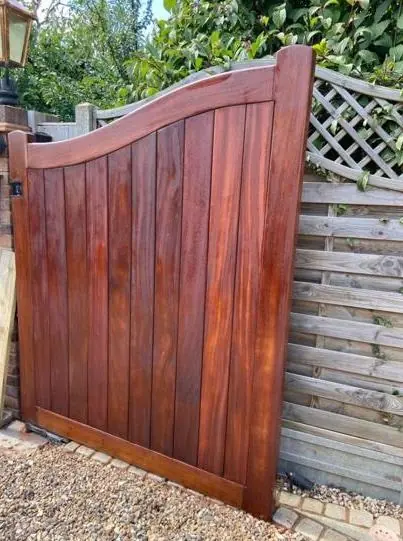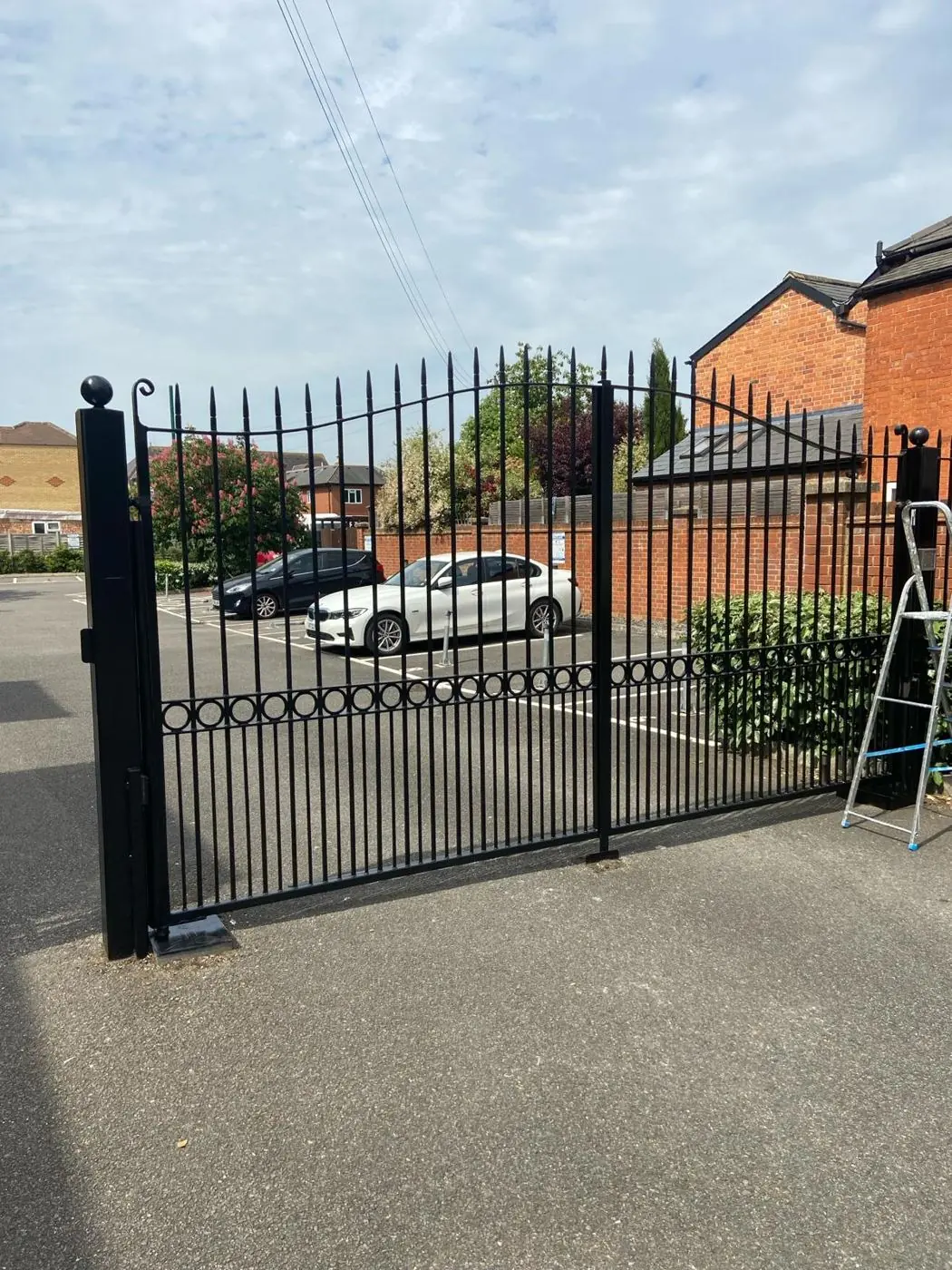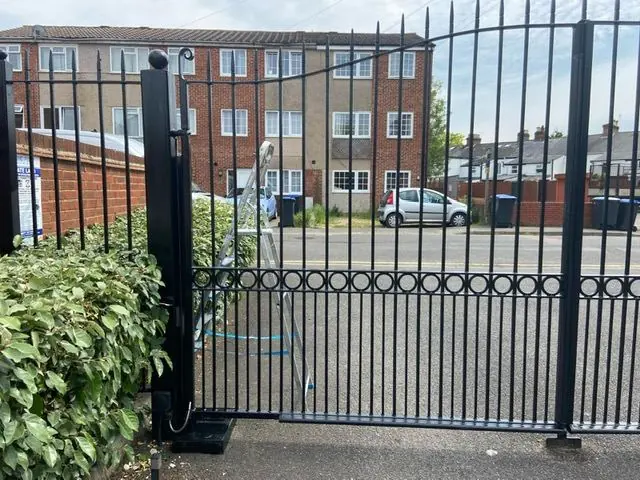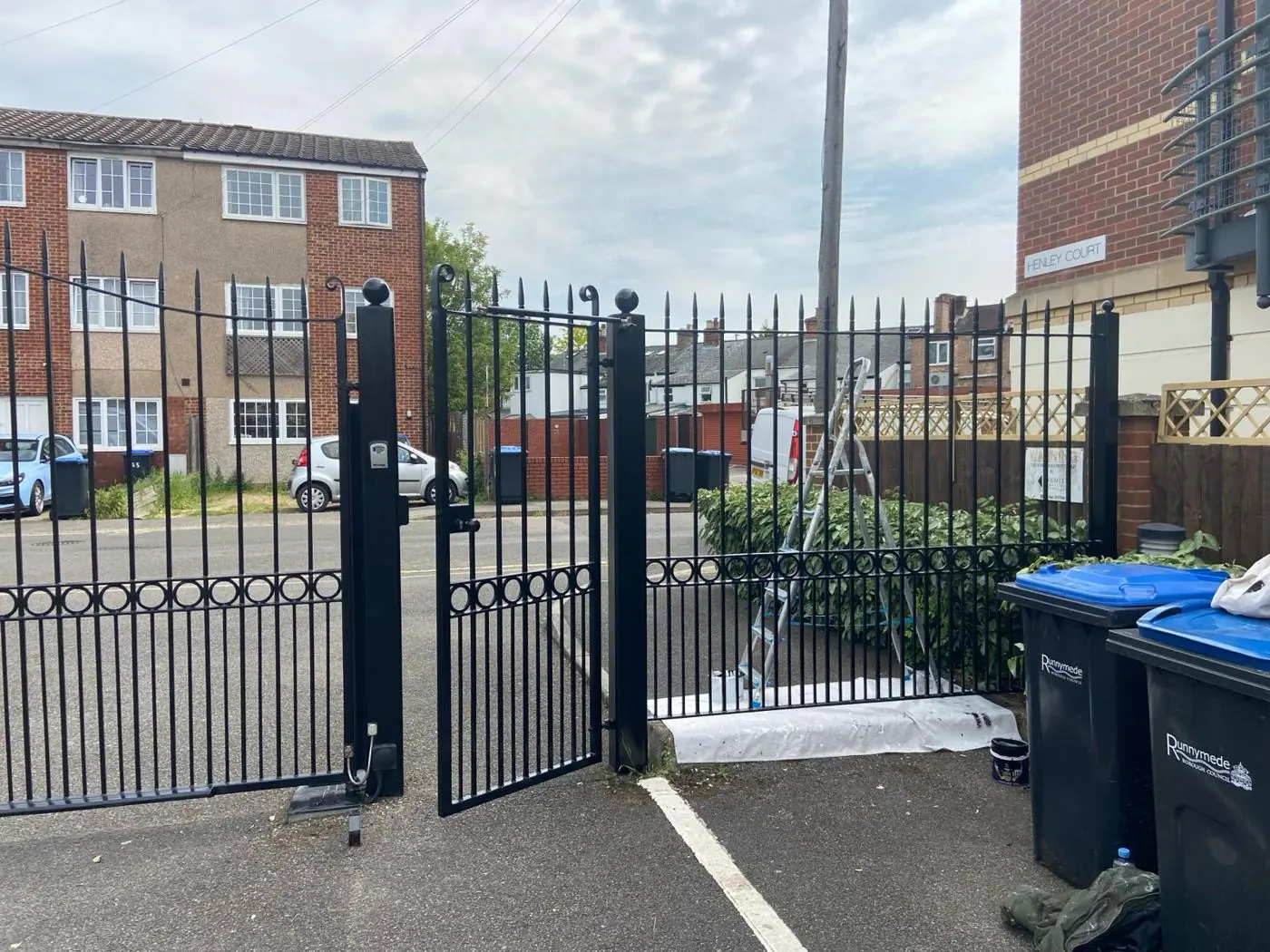
DH Painter & Decorator stains and paints garden fences, gates and outdoor timber in Denton, NN7, about 5.4 miles east of Northampton town centre. Most fence work is around the Leys estate and newer homes towards the A428, while the historic core has timber gates set into stone boundary walls.
Garden boundaries between The Leys and the bypass
Most of the fencing in Denton is south of the old village, where The Leys estate was built in the late 1960s and bungalows and houses have since filled the land down to the A428 bypass. Garden fences and side gates around these bungalows and houses are the timber that needs staining every few years, and access is far easier than among the walled plots of the old core.
A boundary fence has two sides, and the other face is your neighbour’s. We stain only your side unless they have agreed, and we keep the colour tidy along the top rail and posts so nothing drips over the line. Gardens backing towards the A428 also catch dust and grime from passing traffic, so those faces get a stiff brush and wash before any stain goes on.
Shade, leaf fall and algae under mature trees
Denton is a well-treed village. The conservation area appraisal records mature trees throughout, including English oak north and south of the church, heavy vegetation along the spring-fed stream, and Tree Preservation Orders on trees along Orchard Lane. For fences that means:
- Green algae and black mould on panels that stay in shade most of the day.
- Tannin and sap spotting under oaks, which shows through pale stains.
- Gravel boards and post bases that stay damp after rain in the lower parts of the valley.
We treat growth with a fungicidal wash and let the timber dry fully before staining, which in shaded corners can mean an extra day. Branches over a fence, especially protected ones, are worked around rather than cut. For heavily shaded runs, Dean may suggest a mid-tone stain, which hides sap marks better than a light honey colour, or an opaque fence paint where the timber is badly weathered.
Timber gates hung in stone and brick walls
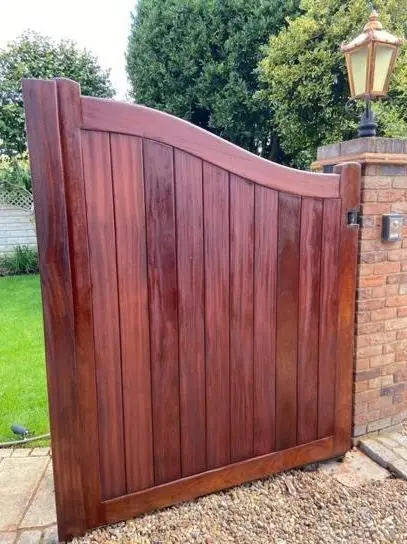
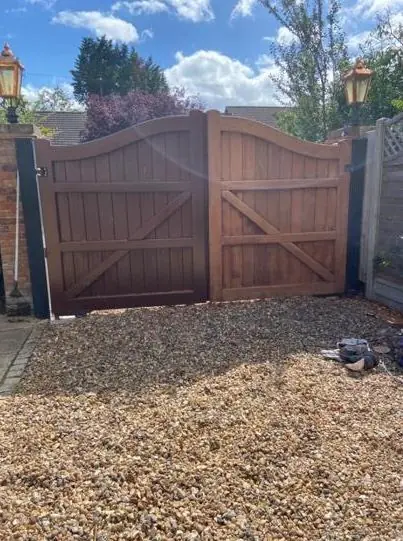
Around the green and up Church Way and Wareing Lane, plots sit behind stone and brick walls with copings, and a timber gate hung between those piers is a different job from a panel fence. Where the gate hangs on iron hinges or pins set into the masonry, those fixings need attention too. We mask the stone piers and copings carefully, because stain soaked into porous limestone or ironstone is very hard to get out. Where the hinges are rusting, they are wire-brushed and primed as part of the gate job.
Colour matters more here too. A gate in a pale limestone wall sits in the street scene of the conservation area, and natural oak or dark brown tones, or a painted finish in a muted shade, tend to look right beside the stone and orange pantile roofs. Estate tenants on Bedford Road or Wareing Lane should check whether the Castle Ashby estate sets a colour for gates and fencing.
Stain or paint, and when to book
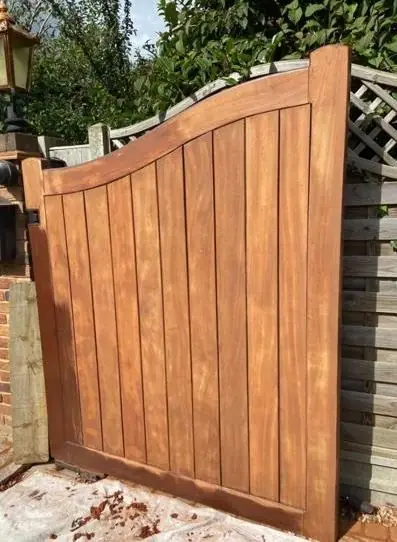
Penetrating stains soak in and wear back gradually, which suits fences that get redone regularly. Opaque fence paints cover weathered or patchy timber well but will need scraping eventually if they start to peel. The pros and cons, and how we prepare each type of timber, are on our main fence and gate staining page. Staining needs dry timber and mild weather, so most Denton fence work falls between late spring and early autumn. Our guide on when to paint outside explains why. You can find the rest of our Denton coverage on the Denton area page.
Last updated by Dean, DH Painter & Decorator.