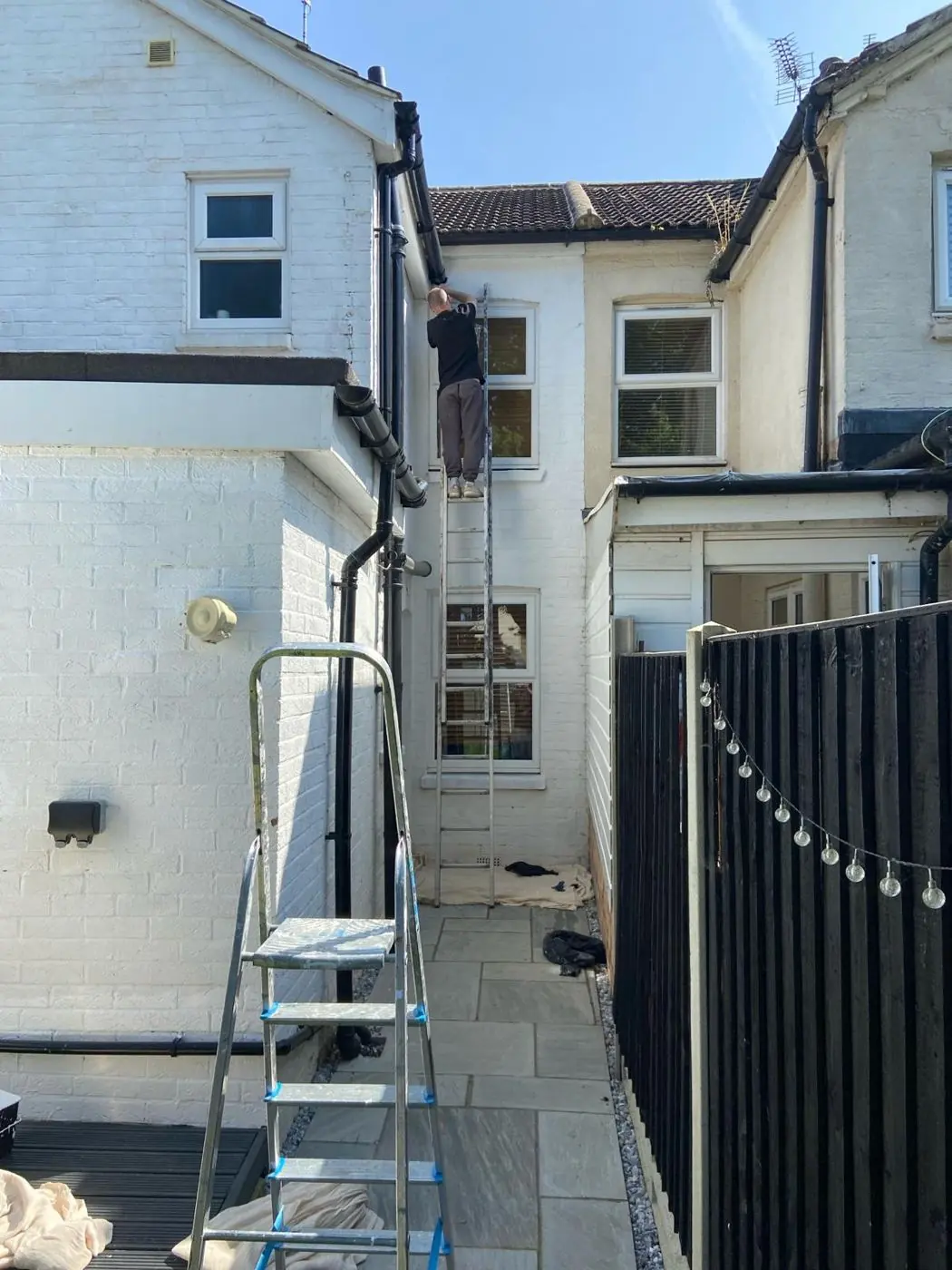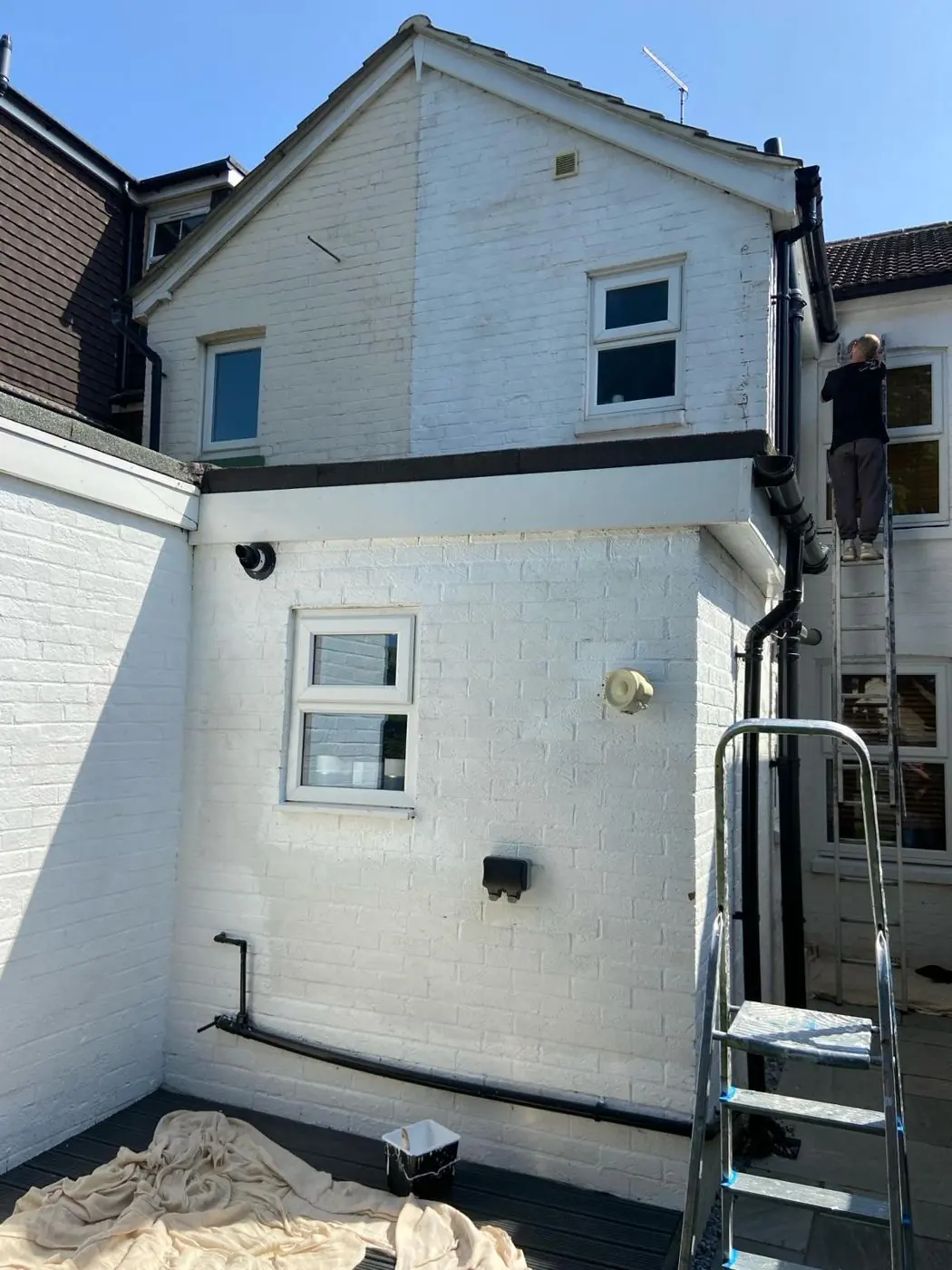
DH Painter & Decorator covers Denton from our Northampton base, about 5.4 miles east of the town centre, just north of the A428 Bedford Road in the NN7 postcode. Dean, who has over 30 years in the trade, paints the village's 17th to 19th century stone houses, listed buildings, estate brick terraces, Leys estate homes and its few non-residential premises.
Denton from our Northampton base
Denton is a small village and civil parish, with 744 residents at the 2021 census, lying just north of the A428 Bedford Road, south-east of Northampton. It sits in a small valley on the Great Oolite limestone belt, with farmland falling towards the village centre and the Church of St Margaret on high ground in the middle. Most of the parish lies more than 300 feet above datum, on clay soils with arable land all around. We cover the whole village from Northampton, about 5.4 miles away, along with neighbouring Cogenhoe, Yardley Hastings, Little Houghton and Hackleton.
The village has a long connection with the Castle Ashby estate. From 1647 the manor descended with Castle Ashby under the Compton Earls of Northampton, many villagers worked on the estate, and the estate still owns around 16 properties in Denton. Today it is mainly a commuter village, and that history shows in its buildings in ways that shape how they should be painted.
The historic core: limestone, ironstone and thatch
Main Street runs through the old village past a large triangular green north of the church, with Church Way, Wareing Lane and the north side of Bedford Road branching off it. The houses here date from the 17th to the 19th century: vernacular cottages, farmhouses and farm buildings, mostly two storeys, some with an attic and a few with three. They are built of pale local limestone, either coursed and squared or rubble, with orange ironstone used for banding, quoins, string courses and window surrounds. Roofs are reed thatch, orange Castle Ashby pantile or Welsh slate.
All of this lies within Denton Conservation Area, first designated in October 1971 and extended in March 2014, when the current appraisal was adopted. Around a dozen buildings in the parish are listed, including the Grade II* church, Church Farm (dated 1675), Manor Farmhouse, the thatched Upper and Lower Gate Houses built at enclosure in 1771, Stone House on Bedford Road (1813) with its 16-pane sashes, and 5 Wareing Lane. For a decorator, these houses come with a clear set of rules:
- Bare limestone and ironstone stay unpainted. Where stone has already been painted, it needs a breathable mineral coating, not acrylic masonry paint. The listing for 5 Wareing Lane notes decayed stonework that has been painted.
- Solid walls and lime plaster inside need breathable emulsions, especially on lower ground near the stream.
- No flame stripping anywhere near thatch, so bargeboards, dormers and eaves joinery are prepared with chemical or steam methods.
- Remaining timber casements, sashes and plank doors suit linseed, oil-based or microporous systems. The appraisal records how many original windows have been lost, so keeping the surviving ones painted and sound helps the area.
- Listed buildings can need consent for changes in appearance, including new colours or painting surfaces that were bare.
Estate brick on Bedford Road and Compton House
Late in the 19th century the Castle Ashby estate built in brick. The New Buildings and Flannel Row terraces on Bedford Road use the estate’s own smooth orange-red Castle Ashby brick. Compton House, an 1893 design by Fairfax B Wade, adds blue brick diaper patterning and limestone detailing, with a listed forecourt wall, gates and gatepiers. That brickwork is not for painting. Work on these houses centres on windows, doors, fascias and the forecourt ironwork, which needs a rust-inhibiting system in a sympathetic colour. Where the estate owns a terrace, it may set a single exterior colour to keep the row uniform, so tenants should get its approval first.
The Leys and the later bungalows
The A428 bypass was built in the late 1930s, and the village has since grown south towards it. The largest addition is The Leys, an estate built in the late 1960s, followed by detached and semi-detached bungalows and two-storey houses, plus infill within the historic core. These homes are the simpler side of decorating in Denton: interior repaints on plasterboard and skim, conventional stairwells, uPVC or plain timber fascias, and garden fences and gates that need regular staining. Access is easier too, with more room to park than in the older lanes. Extensions and conversions under the village’s infill policy add fresh plaster that needs a mist coat before any colour.
Working in the village: access, trees and weather
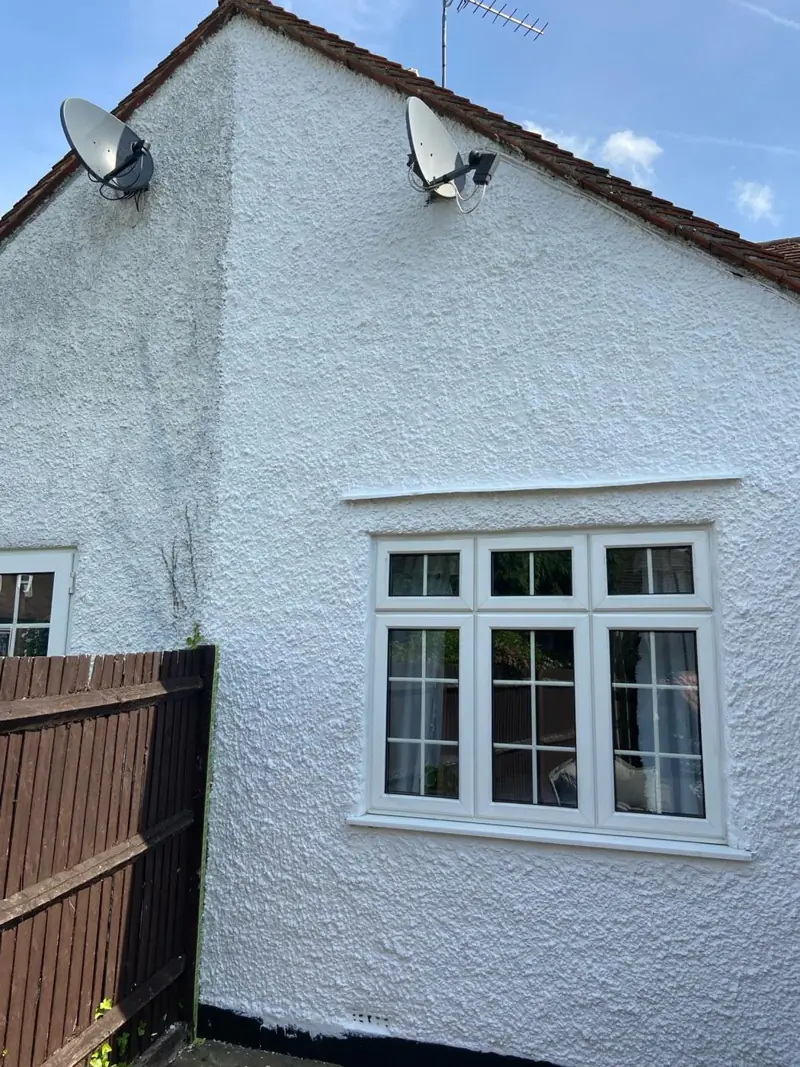
Several features of Denton’s layout affect how a job is set up. In the conservation area, buildings stand close to the pavement edge or behind linking stone walls, and most roads have a single footway, some none at all. With roadside parking eating into the lanes, we fix van space and ladder or tower positions before the first day and screen off the footway for anyone walking past. Overhead wires and telegraph poles run through the conservation area, which affects where ladders go on frontages and eaves. Main Street is wide, while the smaller lanes are tightly enclosed.
The sloping ground gives neighbouring houses different eave and ridge heights, so access equipment often has to be adjusted from one house to the next. Mature trees stand throughout the village, including English oaks north and south of the church, and trees on Orchard Lane carry Tree Preservation Orders. They drop sap and debris and shade walls, so exterior surfaces need careful cleaning and longer drying times, and branches cannot simply be cut back for access. Add the low valley floor and the stream below St Margaret’s, that makes spring to early autumn the sensible window for exterior painting. Our guide to timing exterior painting in the UK explains why.
Non-residential premises
Denton has no shops or parades. Beyond houses, the village has a handful of buildings in other use: a restaurant in what was the Red Lion pub, Denton Primary School, two surgeries (one doctors’, one dentists’), the village hall, the 1889 Baptist Chapel and St Margaret’s. For any of these, work is scheduled around opening hours or school hours, and our commercial painting service covers how that is organised.
Where to start
For most older Denton houses, the jobs that matter most are joinery and previously painted masonry outside, and breathable paint on solid walls inside. Start with our exterior painting service or the interior painting service, and use the cost guide to see what affects a quote. To arrange a free quote, call Dean on 07539 779 036.
Last updated by Dean, DH Painter & Decorator.