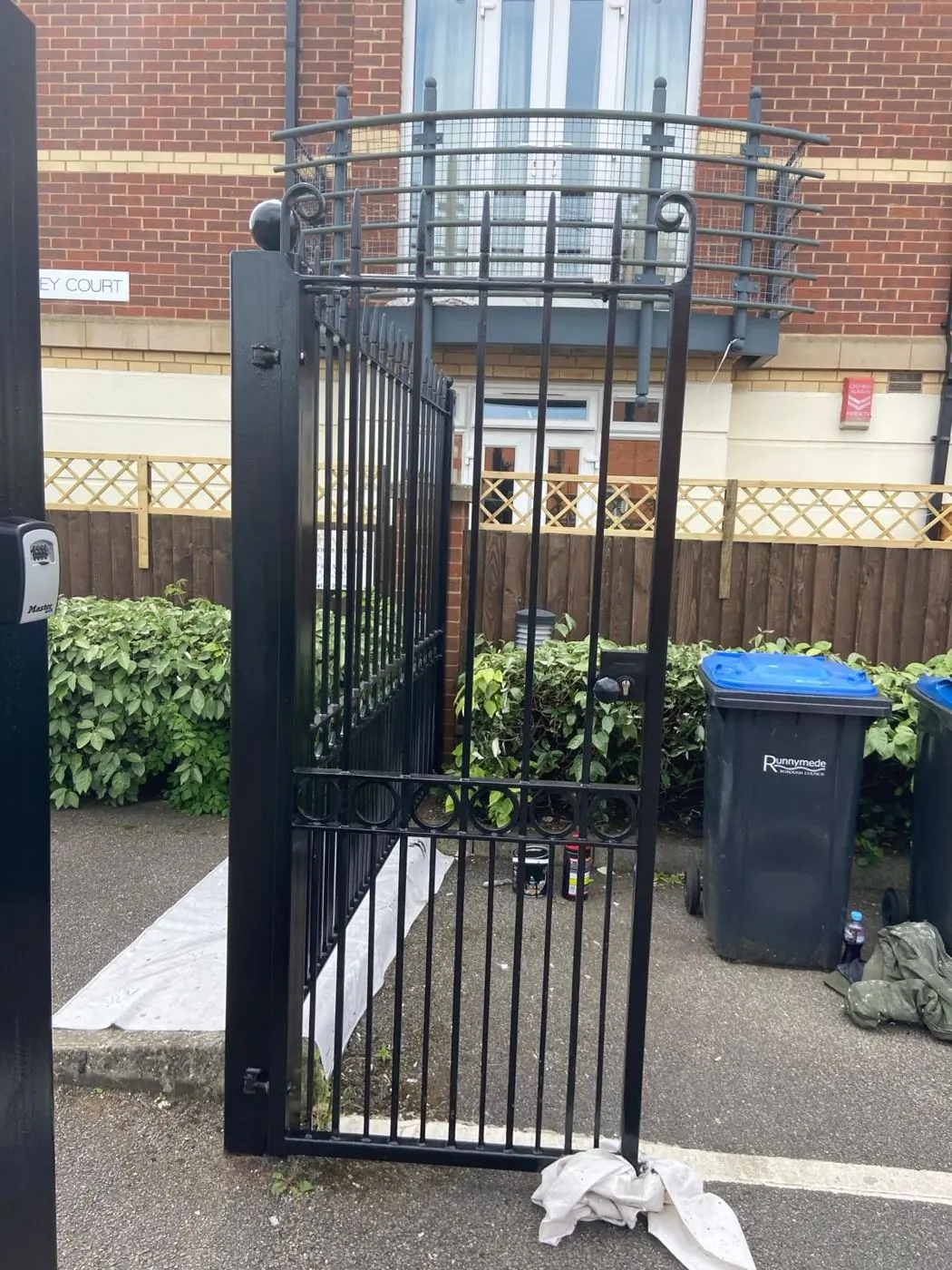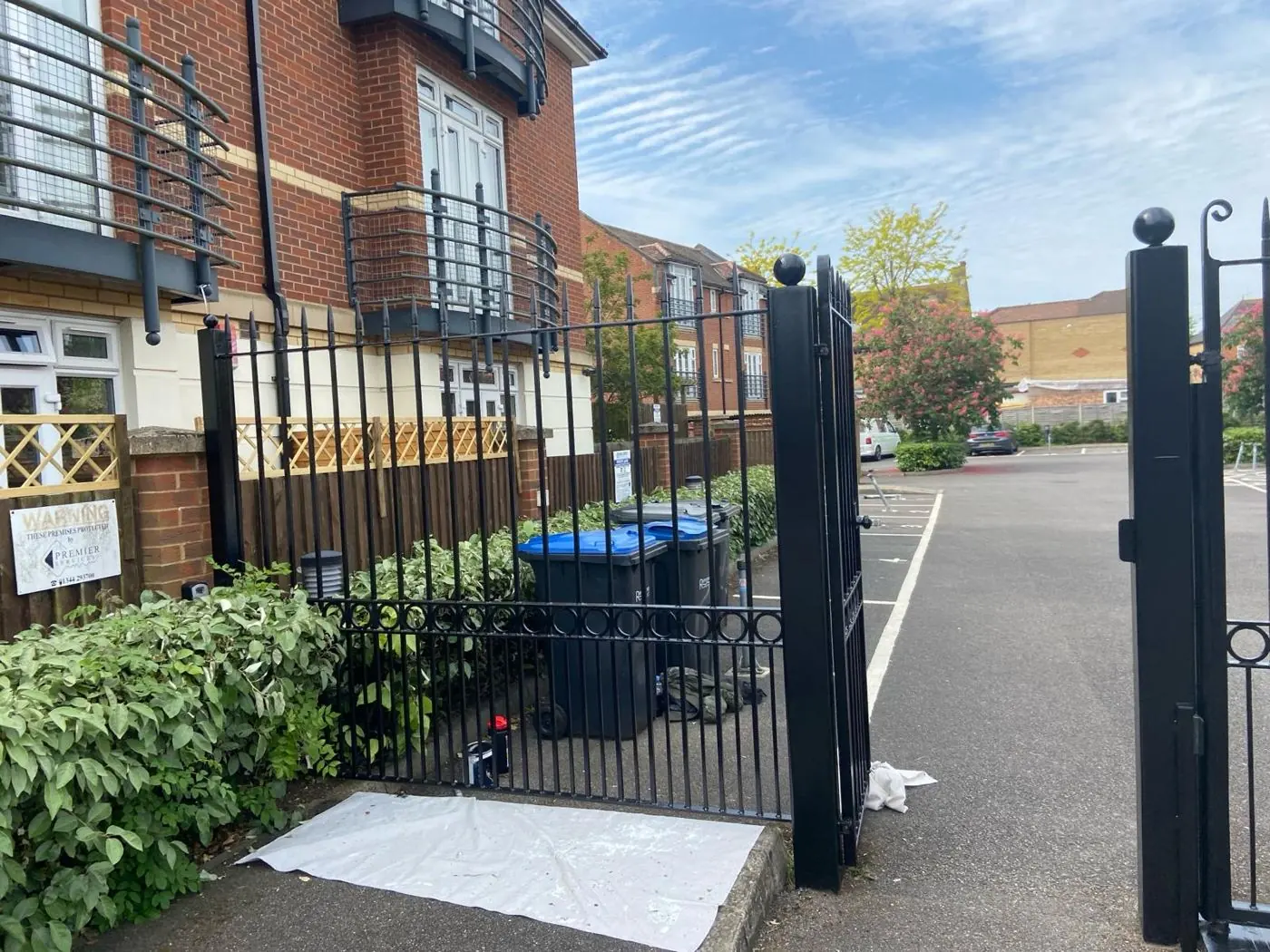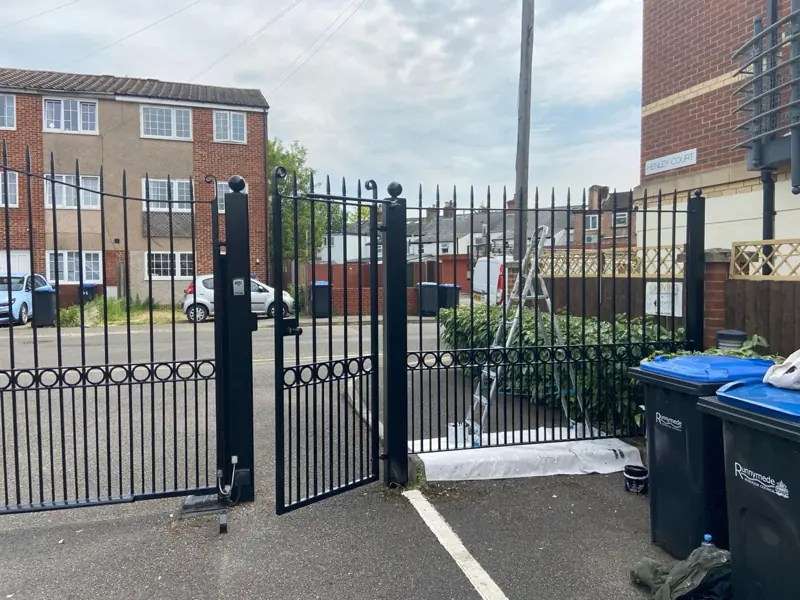
DH Painter & Decorator repaints metal gates, railings and handrails in Denton, NN7, about 5.4 miles east of Northampton town centre. We take rust back to sound metal, prime with a rust-inhibiting system and topcoat, with extra care on period ironwork near the village's listed buildings.
Period ironwork near listed buildings
The clearest example of historic metalwork in Denton is at Compton House, built for the Compton family’s Castle Ashby estate in 1893. Its forecourt wall, gates and gatepiers are listed at Grade II alongside the house, which is built in orange-red Castle Ashby brick with blue-brick diaper patterning. Ironwork like this needs sympathetic treatment: hand preparation that does not knock off cast detail, traditional colours, and no paint on the surrounding brickwork.
On a listed building, repainting in the existing colour is usually straightforward. Changing the colour, or stripping back to bare metal in a way that alters the look, should be checked with West Northamptonshire Council first. Dean will tell you at the survey if he thinks consent is worth asking about. The same applies to iron gates and railings at other listed houses in the village; there are around a dozen listed buildings in all.
Railings fixed into stone and brick walls
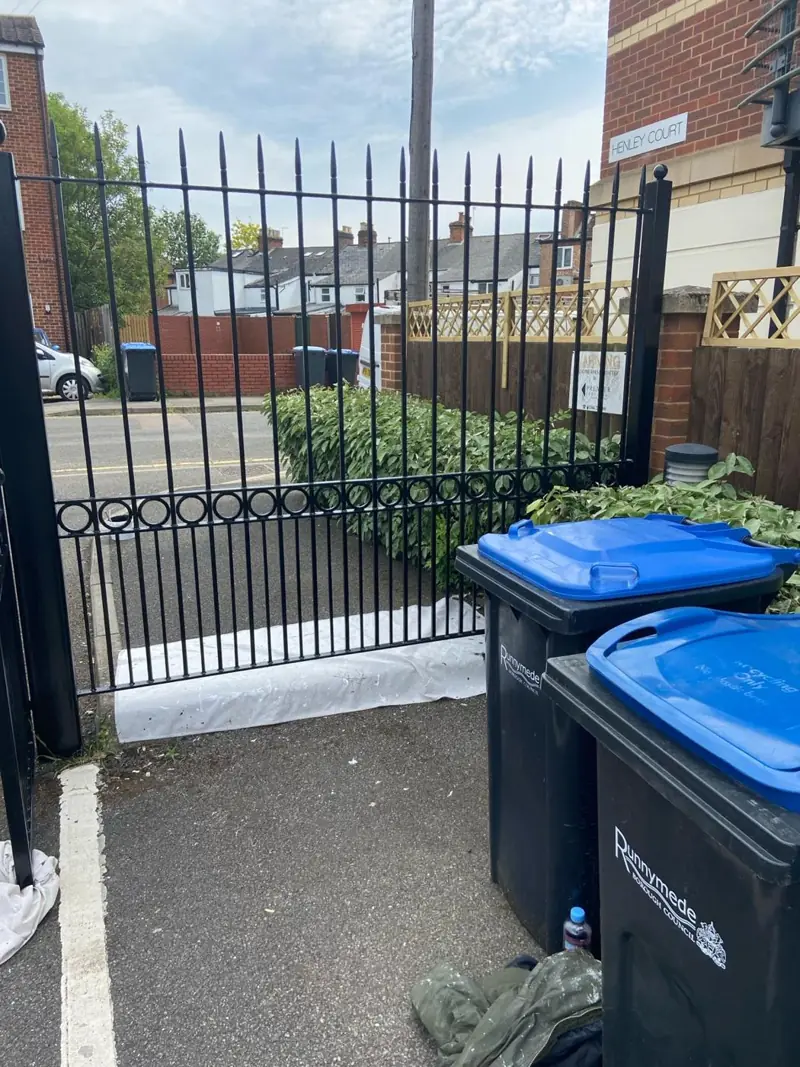
Coped boundary walls in pale limestone, orange ironstone or brick line many Denton frontages, and where a railing or gate is fixed into one, the fixing point is where trouble starts. Iron expands as it rusts, and a corroding railing foot leaded or mortared into a coping can crack the stone around it. Rust also runs down onto pale limestone and leaves orange streaks that are hard to clean off.
So our preparation at the base of each bar is thorough:
- Scrape and wire-brush back to sound metal, paying most attention to the feet and the bottom rail.
- Treat any pitting that cannot be fully cleaned with a rust converter.
- Prime with a rust-inhibiting metal primer, worked into the joint where bar meets stone.
- Mask the copings and piers so primer and gloss stay off the stone.
If the stone around a fixing is already split, we flag it so a mason can reset the bar before we paint.
Damp corners and the valley floor
Low ground near the stream and the heavy vegetation around St Margaret’s mean that some ironwork sits in shade and damp for long spells. Gates under trees collect wet leaves at their base, and rust there moves faster than on a sunny open frontage. We pick dry, mild days for metalwork, because primer applied to cold, damp iron does not bond well. Where gates sit beside narrow lanes with a single footway, we tape off a working area so passers-by do not brush wet paint.
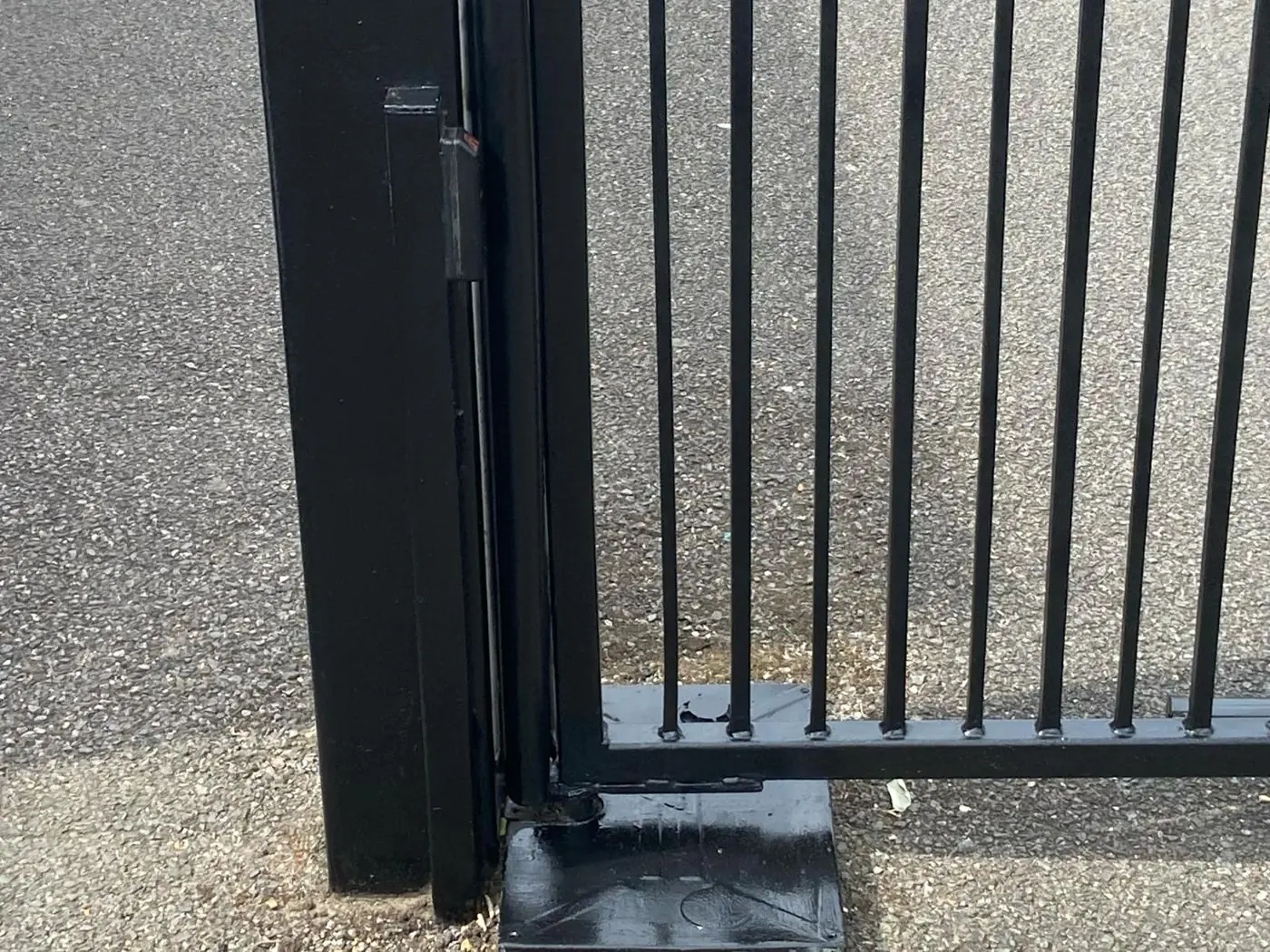
Gates that open straight onto a lane also take knocks from bins, bikes and car doors on roads where parking is tight. Chipped edges let water under the paint film, so we touch in and prime every chip and scrape before the full coats go on, rather than painting over damage that will lift within a winter. Hinges and latches are freed and greased once the paint has hardened.
Modern gates on the newer estates
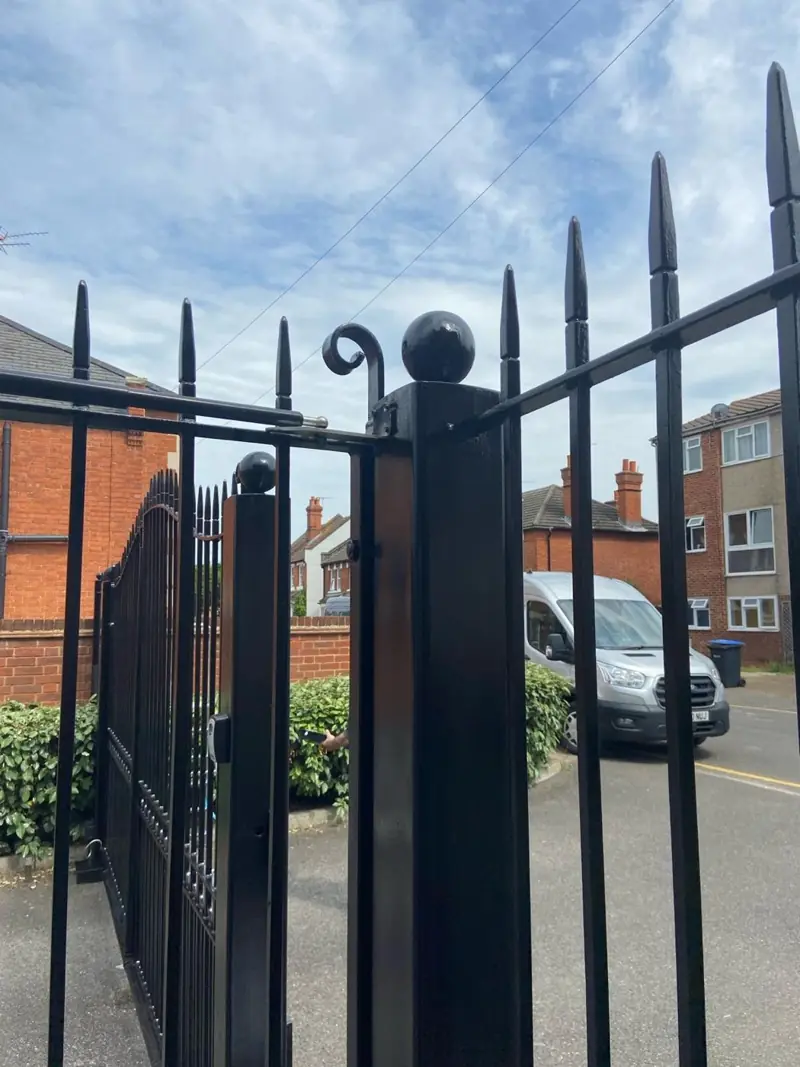
On The Leys estate and the newer homes towards the A428, metalwork is more likely to be mild steel driveway gates, side gates or galvanised railings on steps. Galvanised steel needs a specific primer before ordinary metal paint will grip it. Mild steel gates usually fail at the welds and hinges first, so those get the most attention. The full step-by-step process for each metal type is on our main metal gate and railing painting page.
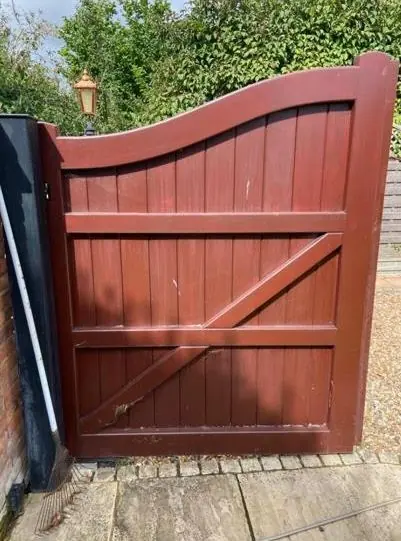
Metalwork pairs well with front doors and timber gates on the same visit, and we cover the whole village from our Northampton base. See the Denton area page for the other services we offer there.
Last updated by Dean, DH Painter & Decorator.