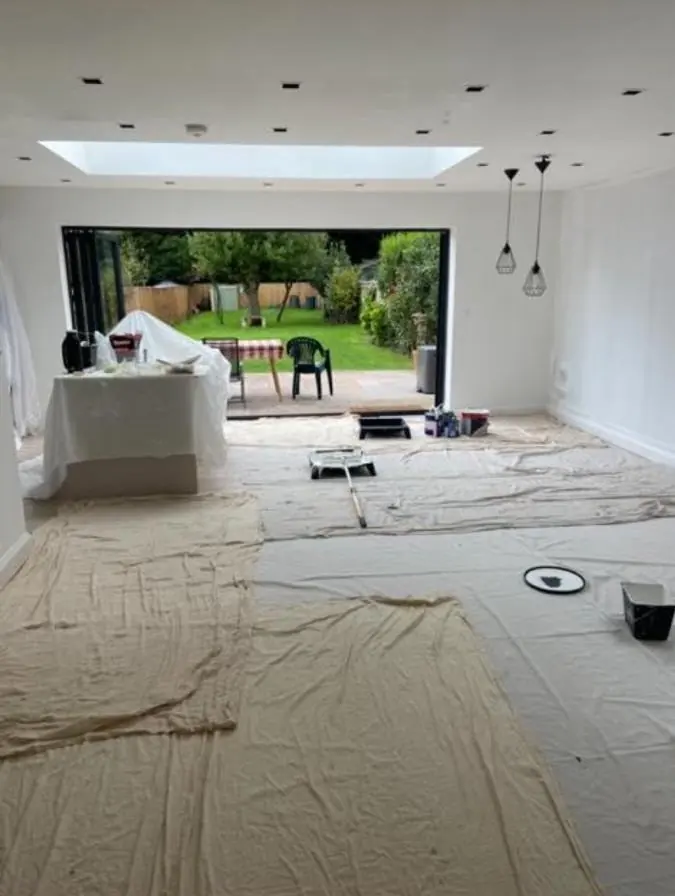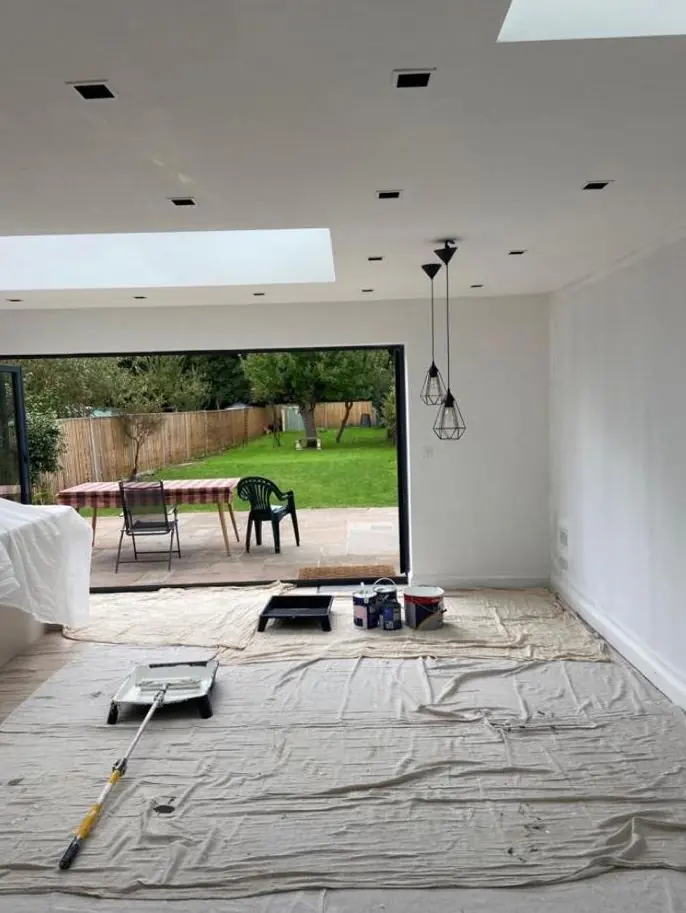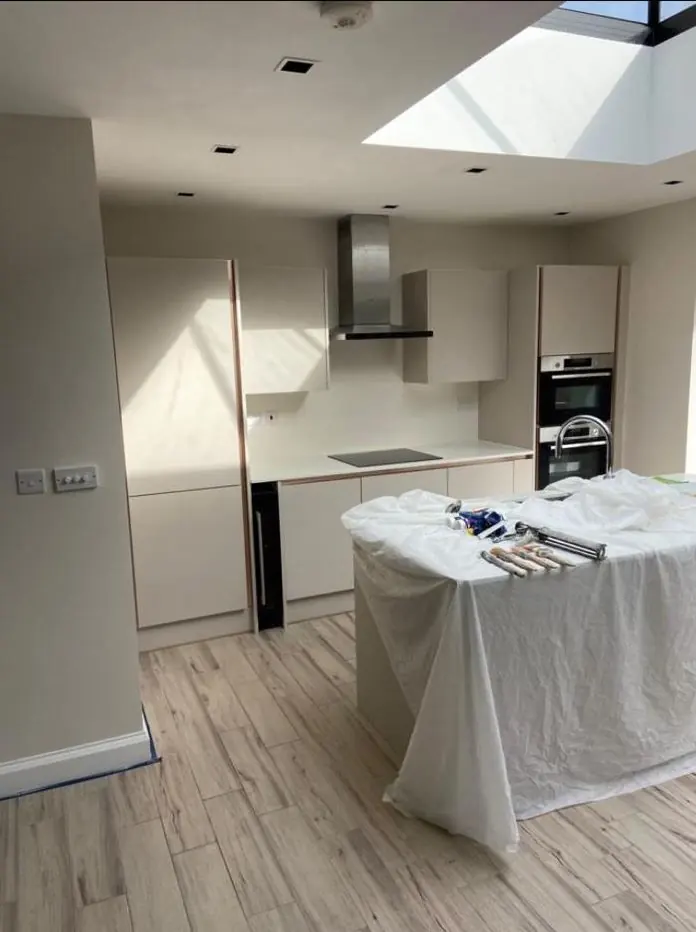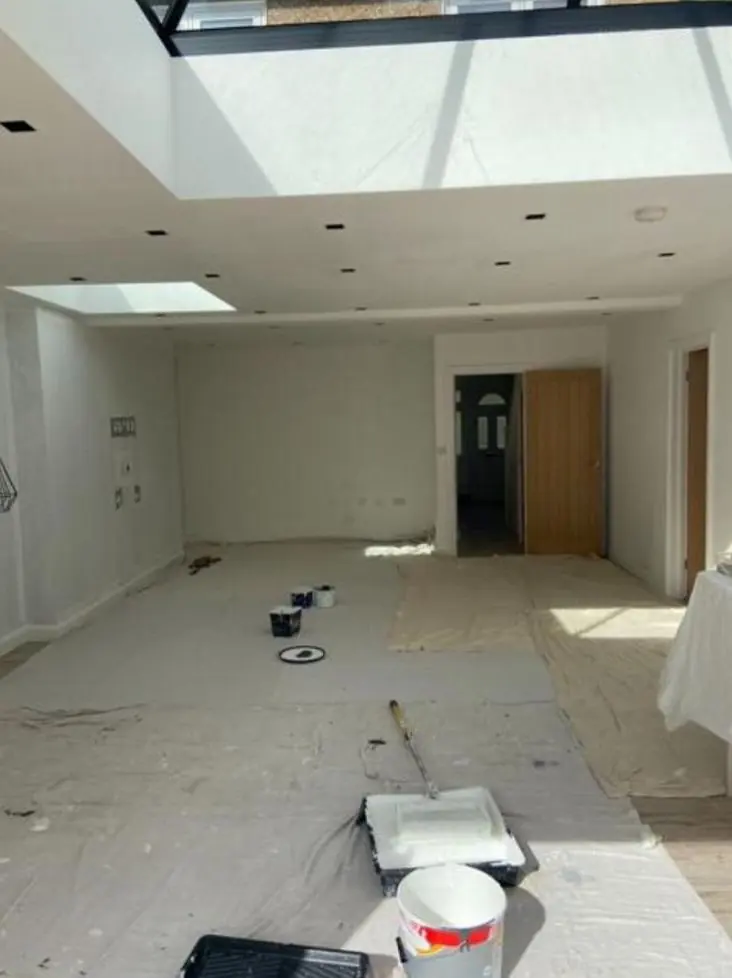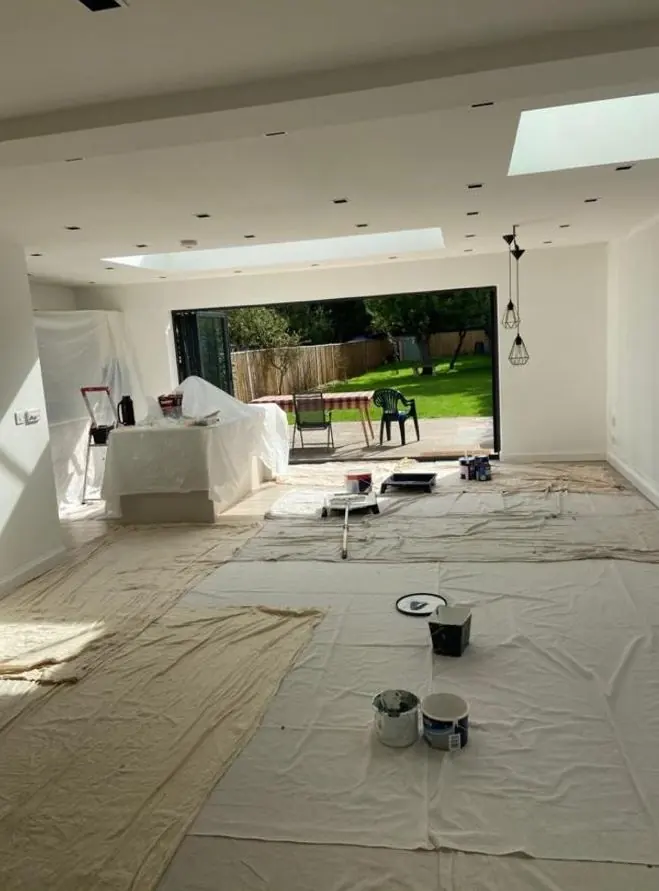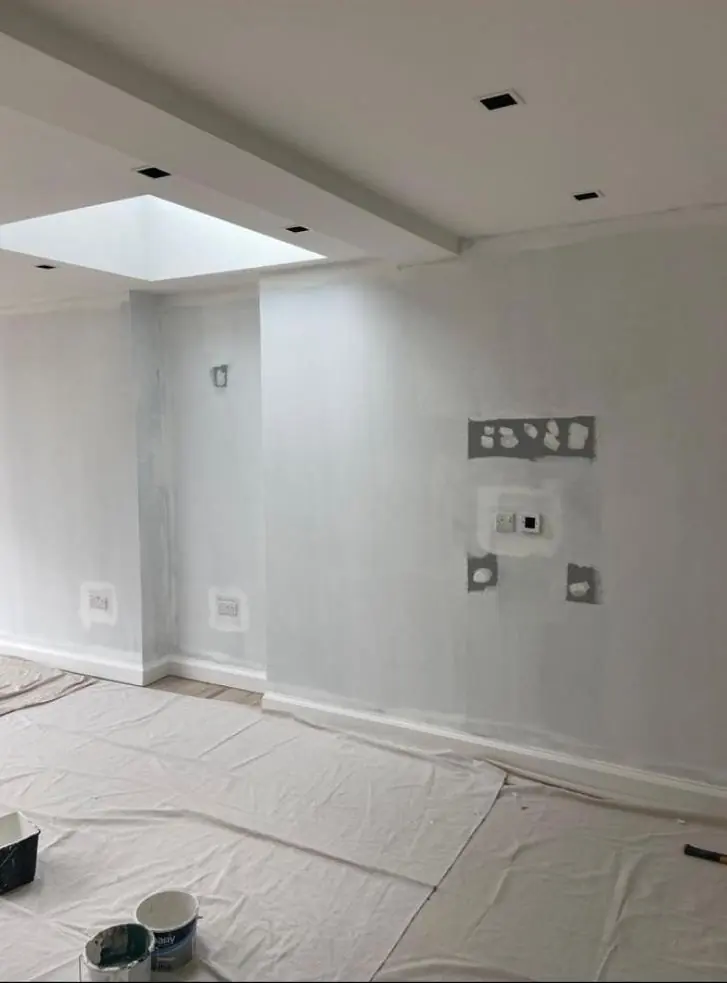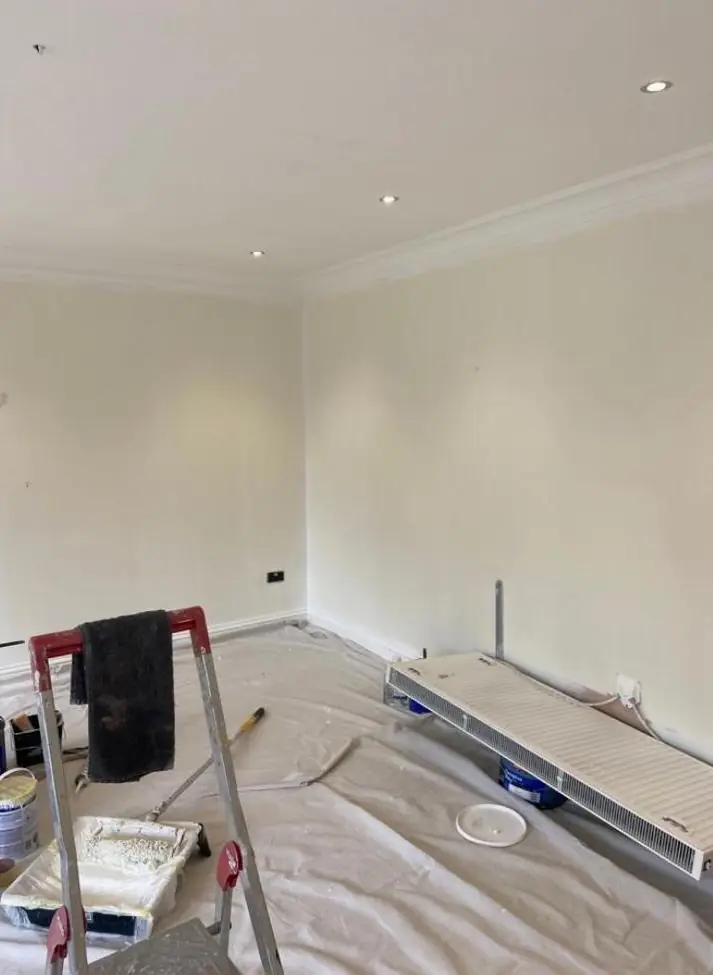
Once the plasterer has finished, Dean decorates new extensions, conversions and re-plastered rooms in Denton, about 5.4 miles east of Northampton. Gypsum skim gets a mist coat and finish coats, while lime plaster repairs in the older stone houses need a breathable paint and a longer wait.
Building work in a small infill village
Denton has grown in steps. The historic core of limestone cottages and farmhouses was joined in the late 1960s by The Leys estate, and since then by bungalows and houses towards the A428 bypass and infill within the old village. Planning policy treats Denton as a restricted infill village, so most new plaster here comes from extensions, loft and outbuilding conversions, and the refurbishment of existing homes rather than large new estates. That gives us two quite different kinds of fresh plaster, and the first thing we ask is which one you have.
Gypsum skim or lime: ask before the first coat
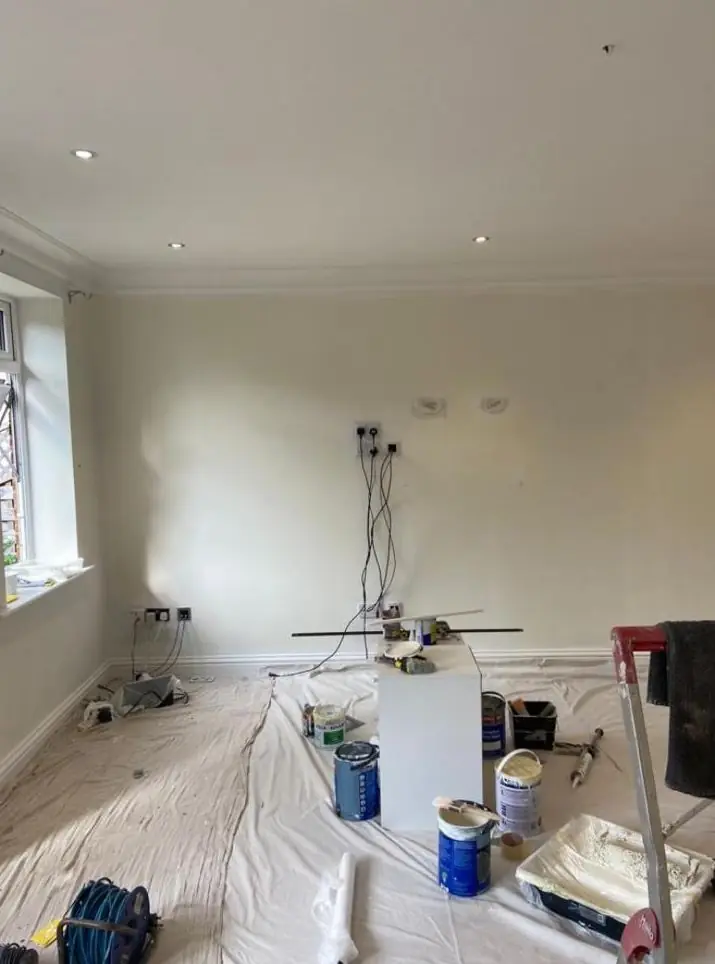
An extension on a Leys house or a newer bungalow is almost always plasterboard with a gypsum skim. That takes the standard approach: wait until the plaster is evenly pale and dry, apply a mist coat of thinned contract matt so the paint soaks in and bonds, then fill, sand and finish with two coats. Our guide to painting new plaster explains the mist coat in detail.
Repairs inside the 17th to 19th century cottages are different. Solid limestone walls in Denton are often plastered in lime, and a good plasterer patching them will use lime again. Lime cures slowly by taking in carbon dioxide from the air, and it has to keep breathing afterwards. A vinyl emulsion over it seals the surface and can push damp back into the wall. We use a breathable mineral or clay-based paint instead and leave the fresh lime longer before the first coat. If your builder used gypsum on a solid stone wall, tell us; it affects which paint will last.
Where the new room joins the old house
A converted barn or outbuilding, or an extension built against a stone cottage, puts new walls next to old ones that move differently. Expect fine cracks along the joint in the first year as the new structure settles. We fill and seal those junctions with flexible decorator’s caulk or filler at the snagging stage, and recommend a light refresh of the joint once the building has been through a full heating season.
New joinery needs attention too. Fresh softwood skirtings, architraves and window boards need knotting and priming before topcoats, and new oak or engineered doors need a finish that suits the timber. Bare plaster reveals around new windows are often the last surfaces to dry, so we test them separately.
Drying times in a valley village
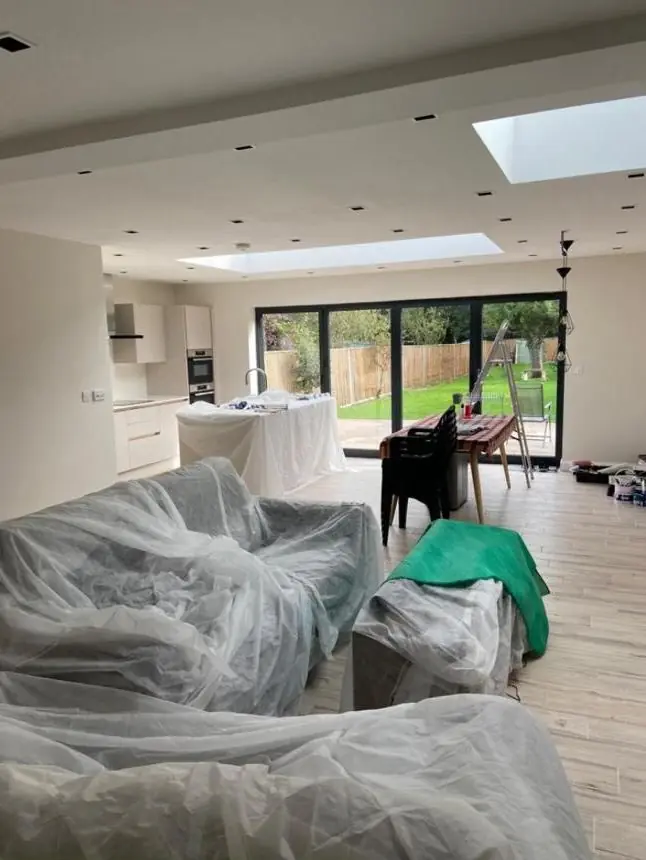
Fresh plaster dries on the slowest schedule where Denton is lowest and shadiest: near the spring-fed stream below the church and under its mature trees. Rooms on a shaded, north-facing side or close to that damper ground can take noticeably longer to dry out after plastering. Run heating and ventilation gently, and do not paint over plaster that still shows dark patches. We check with a moisture meter before the mist coat goes on, and if it is not ready we would rather come back a week later than see paint blister.
Season matters less indoors than out, but winter builds often finish with the windows shut and the heating on high, which dries the surface faster than the core. A steady, moderate temperature with a window ajar gives a more even result, and fewer hairline cracks to fill before the topcoats.
The full process, from snagging to final coats, is covered on our main new plaster and extension painting page. Other services we offer in the village are listed on our Denton page.
Last updated by Dean, DH Painter & Decorator.