DH Painter & Decorator handles masonry and render painting in Denton, NN7, about 5.4 miles east of Northampton town centre. In this village that means breathable coatings on stone that is already painted, standard masonry systems on rendered modern homes, and honest advice about the many walls that should stay bare.
Most of Denton’s walls should never see masonry paint
Walk down Main Street or Church Way and almost every older wall is bare: light limestone laid as coursed squared stone or rubble, with orange ironstone used for banding, quoins and window surrounds, all bedded in lime mortar. Those walls work by letting moisture in and out. A modern acrylic masonry paint forms a skin over the face, water gets trapped behind it, and in winter the stone surface can start to flake and crumble. That is why we do not quote to paint an unpainted stone cottage in Denton, and why, for many walls in the old core, Dean’s advice will be to leave the stone alone.
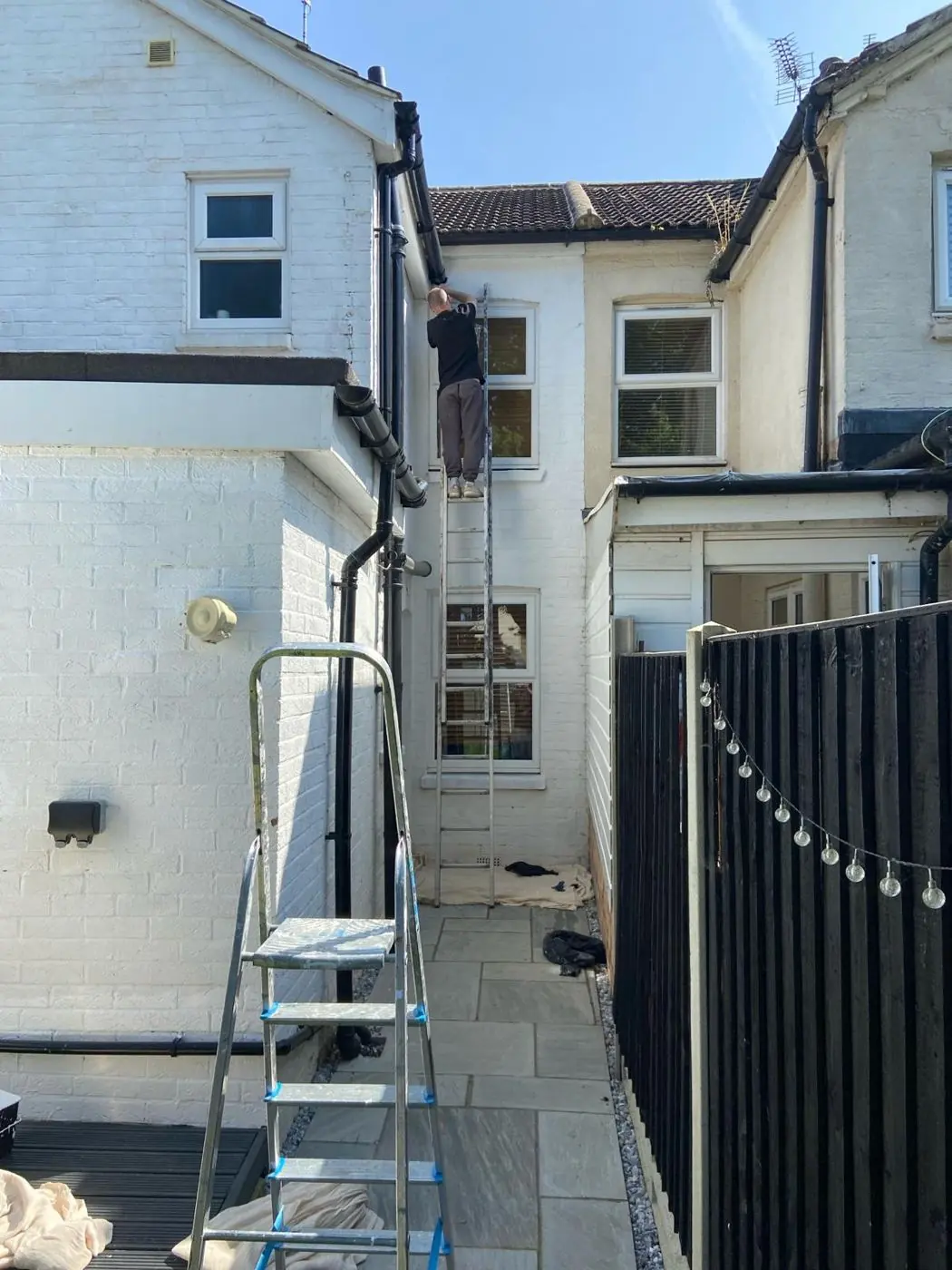
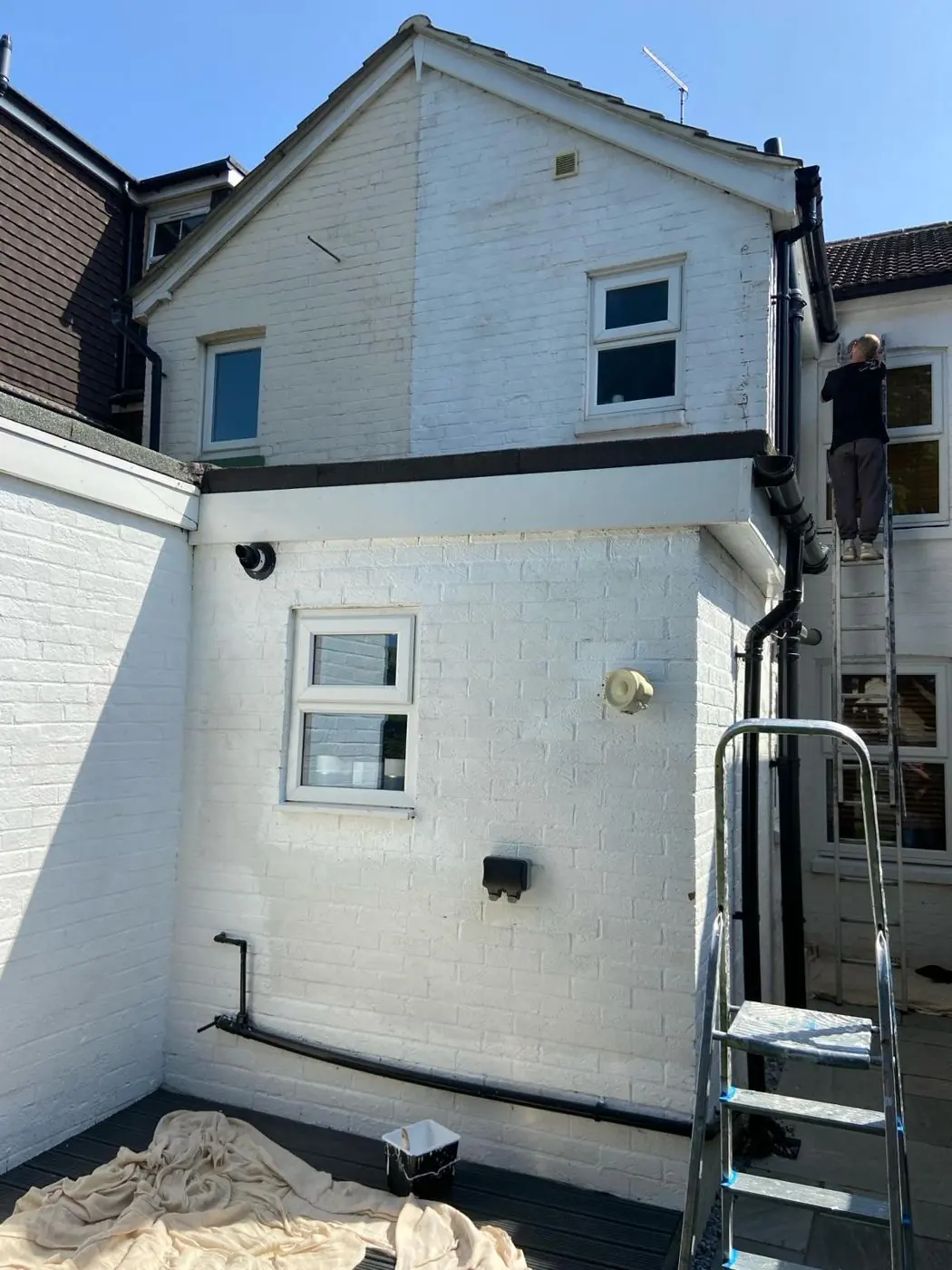
The same goes for brick. New Buildings and Flannel Row on Bedford Road, and Compton House with its blue-brick diaper pattern, are built in smooth orange-red Castle Ashby brick from the estate’s own brickworks. That brick is part of the village’s character and stays unpainted. Brickwork jobs here are limited to surfaces someone painted in the past.
Stone that has already been painted
Some limestone in the village has been painted at some point, and this is where care matters. The listing description for 5 Wareing Lane, a 17th-century cottage of limestone rubble with ironstone dressings, records decayed stonework that has been painted. It is a useful warning: putting another layer of plastic paint over damaged soft stone hides the problem and can make it worse.
When we look at a painted stone wall in Denton, we check for:
- Paint lifting in sheets or blistering, a sign moisture is trapped behind it.
- Powdering or flaking stone underneath, especially on the softer ironstone dressings.
- Hard cement repointing, which pushes moisture out through the stone instead of the joints.
- Whether the existing coating is a limewash, a mineral paint or a modern acrylic, since each needs a different approach.
Where the coating is sound and breathable, we clean it and recoat with a compatible mineral or lime-based paint. Where an acrylic is failing over soft stone, it may be wiser to remove it carefully, or to stop and get a stonemason in first. On a listed building, any change in finish needs checking with West Northamptonshire Council before we start.
Where masonry paint does belong in the village
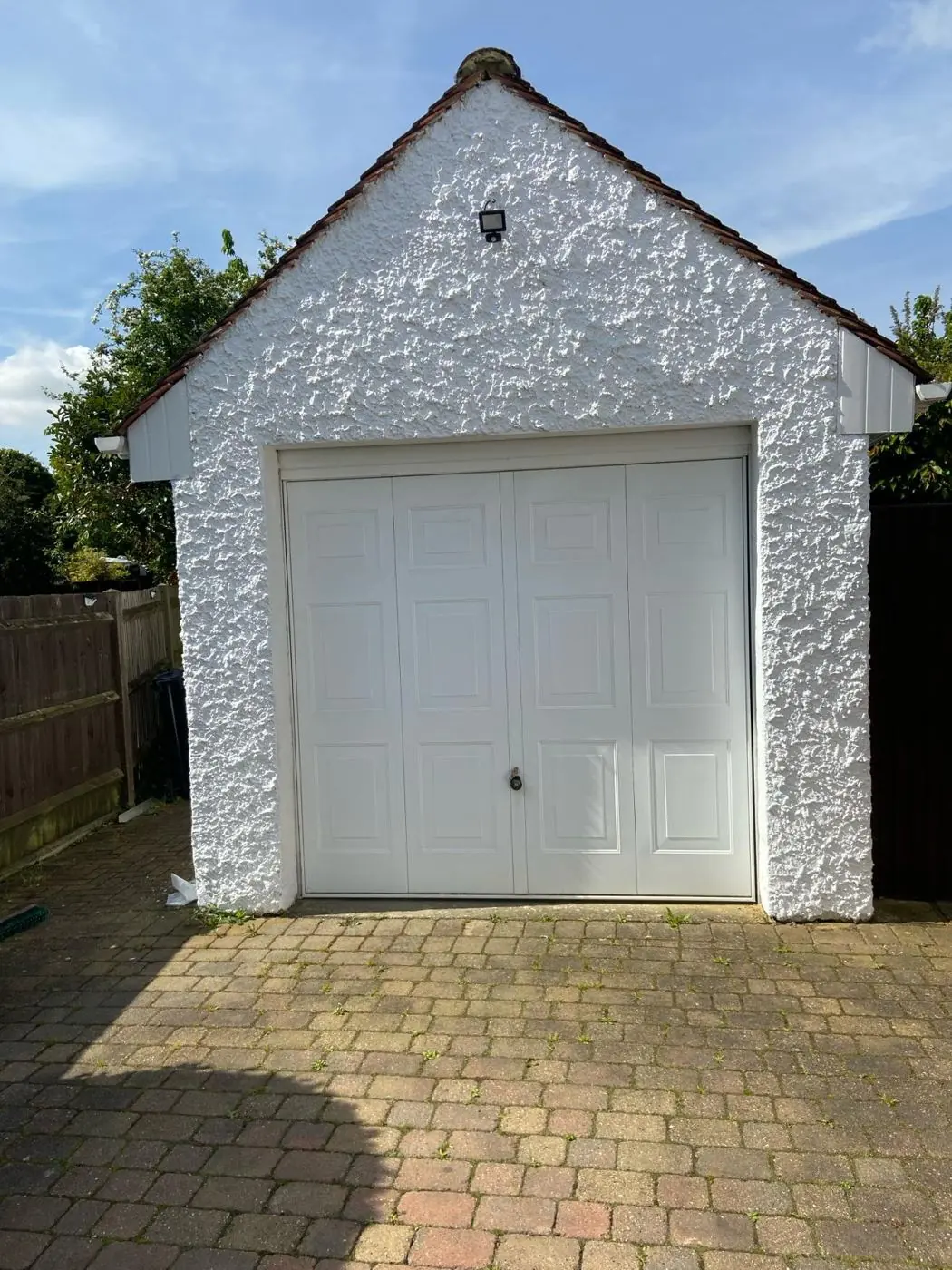
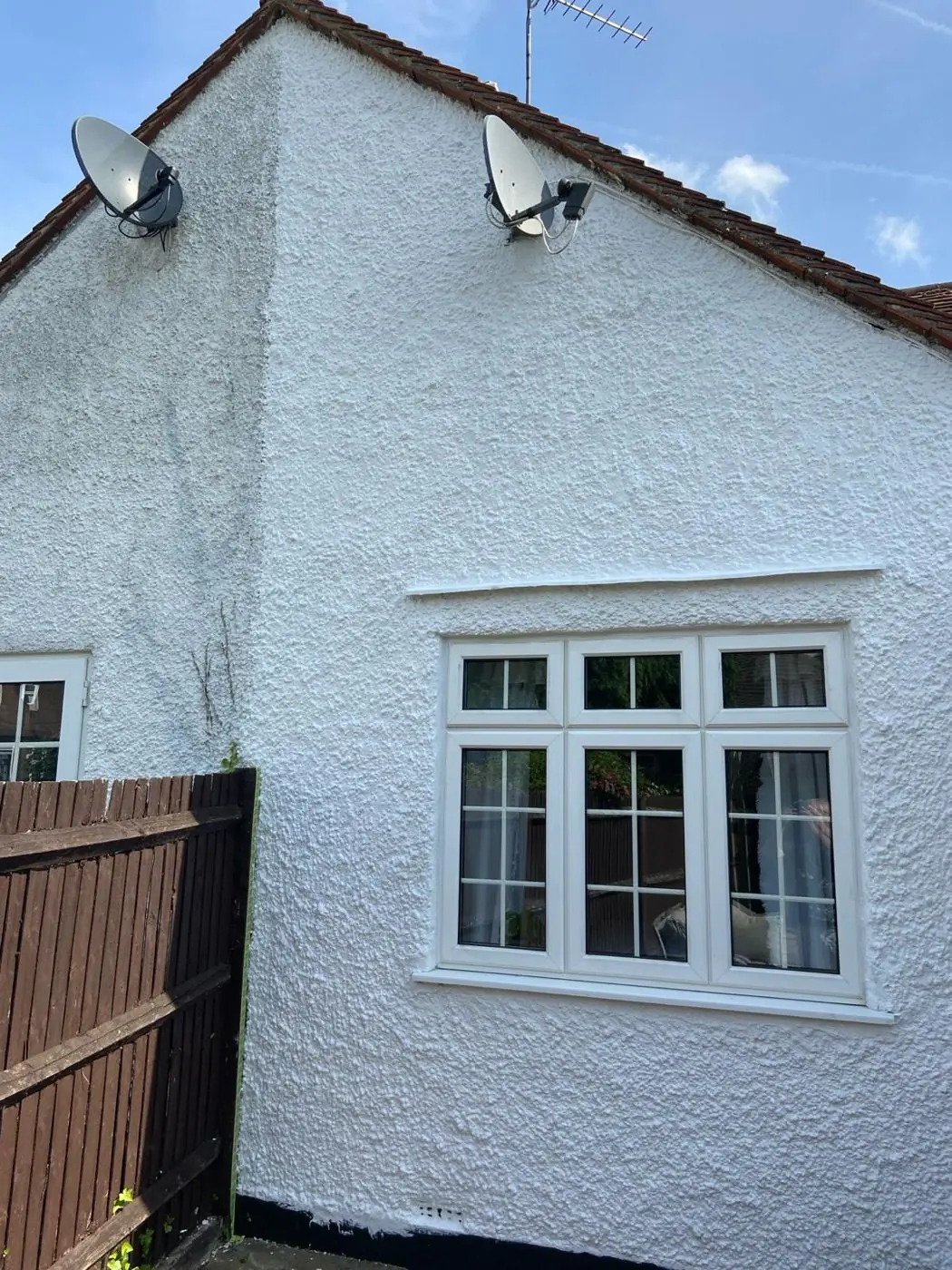
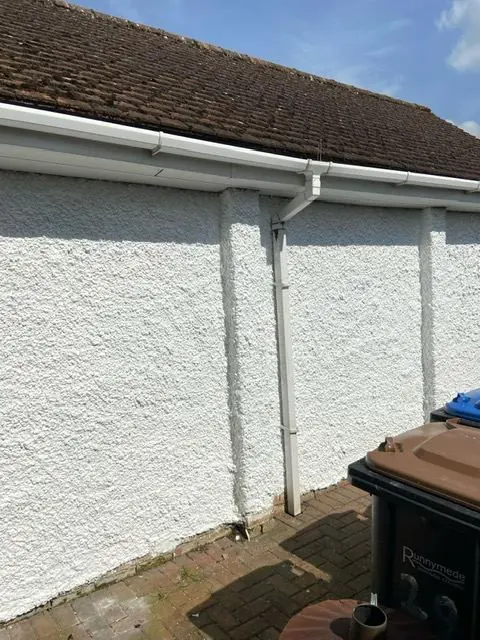
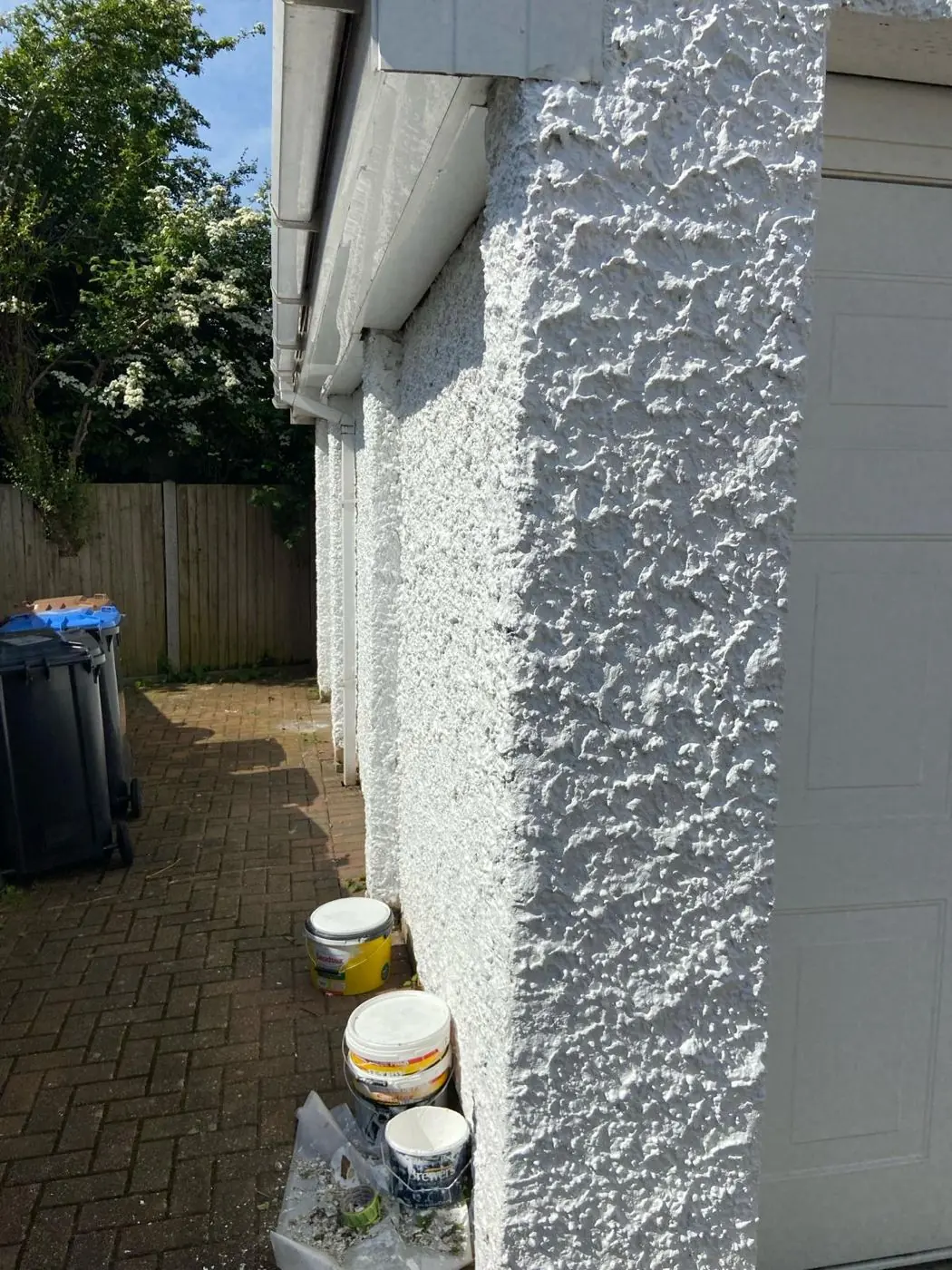
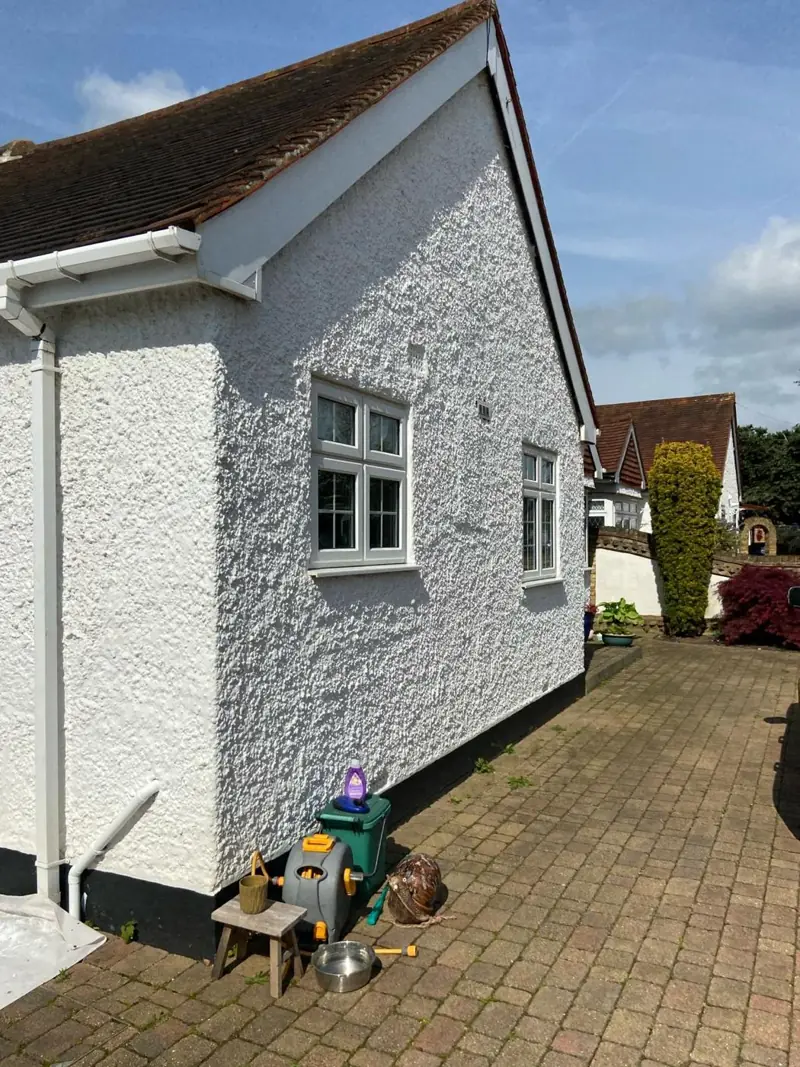
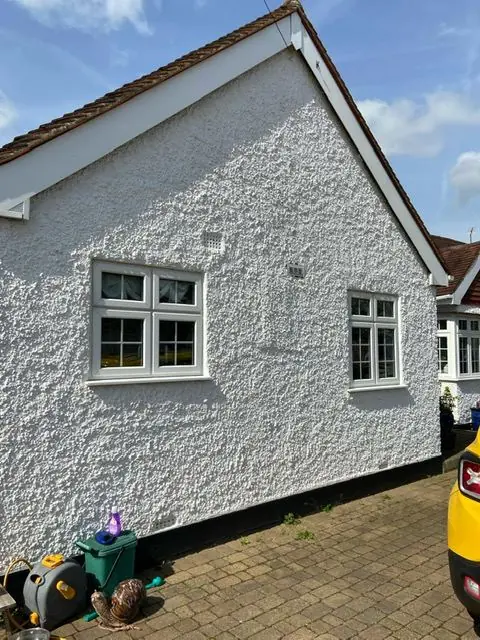
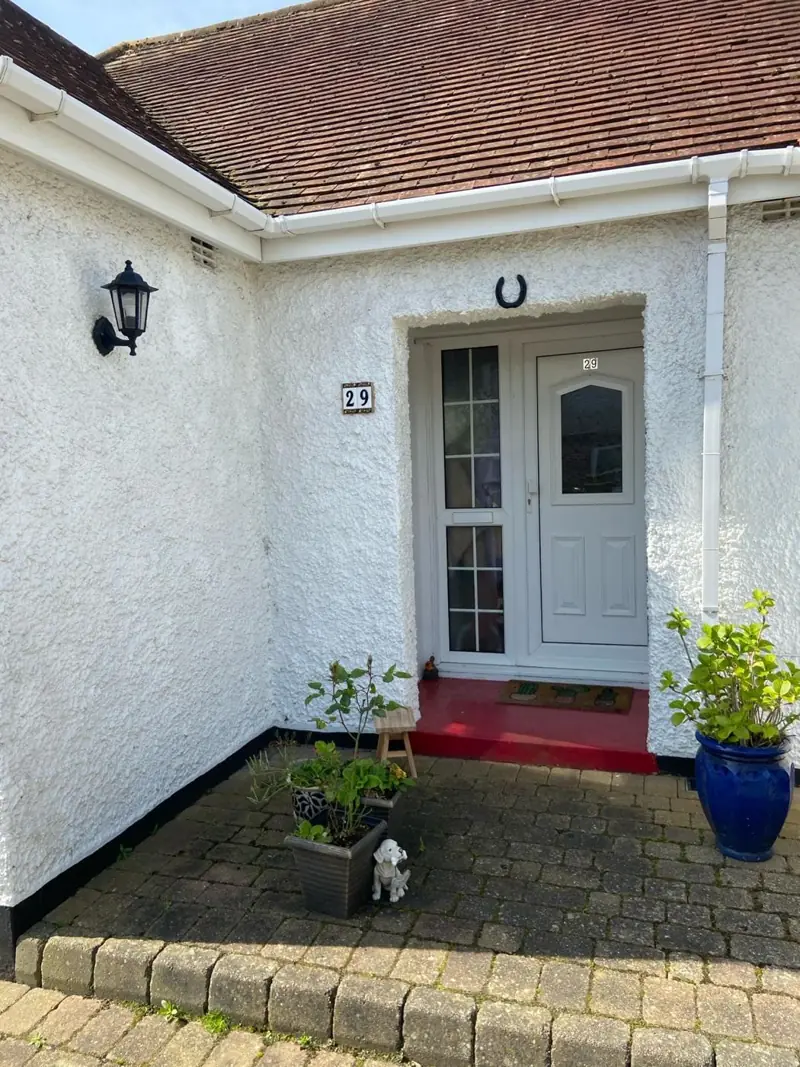
Outside the conservation area, the late-1960s Leys estate and later infill homes between the old core and the A428 bypass are of modern construction, and any rendered panels, painted block or pebbledash on those houses take a conventional masonry system. Our main render and masonry painting page explains the preparation step by step, and our guide to painting render and roughcast covers the different textures.
Before painting render in Denton, Dean looks hardest at walls in shade. The village sits low in a small valley with a stream draining south past the church and mature trees throughout, so north-facing elevations and walls under trees often carry green algae. That growth is killed with a fungicidal wash and left to work before anything is brushed off; paint over live algae fails early.
Boundary walls, copings and the street scene
Stone, ironstone and brick boundary walls with copings link many Denton plots and give the lanes their enclosed feel. These are not walls to brighten with masonry paint. If a boundary wall has previously been rendered and painted, we can recoat it in a muted, breathable finish. Bare stone walls we leave for a mason. For the wider picture of how we work in the village, see our Denton page.
Last updated by Dean, DH Painter & Decorator.