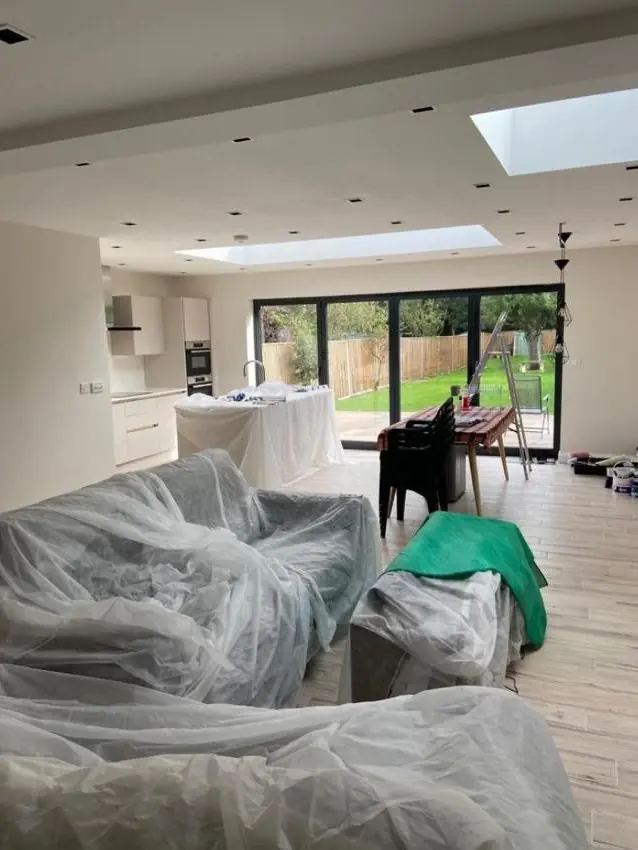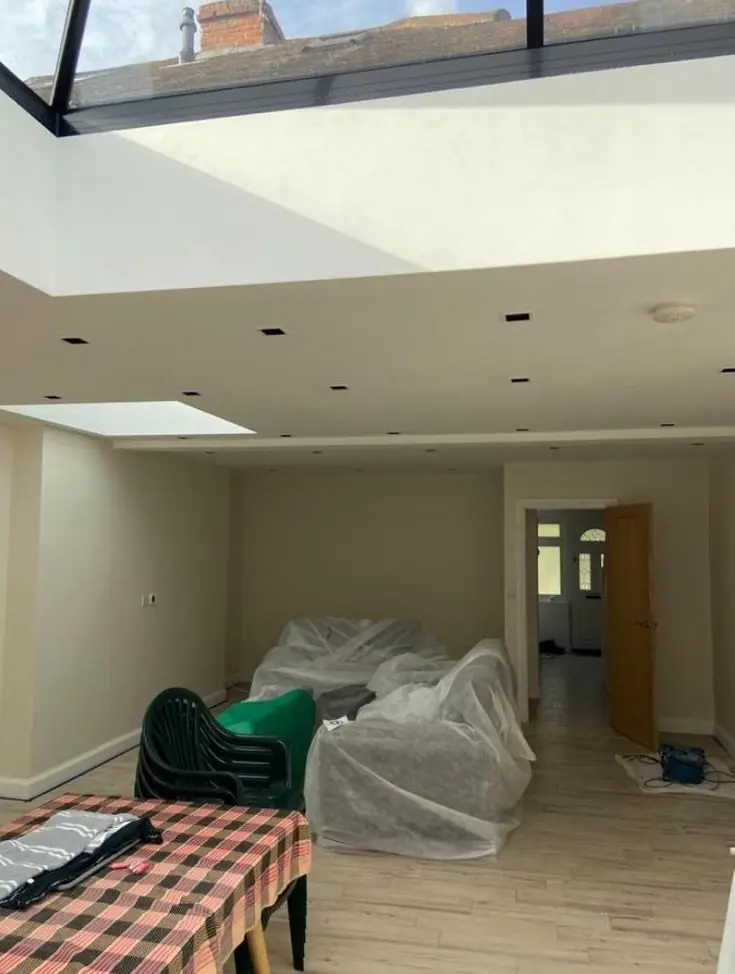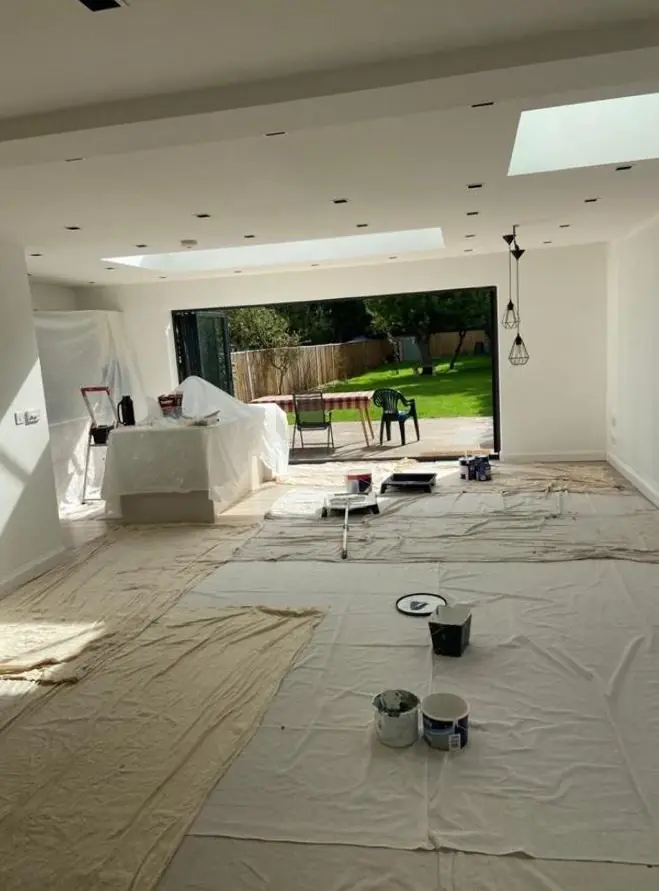
Dean seals and decorates new plaster, re-skimmed rooms and extensions across Duston, on the west side of Northampton, 2.1 miles from the centre. Much of the demand here comes from homes built on former factory and school land, and from extensions to Duston's larger detached houses and bungalows.
Where fresh plaster comes from in Duston
For a parish built around a 12th-century church, Duston has a lot of 21st-century housing. The British Timken roller-bearing works off Main Road closed in 2002, and the land was mostly redeveloped for housing, with 231 units holding permission in 2014. Timken Way North and Alfred Knight Close are among the streets there now. The Neighbourhood Plan also lists housing on the former Ryelands Middle School site at Prestbury Road (68 units) and the former Millway Middle School on Mill Way (52 units).
The same plan notes extension pressure on the large-garden detached houses and bungalows in the parish. Between these new homes and the extensions going onto older ones, that adds up to a good deal of bare or barely painted plaster.
First proper redecoration of a new-build
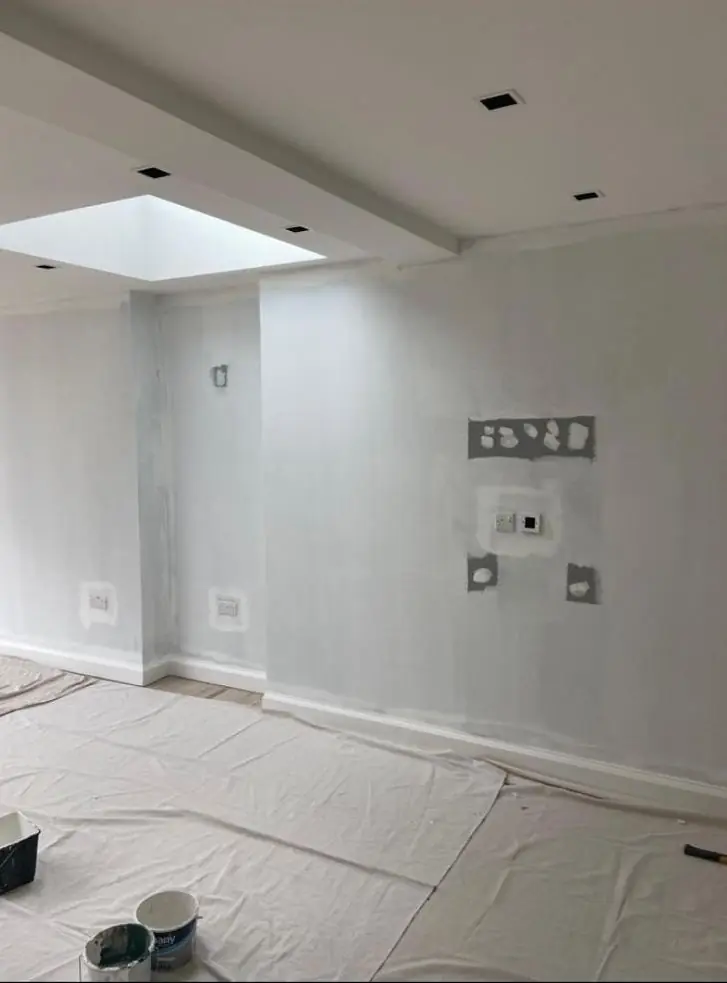
New homes on estates like these are usually handed over with a single builder’s emulsion straight onto the plaster, often in one off-white throughout. That coat was never meant to last. In the first couple of years the house dries out, timber shrinks and settlement cracks appear at ceiling angles, around door frames and where plasterboard sheets meet.
When owners on the Timken site or the former school sites come to decorate properly, the work usually involves:
- Checking whether the builder’s coat is sound or chalky, and sealing it if it powders.
- Raking out and filling settlement cracks with a flexible filler, then spot-priming.
- Caulking the gaps that open between skirtings, architraves and walls.
- Two full coats of a better quality emulsion in the colours you choose.
- Bringing MDF skirtings and doors, often only primed or factory-coated, up to a proper finish.
Leaving it a year or so before this first full redecoration gives the building time to settle, so the cracks we fill are less likely to come back.
Extensions on Duston’s larger plots
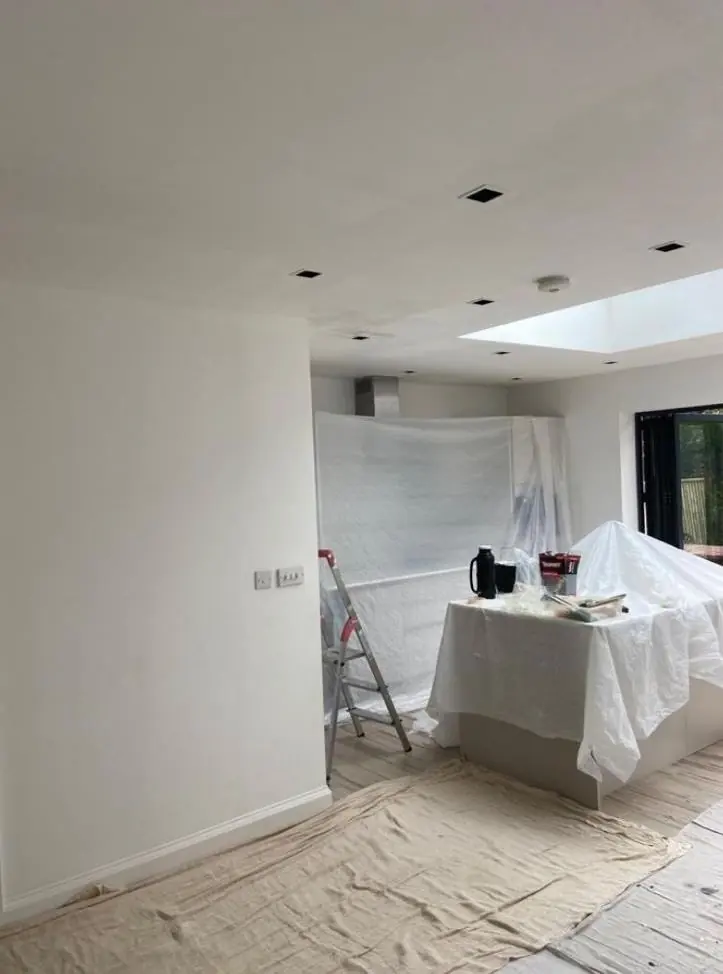
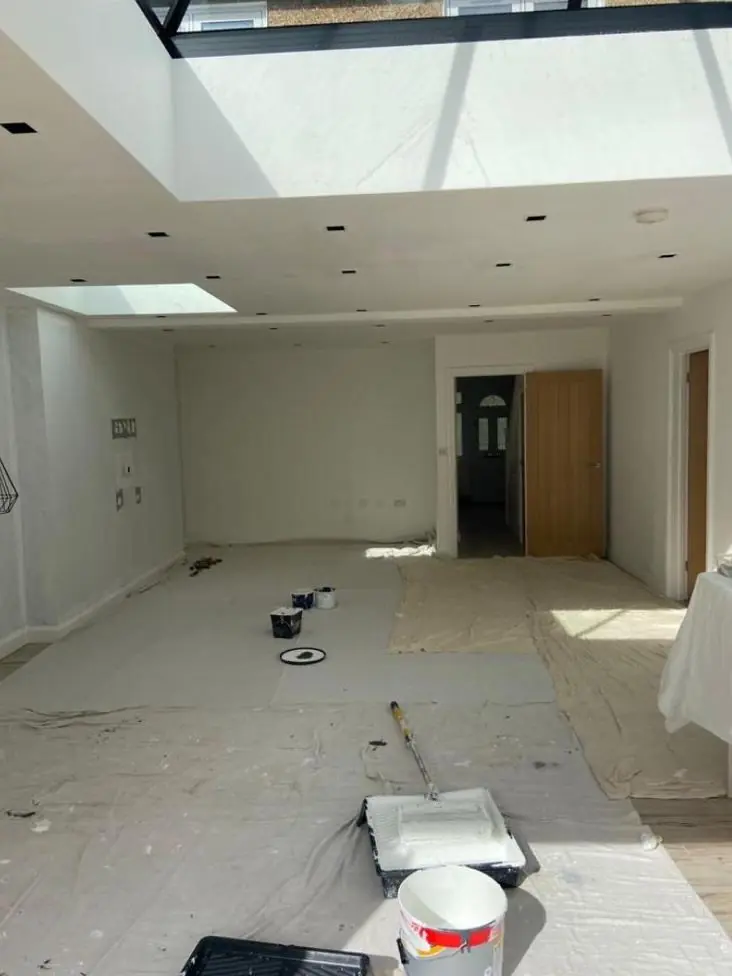
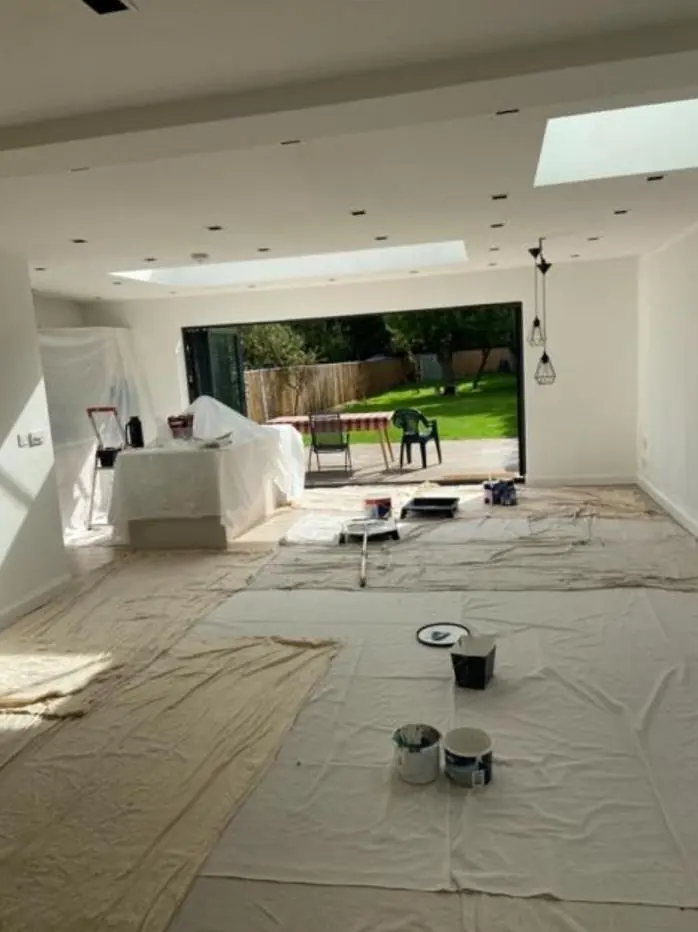
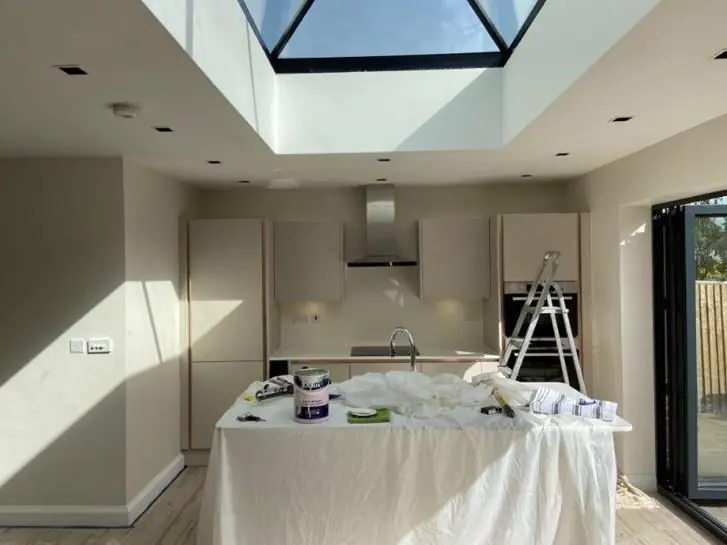
A single-storey kitchen extension or a bungalow enlarged at the back produces walls of gypsum skim that are completely bare. That skim has to dry fully before anything goes on it, which can take several weeks depending on the season and how well the room is ventilated. Once it has turned an even pale pink, we apply a mist coat of thinned, breathable emulsion so the plaster can still release moisture, then sand back nibs and fill whatever the mist coat shows up. Our guide to painting new plaster with a mist coat goes into the reasons, and the main new plaster and extension painting page lists everything a typical extension quote covers.
New work against old walls
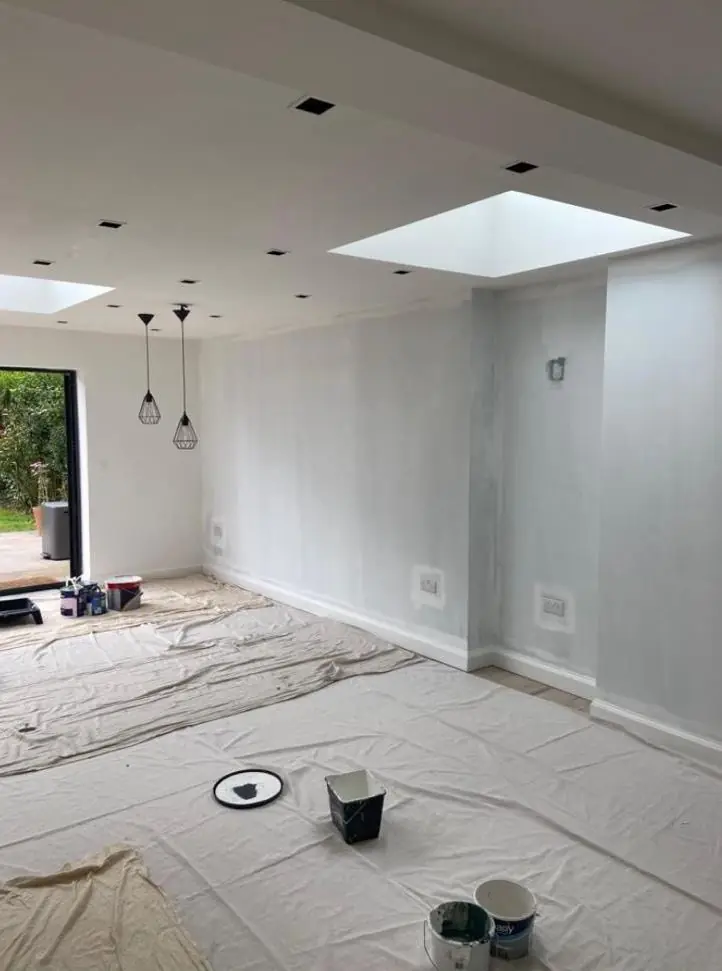
Some extensions in Duston join much older buildings, particularly around Main Road and Millway where houses are built of local ironstone and often lime plastered inside. Where modern gypsum meets lime plaster, the two behave differently. Lime needs to breathe, so we avoid putting vinyl emulsion or sealer over it and use a breathable paint on the old side of the join. The junction is usually where cracking shows first, so we reinforce it with scrim or a flexible filler before painting.
If the original house is in the Duston Conservation Area, the extension may have needed planning permission, and if it is listed, listed building consent may cover the internal finishes too. That is worth checking before choosing paint. Duston’s other character areas, from Kerrfield to Newton Road, are described on our Duston overview.
Last updated by Dean, DH Painter & Decorator.