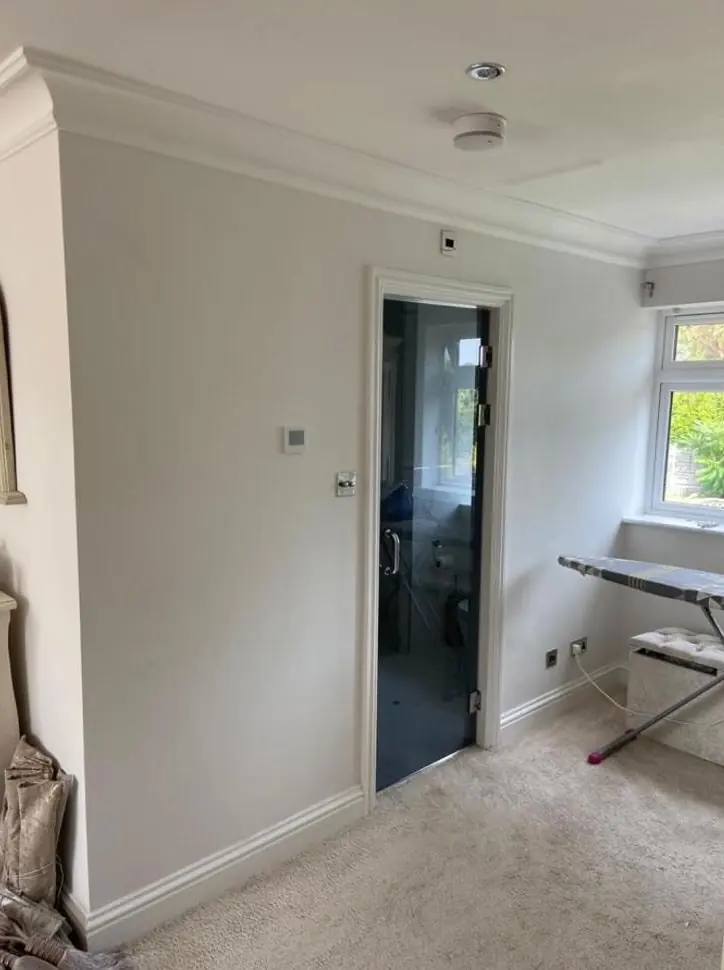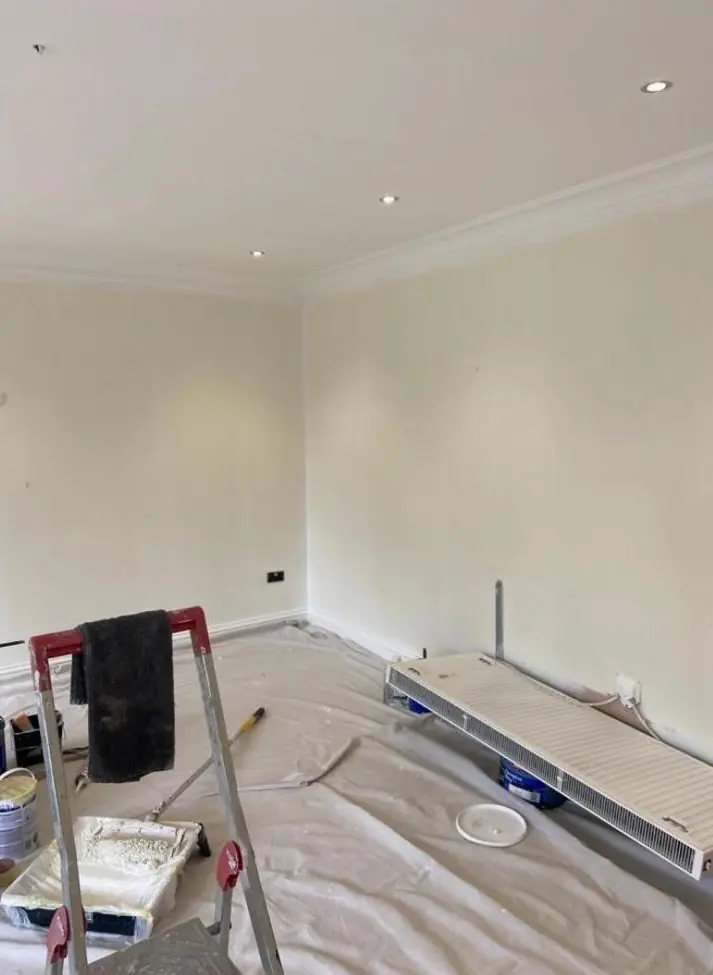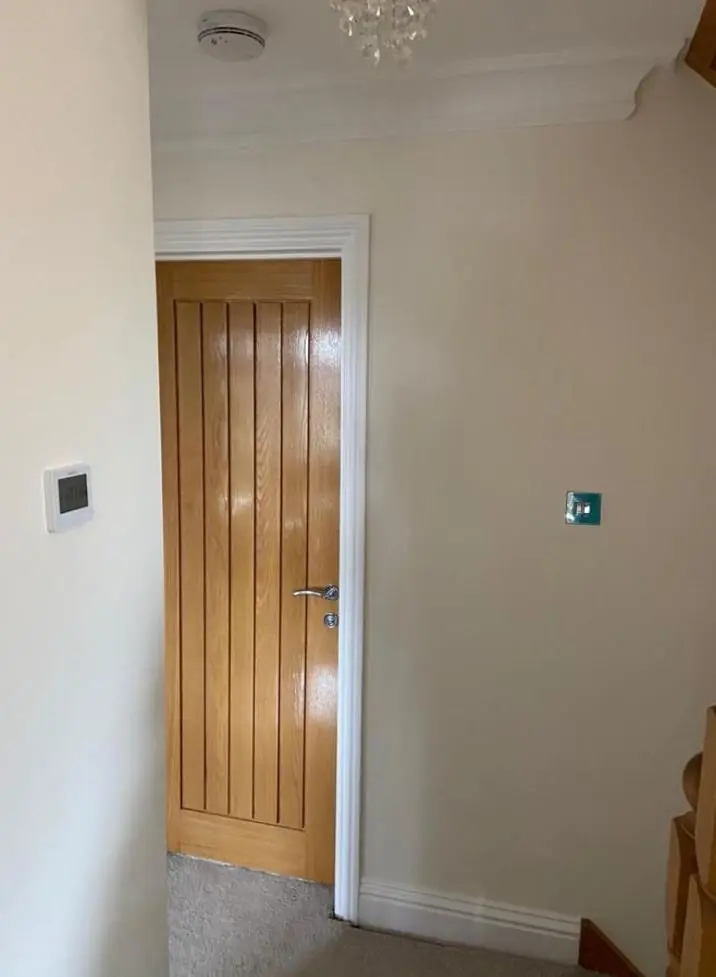
Dean hand-paints decorative finishes in Duston, west of Northampton and about 2.1 miles from the town centre. They suit the larger period houses on Main Road most naturally, where heritage effects, graining and panelling match the architecture, though a well-judged feature wall can work in a modern Duston home too.
Matching the effect to the architecture
A decorative finish only looks right when it belongs to the building. Duston’s houses run from 17th-century thatch to 2010s infill, so an effect that suits one street can look wrong in the next. The larger houses along Main Road give the most scope. The conservation area appraisal records a mix there: Duston House of 1822 in stucco with a balustraded parapet and Corinthian porch, the ironstone and render of The Chantry and The Old Vicarage, Flemish bond brick at 53b Main Road, the 70-80 Main Road town houses in red brick and stucco, and Oak Lodge, a Gothic Revival stone house of 1899.
Georgian, Regency, Victorian and Arts and Crafts interiors each had their own decorative habits, and we take our cue from the period of your house rather than from current fashion.
Graining and painted joinery in the older villas
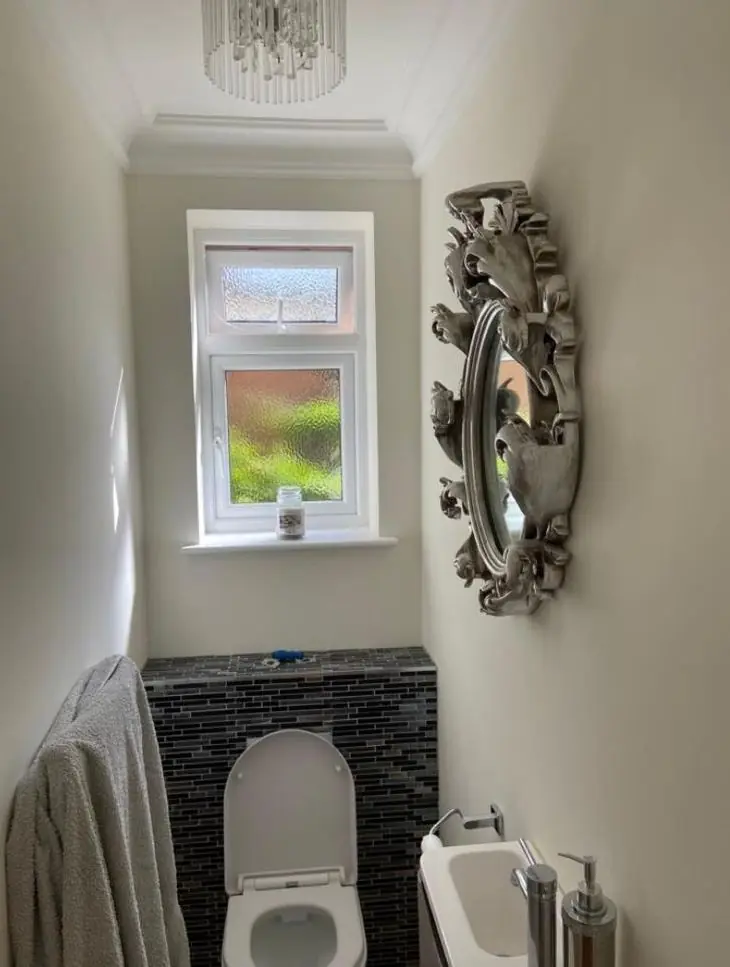
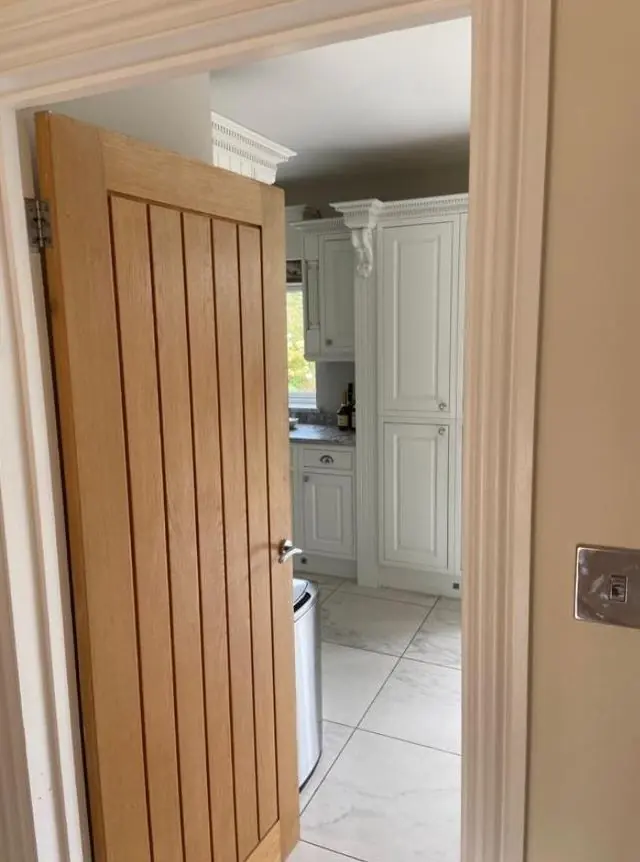
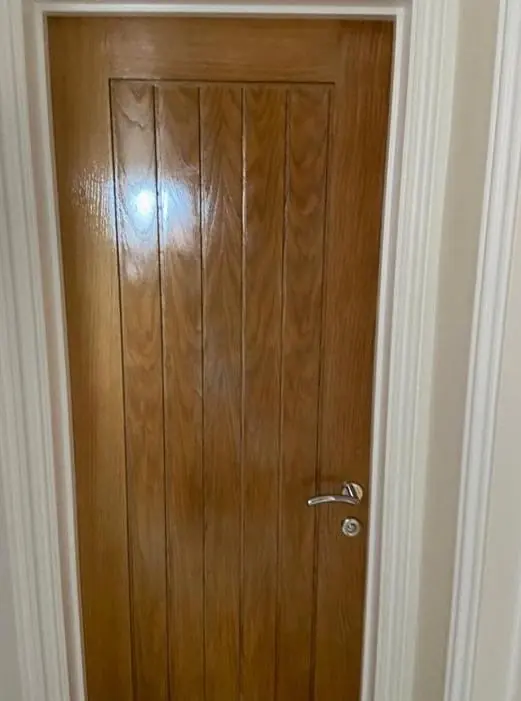
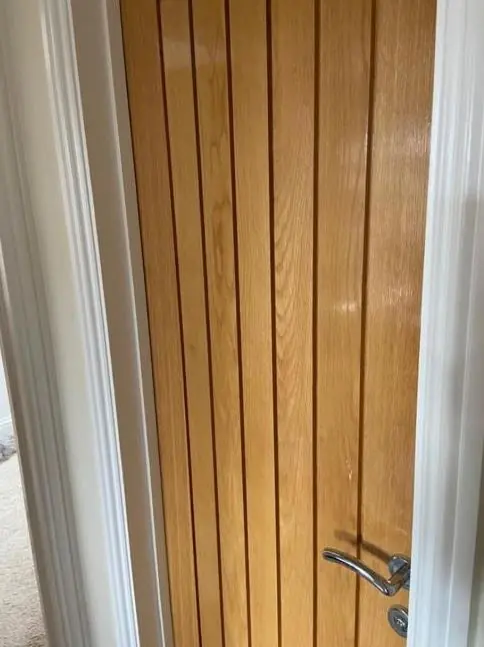
Woodgraining, where a painted surface is worked with glazes and combs to look like oak or mahogany, was a standard finish for doors and joinery in 19th-century houses. Where a house still has its original panelled doors, a grained finish can restore the look they were built with, especially where old paint layers show traces of earlier graining.
Some of these houses are listed, and the appraisal values their original sash windows and joinery. Listed building consent covers interiors, so if a change goes beyond redecorating, such as painting woodwork that has always been bare, ask the conservation officer before work starts.
Panelling, dados and picked-out mouldings
Where the Victorian and Edwardian houses of the Main Road character area still have picture rails, dado rails, cornices or ceiling roses, picking these out in a contrast colour or sheen is one of the simplest decorative jobs and one of the most effective. Typical options in houses of this age include:
- A deeper colour below the dado and a lighter shade above, divided by a painted rail.
- Cornice and ceiling rose painted in a slightly warmer white than the ceiling, so the detail reads without shouting.
- New or restored wall panelling painted in an eggshell, with joints and pins filled so the frames look like one piece.
Cottages and post-war homes call for restraint
The old village’s ironstone cottages are a different case. Their charm is in uneven lime plaster, low beams and plain, honest surfaces, and elaborate faux effects tend to look out of place. A limewash-style finish or a gently colour-washed wall suits them better than marbling or heavy glazes, and the walls usually need breathable products anyway.
On the interwar and 1950s estates, or in the 2000s houses on the old Timken site, decorative work is more about a single focal point: a two-tone split on a stair wall, a panelled feature behind a bed, or a chimney breast in a deeper colour. Rooms in these homes are regular in shape, so a crisp geometric feature sits comfortably where it would fight with a cottage wall.
Planning a decorative job in the old village
Decorative work is slow by nature, often spread over several days so each glaze and varnish coat can dry. In the Village Centre, where parking is limited and Main Road is busy, we agree arrival times and where to park before the first visit. The general methods, from faux effects to panelling, are on our main decorative finishes service page, and our Duston page has the wider picture.
Last updated by Dean, DH Painter & Decorator.