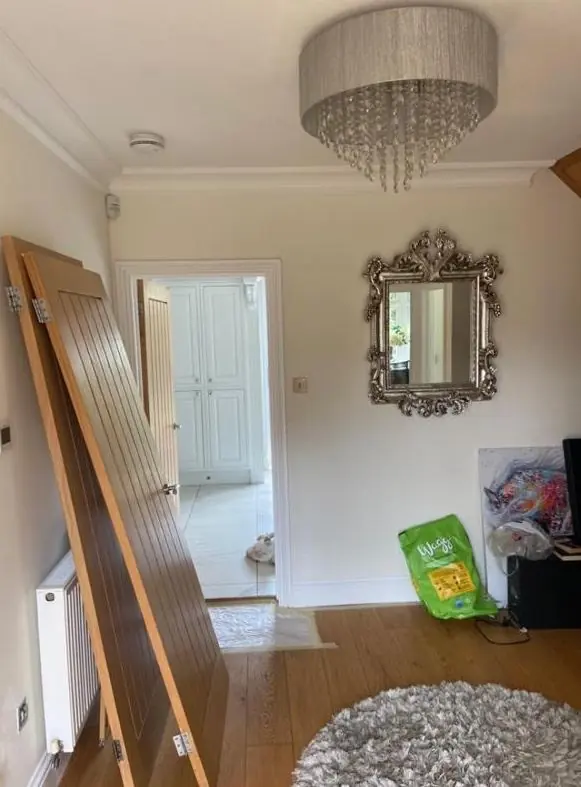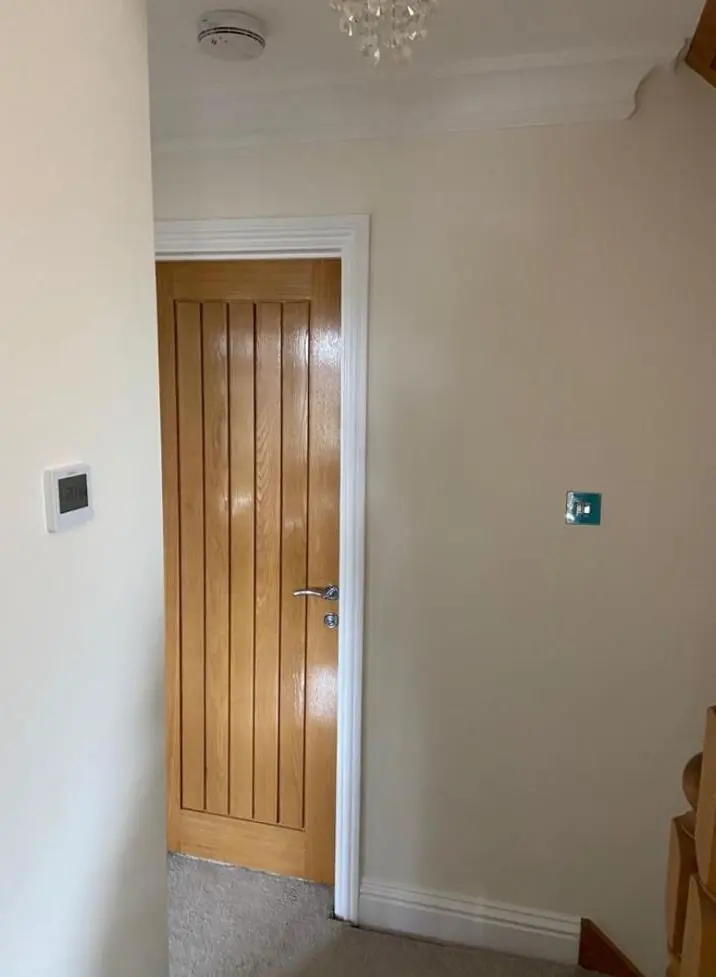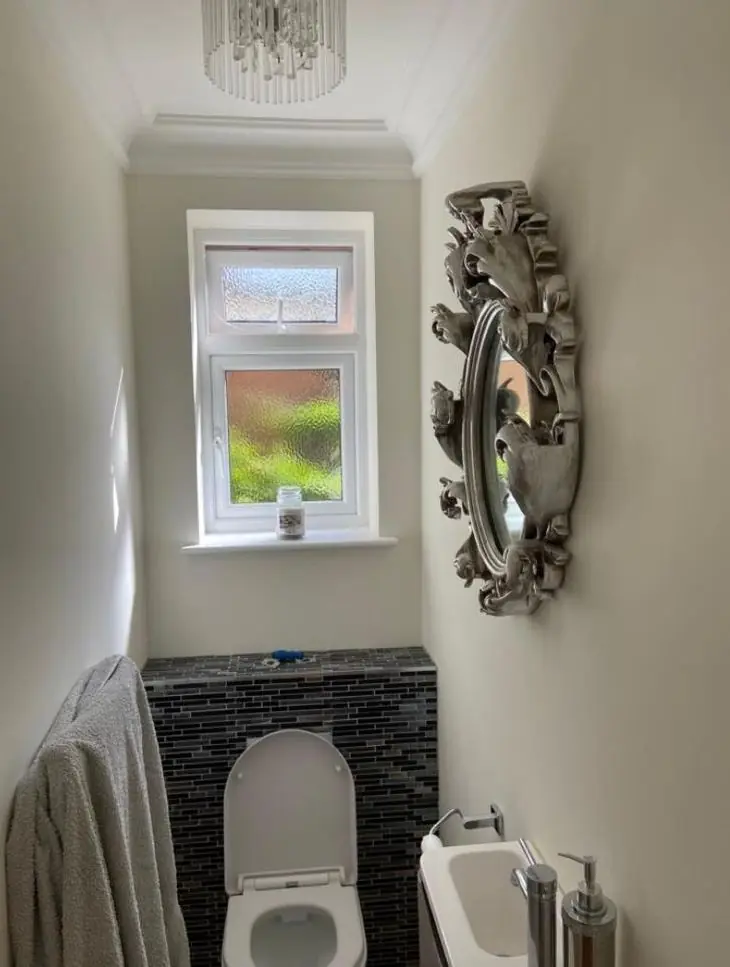
Dean decorates hallways, staircases and landings in Far Cotton, the NN4 suburb just south of the River Nene, 0.9 miles from Northampton town centre. Most of the work here is in tight terrace stairwells, where the access kit has to fit the space, or in communal stairs in the newer riverside flats.
Tight halls on the terraced streets
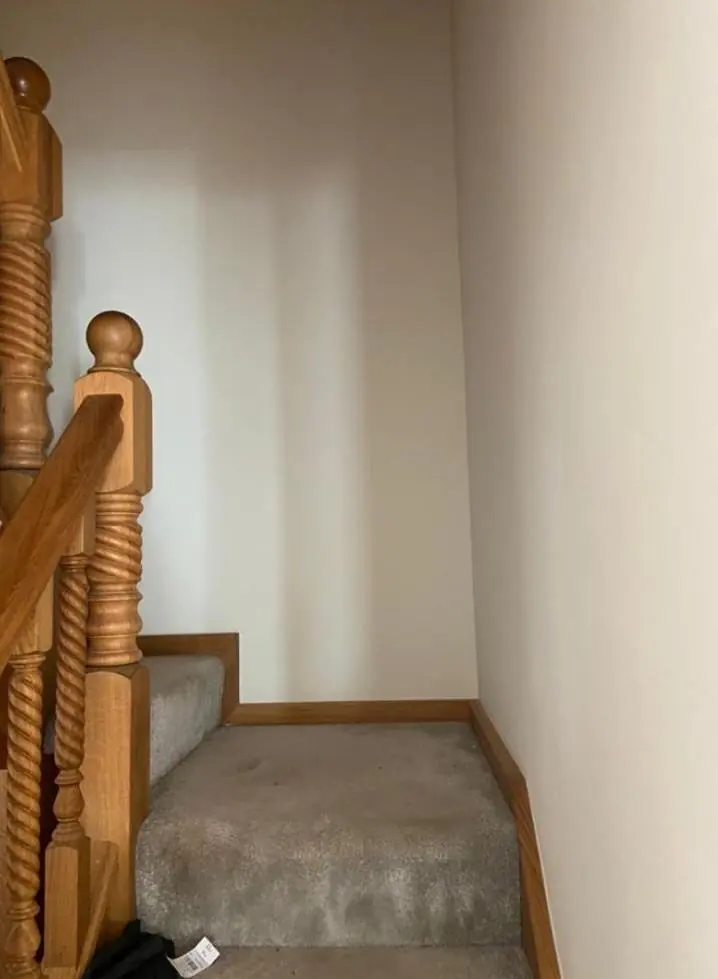
Walk into a terraced house on Penrhyn Road or Euston Road and the hall is usually one person wide, with a steep straight flight rising from just inside the front door. There is no room for a scaffold tower and no flat landing big enough to stand a stepladder on at the top. The tall wall above the stairs, often the piece that never gets done, sits over a drop that a normal ladder cannot reach safely.
For these staircases Dean uses hop-ups, an adjustable stair ladder whose legs sit on different treads, and short staging boards cut to the width of the stairwell, not a full stair tower. The kit goes up in a few minutes, so the stairs can still be used at the end of each day. Our main hallway, stairs and landing page explains the equipment and the order we work in, and our cost guide covers what affects the price of a stairwell.
Bigger halls on Towcester Road and Gloucester Avenue
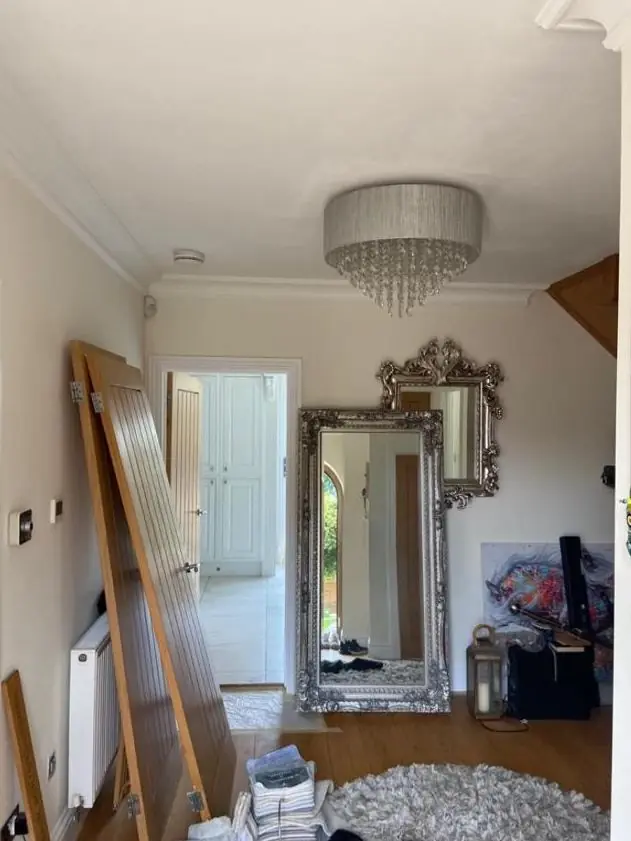
The semi-detached houses on the main roads give more room to work but more surface to cover: a wider hall, a turn or half-landing on some stairs, and more doors opening off the landing. On these jobs we usually plan in stages: ceiling and stairwell wall first while the floor is covered, then the walls, then spindles, handrail, strings and the doors last. That keeps fresh paint out of the way of anyone going up and down.
Houses on busy through roads get more dirt walked and blown in through the front door. A scrubbable matt or a durable eggshell on the lower walls, with a slightly tougher finish on the woodwork, wipes clean without leaving shiny patches.
Communal stairs in the riverside flats
The 2000s blocks on the riverside estates, such as River View and Mill House, have shared stairwells and landings. These usually belong to the freeholder and are run by a management company, so the decision to redecorate, and the colour, rests with them rather than with one leaseholder. Where we are asked to decorate a communal stair, the work is planned so residents can always get in and out: one section at a time, clear walkways, fresh paint signed, and nothing left on the landings overnight. Inside a single flat, the shared stair outside still needs protecting while materials come and go.
Ground-floor walls that need a moisture check first
The hall is the room most affected when water comes into a ground floor, and parts of Far Cotton and Delapre are recorded by the community council as being at risk of flooding. If your hall was replastered after water got in, we take moisture readings across the lower wall before we start. Plaster that still holds water will push paint off within months, so a breathable mist coat and finish go on only once the readings show it has dried. If the readings are still high, we tell you and wait.
| What we find | What happens |
|---|---|
| Dry, sound plaster | Normal preparation and decoration |
| Fresh plaster after water damage | Readings first, then breathable mist coat and finish |
| Salt bloom or flaking low on the wall | Advise on the cause before any decoration |
When to book
Leave halls and stairs until after any other building work in the house, because they take the knocks while trades carry things through. Far Cotton is a short hop over the Nene from the town centre, so Dean can come and measure up the stairwell before quoting. See our Far Cotton area page for the wider picture, or ring 07539 779 036 to arrange a visit.
Last updated by Dean, DH Painter & Decorator.