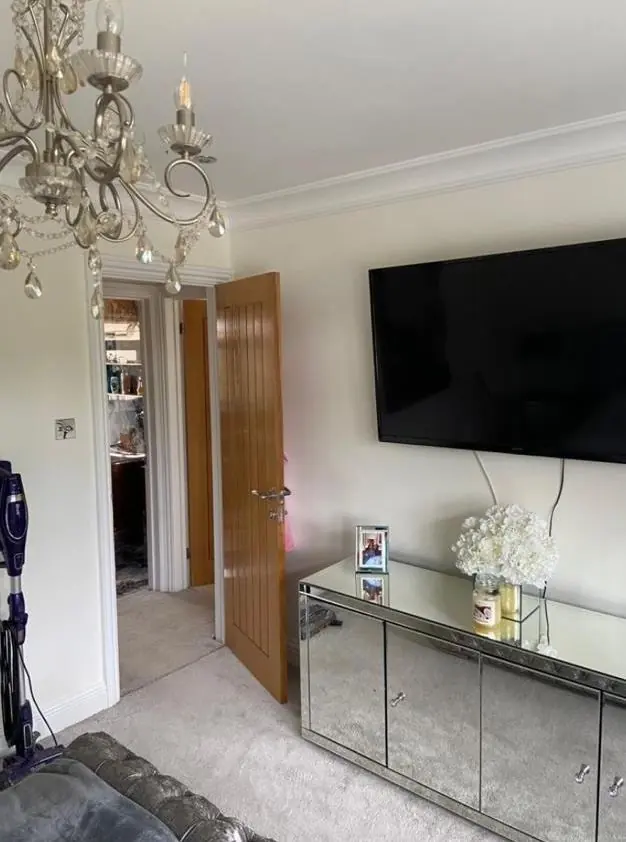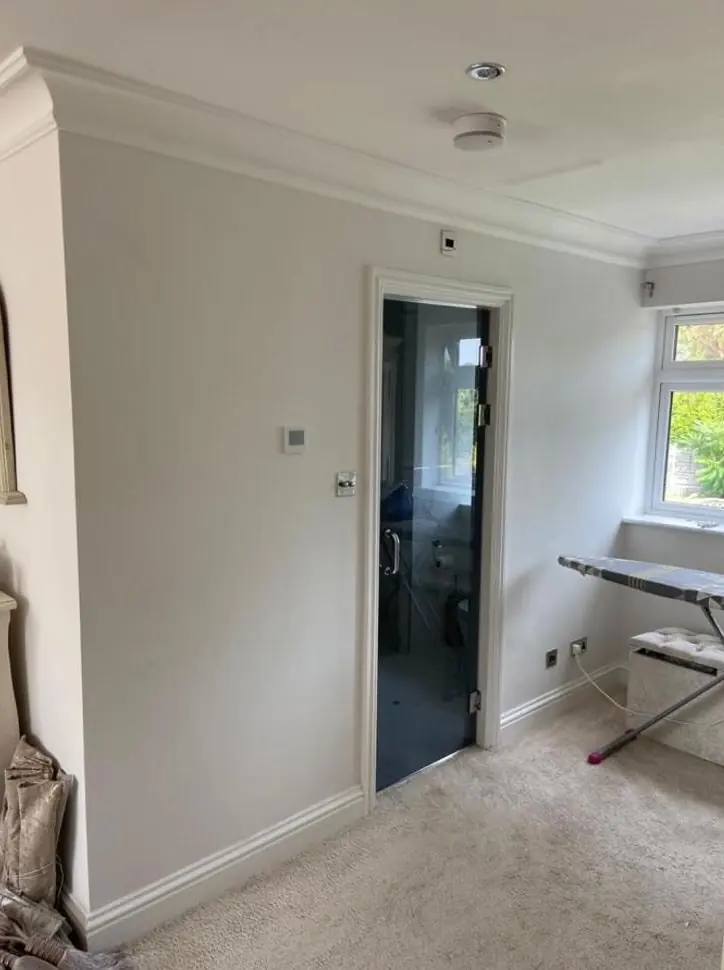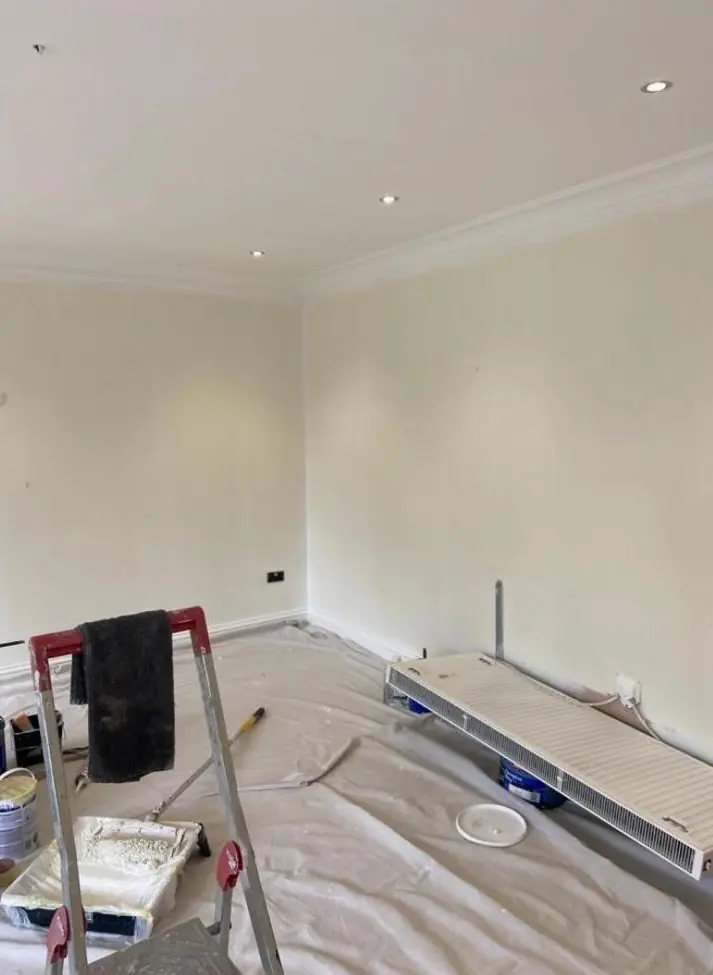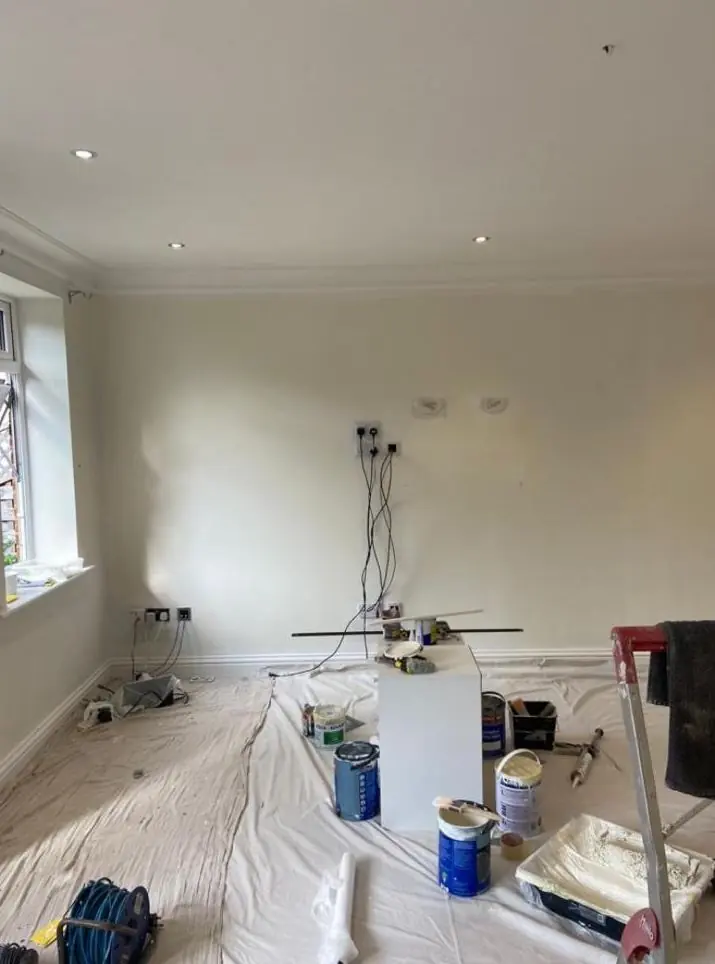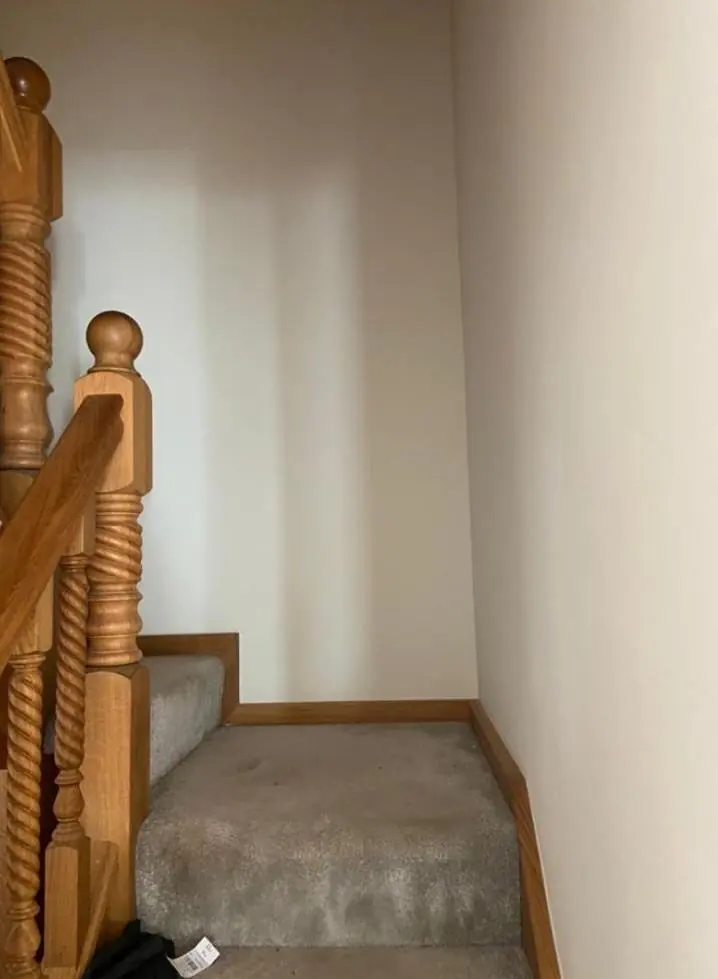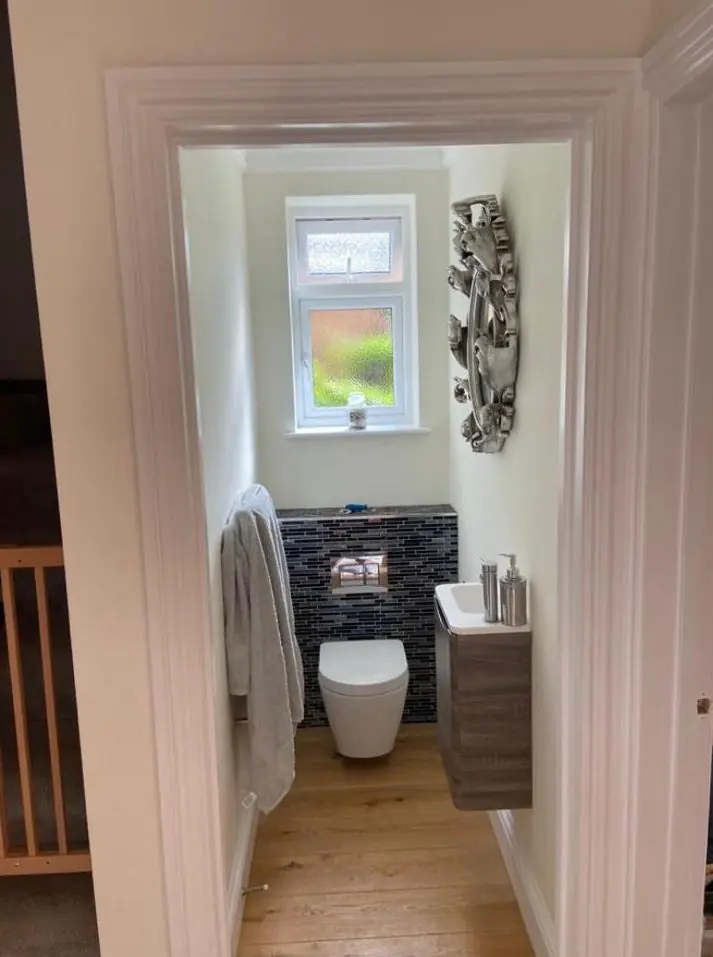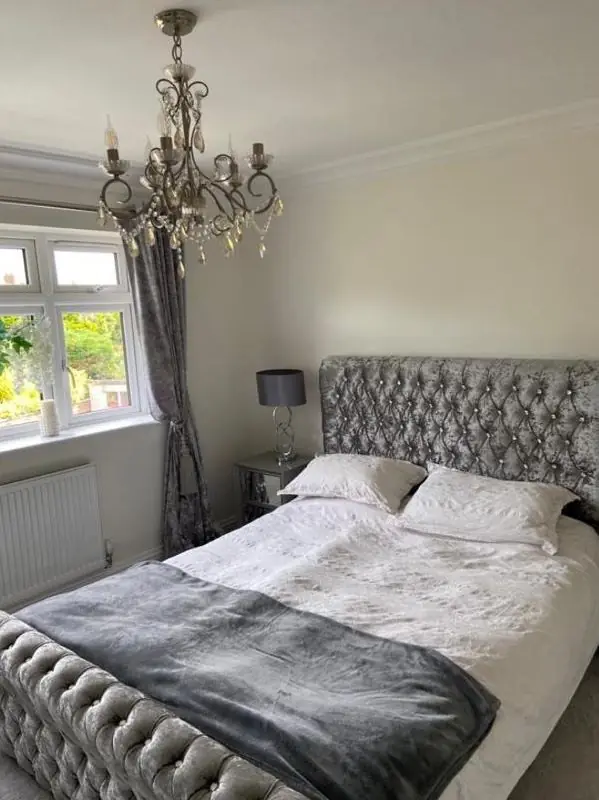
Dean paints the inside of homes in Ecton, the NN6 conservation village about 4.9 miles north-east of Northampton town centre. Old cottages on the High Street and West Street get breathable paint and moisture checks on their lime plaster, while Church View bungalows and the West Street and Northampton Road semis get a durable modern emulsion system.
Two kinds of interior in one small village
Ecton had just 221 dwellings at the 2011 count, yet the insides of them divide sharply. The late 17th and 18th century cottages along the High Street were built of coursed lias, ironstone and golden-brown limestone, and inside they still have solid walls, old lime plaster and, in the thatched and crescent cottages, exposed ceiling beams, spine beams and bressumers over the fireplaces. At the village edges, Church View’s bungalows and the two-storey semis lining West Street and Northampton Road are 20th-century brick houses with plasterboard or gypsum plaster and nothing unusual behind the paint.
Those two groups need different paint, different preparation and a different pace of work, so the first thing Dean does at a quoting visit is establish which one he is standing in. For the modern houses, our standard approach on the interior painting page applies with little change. The rest of this page is mostly about the older stock.
Street-facing rooms and the moisture question
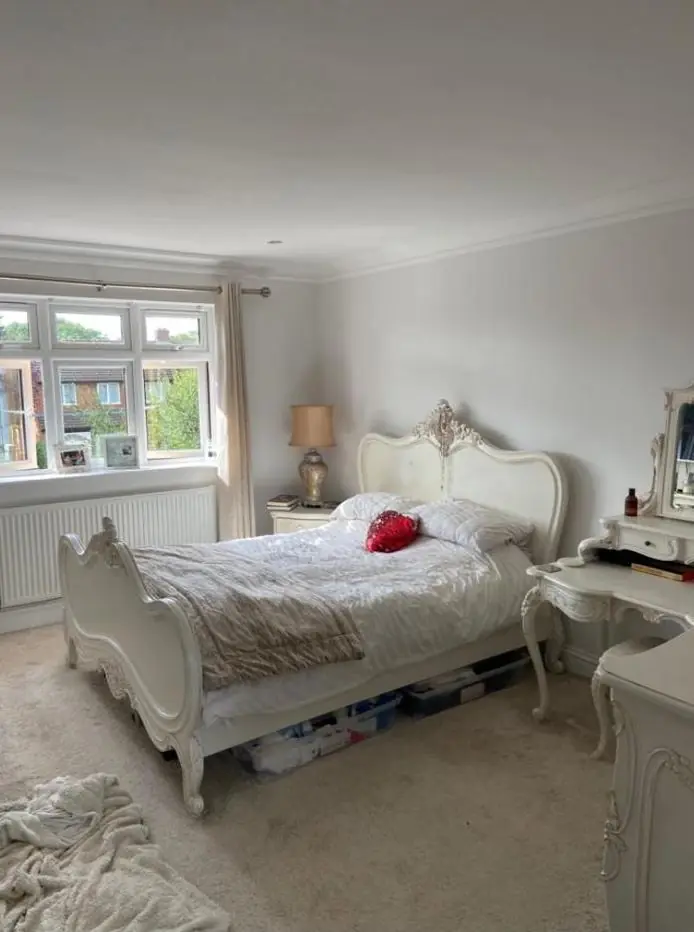
Many High Street cottages sit directly on the pavement with no front garden, so the front wall of the sitting room is also the outside wall to the street. Add the natural springs that rise where lias clay meets the sandstone on the valley slopes south of the village, and some ground-floor walls in Ecton carry more moisture than a decorator would like. Painting straight over that with a vinyl emulsion tends to end in blistering and flaking within a season or two.
So before quoting a street-facing room in an old cottage, we take moisture readings and look for salts, tide marks and loose plaster at skirting height. Where the wall is lime plaster, the answer is usually a breathable finish, such as a clay or mineral paint, that lets the wall dry out into the room. If readings are high, we will say so and suggest the cause is looked at before any money goes on decoration.
Attic rooms, beams and a lot of cutting in
The single-storey-with-attic cottages, such as the late-17th-century crescent at 80 to 86 High Street, have upstairs rooms built into the roof slope. That means sloping ceilings meeting walls at odd angles, small dormer reveals and almost no flat open wall to roll. On these jobs the hours go into brushwork along beam edges and ceiling junctions rather than coverage, and we price accordingly.
- Beams that have been left bare stay bare: we mask and cut in to them rather than paint over old timber.
- Ceilings between beams on lime plaster get a limewash- or distemper-compatible paint, not a standard contract matt.
- Uneven lias walls are filled only where plaster is loose, so the soft, hand-finished look of the room survives.
Listed cottages and like-for-like redecoration
The parish has more than 40 listed buildings, among them the High Street crescent, The Old Bakehouse on West Street and the 1752 former school room and houses at 3 to 9 High Street. Repainting a listed interior in the same type of finish is normally treated as maintenance. Stripping historic finishes, or putting a modern sealed paint system onto old lime plaster, can count as an alteration that needs listed building consent from North Northamptonshire Council. We flag that at the quote stage so nothing is started that later has to be undone.
The Ecton Hall apartments, created inside the Grade II* house and its coach house, stables and laundry in the late 1980s, sit somewhere in between: private flats with modern interiors inside a heritage shell. Inside your own apartment the work is usually straightforward. Shared halls and stairs are a matter for the managing agent.
Getting materials into a High Street cottage
With front doors opening onto the footway and pinch points beside the Manor House walls and near the Three Horseshoes, there is rarely anywhere to stage dust sheets and tins outside. We plan unloading around the village’s request that visitors park considerately and keep the road clear, and some cottages, such as Nos. 17 and 57, are entered from the rear anyway. For everything else we cover in the village, see our Ecton area page.
Last updated by Dean, DH Painter & Decorator.