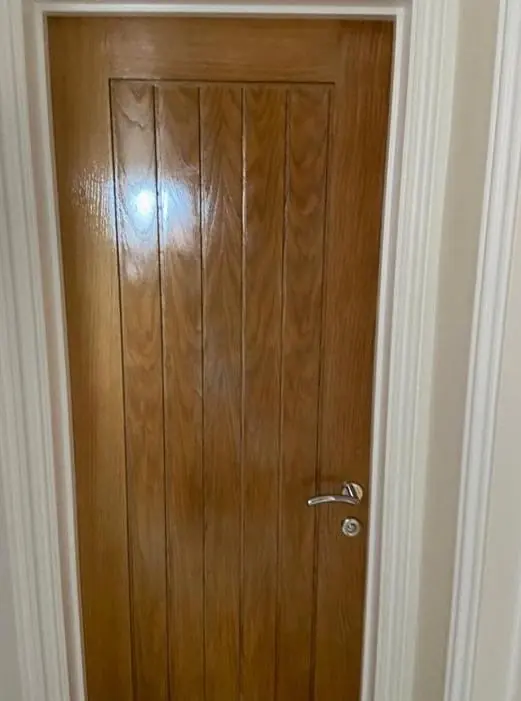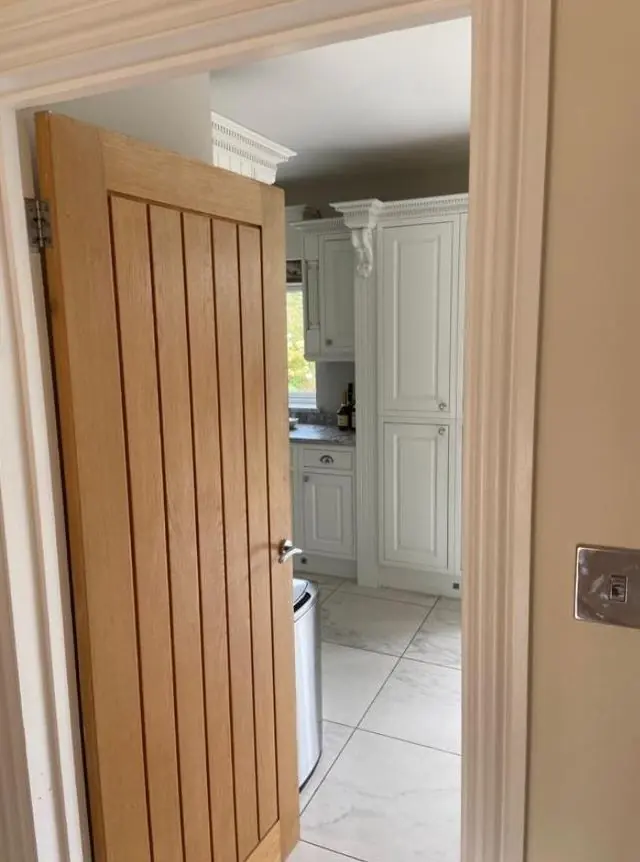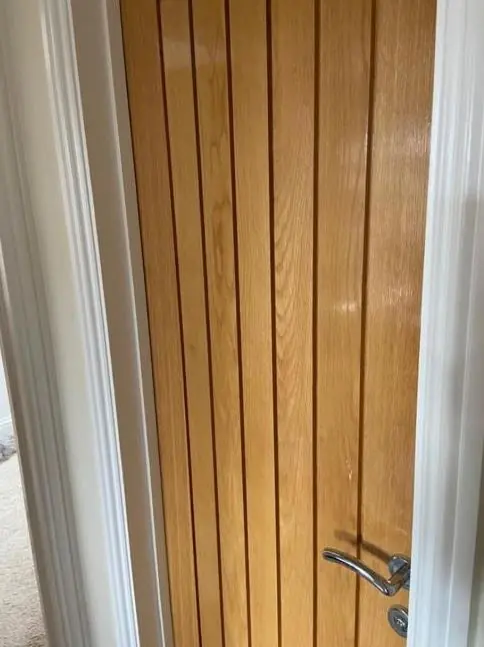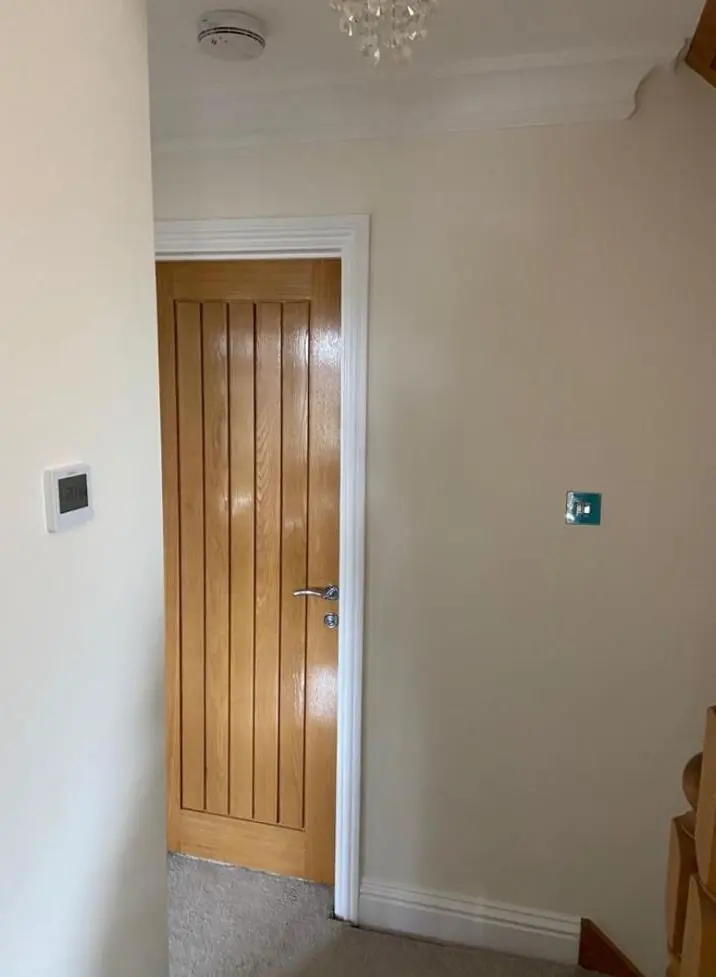
Dean paints internal and external woodwork in Ecton: doors, frames, skirtings, architraves, casements and sashes. The village is about 4.9 miles north-east of our Northampton base, off the A4500, and its conservation area expects traditional painted timber to be kept and looked after rather than replaced.
White plank doors are part of the village’s character
Ecton’s conservation area appraisal, written in 2017 and adopted the year after, singles out ledged and braced plank doors painted white as typical of the village, together with flush casements beneath timber or stone lintels. Policy 7 of the Neighbourhood Plan backs that up by expecting traditional windows and materials. For woodwork, that means a tired front door on the High Street is usually repaired, prepared and repainted, not swapped for a composite or uPVC unit.
Plank doors take paint differently from a flat modern door. The joints between boards open and close with the seasons, and the ledges and braces on the back trap water and dust along their top edges. Before a top coat goes on, we:
- rake old paint and dirt out of the board joints so the new coat does not bridge a gap that will crack in the first winter
- check the bottom of each board for soft timber, since it sits just above the footpath on cottages built hard onto the pavement
- prime bare end grain and nail heads, which show through as dark spots if left
- keep to white or the existing traditional colour unless you have checked a change is acceptable
Some cottages, such as No.17 and No.57 High Street, are entered from the rear according to their listings, so the street-facing door may see little use while the back door takes the daily wear. We price and plan the two separately.
Sashes, mullions and old glass
Ecton House, the former rectory on Church Way, has sash windows with crown glass and a nine-panelled door. Ecton Hall, now apartments, has timber sliding sashes with glazing bars. Painting glazing bars next to historic glass is slow work: we cut in by hand, scrape back old paint lines with care rather than a sharp blade pressed on the pane, and avoid heat on putty next to old glass. The Manor House on the High Street, dated 1694, has stone mullion windows and a 17th-century studded door. A door like that needs its existing finish assessed before anything is stripped.
Many of the older buildings are listed, and there are more than 40 listings in the parish. Like-for-like repainting of joinery is normally routine. Stripping back historic finishes, changing the paint system or altering a door is a different matter, and we will flag it so you can raise it with the council’s conservation officer first.
Inside the cottages: beams, boarded doors and short skirtings
Inside the late-17th-century cottages, such as the crescent at 80-86 High Street, woodwork tends to mean plank internal doors, simple architraves and short runs of skirting against walls that are rarely straight. Sloping attic rooms leave skirtings broken up by stair openings and chimney breasts. Masking and cutting in take longer than the painting itself. Where skirtings meet old lime plaster, we use a flexible, breathable filler rather than a hard decorator’s caulk that would crack as the wall moves.
Bungalows and semis on the edges of the village
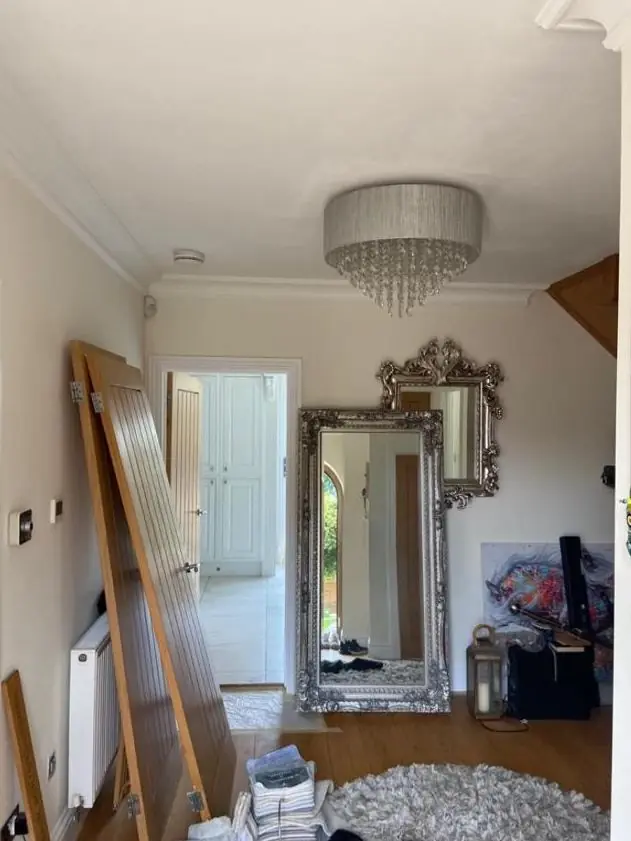
Out at the edges, Church View’s bungalows and the paired two-storey houses on West Street and Northampton Road have standard 20th-century joinery: flush or moulded doors, machined skirting and softwood frames. Here the job is usually yellowed oil gloss that needs keying and an adhesion primer before a water-based satin or eggshell. Where it suits you, we can do every door and skirting in a bungalow in one visit because all the rooms are on one level.
Nothing but open farmland lies to the south and west of the village, so external doors and casements on those elevations weather faster than those facing the street. If only one elevation is flaking, that is usually why. Our door and skirting painting page covers preparation and paint choices in detail, and the Ecton area page lists the other work we cover in the village.
Last updated by Dean, DH Painter & Decorator.