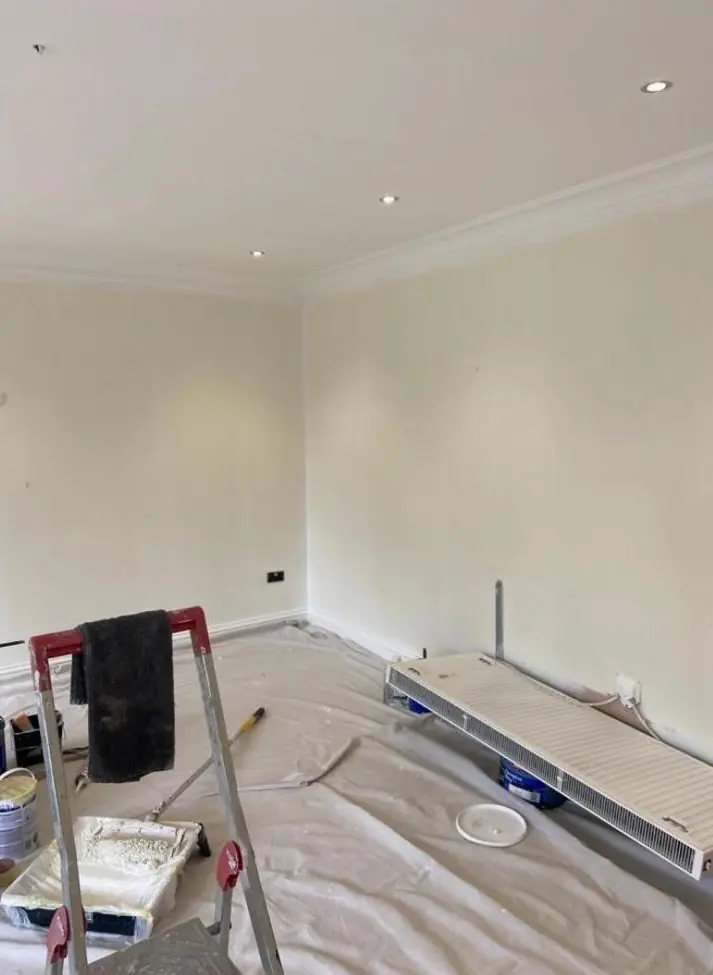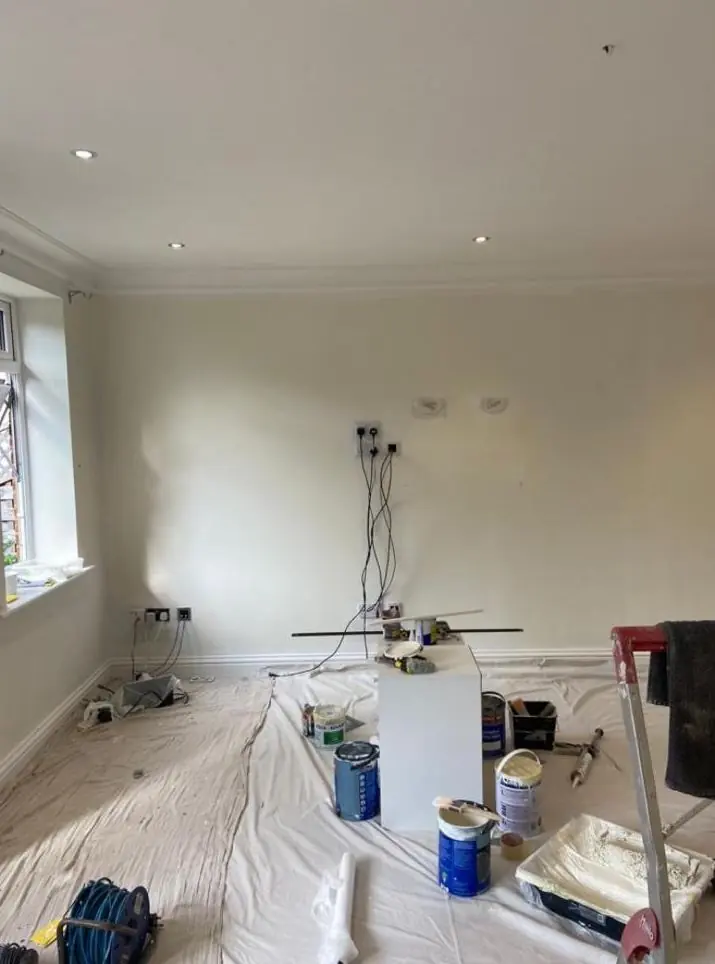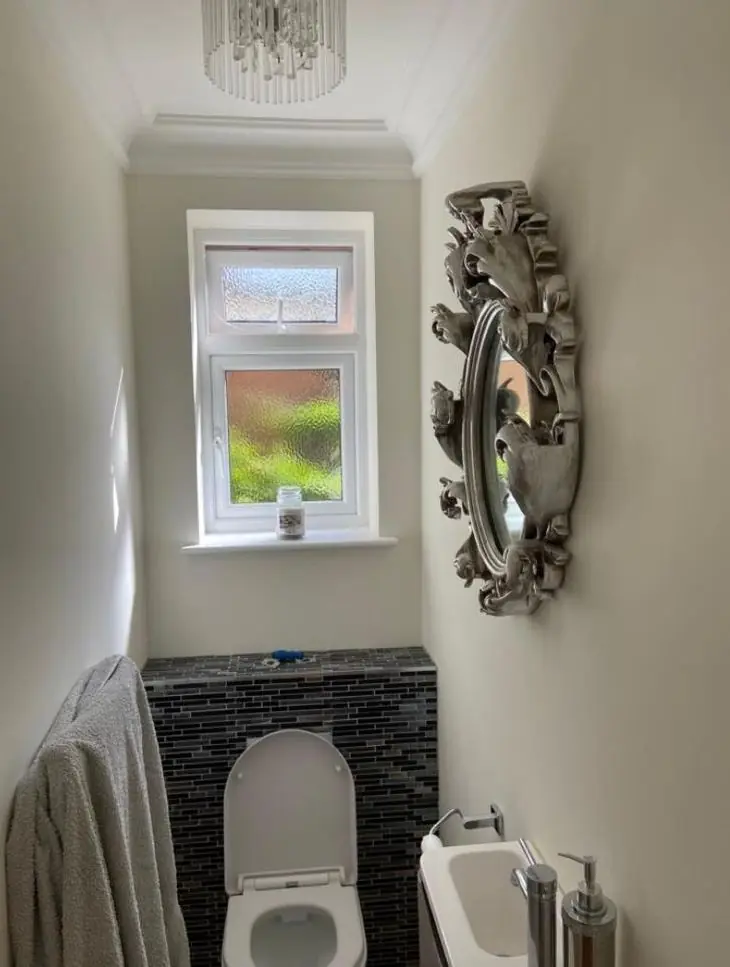
Dean applies decorative and period finishes in Ecton, the NN6 conservation village 4.9 miles north-east of Northampton. In the beamed 17th and 18th century cottages that mostly means limewash, distemper and careful work around old timber, while the larger detached homes and 20th-century houses suit feature walls, painted panelling and picked-out detail.
The village’s old interiors favour traditional finishes
Ecton’s decorative work is shaped by what is inside its oldest houses. The four crescent cottages at 80-86 High Street, the thatched Old Bakehouse on West Street and many of the lias and ironstone cottages have spine beams, ceiling beams and bressumers above the hearths, set into walls of soft lime plaster. Glazes, metallic effects and polished plasters look out of place in those rooms, and some of them also seal the wall. The finishes that suit these interiors are the ones they were first given: limewash and distemper.
We use these as decorative finishes in their own right. Limewash builds up in thin coats into a chalky surface whose depth changes slightly from one coat to the next, which is exactly what makes it look right on an uneven cottage wall. Soft distemper gives a flat, velvety finish on ceilings between beams. Both let lime plaster breathe, which matters in a village where springs on the clay and sandstone slopes and pavement-fronted walls keep some ground floors on the damp side.
Working with beams and bressumers
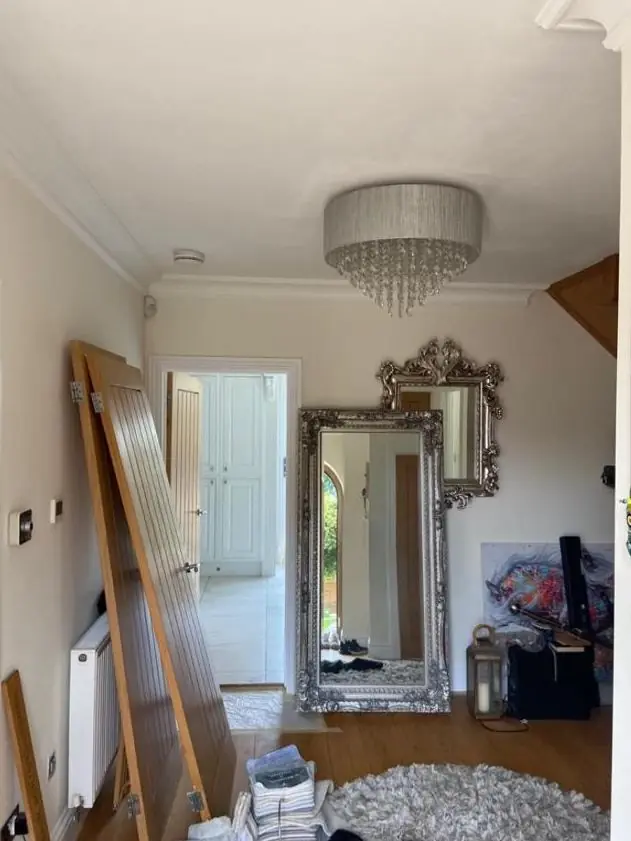
Old timbers raise the question of whether to paint them at all. Our default in Ecton is to leave bare beams bare and decorate up to them. Where beams have already been painted or limewashed in the past, the decision is between renewing that finish and the more involved job of removing it.
- Limewashed beams: renewed with limewash, so the timber and plaster read as one surface in the traditional way.
- Bare beams: masked and cut in cleanly, with the ceiling and walls in a breathable finish.
- Beams under modern paint: discussed case by case, because stripping in a listed cottage may need listed building consent.
With more than 40 listed buildings in the parish, it is worth confirming with North Northamptonshire Council before changing the finish on historic timber or plaster. Dean will raise it at the quoting visit if anything looks like it falls outside like-for-like redecoration.
Panelled doors and picked-out joinery
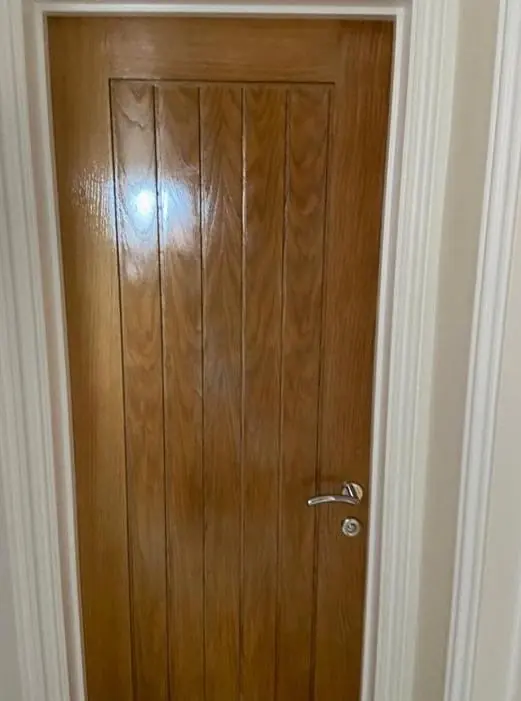
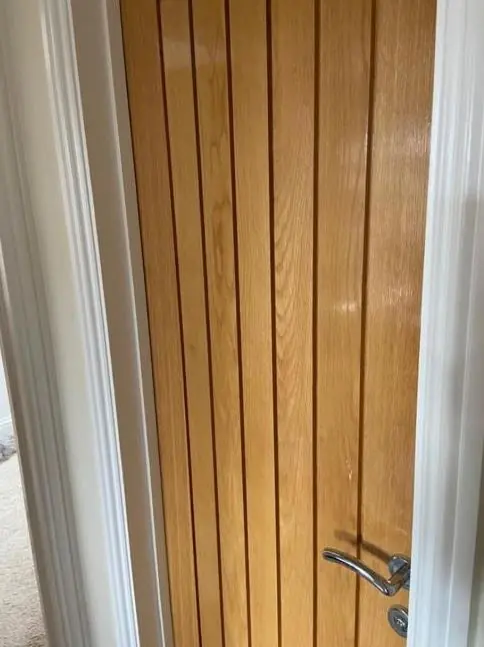
Panelled doors are a recurring feature of Ecton’s older and higher-status houses, and a good panelled door can be the most decorative thing in a hallway. Picking out the mouldings in a slightly different tone or sheen from the panels and stiles gives depth without needing a bold colour. Plank doors, by contrast, look right kept simple in a single traditional colour, in line with the white-painted plank doors the conservation appraisal records. On the sashes of the larger period houses, decorative work stays restrained and the priority is clean lines against old glass.
Where a modern feature finish belongs
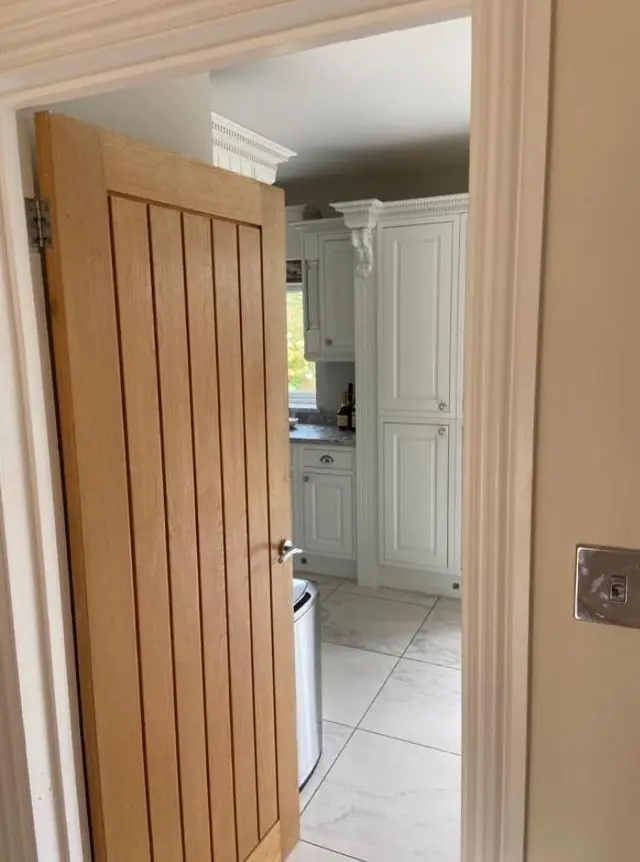
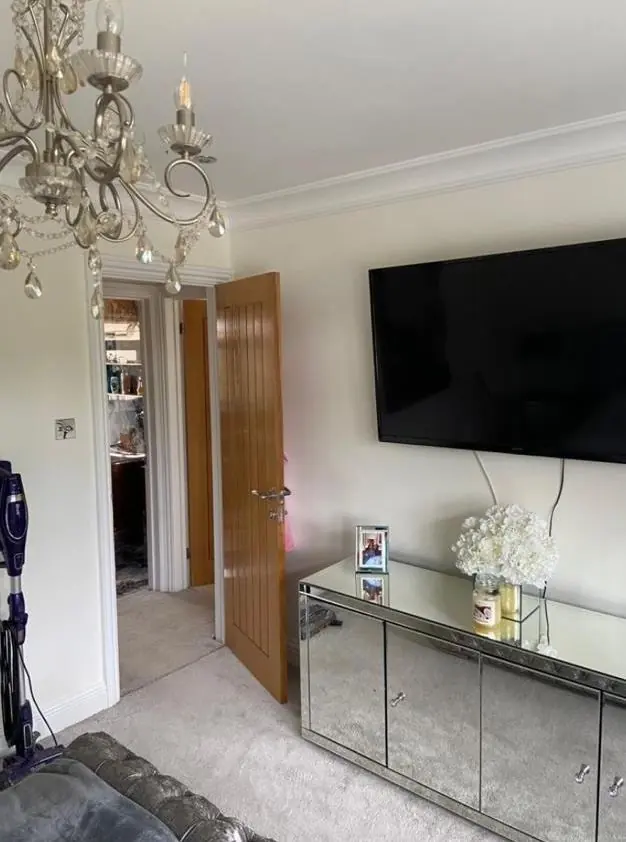
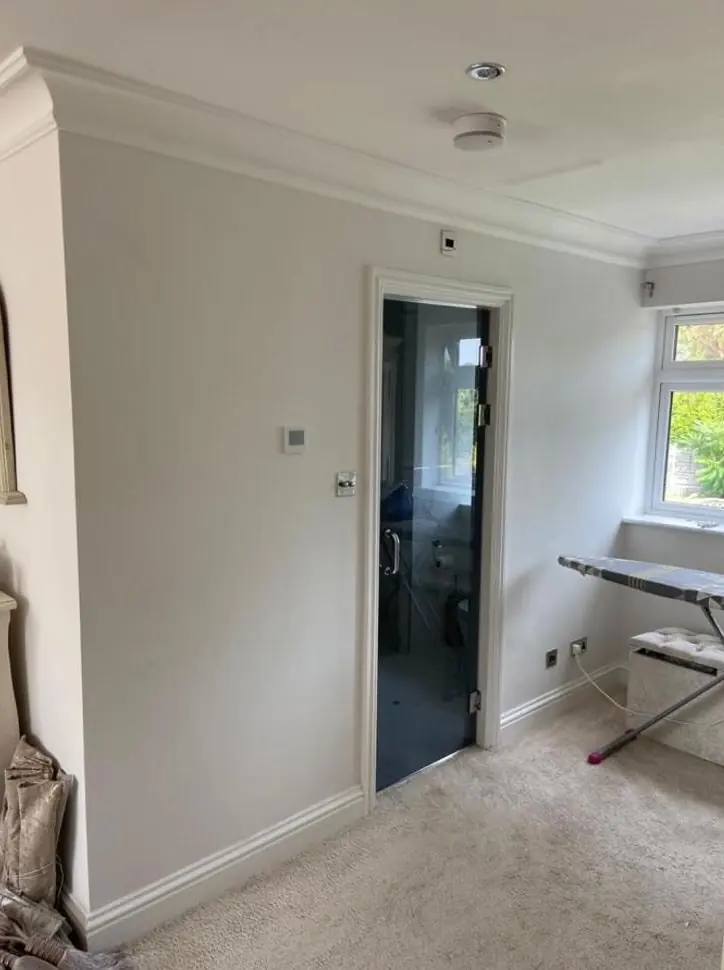
Outside the historic core the picture changes. The Church View bungalows and the semis along West Street and Northampton Road have flat plastered walls that take any modern effect, and Ecton’s large detached homes, nearly 40% of the stock in the 2011 figures, have the wall space for painted panelling, two-tone splits or a statement colour on a chimney breast. Those are the rooms for the glazes and colour-blocking described on our main decorative finishes page. In the Ecton Hall apartments, the plainer interior walls inside a Grade II* shell suit a quieter approach that leaves any surviving period features as the focus.
Before a limewash or feature finish goes on, we look at what the wall needs first, including whether new and old plaster meet, which our guide to mist-coating new plaster covers. The Ecton area page lists the rest of our services here.
Last updated by Dean, DH Painter & Decorator.