Dean paints interiors in Great Billing, the former estate village about 3.9 miles east of Northampton town centre in NN3. The job splits two ways here: thick-walled stone buildings in the conservation area that need breathable paint, and modern brick houses on the surrounding closes that take ordinary plasterboard emulsions.
One village, two very different sets of walls
Great Billing is a small stone core of High Street, Elwes Way, Church Walk, Pound Lane and Cattle Hill, with late 20th-century housing wrapped around it to the north and east. Inside, the two halves have almost nothing in common, and the first question on any visit is which half the house belongs to.
- The old village: 16th to 18th-century cottages, farmhouses and Georgian houses in coursed Pendle limestone, some three storeys, plus the paired 1866 estate workers’ houses on High Street and Church Walk.
- Converted outbuildings: the Hall’s former stable block, coach house and dairy, and other farm buildings turned into homes.
- The estates: detached and semi-detached brick houses, some terraces and flats around Great Billing Way, Lady Winefride’s Walk, Cumbrae Drive and infill built inside the conservation area.
Why a stone cottage wall needs a paint that lets it breathe
A rubble limestone wall with lime plaster on its inner face moves moisture through itself all year. That is how it stays sound. Seal the plaster with a modern vinyl emulsion and the damp that used to escape gets trapped behind the film, which shows up later as blistering, flaking or a chalky bloom near the skirting. In the cottages along Pound Lane and Cattle Hill, and in the older houses on Elwes Way, we test the plaster before choosing a paint and use breathable mineral, clay or limewash-compatible finishes where the wall is lime. Those paints go on differently and dry with a softer, slightly uneven look that suits old rooms.
Where earlier owners have already covered lime plaster in vinyl, we talk through the options honestly. Sometimes the right answer is careful patch repair and a compatible repaint. Sometimes the old coating needs taking back first.
Barn, stable and coach-house conversions
The converted buildings in Great Billing are their own category. Thick stone walls mean deep window reveals that catch every brush mark. Exposed beams and trusses have to be masked and cut in around rather than painted over, unless you want them painted. Ceilings can be high or sloping, so staging or a stable tower is planned before the job starts, not improvised on the day. A few of the converted outbuildings on Church Walk are listed grade II, and if yours is one of them, any change that affects the character of the interior may need consent from West Northamptonshire Council. We will raise that before quoting so nobody gets caught out.
Repainting the newer houses off Great Billing Way
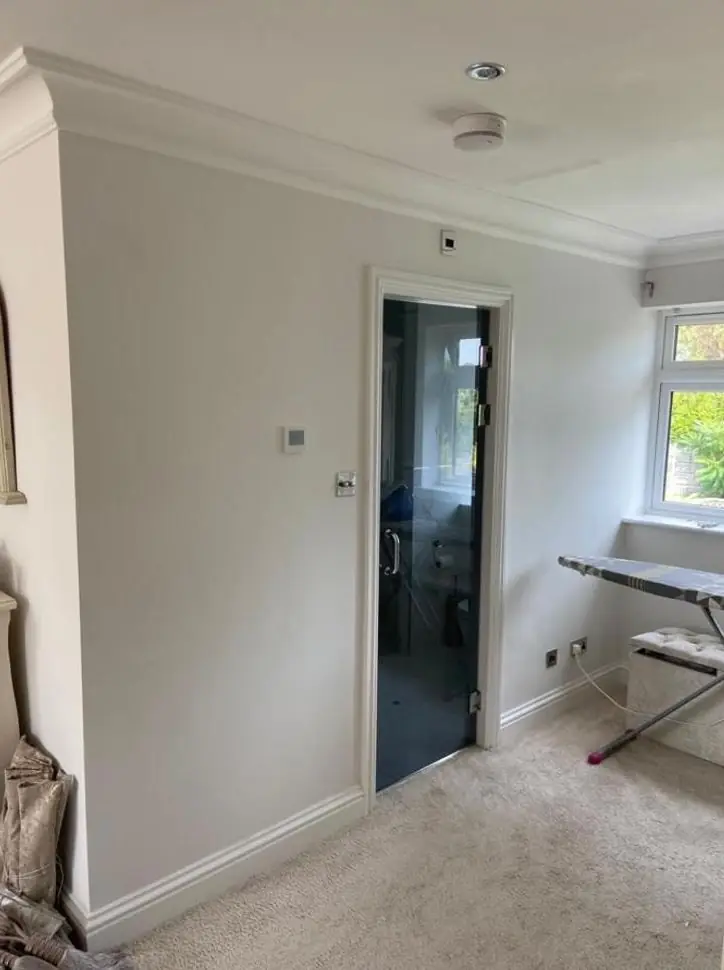
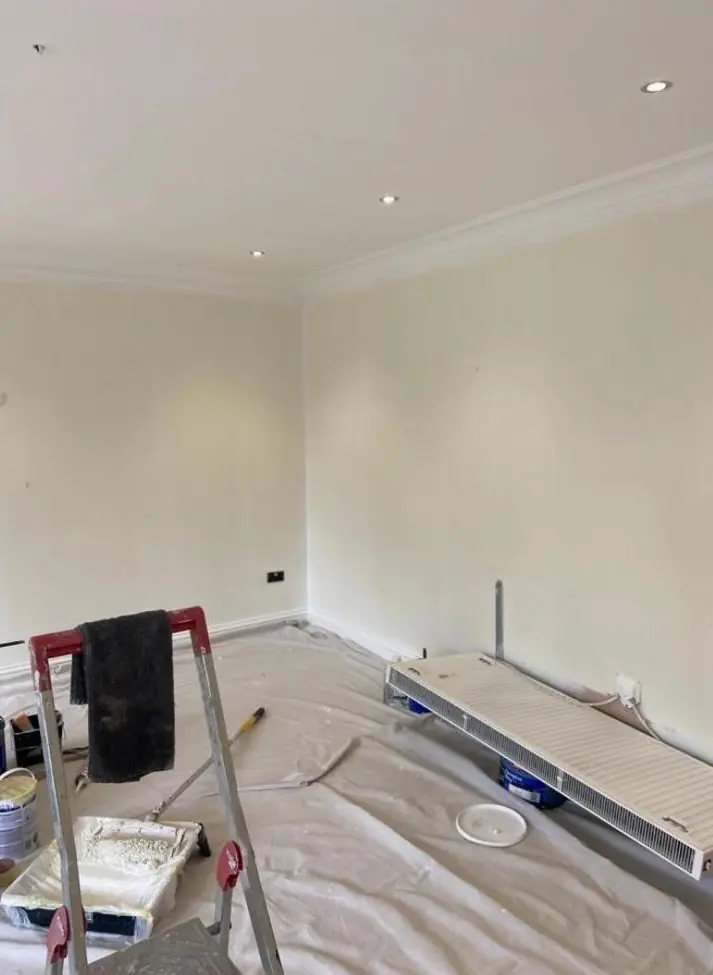
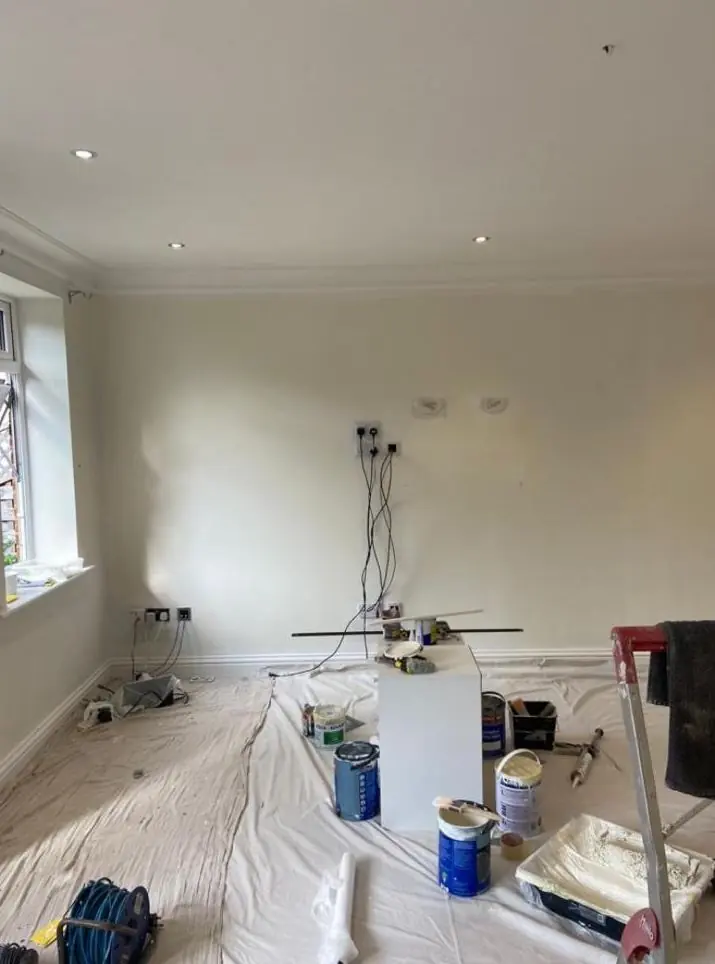
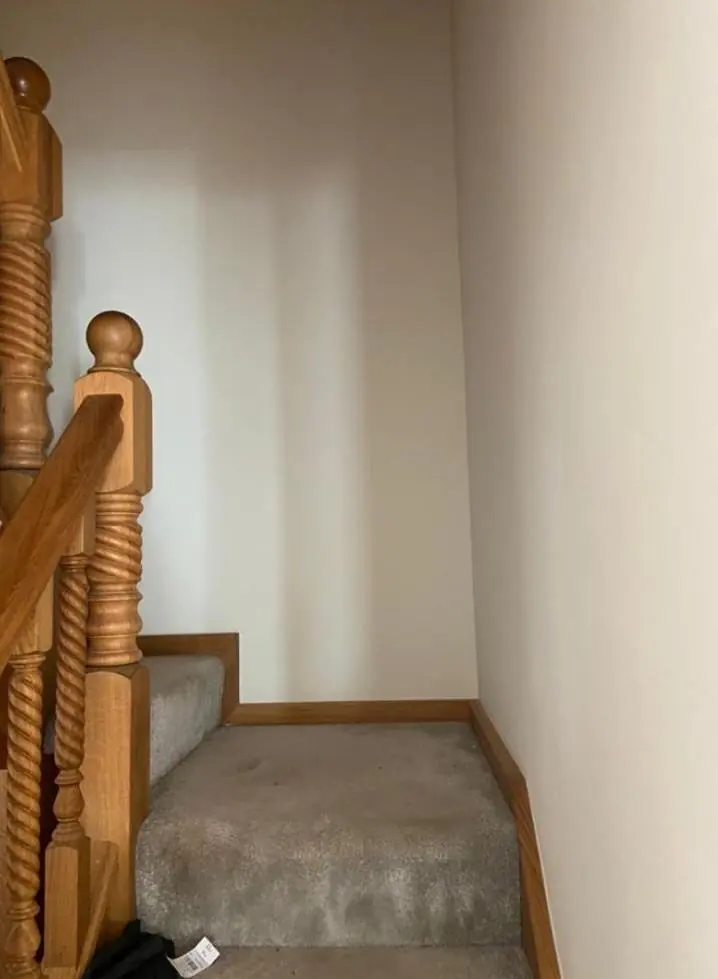
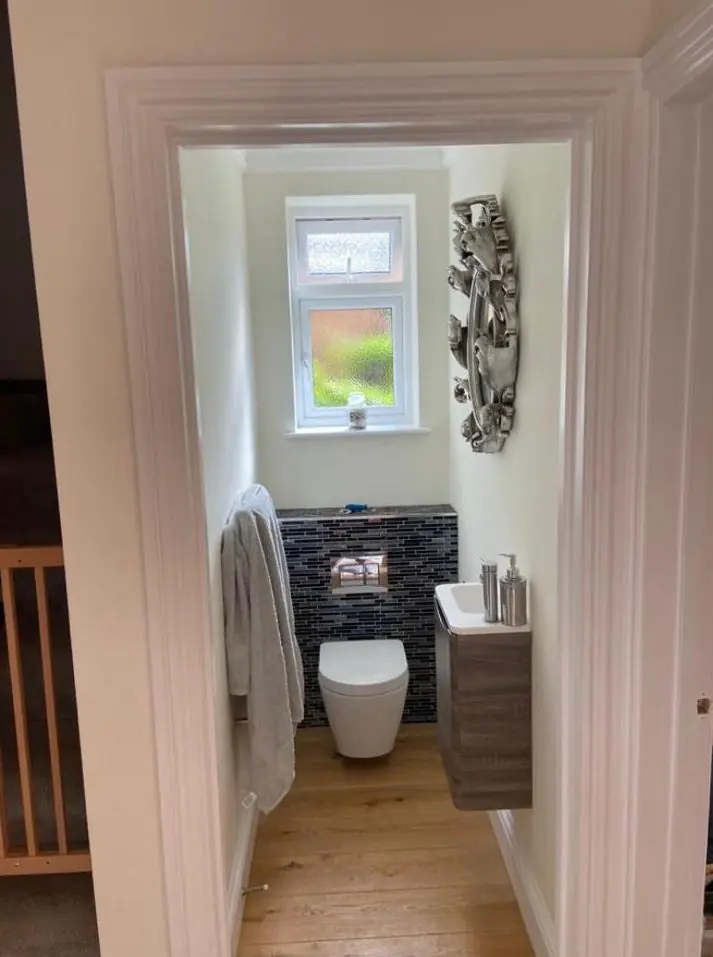
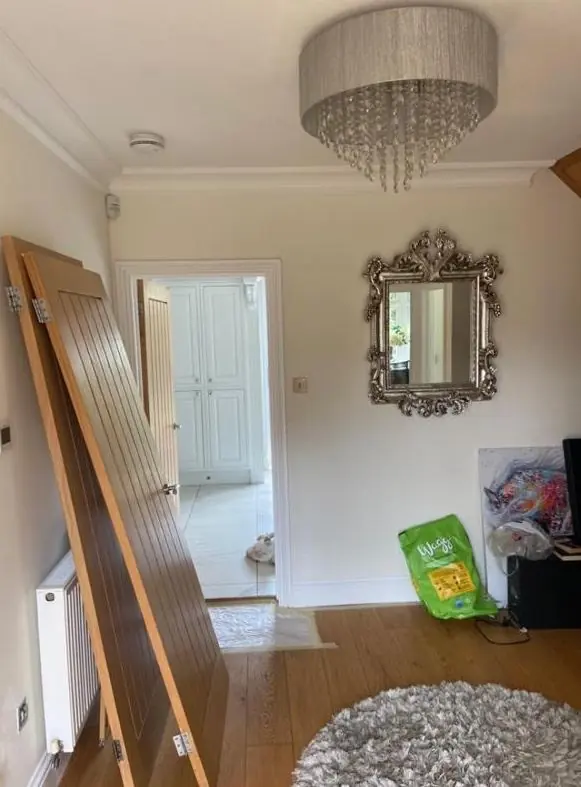
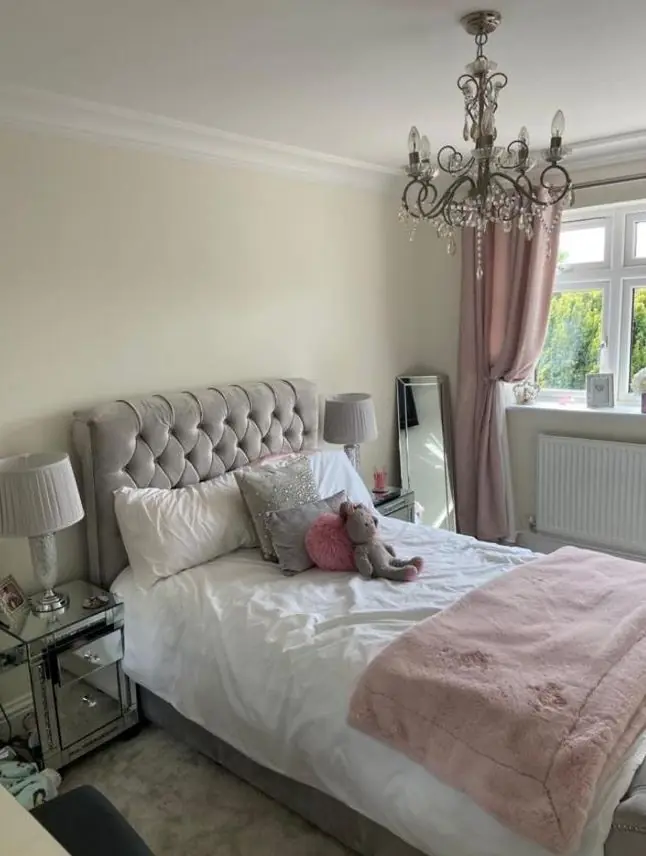
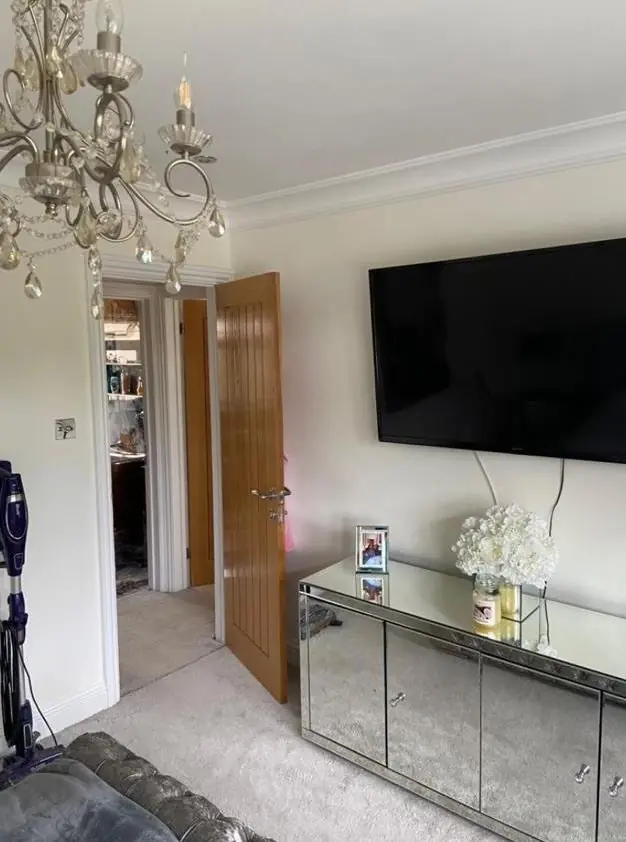
The brick estate homes are more straightforward. Walls are plasterboard or gypsum skim, and a good contract-quality or durable emulsion over properly filled and sanded surfaces is what they need. The work here tends to be whole-house refreshes, kitchens and bathrooms that have had a hard decade, and new plaster in extensions. Our main interior painting service page covers how we prepare and paint these rooms in more detail.
Parking and access in the conservation core
Pound Lane and Cattle Hill are narrow informal lanes, Elwes Way winds between stone walls, and many buildings sit right at the back of the highway with no front garden. There is rarely space to park a van outside the door without blocking someone or churning up a grass verge. For interior work that matters more than people expect: dust sheets, steps and tins come in through the front door, so we agree a loading spot in advance and keep the walk short. On the estates the closes and cul-de-sacs make parking far easier.
We cover Great Billing from our Northampton base. For how quotes are worked out, see the painter and decorator cost guide, and the Great Billing area page covers the other work we do in the village.
Last updated by Dean, DH Painter & Decorator.