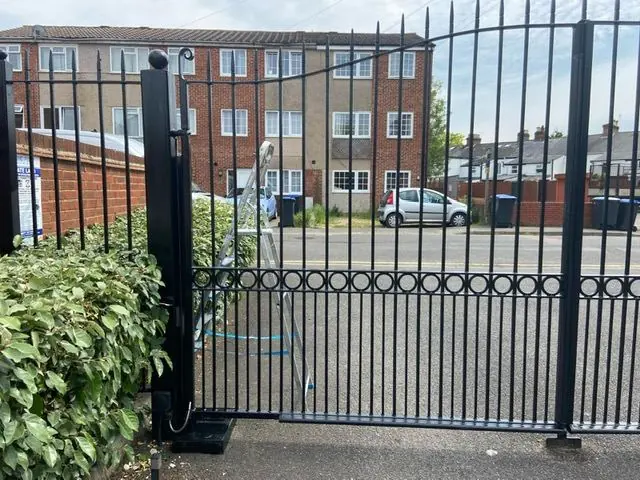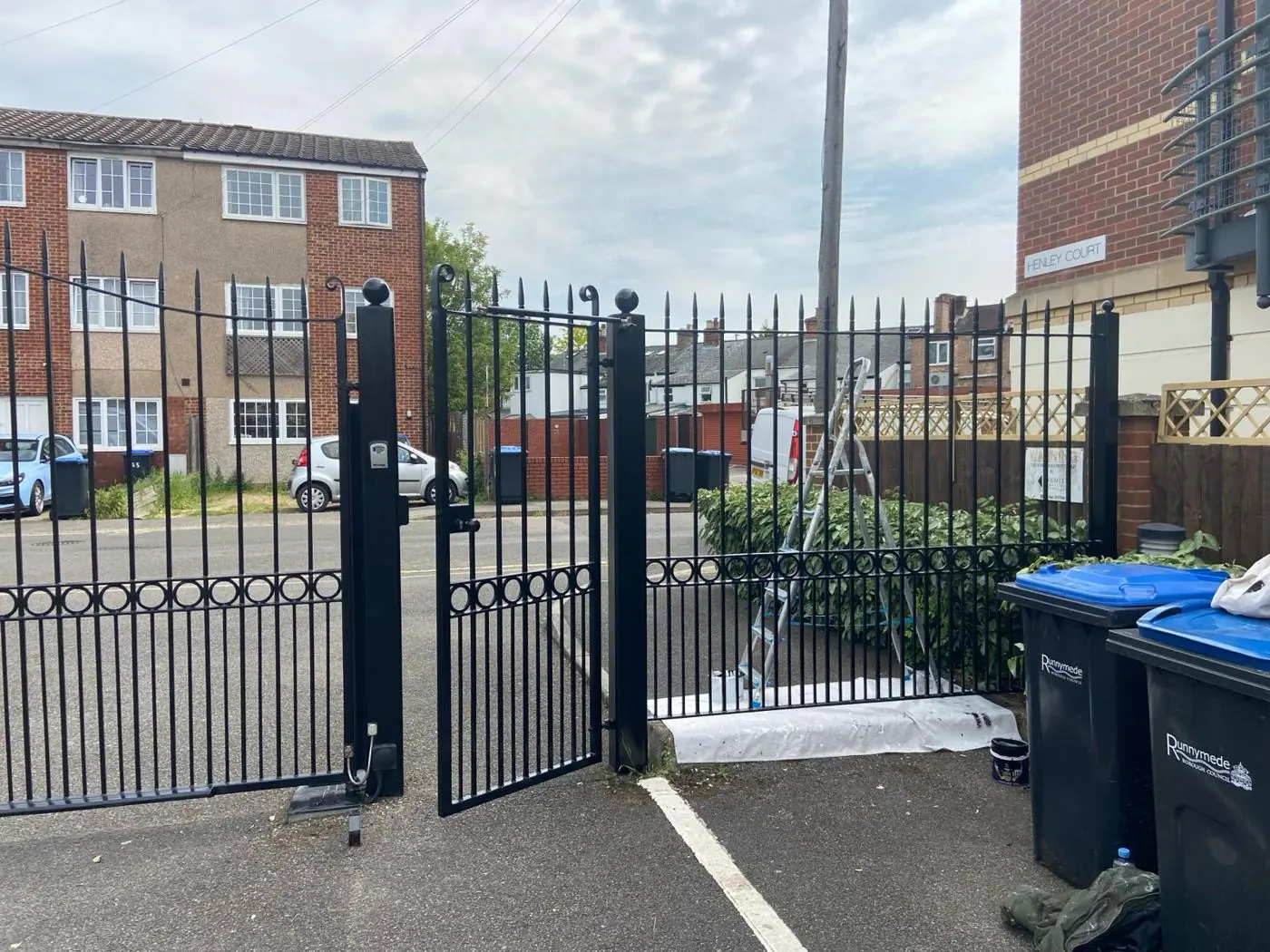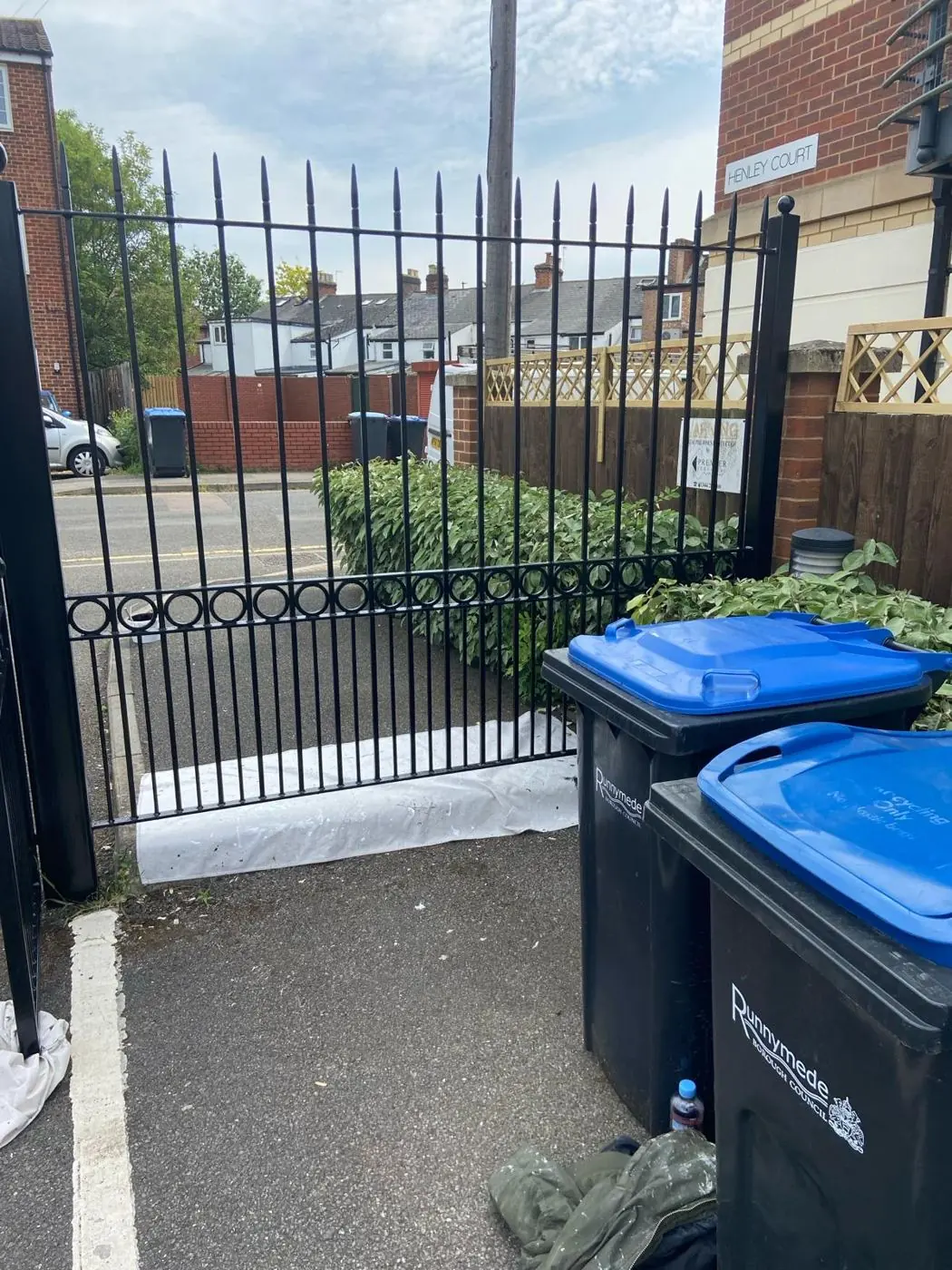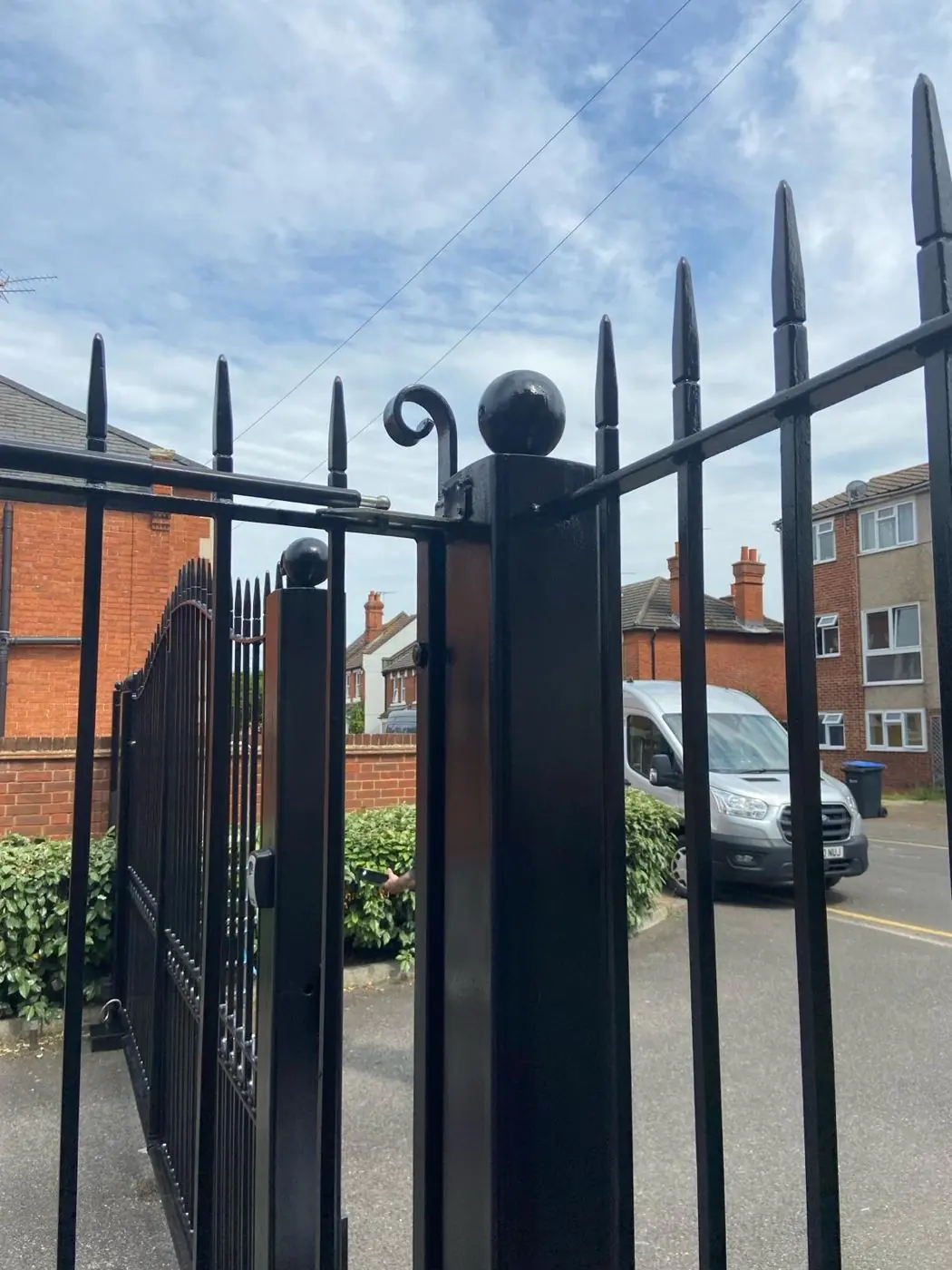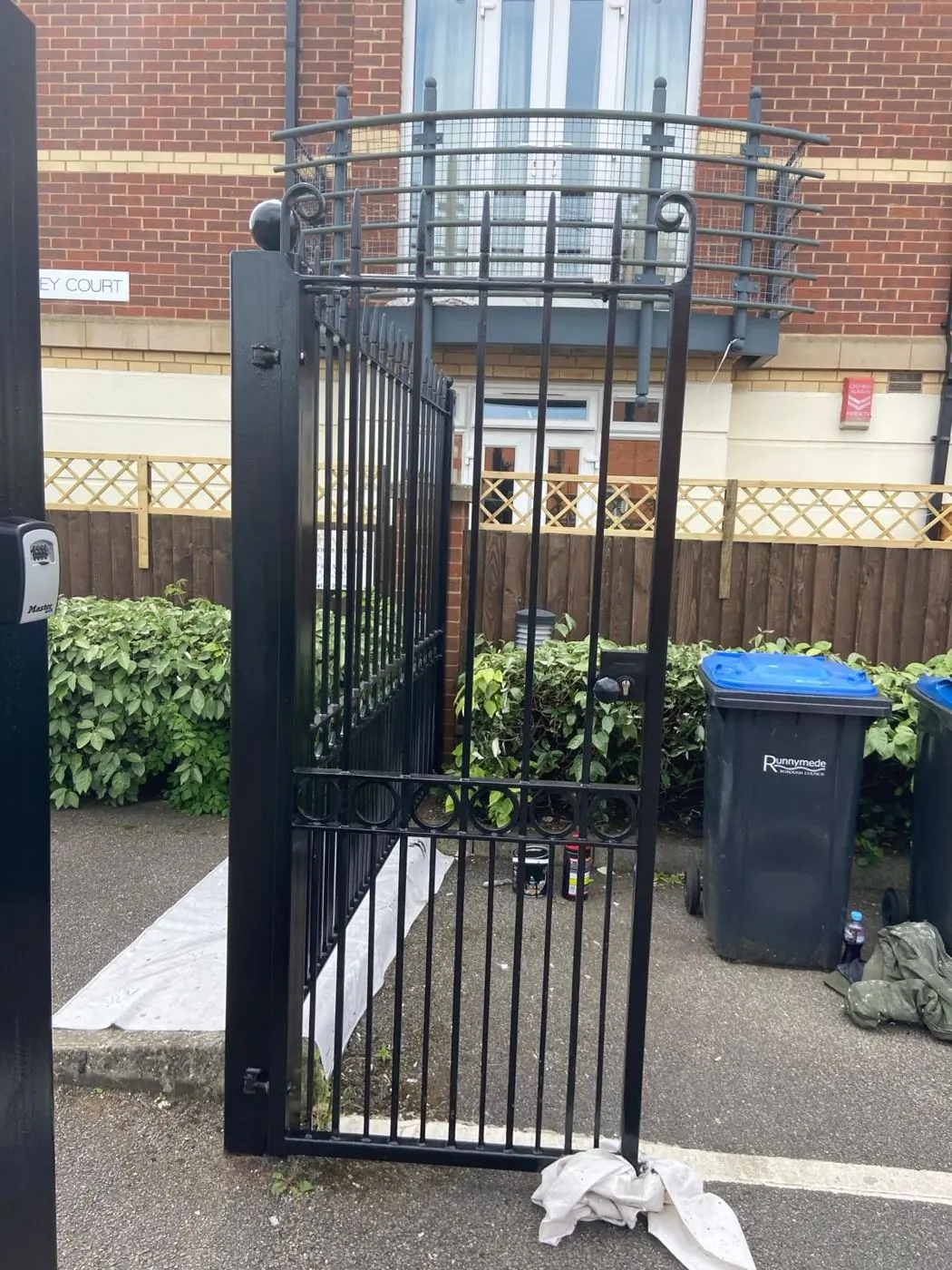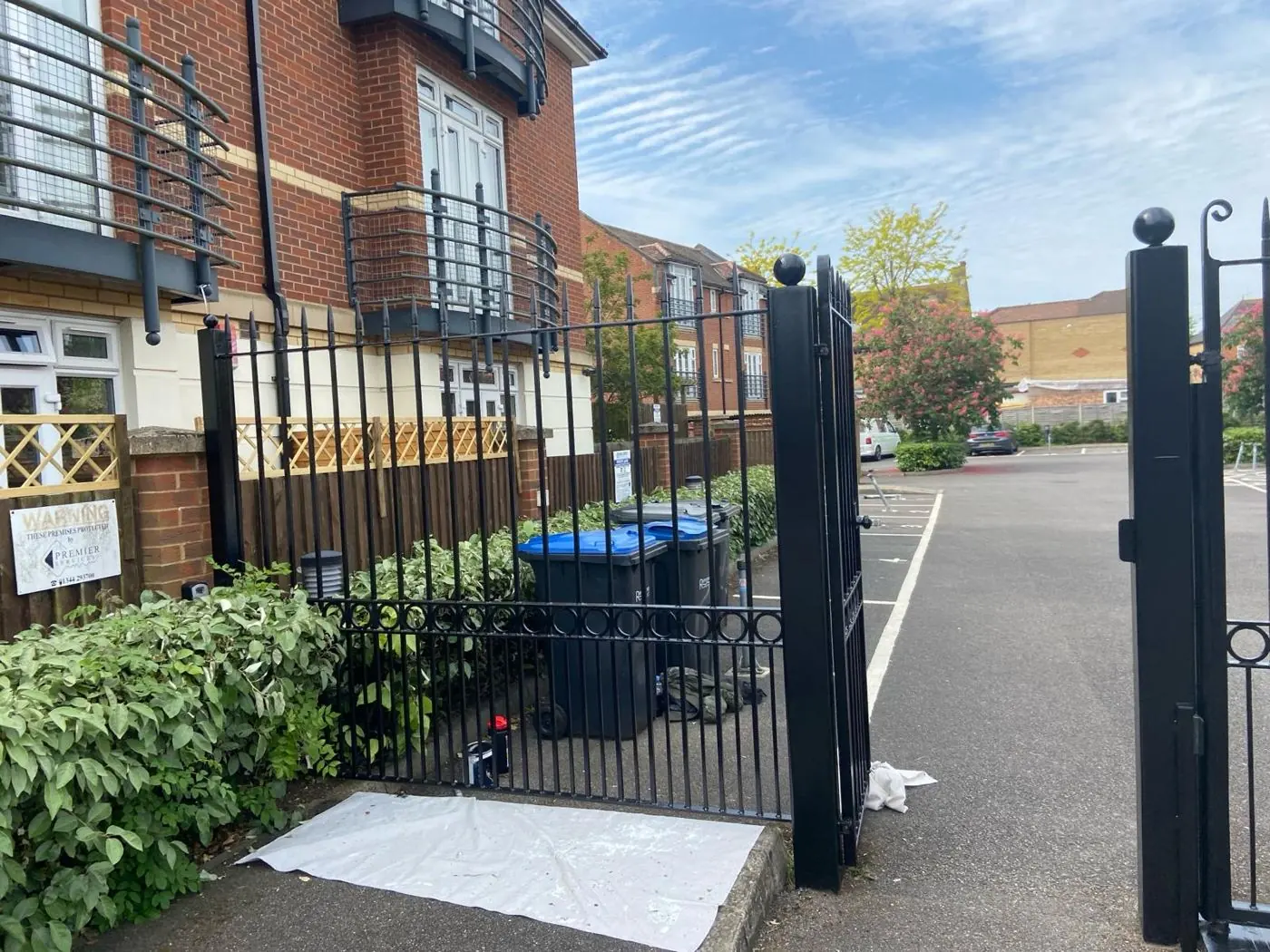
We wire-brush, prime and repaint metal gates and railings in Ecton, the NN6 conservation village roughly 4.9 miles north-east of Northampton town centre. Old ironwork in the village core is treated as a protected feature, so Dean repairs and repaints what is there rather than suggesting replacement.
Ironwork with a local story
Ecton has an unusual link to metalwork. For over three centuries Benjamin Franklin’s forebears lived in Ecton, with many working as the village smiths, and the Three Horseshoes listing refers to a smithy behind the pub that the family is said to have owned. Bell founder Henry Bagley also ran a foundry here from about 1687 to 1703; his datestone of 1694 is on the Manor House. The wrought iron and steel gates that survive in the village core are part of that picture, and the conservation appraisal treats them as features worth keeping.
What the conservation rules mean for a gate
Neighbourhood Plan Policy 7 asks for the retention of the stone walls and of the railings associated with Ecton Hall. The appraisal favours traditional materials throughout. Taken together, that means old metalwork here should be maintained rather than swapped for something new. For a painter, the job is to stop corrosion and keep the original profile, not to fill every pit with filler until the scrolls disappear. Our sequence on old iron is:
- Identify the metal. Wrought iron has a fibrous grain and tolerates firm wire-brushing; cast pieces are brittle and need a lighter touch.
- Remove loose paint and scale by hand and with rotary wire brushes, working scrolls and collars with emery and small brushes.
- Treat remaining rust in pits with a converter, then prime bare metal the same day so it does not flash-rust.
- Build up with undercoat and a metal top coat, usually black or the existing colour.
Ironwork in a village core this old can carry lead paint under later coats, so on thick old build-ups we use wet, dust-controlled methods.
The Shrine gates and the Hall railings
Two pieces of metalwork stand out in the listings. The Ecton War Memorial Shrine at the head of the High Street, a Grade II structure from 1917, has decorative iron gates alongside timber tablets with gold painted lettering. The railings linked to Ecton Hall, a Grade II* house now divided into apartments, are named in the Neighbourhood Plan. Work on items like these is arranged with whoever is responsible for them, such as the parish or the Hall’s managing agent, and anything beyond routine repainting on a listed structure should go to North Northamptonshire Council first. We would quote for them on the same careful basis as a private gate, with extra masking around stone and lettering.
Working against high stone walls
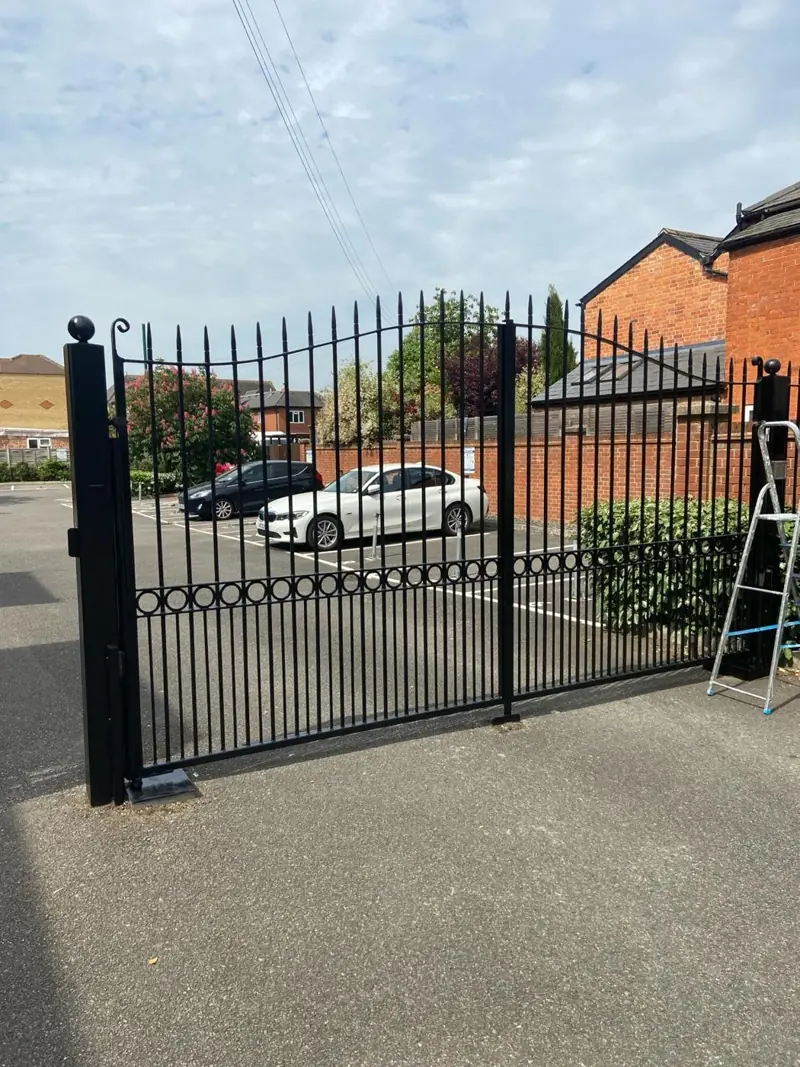
Most gates in the old village hang on, or between, stone walls over 1.8 metres high. Iron hinge pins leaded into lias or ironstone can rust, swell and crack the stone, so we look at the fixings and flag anything that needs a mason. Rust staining on soft limestone is very hard to remove, so stone around the gate is masked and the ground sheeted to catch scale. Where trees overhang the wall, damp and leaf litter keep the bottom rails wet, which is where rust usually starts.
Some gates open straight onto the High Street footpath, near the narrow stretches by the Manor House walls and the Three Horseshoes. Paint on a gate that is in daily use needs a dry day and time to harden, so we agree with you how the gate will be propped or kept shut while it cures, and we keep the pavement clear around it. Newer steel gates on the 20th-century houses are more likely to be galvanised, which needs a dedicated primer before any top coat. Our seasonal painting guide explains why we avoid cold, damp weeks for metalwork.
See the main metal gate and railing painting page for more on metals and primers, or the Ecton page for other work in the village.
Last updated by Dean, DH Painter & Decorator.