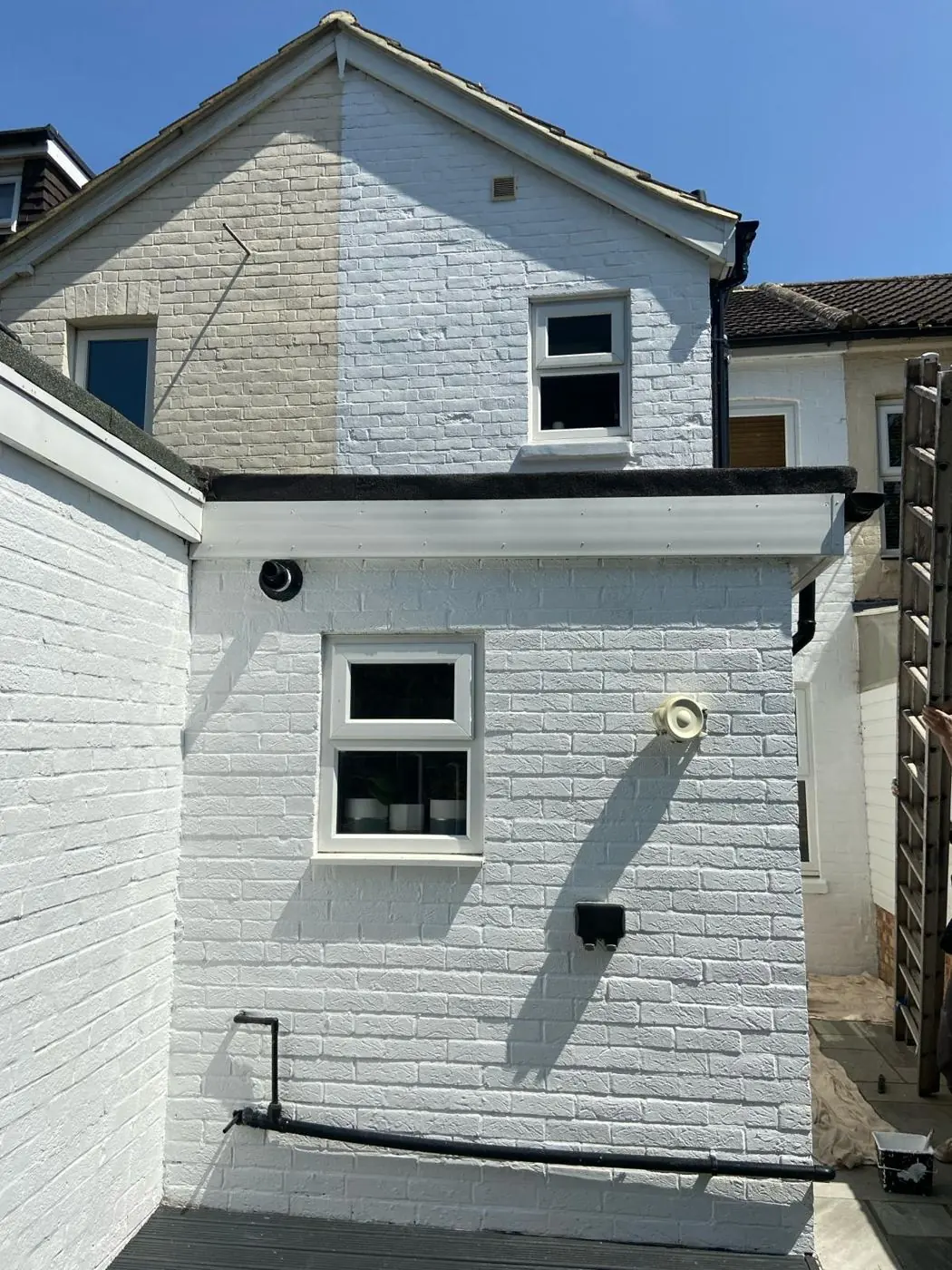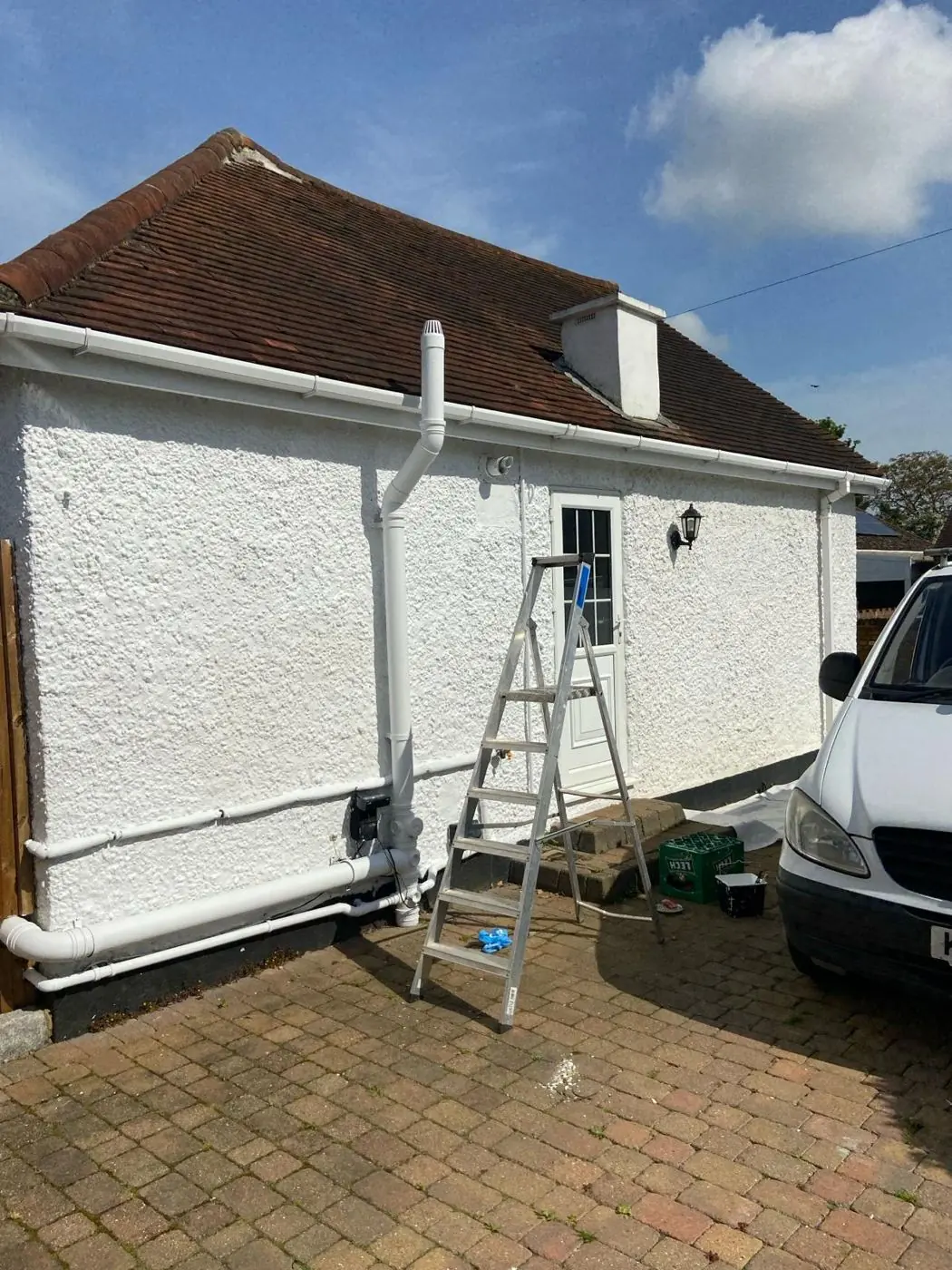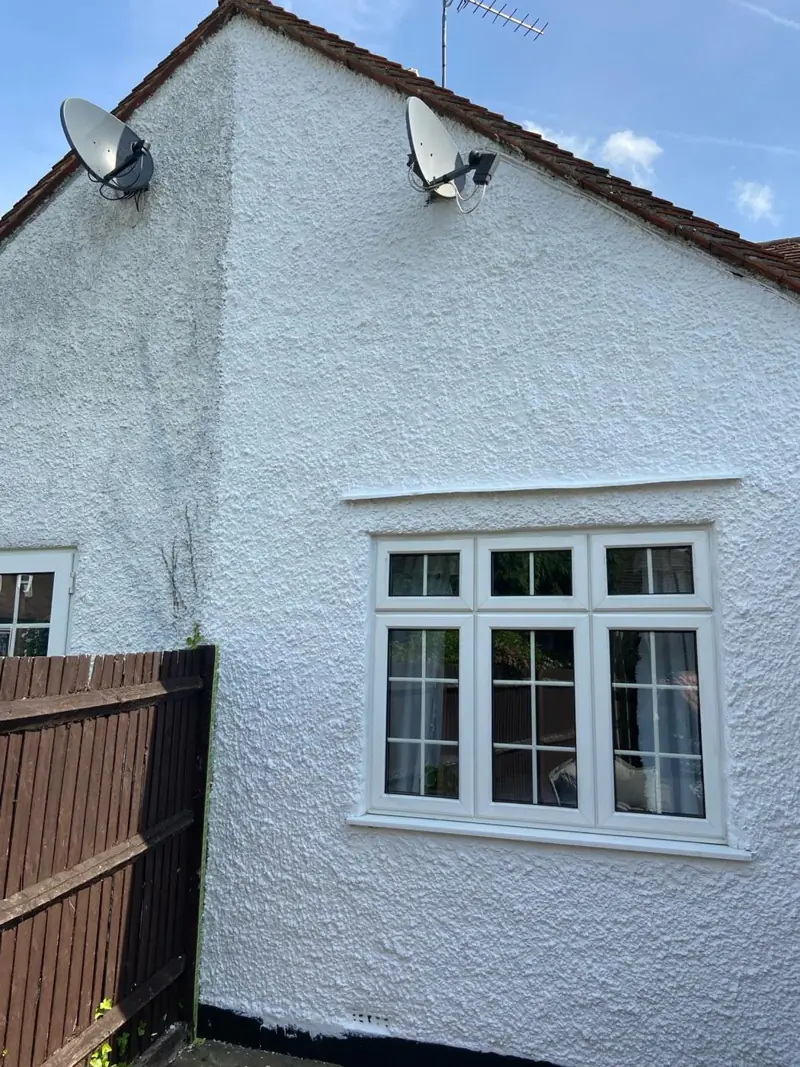
Dean paints timber fascias, soffits, bargeboards, gutters and downpipes in Ecton, about 4.9 miles north-east of Northampton town centre. In this village the work mostly applies to the Church View bungalows and the 20th-century semi-detached houses on West Street and Northampton Road, since the old stone cottages generally have parapet gables instead.
Which houses in Ecton have fascia boards at all
A lot of Ecton has no fascia to paint. The High Street’s older cottages, dating from the late 1600s and 1700s, were built with ashlar gable parapets and kneelers, the stone carried up past the roof line, so the eaves detailing is different from a modern house and there is no long run of painted board under the gutter. Thatched houses such as The Old Bakehouse on West Street have none either.
The roofline work here sits with the 20th-century housing:
- Church View, a run of small single-storey bungalows on the east side, between Wellingborough Road and the edge of the Ecton Hall parkland.
- The two-storey semi-detached houses on the west side of West Street and Northampton Road, built to a similar design.
- Other later brick houses in and around the village, and some outbuildings and garages.
Church View bungalows: low eaves, long runs
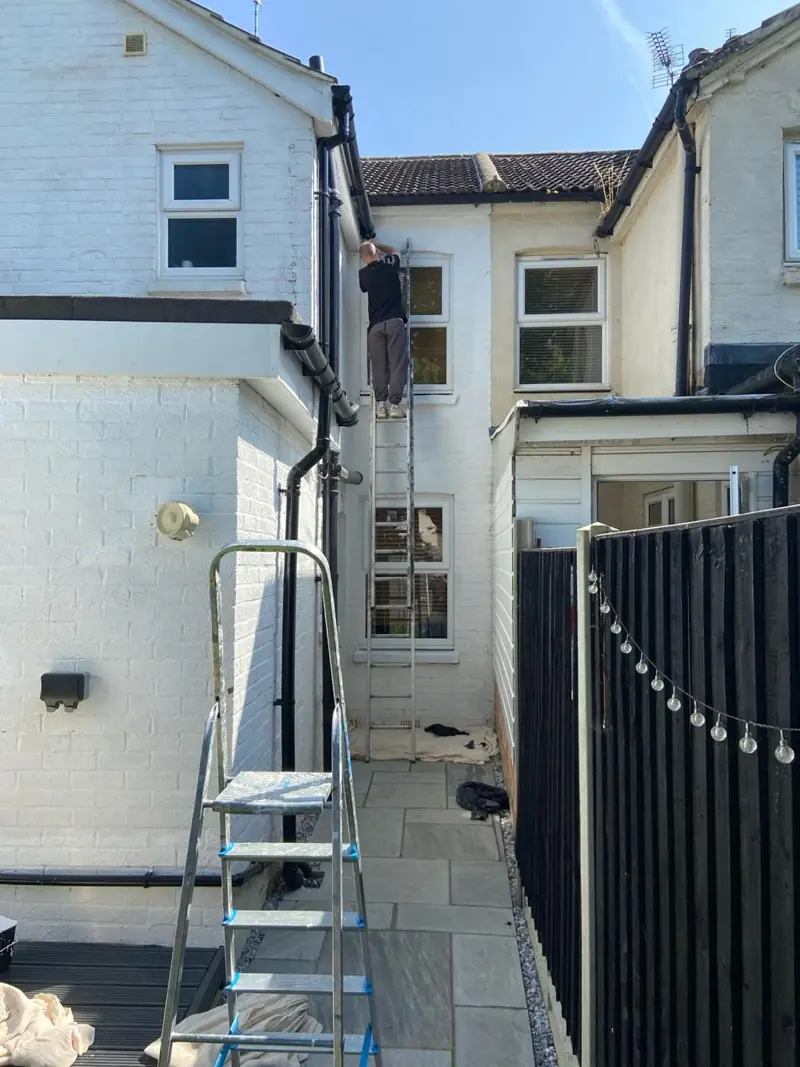
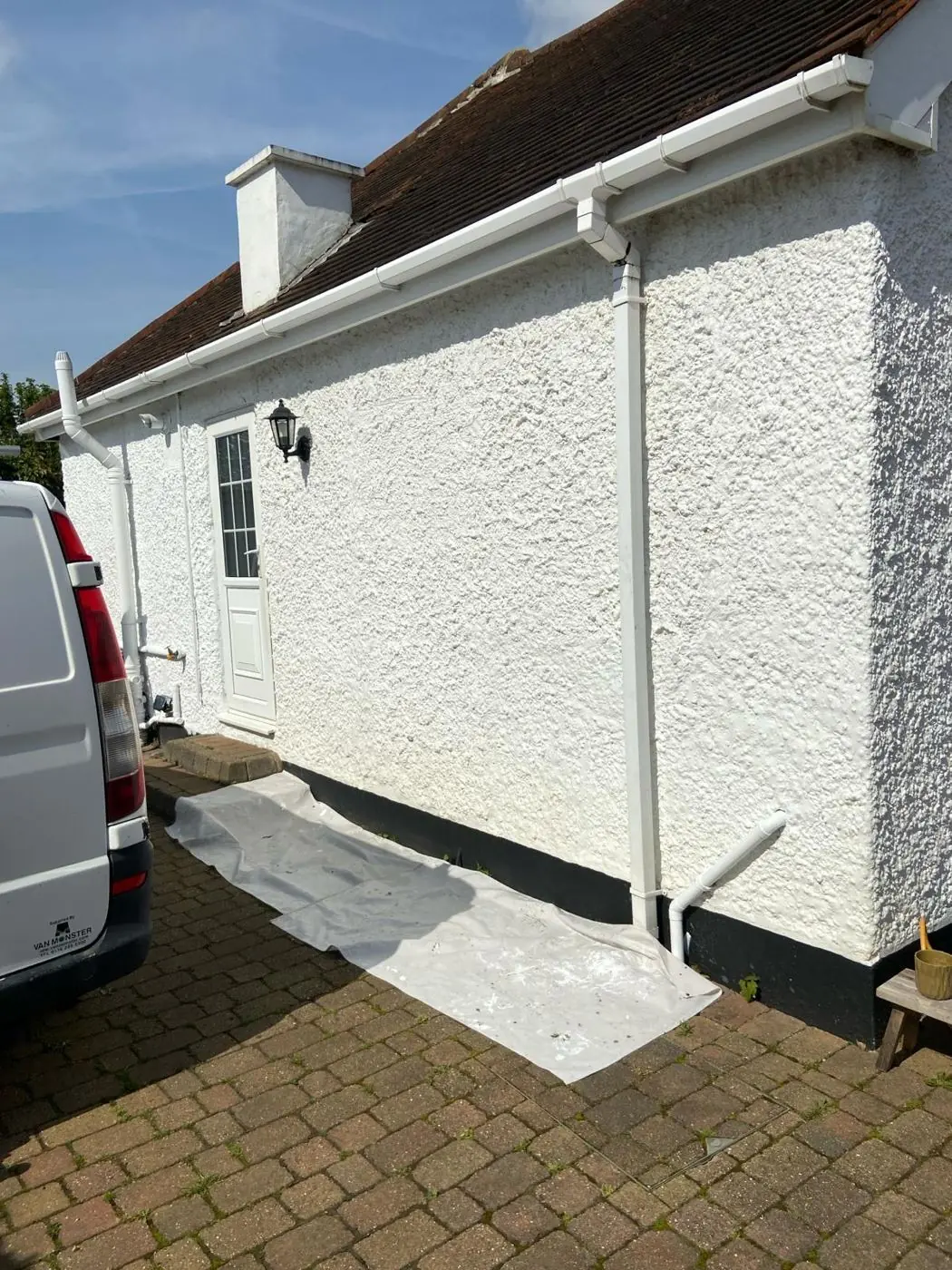
A bungalow’s roofline is low enough to reach with a short ladder or a podium, which keeps the job quicker and safer than on a two-storey house. The trade-off is length. A bungalow carries fascia all the way round, often with bargeboards on the gable ends, so there is more board per house than its size suggests. Being single storey also puts the soffit right where rain bounces off the ground and splashes back, and the corners and joints at gutter outlets are where the timber softens first.
On a Church View bungalow we probe every corner and gutter outlet for rot before any scraping starts, because that is where these boards fail. Gutters, downpipes and brackets are painted in the same visit so the colour matches.
Some bungalows have had their fascias capped or replaced in uPVC over the years. Plastic boards are outside what we paint as routine, but a timber soffit or bargeboard alongside them often still needs attention, and we will tell you honestly which parts are worth doing. Since these houses sit outside the stone core, colour is your choice; white and black are common, but darker greys and greens work well against brick.
The West Street and Northampton Road semis
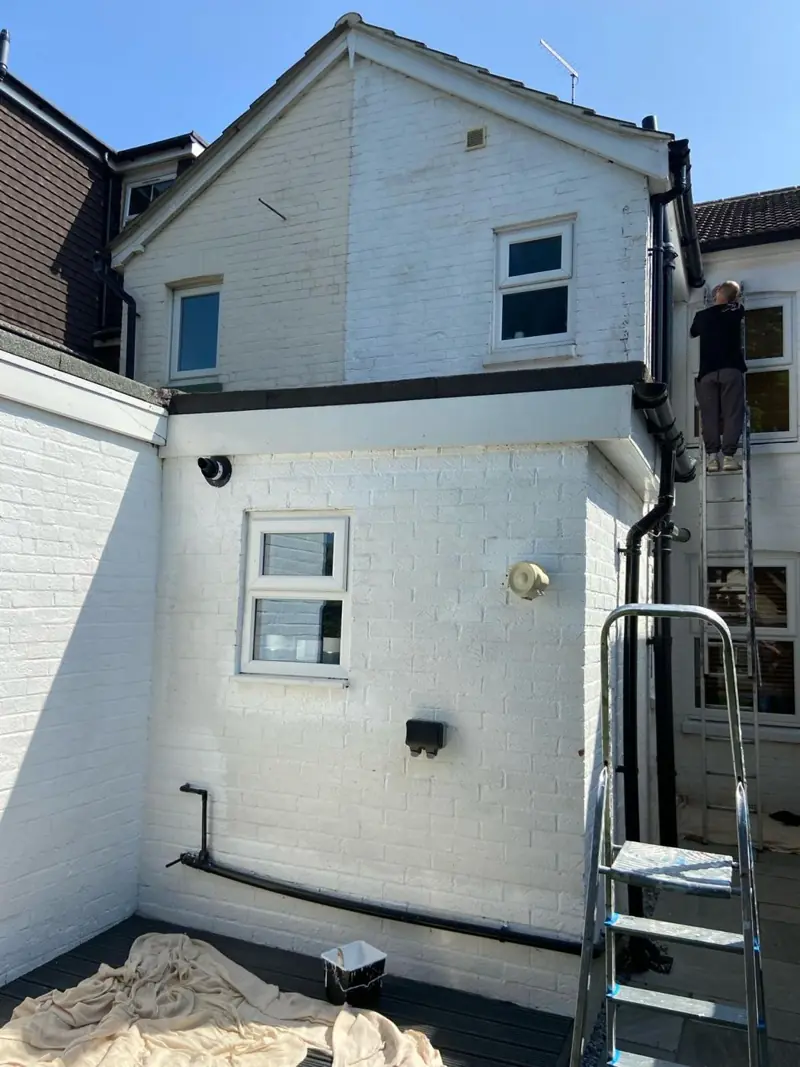
Because these houses were built as pairs of similar design, the roofline on one half joins its neighbour’s. Painting only one side leaves a visible step at the party line, and working near the join means stepping close to next door’s gutter. We are happy to paint one half carefully to a clean line, but if both owners want the work done, doing the pair together means one setup and a consistent colour across the front. Access is from the front of the house, which is easier than the pavement-fronted cottages in the core. At two storeys, the gable bargeboards and the rear fascia over a back extension or conservatory are the parts that need the most thought, as ladders cannot stand on a conservatory roof and a tower may be needed.
Leaves, shade and the open fields
Ecton has mature deciduous and coniferous trees by the churchyard and Hall grounds and along the hedged roads at the southern end of the village. Gutters under trees fill with leaves and overflow down the fascia face, so the boards stay wet and the paint fails from behind. Clearing blocked gutters before painting is part of the preparation. Elsewhere, houses facing the open fields to the south and west take full sun and wind-driven rain, which chalks and cracks gloss faster on those elevations.
The process in full is on our fascia and soffit painting page. If you are also thinking about walls or windows, see what else we cover on the Ecton page, or read what decorating costs around Northampton.
Last updated by Dean, DH Painter & Decorator.