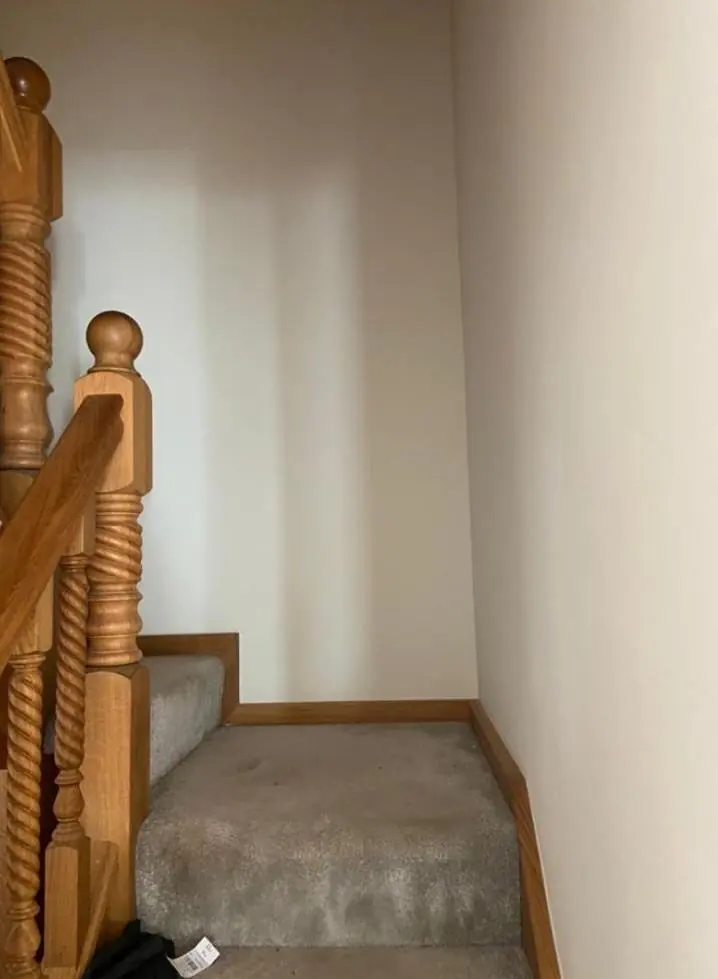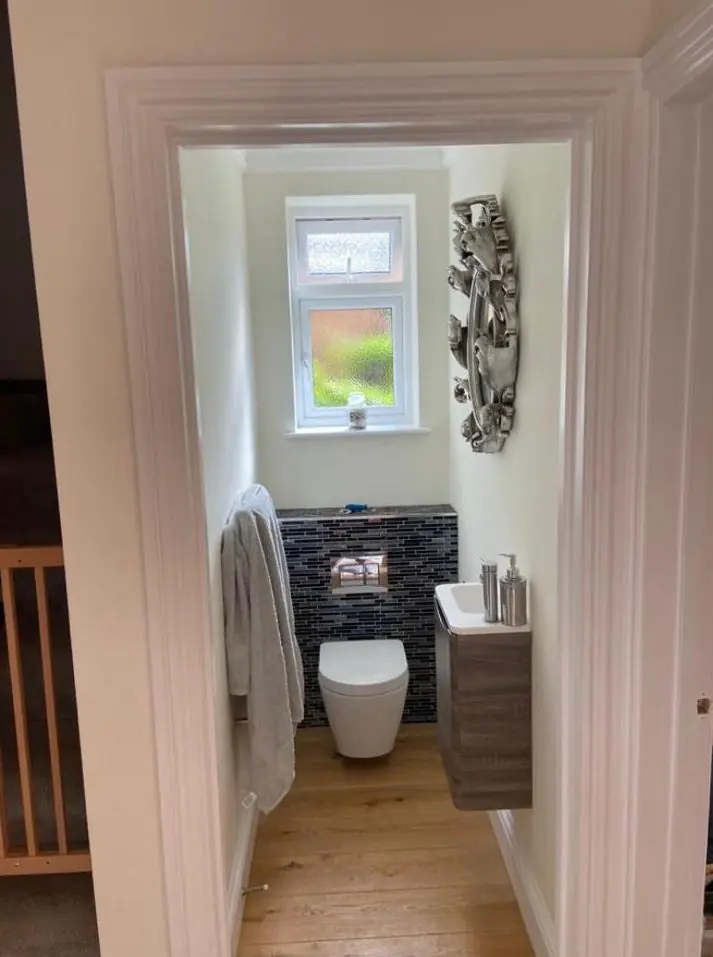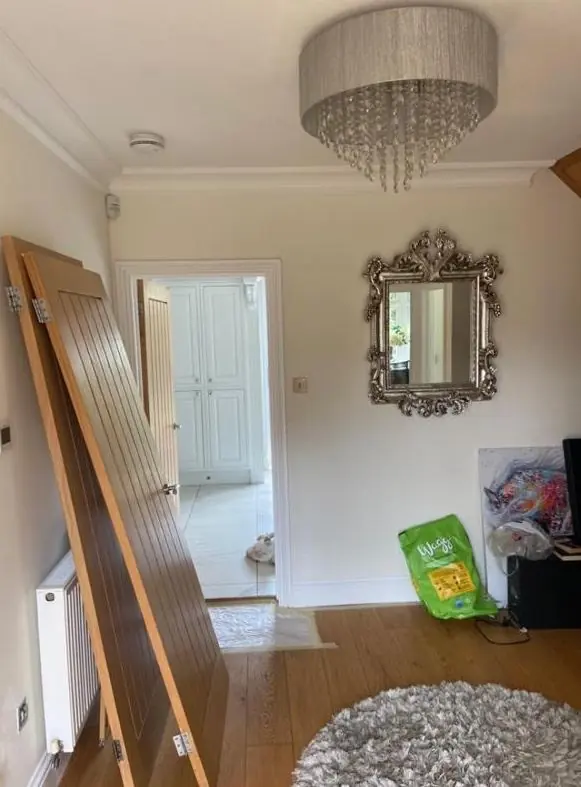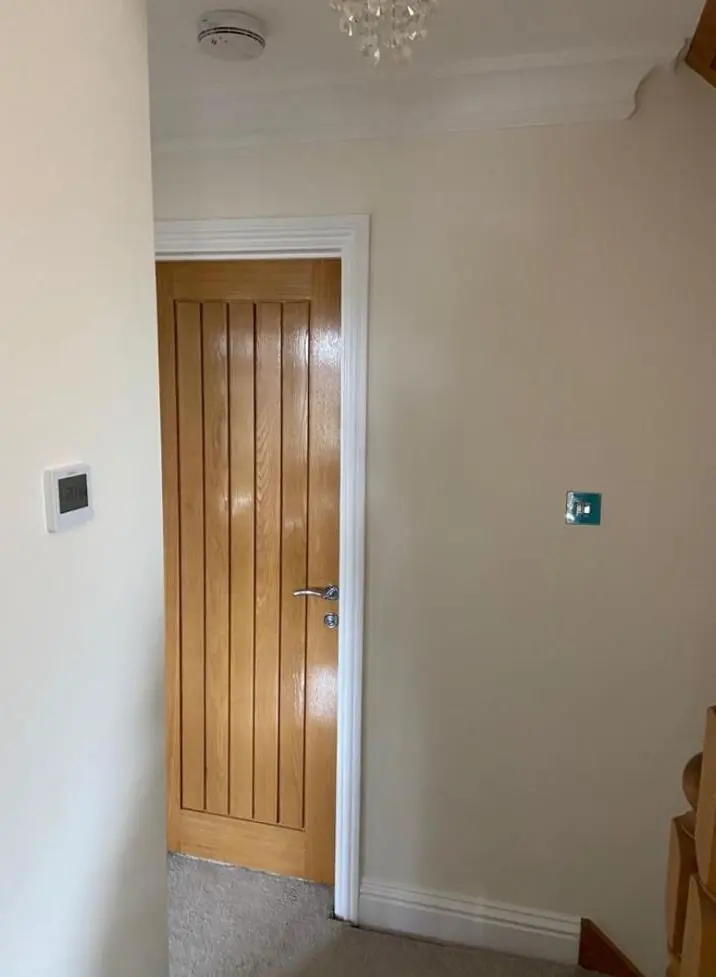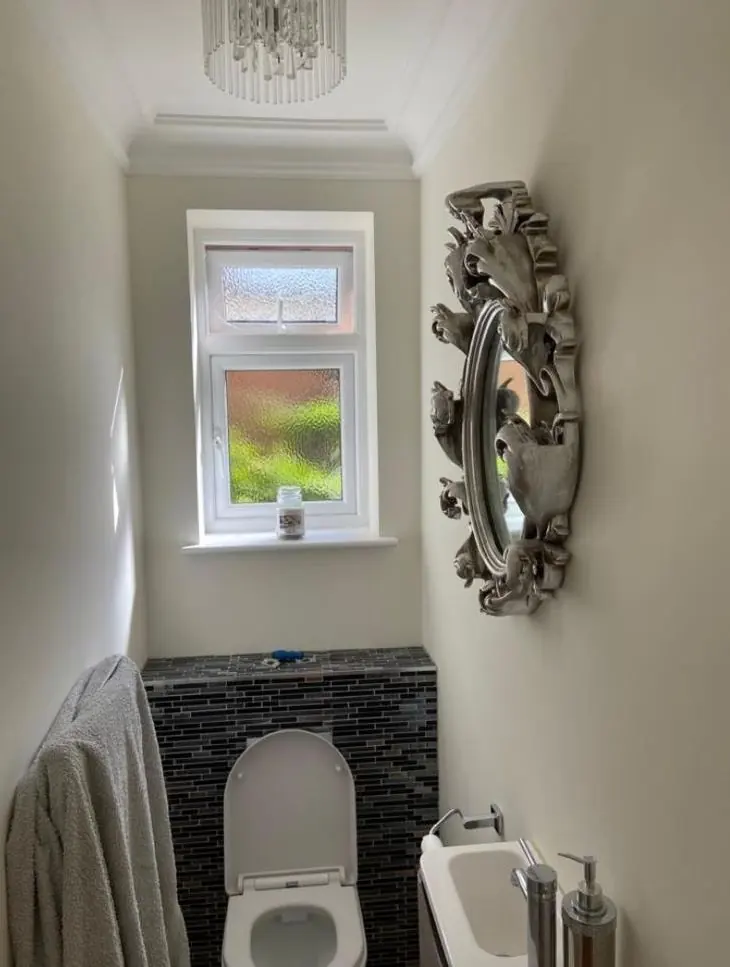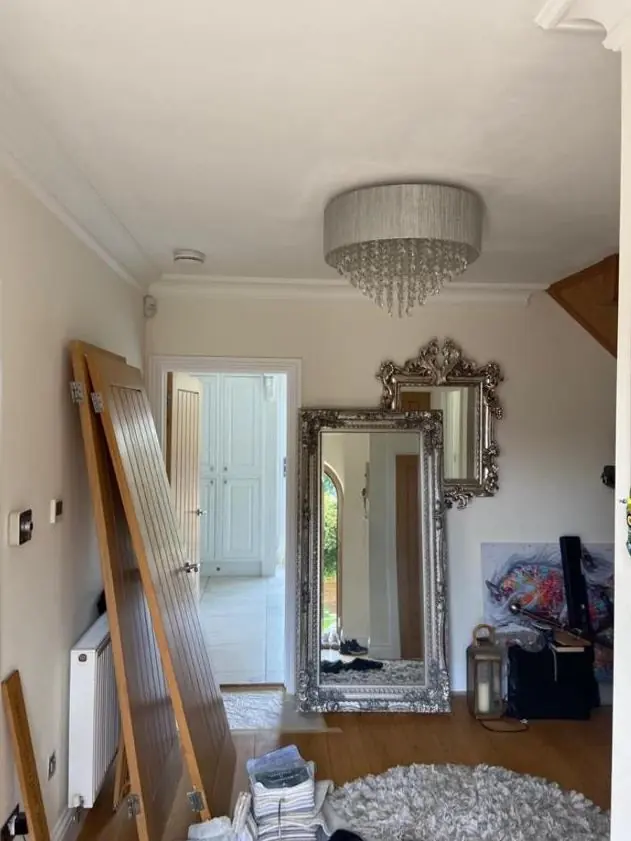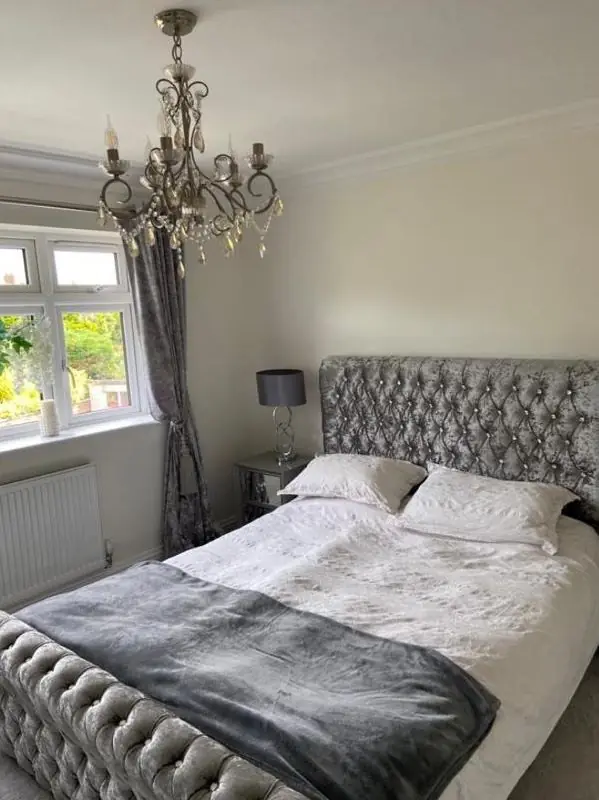
Dean hangs wallpaper and lining paper in Ecton, the conservation village 4.9 miles north-east of Northampton off the A4500. Most of the planning goes into the 17th and 18th century cottages, where walls are out of true and attic ceilings slope, but we also paper the village's larger detached homes and its 20th-century bungalows and semis.
No straight line to hang from
The old houses of Ecton were built of lias, ironstone and soft limestone by hand, and the walls inside them follow the stone. Corners lean, window reveals taper and a wall can bow by a noticeable amount over its height. Hang a striped or geometric paper on that from the corner and by the far end of the room the pattern is running visibly downhill.
So on a cottage wall we do not trust the corner. Dean sets a plumb line in the middle of the main wall, works outwards both ways and plans where the pattern break will fall, usually in the least visible corner behind a door. Where the plaster is lumpy or hairline cracked, a lining paper goes up first, hung horizontally, so the finish paper has an even base. Busy, small-repeat patterns hide the remaining movement far better than large, evenly spaced geometrics, and we will say so if a chosen design is going to fight the wall.
Papering under the slope of an attic
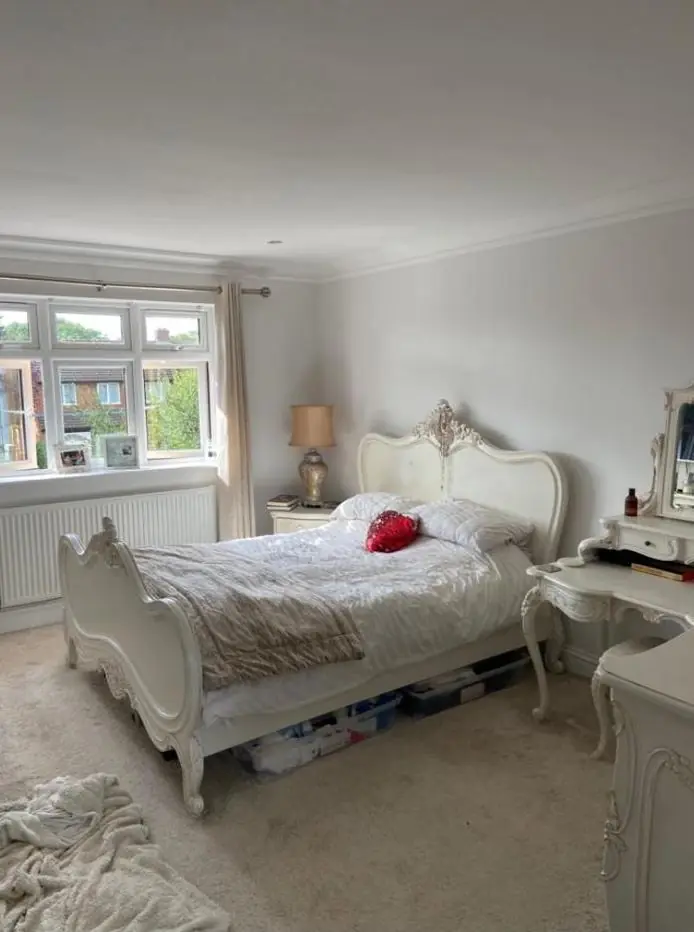
A distinctive part of the village stock is the single-storey-with-attic cottage, the listed example being the late-C17 crescent of four at 80 to 86 High Street. Upstairs, the ceiling comes down to meet a low knee wall, with dormer reveals cutting through it. Paper on a slope has to be hung in shorter drops, each one trimmed to the angle, and the pattern has to stay continuous where the wall turns into the ceiling. That is slow, careful work and we allow time for it rather than rushing the cuts.
Where beams cross the ceiling, the paper is trimmed tight to the timber instead of being wrapped or tucked behind it, so the beams stay clean and undamaged.
Choosing paper for solid, damp-prone walls
| Wall in Ecton | What we usually suggest |
|---|---|
| Street-facing wall of a pavement-fronted cottage | Check for moisture first. Breathable papers rather than heavy vinyls, which can trap damp against solid stone. |
| Old lime plaster with hairline cracks | Horizontal lining paper, then a paste-the-wall or traditional paper on top. |
| Plasterboard in a Church View bungalow or 20th-century semi | Sized and primed board, then any paper you like, vinyl included. |
| Large wall in a detached home | A statement design as a feature wall, planned so the repeat centres on the room. |
The moisture point matters here more than in most villages. Natural springs rise on the clay and sandstone slopes to the south, and many High Street front walls are the house’s outer wall to the street. A vinyl paper on a wet wall tends to lift at the seams and can encourage mould behind it.
Larger homes and feature walls
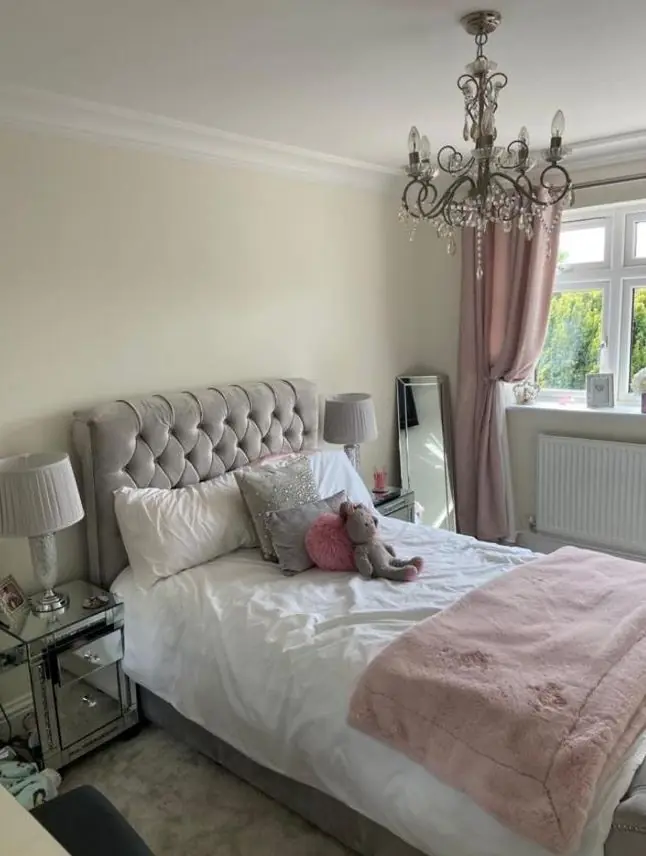
Ecton’s homes skew large. The Neighbourhood Plan’s 2011 figures show about a quarter of homes with four or more bedrooms and nearly 40% detached, which means plenty of full-height walls, chimney breasts and stairwells where a bold paper earns its place. In those rooms the challenge is less about uneven walls and more about setting out a large repeat so it sits centrally on a chimney breast or lines up across a long wall without a visible join.
In a listed cottage, removing old papers or historic linings can be more than redecoration, so we check before stripping anything that looks original. Our general method, from stripping to the last seam, is on the main wallpaper hanging page, and the rest of our work in the village is on the Ecton area page.
Last updated by Dean, DH Painter & Decorator.