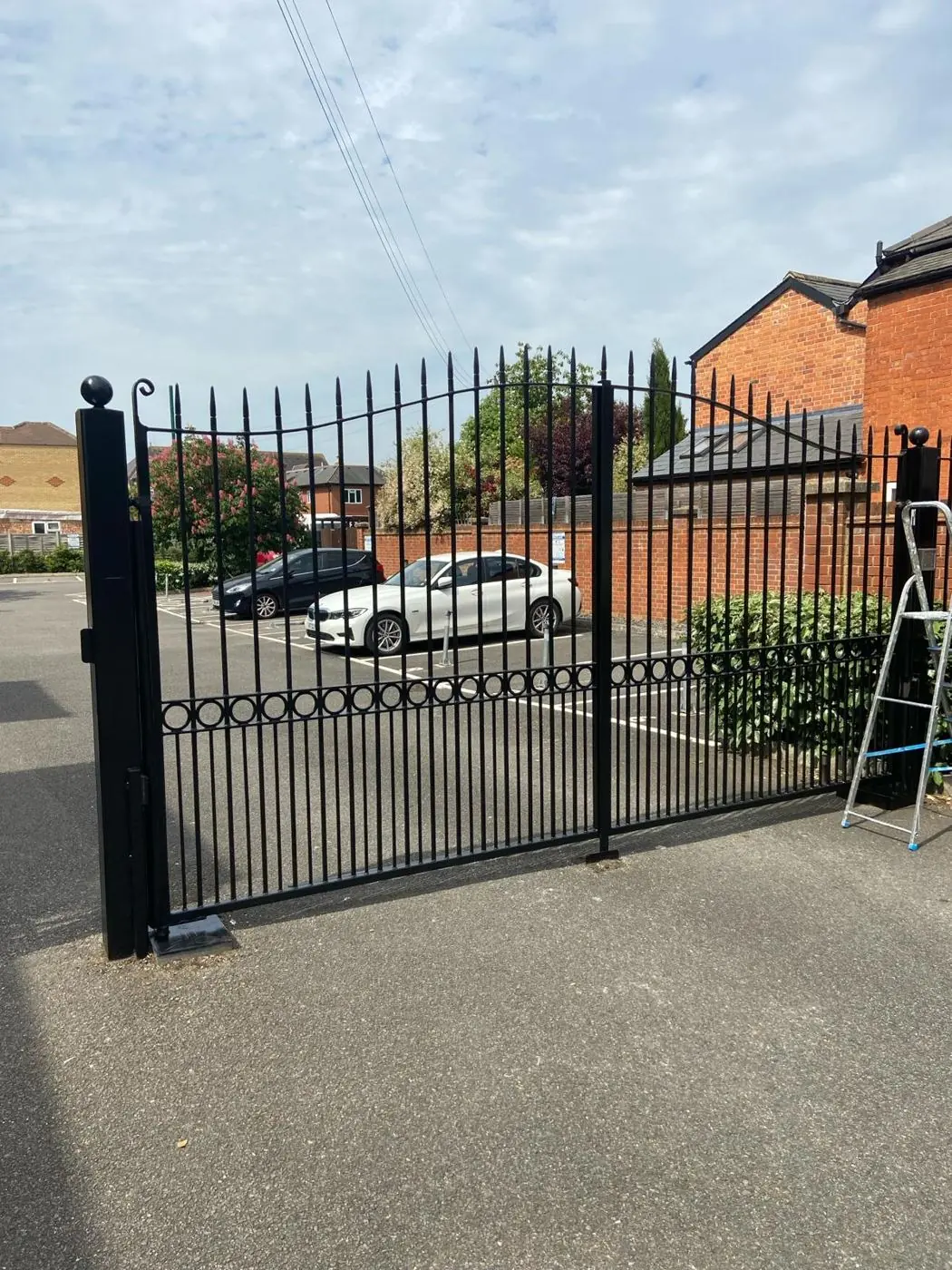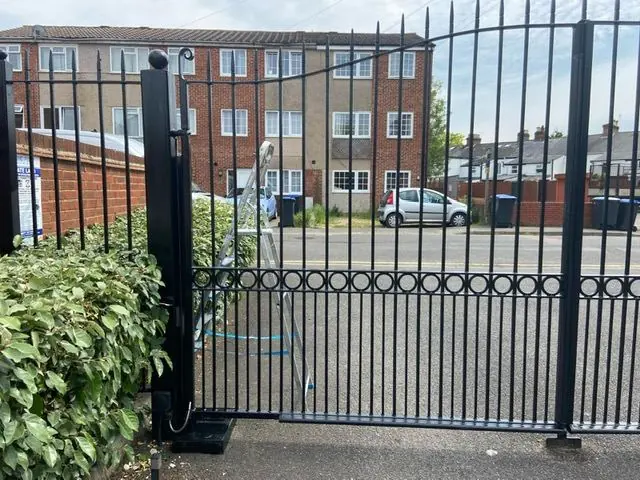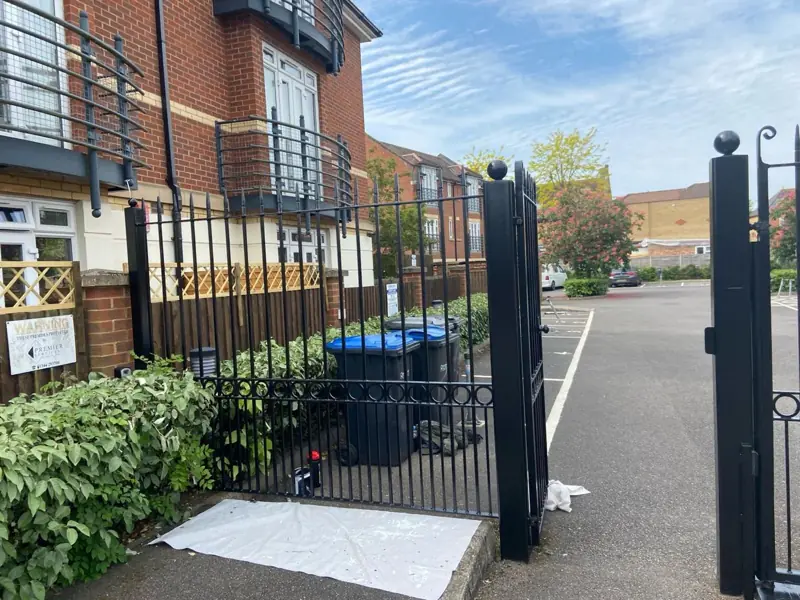
We stain and treat timber gates and fences in Stoke Bruerne, NN12, about 6.6 miles south of Northampton. Most older gardens here are bounded by dry limestone walls and hedges, so the work is mainly garden gates, post-and-rail fencing and the timber boundaries around modern homes and barn conversions.
A village of walls and hedges, with timber in between
Panel fencing is not what bounds most of Stoke Bruerne. Around the green, the Lanes and Rookery Lane, gardens are enclosed by dry limestone walls, some topped with cock and hen coping, and by mature hedgerows. Timber appears in the gaps: a ledged and braced garden gate hung between two stone piers, a field gate at a farm entrance, or a run of post-and-rail where a garden meets the Tove valley farmland. Close-boarded fences and panels are more usual around the modern houses on Wentworth Way and Chapel Lane and along the infill on Mill Lane and Rookery Lane.
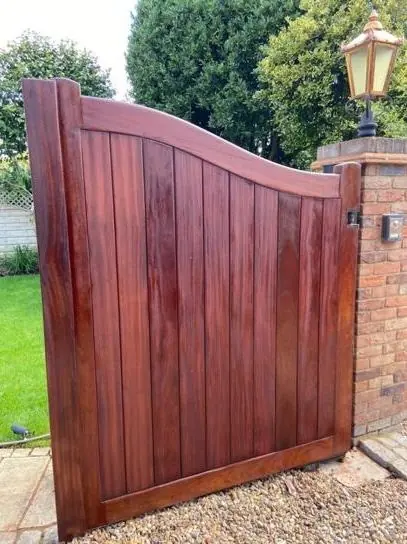
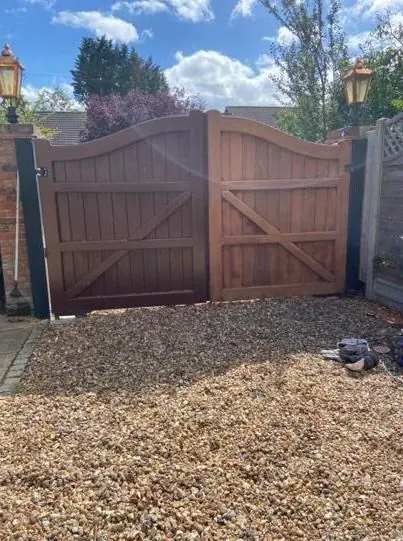
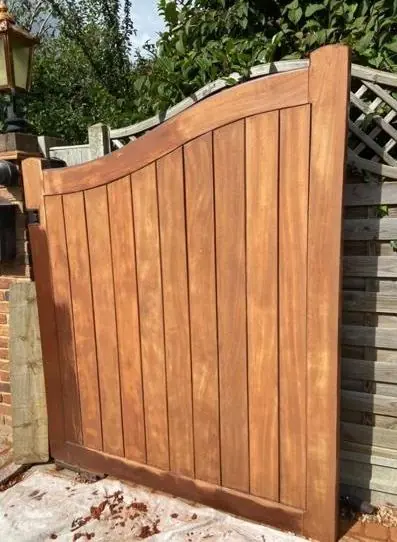
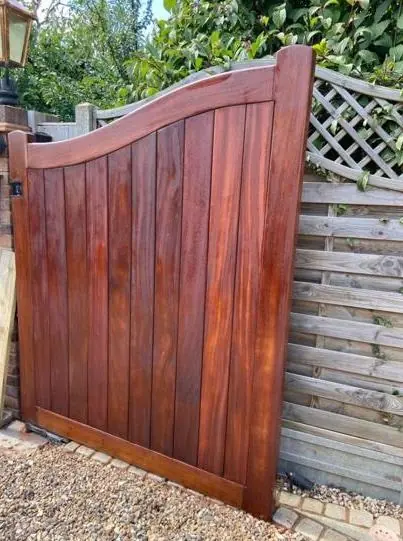
Gates hung between stone piers
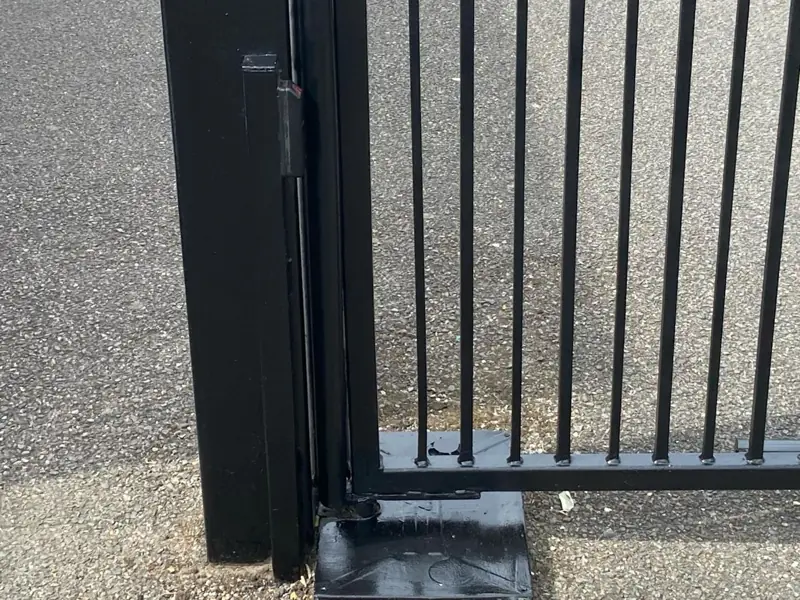
A gate set into a limestone wall is a fiddly staining job. The hanging stile is inches from the stone, and a drip of dark stain on limestone is very hard to remove. We mask the piers and coping, use a brush rather than a sprayer, and stain the gate edges and top rail first, since water gets into a gate through the end grain. Hinges and latches are taken off or masked so they keep working. A gate that has dropped and drags on the path is worth rehanging or packing before staining, or the bottom rail will wear through the new finish within a season.
Shade, leaf fall and slow drying
Tree cover is one of the conservation area’s defining features, from the canopy along Rookery Lane to the walled gardens of Bruerne House. Timber under that cover stays damp for much of the year, collects leaf litter at its base and grows algae on the shaded face. That affects the order of work:
- Clean and treat green growth first, and give the timber several dry days afterwards
- Clear leaves and soil away from post bases and the bottom boards before any stain goes on
- Pick a penetrating, microporous stain or oil that lets damp out, rather than a film that peels in the shade
- Stain in spring or early autumn, when the timber is dry and the summer crowds and parking pressure are not at their peak
Note that work on trees in the conservation area needs six weeks’ notice to the council. We don’t cut back trees or hedges. If an overhanging branch is in the way of a fence, that’s something to sort out with the council and a tree surgeon first.
Barn conversion boundaries and newer gardens
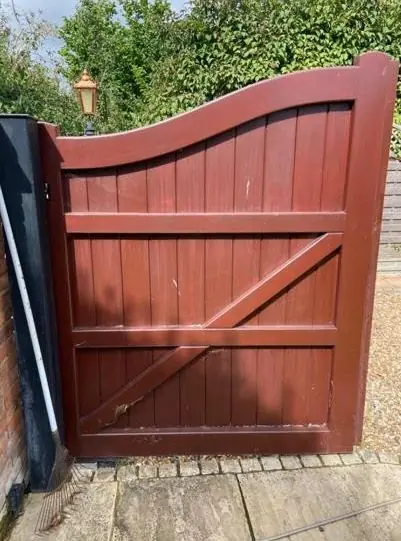
The Grafton Estate model farm buildings opposite Rookery House are now four homes, and conversions like these often have new timber gates, yard fencing and post-and-rail around larger gardens. New softwood should weather or be cleaned with a suitable preparer before the first coat, so the stain soaks in evenly instead of sitting in blotches. Around the newer houses, panel fences and featheredge boards take a standard fence treatment, though even there we would steer away from bright orange-toned colours that clash with the stone next door.
Choosing a colour that sits with the stone
Against the grey and honey limestone, slate and thatch, mid and dark natural tones, from oak and walnut to muted greens and greys, usually look right. For a gate on a listed property or a very visible spot on the green, a quick word with West Northamptonshire Council before a strong colour change is sensible. Our main fence and gate staining page compares stains, oils and paints, the exterior timing guide explains drying conditions, and our Stoke Bruerne area page covers the rest of the village.
Last updated by Dean, DH Painter & Decorator.