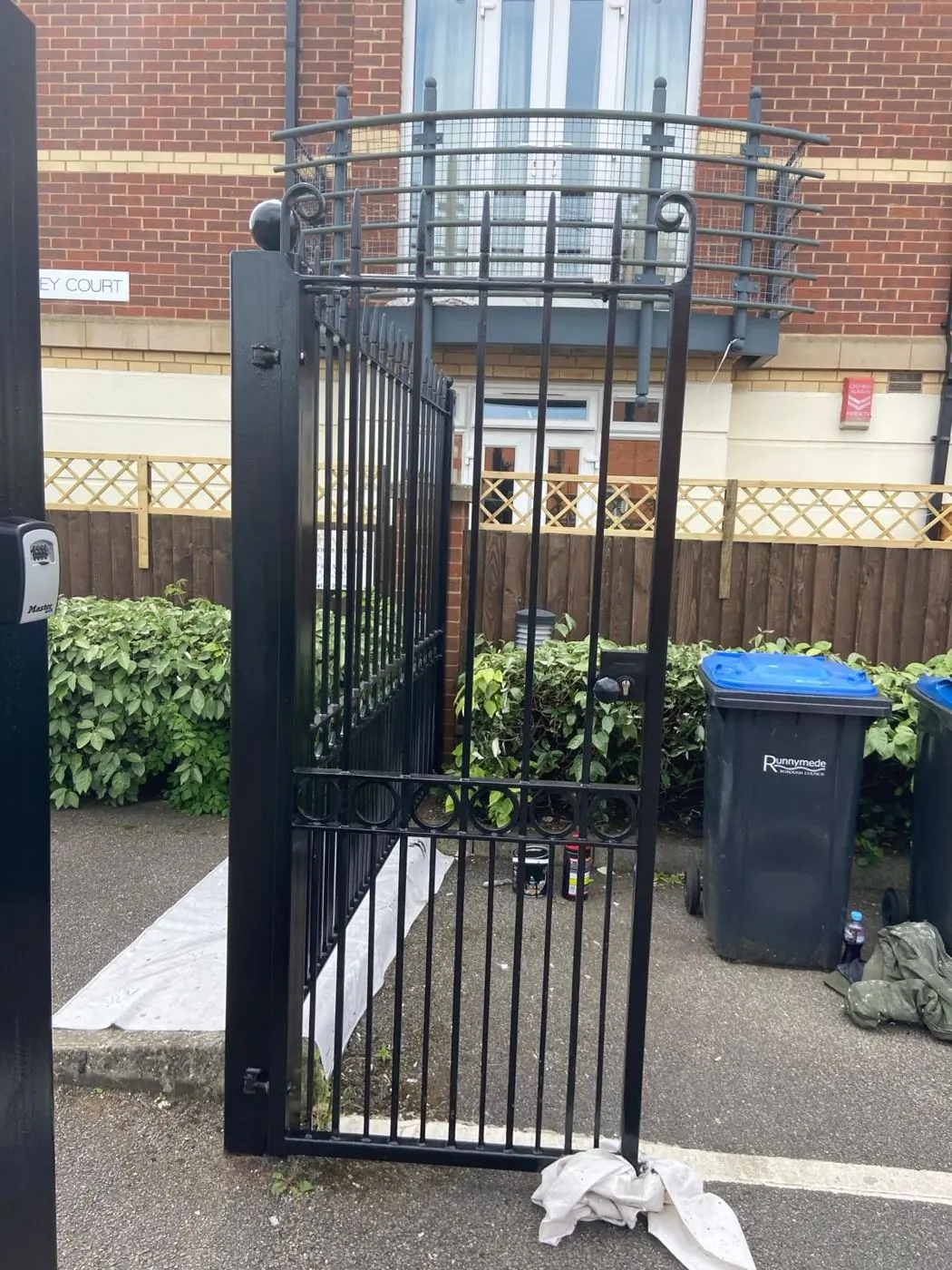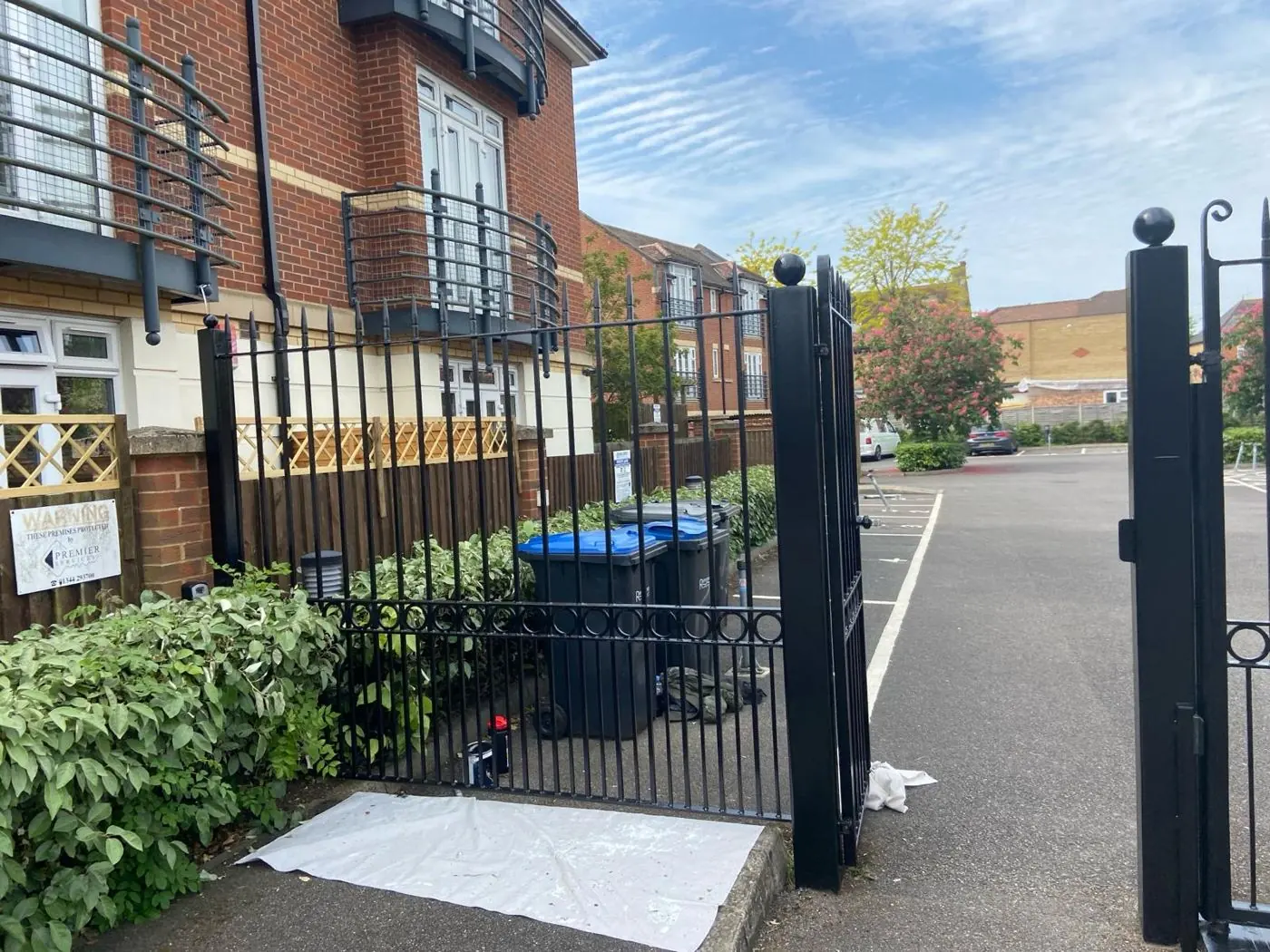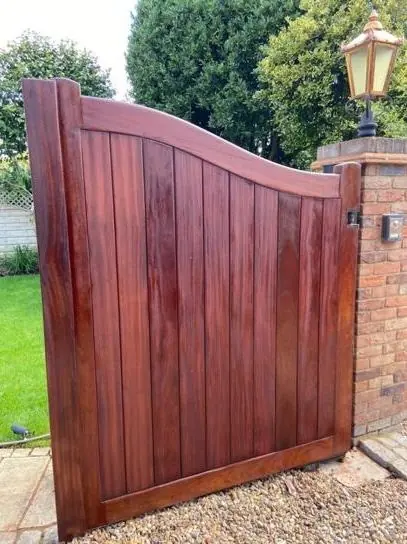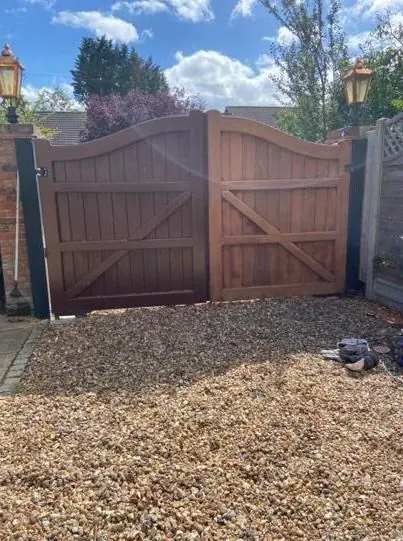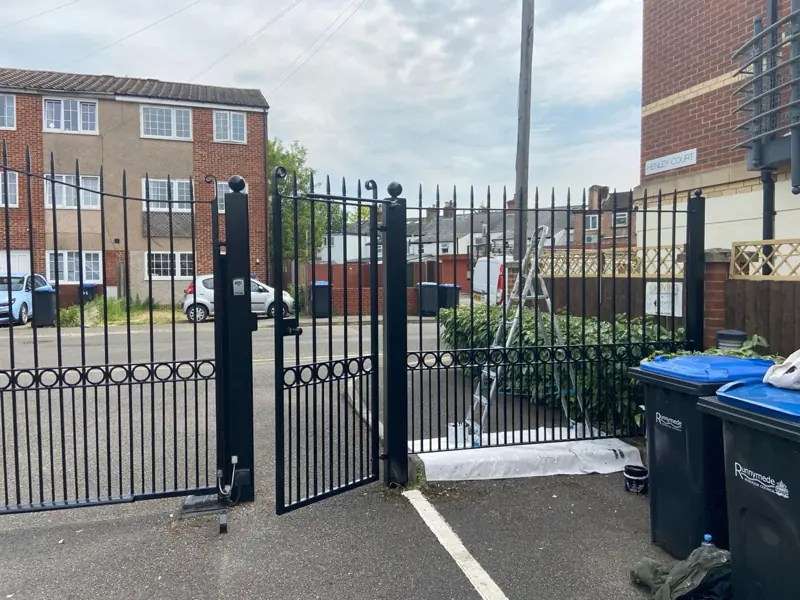
We stain and treat timber fences and gates in Pattishall, NN12, and its hamlets, about 6.5 miles south-west of Northampton. Gardens here often back onto farmland, so expect longer boundary runs, field-style gates and timber that weathers fast on the open higher ground.
Boundaries in a farming parish
Pattishall is a rural parish of small settlements, with a working farm, a village park and fields running up to the edges of many gardens. Boundaries here tend to be longer than on a town estate, and they divide gardens from paddocks, lanes and farmland as often as from a neighbour. That shapes the job. A long run of close-board or post-and-rail fencing takes time to prepare properly, and the side facing open land picks up more dust, spray and growth from the field edge than the garden side does.
The 20th-century homes on the higher ground above the older village are where most garden fencing in the parish sits, and they are the main market for routine re-staining. The stone houses down the hill and in Eastcote and Astcote are more likely to have a single timber gate set in a wall or hedge.
Field-style gates need more than a quick coat
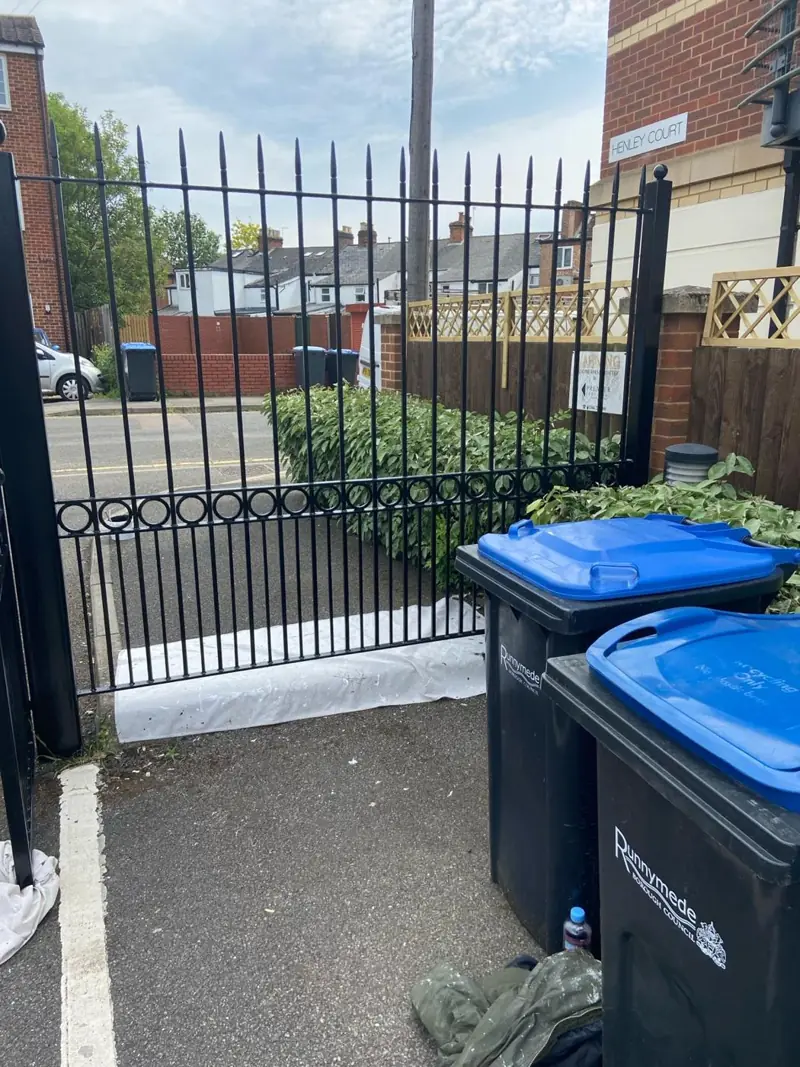
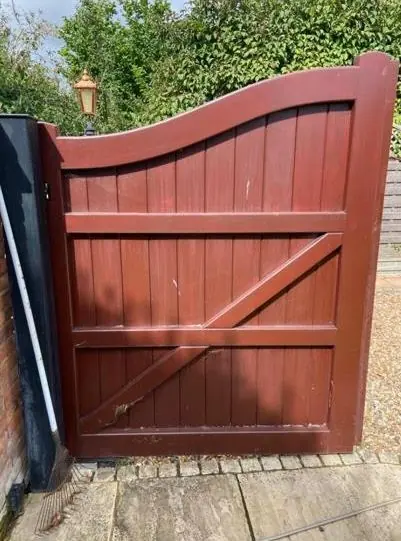
Field-style timber gates, the braced and barred kind common on village and farm-edge plots, have more surfaces than a fence panel. Every rail and brace has a top edge where water sits, and the joints are where rot starts. We work through a gate in a set order:
- brush off loose fibres, moss and dirt, paying attention to the tops of rails
- check the joints and hanging stile for soft timber, and flag anything that needs a joiner
- let the timber dry out fully if it has been wet
- apply the stain or oil, working each rail and brace on all faces, including the undersides
If the gate has metal hinges or a latch that are rusting, that can be dealt with on the same visit. Where a gate hangs on stone piers, it also needs the stone around the hinge pins protected, since stain soaks into limestone and leaves a mark that will not wash out.
Colours that sit beside limestone and ironstone
The older houses in the parish are pale limestone with darker ironstone dressings and slate or plain-tile roofs. Mid and dark browns, deep greens and muted greys tend to sit comfortably against that stone, while very orange or bright stains can clash with the warm brown of the ironstone. Fences fall outside any conservation area here, so for most homes the colour is your choice. If the fence or gate belongs to one of the parish’s 22 listed properties, it is worth checking with the council before a marked change of colour.
Weather on the open hillside
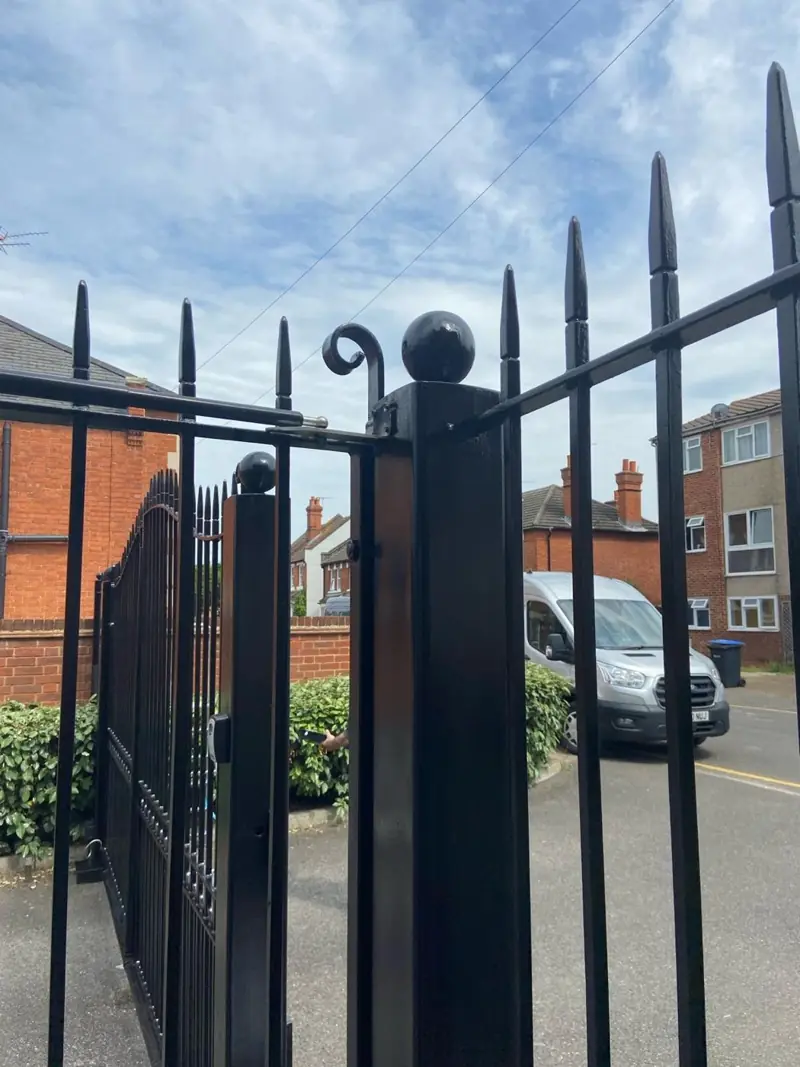
Timber on the exposed higher ground faces more wind and rain than fencing in a sheltered town garden, so it greys and dries out faster. A penetrating stain or oil that feeds the wood generally copes better there than a thin surface coat, and the most exposed run may need re-treating more often than a fence in the lee of the house. On a garden that ends at open farmland, the run facing the field usually takes the prevailing weather, so we start the inspection there. The products and the reasons behind them are explained on our fence and gate staining page.
Because the parish is spread out, tell us whether you are in Pattishall, Eastcote, Astcote, Dalscote, Fosters Booth or Cornhill, and whether the fence can be reached from the garden or only from a lane or field. Our Pattishall area page describes the parish’s housing in more detail.
Last updated by Dean, DH Painter & Decorator.