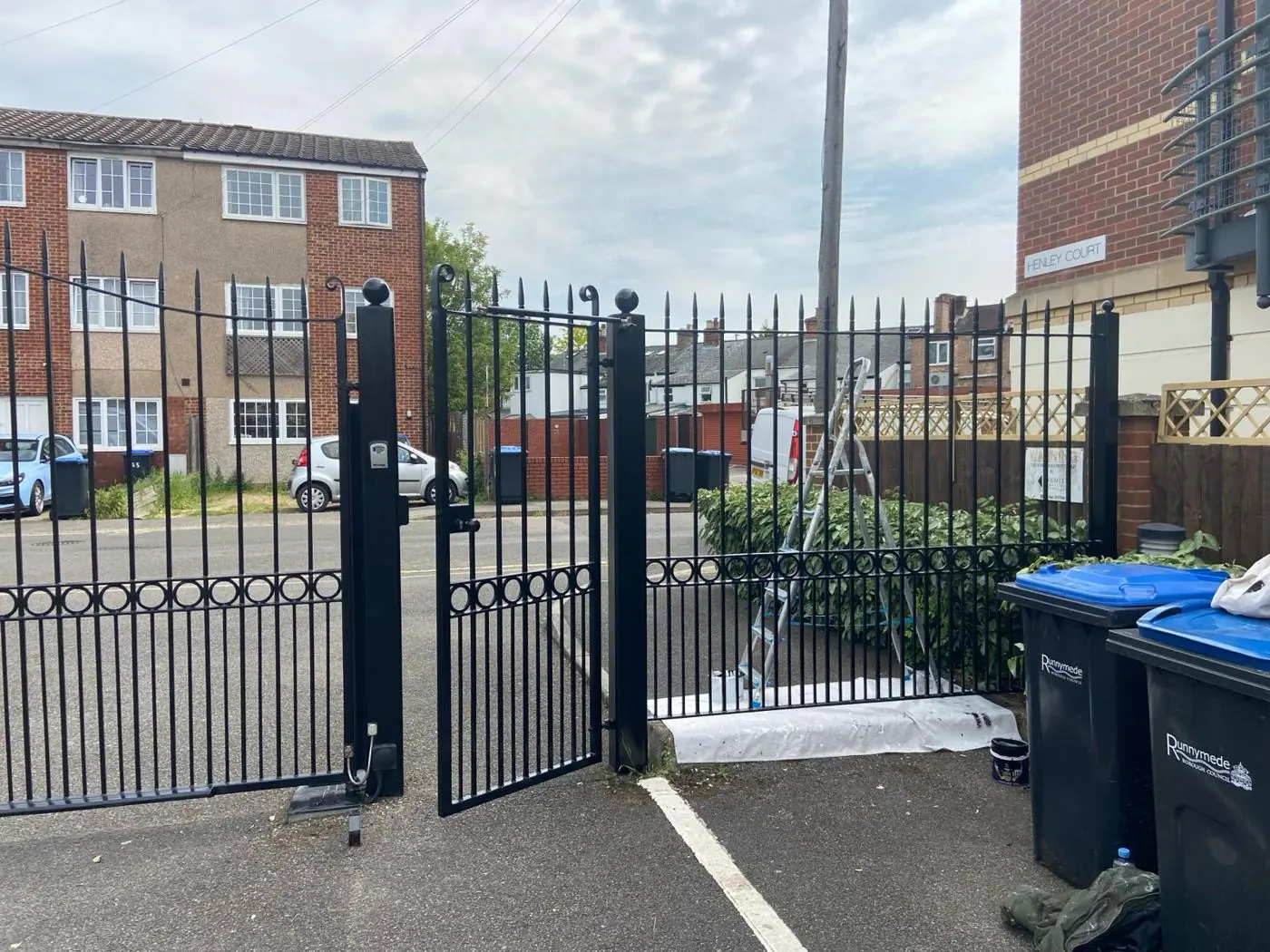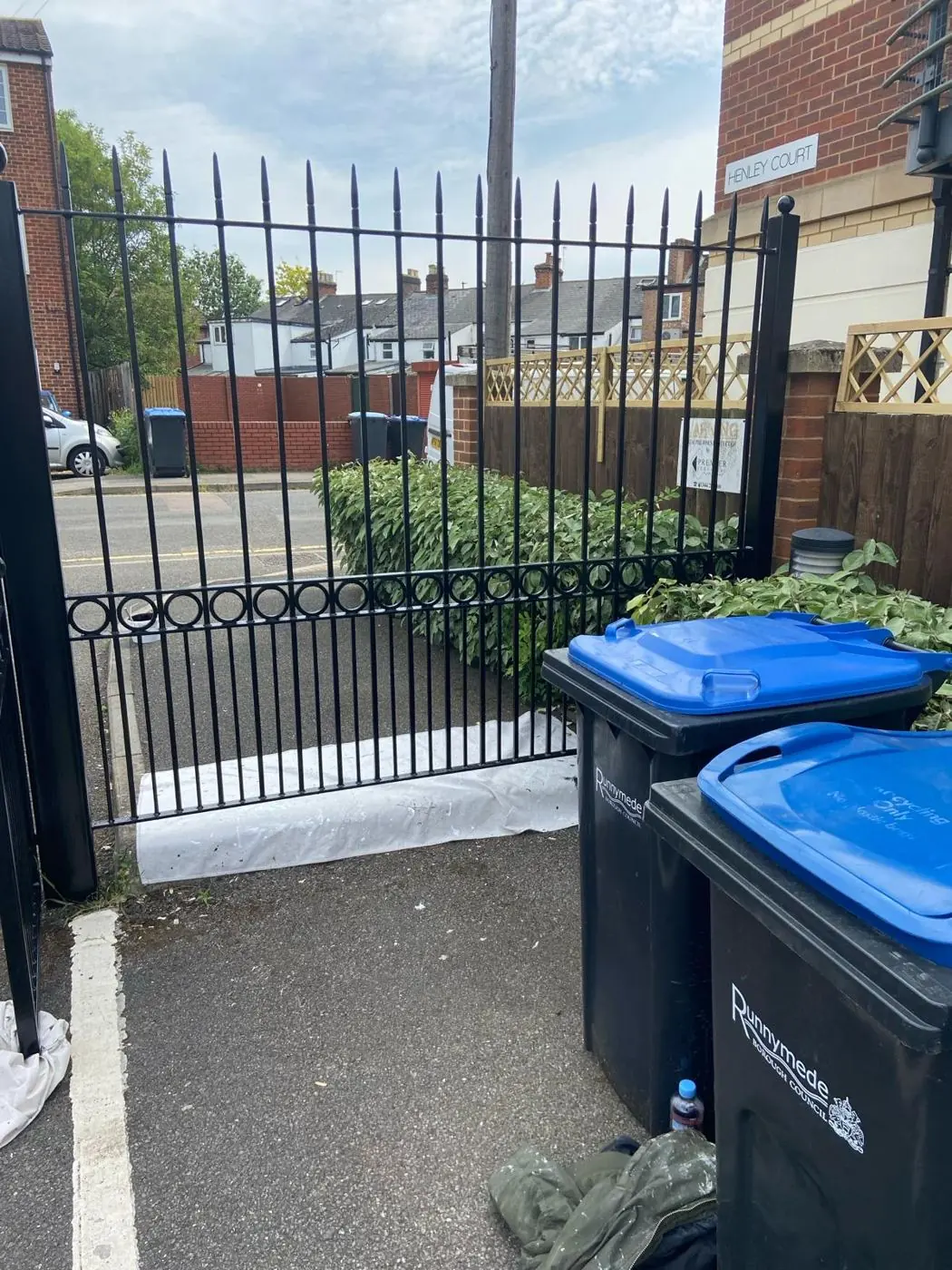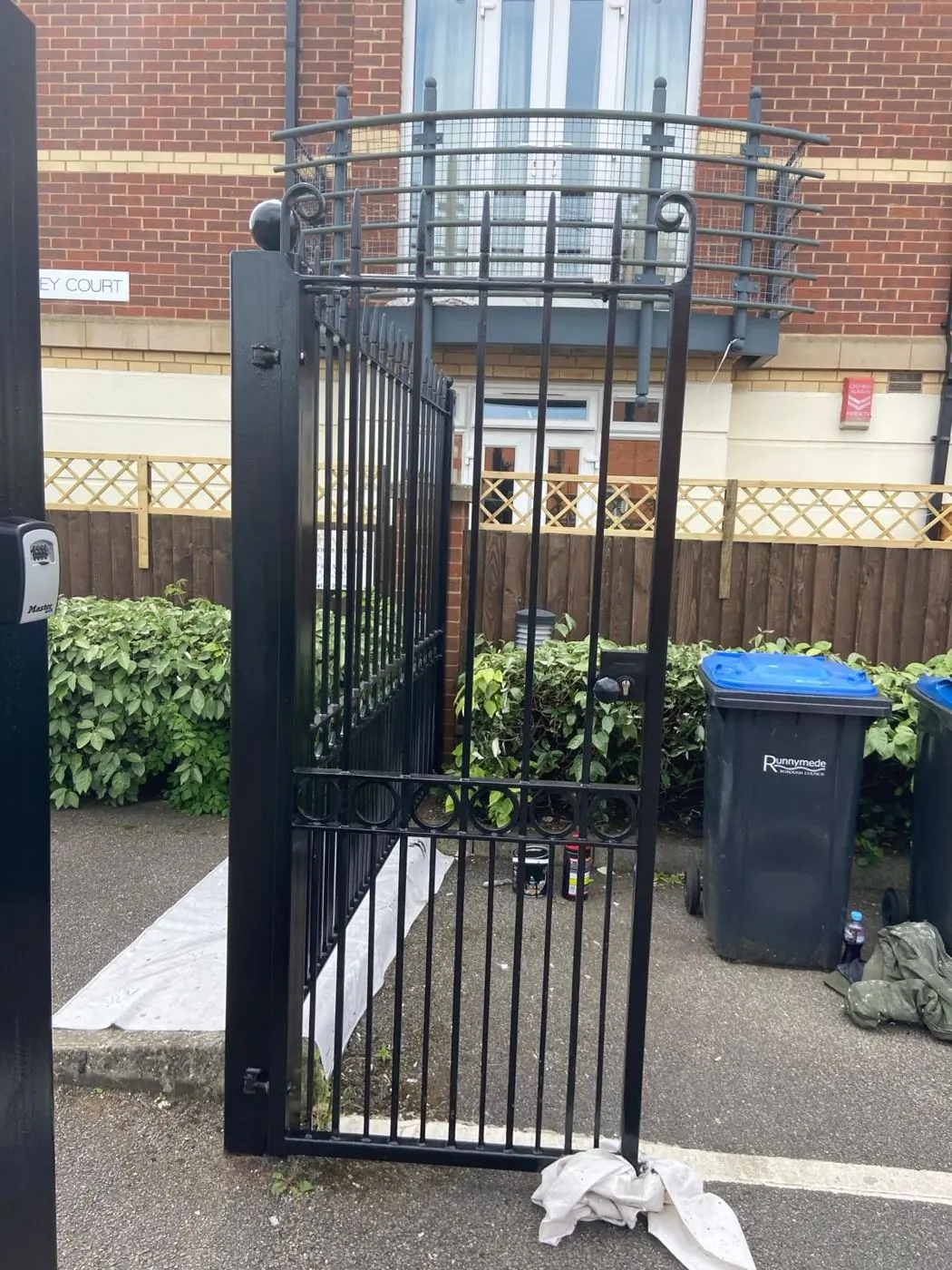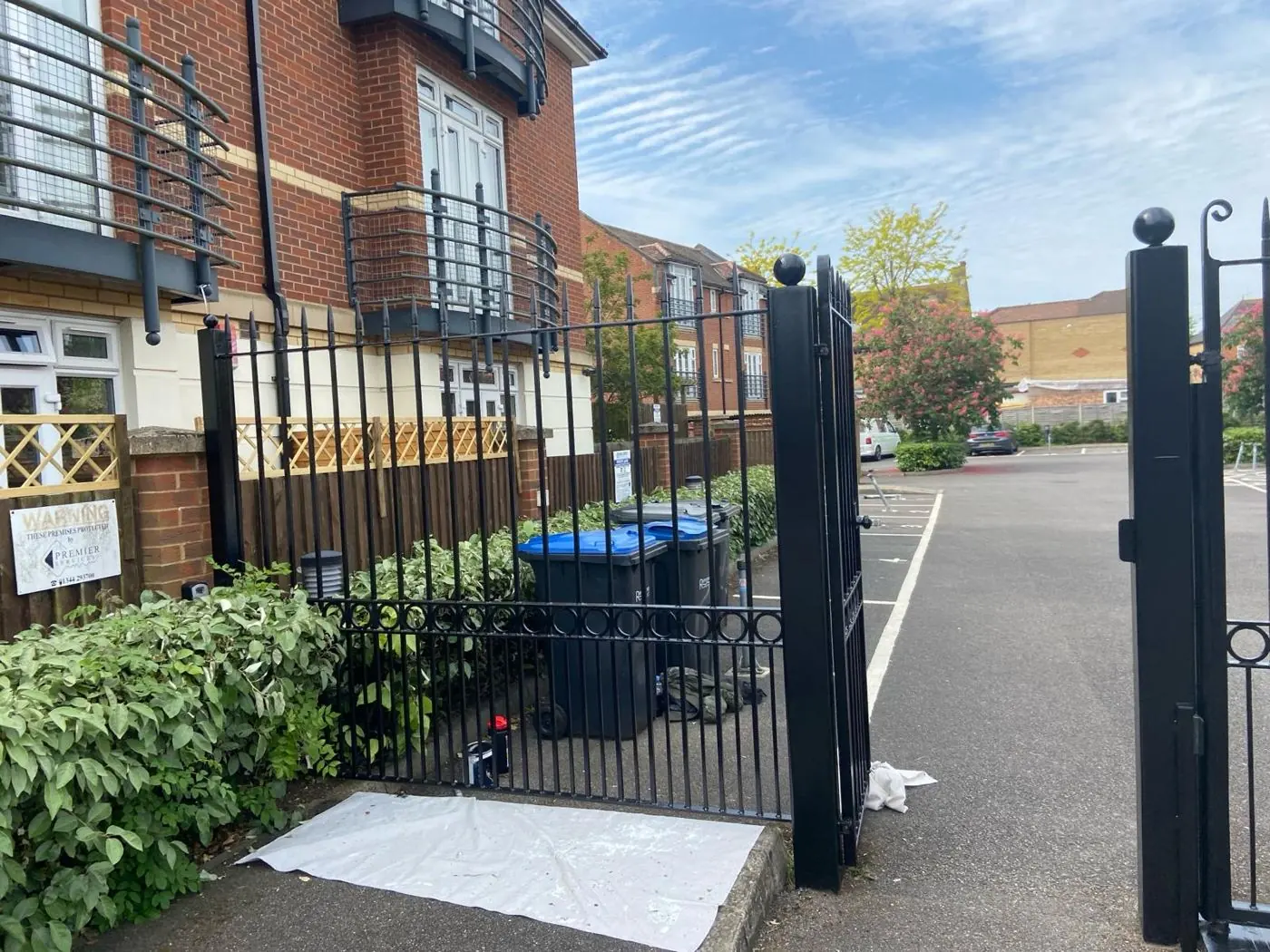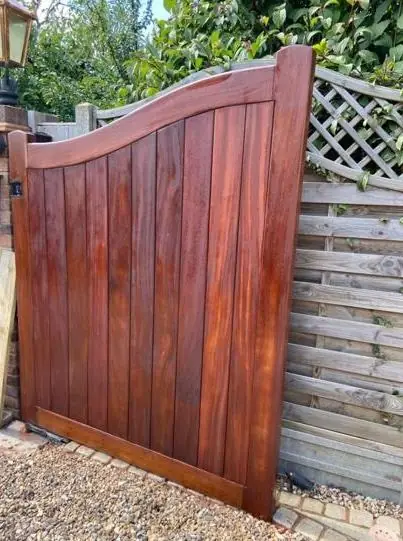
We stain and treat timber fences and gates in Paulerspury, about 9.8 miles south of Northampton in NN12. The work here leans towards farmhouse field gates, garden gates and longer boundary fencing around the village's separate ends and the hamlet of Heathencote.
Gates and boundaries on a rural parish
Paulerspury is a farming parish, with ridge-and-furrow fields and former deer parks round the village. Several farmhouses, including Kirby, Manor, Old Home, Elm and Heathencote Farmhouses, are now homes, and farmhouse plots like these can have wide field gates, driveway gates, post-and-rail and long runs of boundary fencing. Cottages in the ends have smaller garden gates and close-board or picket fencing. The scale of timber is often bigger than on a town garden, and so is the exposure.
Weather off open farmland
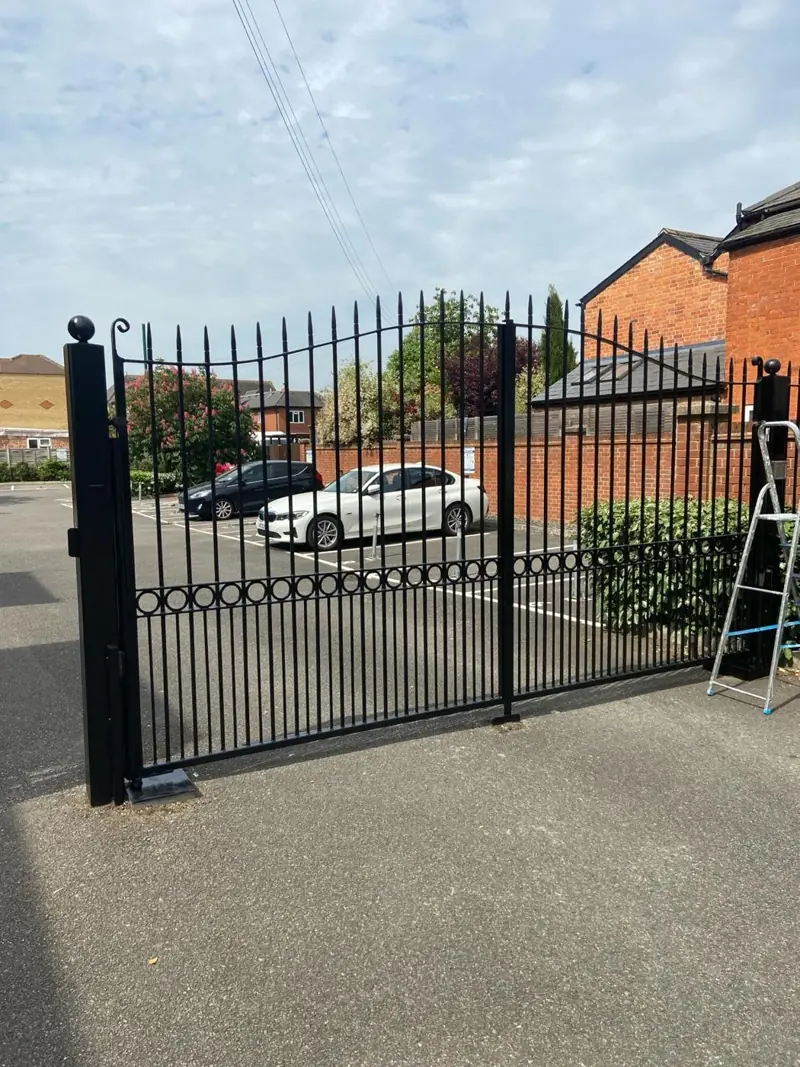
A gate at the edge of a field gets full sun, wind-driven rain and no shelter from buildings. Timber in that position greys quickly, opens up along the grain, and the bottom rails stay wet in long grass. Clay soils hold water, so posts and the foot of each gate are the parts to check first. That affects product choice. A penetrating oil or preservative stain that soaks in and can be topped up suits rough-sawn field gates better than a film-forming finish that will peel once moisture gets behind it.
Choosing a finish for each kind of timber
| Timber | Typical setting in the parish | Finish we’d usually suggest |
|---|---|---|
| Rough-sawn field gates and post-and-rail | Farmhouses at Heathencote and field edges | Penetrating preservative stain, easy to recoat |
| Planed garden gates | Cottages on the village lanes | Microporous wood stain in a natural or dark tone |
| Close-board fencing | Rear gardens in the ends | Water-based fence stain, brushed into the joints |
| Hardwood gates | Driveways on larger houses | Hardwood oil, renewed as it fades |
Colour on a gate next to a listed limestone cottage is worth some thought. Mid and dark browns, greys and muted greens sit well against the stone. A bright orange stain on a gate beside a Grade II cottage tends to look out of place. We have not found a conservation area designation for Paulerspury, but listed building rules can extend to structures within the curtilage of a listed building. If in doubt about a historic gate, check with West Northamptonshire Council.
Repair first, then stain
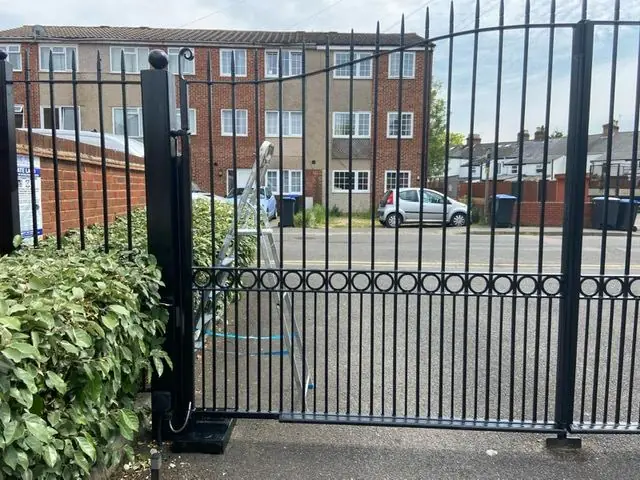
Stain won’t fix a gate that has dropped on its hinges or a rail that has gone soft. Before treating anything, we check that the hinges, latches and posts are sound, and we tell you if a carpenter is needed first. Preparation is then a stiff brush and a wash to remove algae and dirt, a light sand on planed gates, and enough dry days for the timber to dry right through. Freshly treated timber should not get soaked within a day or so, so we time the job around the forecast.
Access across the village’s ends
Jobs in Paulerspury can be some distance apart. Pury End, Plumpton End, Tew’s End, the church end, Pury Hill and Heathencote are separate places, linked partly by old hollow-ways. A long fence line on a farmhouse may need the van parked in a yard, while a garden gate on Lumber Lane or Careys Road is reached by carrying kit along a narrow lane. Dean visits to measure the timber and check access before quoting. He’ll also note which side of each fence faces the fields, since that face weathers fastest and may need an extra coat, and whether any neighbouring planting has to be tied back first.
The main fence and gate staining page covers products and process in more detail. See the Paulerspury page for other services in the village.
Last updated by Dean, DH Painter & Decorator.