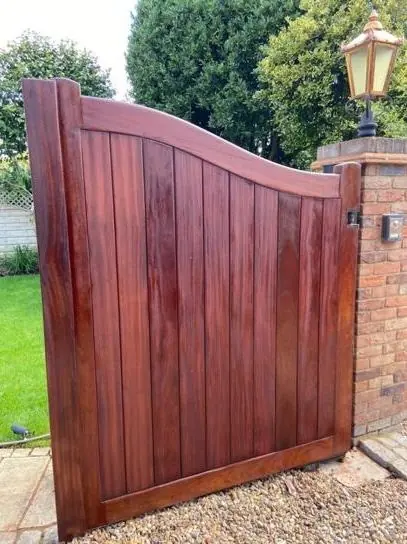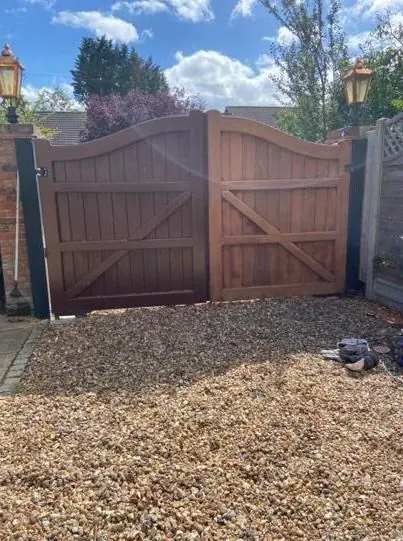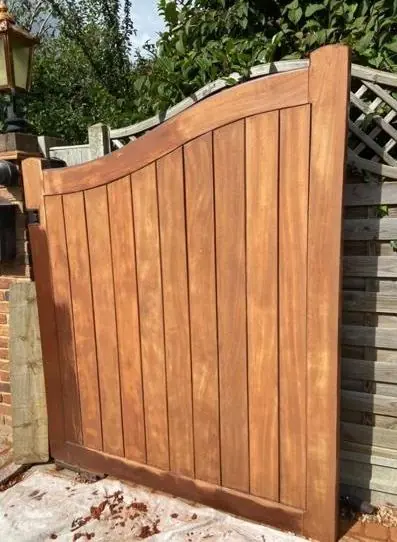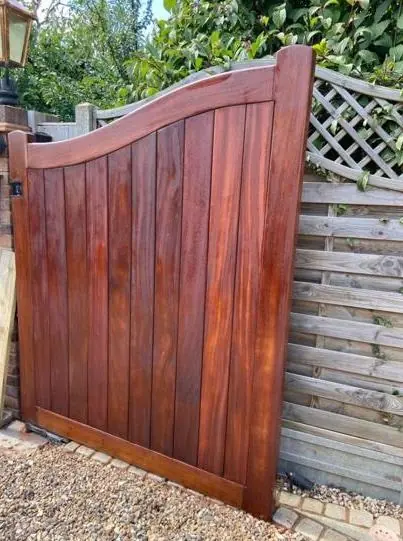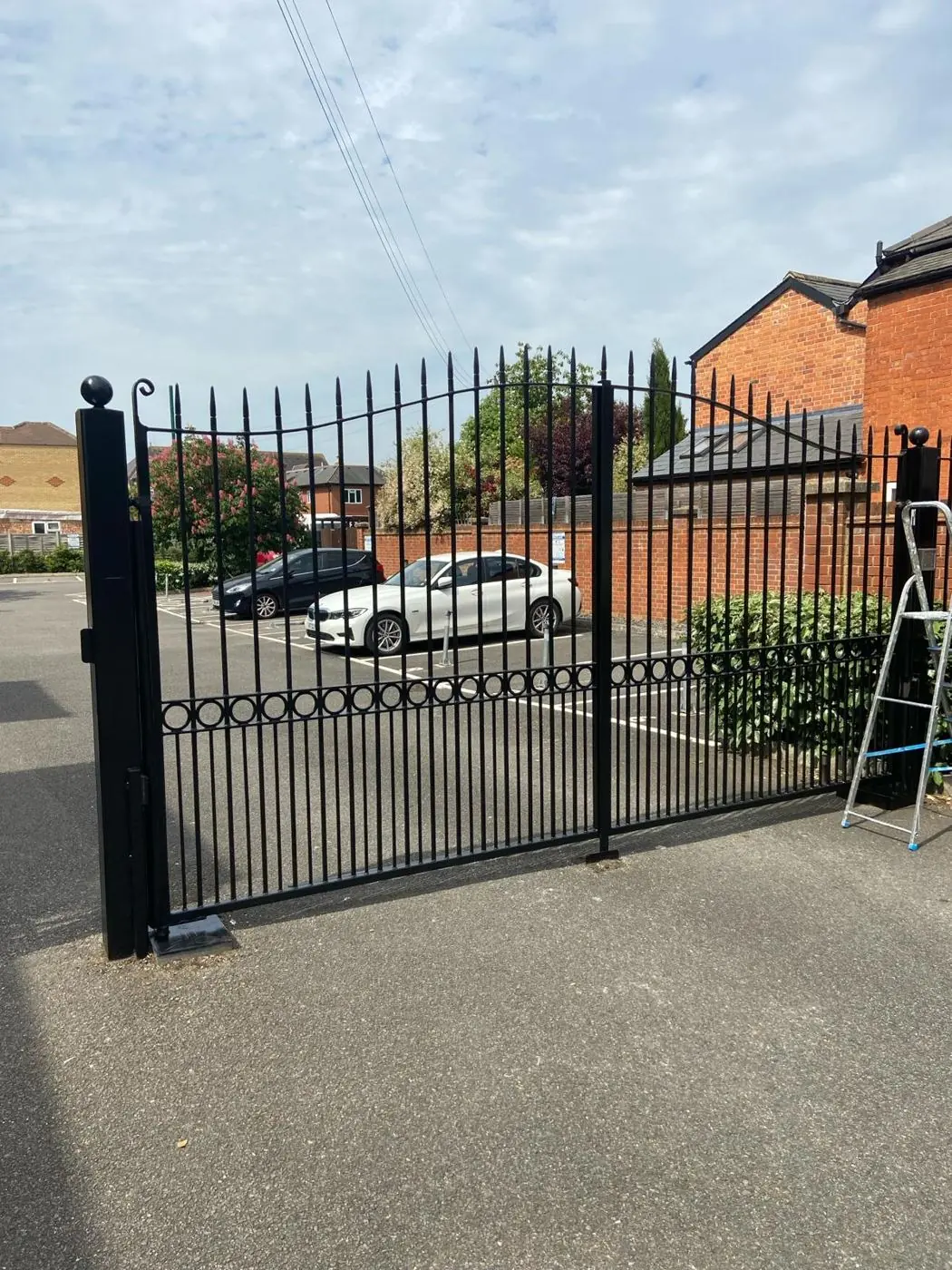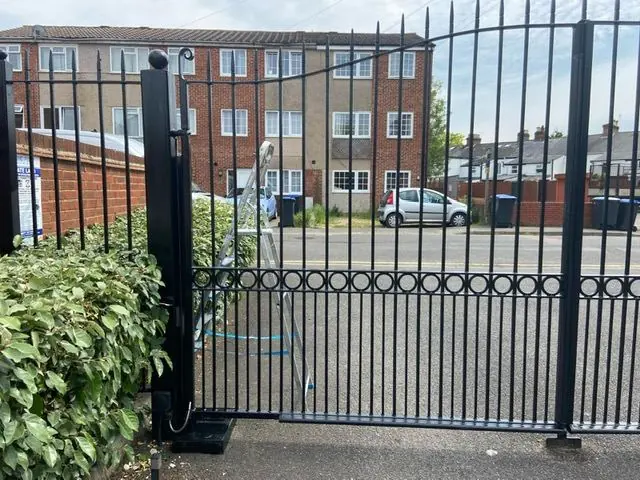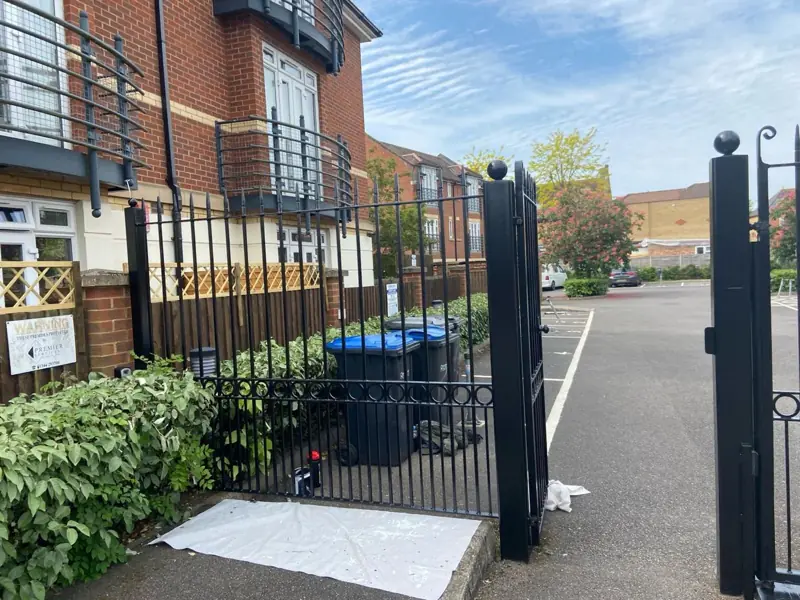
We stain and paint fences and gates in Blisworth, NN7, 4.6 miles south-west of Northampton along the old Towcester road. In the historic core most boundaries are stone walls, so the work there is usually a single timber gate, while the cul-de-sac estates and rural edges have full runs of fencing.
Two kinds of boundary in one village
The old part of Blisworth is bounded mostly in stone. Limestone walls enclose the larger houses around the church, and Church Lane is enclosed by a high wall of it. Timber in the core is limited to the gates set into those walls and the occasional side gate between terraced cottages. On the post-war estates built in the 1960s and 70s, and on plots at the rural edges, it is the other way round: lap panels, feather-edge boards, posts and gravel boards around every garden.
Those two situations call for different finishes and different conversations, so we cover them separately.
Gates in stone walls
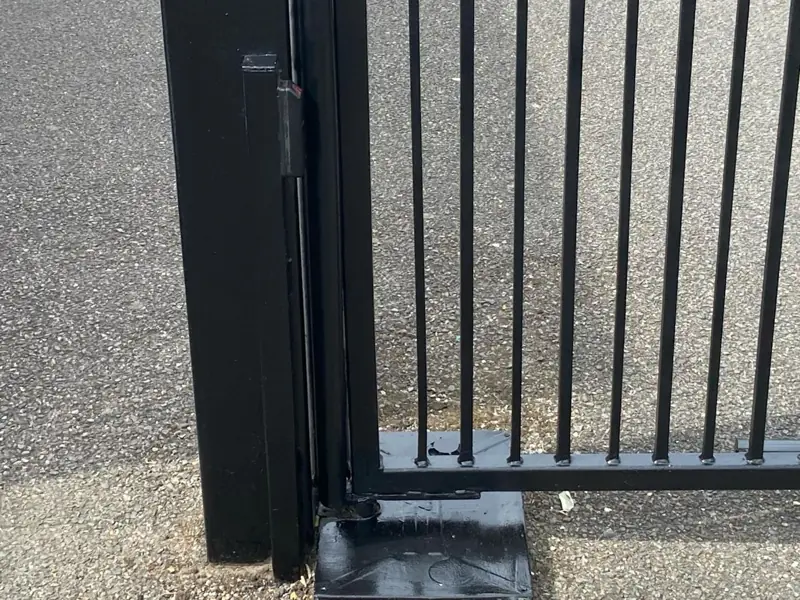
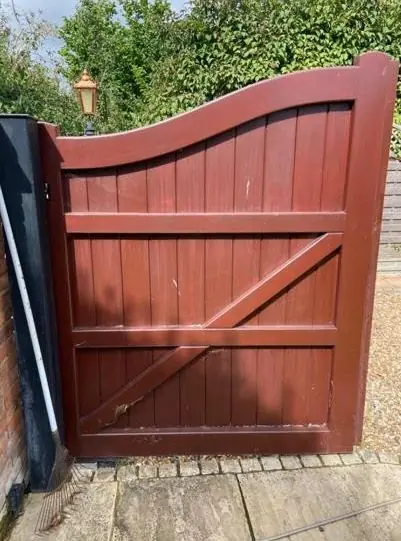
A timber gate in a limestone wall is a small job with a lot of character riding on it. The wall itself should stay bare, so the gate is the only colour in that stretch of boundary. Traditional colours suit it: deep greens, dark greys, off-black, or a stain that keeps the grain showing on a hardwood gate. Inside the Blisworth Conservation Area, matching what the street already has is usually the sensible starting point, and listed boundaries may need consent before anything changes.
What we do on a gate like this:
- Lift or wedge the gate so the bottom rail and hanging stile can be reached, since those stay wettest against the ground and the wall.
- Mask the stone and the hinge pins carefully. Stain splashed on limestone soaks in and is very hard to get out.
- Strip loose finish and flaking paint, and sand back grey, weathered timber to fresh wood.
- Brush the stain or paint into the grain, ends first, in dry weather.
If the gate is ironwork rather than timber, our metal gate page for the village covers that instead.
Estate fences and garden runs
The post-war cul-de-sacs have off-road parking and side access, which makes fence work straightforward. Most fences here are pressure-treated softwood panels, and the choice between a soaking stain and an opaque fence paint depends on how weathered the boards are and how much colour you want. Our main fence and gate staining page explains that choice and our preparation in full.
Fences on the elevated ground south-west of High Street take more weather than those lower down towards the canal. On an exposed run, a pigmented stain or fence paint holds colour longer than a clear finish, and the posts and gravel boards, which wear out first, are worth treating even if the panels are sound.
Shared fences are worth agreeing with the neighbour before we start, since stain on one side tends to run through the gaps. Where a run of panels backs onto a hedge or a tree line, as along parts of the tree-lined Northampton Road approach, we trim back enough growth to reach the boards and let them dry out before the first coat.
Cottages with small gardens and no rear access
Back on High Street, small rear gardens behind pavement-edge cottages are often reachable only through the house. That changes the job: tins, dust sheets and any old panels come through the hall, so we protect the floors on the route and keep the number of trips down. It is worth booking in a dry spell, so stain is not tracked indoors on wet boots.
For other outdoor work we cover here, see our Blisworth area page, and for timing, our guide on choosing the right season for outdoor painting.
Last updated by Dean, DH Painter & Decorator.