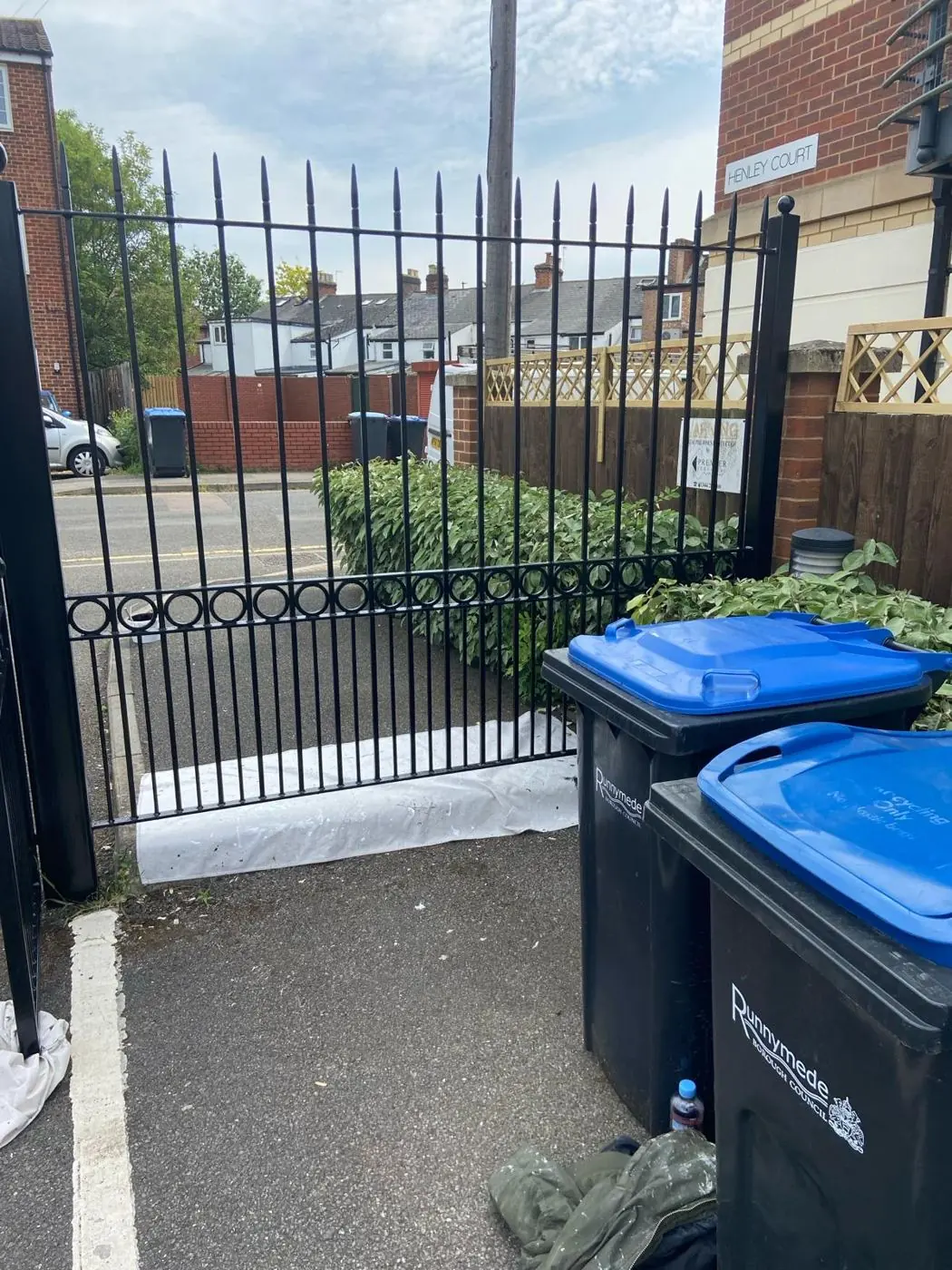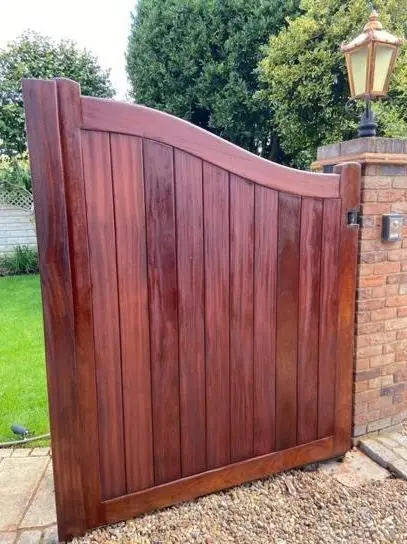
Dean stains and treats post-and-rail fencing, field and garden gates and timber outbuildings around Gayton, NN7, a short van run from our Northampton base. The parish is ringed by arable land, paddocks and stables, so much of the timber stands on open, exposed ground.
Paddock rails and five-bar gates on open ground
Outside the village core, Gayton is farmland: open arable fields with horse and livestock farming, a stables and riding school, and boarding kennels. That brings a different kind of timber from a town garden. Post-and-rail paddock fencing, field gates, stable doors, field shelters and timber outbuildings make up most of the staining work here, and they stand on high, exposed ground where sun, wind and rain reach the wood with little shelter.
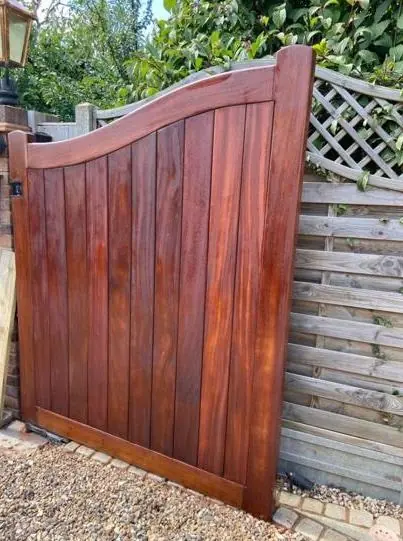
On long runs of post-and-rail the work is about consistency more than finesse. Every rail top, which takes the rain, and every post head, where end grain soaks up water, needs a full coat. Field gates need the same care at their joints, at the hinge post and along the bottom rail closest to wet ground.
Picking a finish for exposed rural timber
| Timber | Usual finish | Notes |
|---|---|---|
| Paddock post-and-rail | Preservative stain or treatment | Soaks in, wears gradually, easy to top up along long runs |
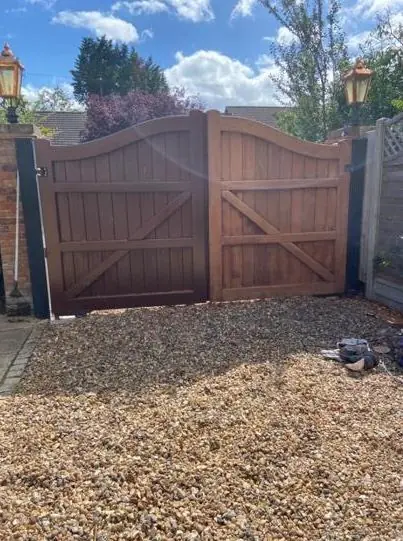
| Softwood field gates | Preservative base plus a coloured exterior stain | Extra coats on joints and end grain |
| Hardwood gates | Oil or a translucent stain made for hardwood | Keeps the grain visible and stops silvering |
| Garden fences in the village | Fence stain or opaque fence paint | Chosen by how weathered and visible the fence is |
| Outbuilding cladding and stable doors | Breathable exterior stain or paint | Hardware masked and all edges sealed |
Where animals will be next to the fence, tell us when you ask for a quote. We choose products whose labels allow use around livestock once dry, and agree with you how long horses or other animals should be kept off while the finish cures.
Garden boundaries under the village trees
In the village itself, the larger gardens behind the older houses and the newer infill plots have their own fences and side gates. The mature tree groups that the parish values drop leaves, sap and seed onto them, and fences under a canopy stay damp and turn green. Those panels need cleaning and an algae treatment, then time to dry, before a stain will take evenly. A boundary fence has two sides, and we only treat a neighbour’s face with their agreement.
Within the conservation area, strong colours on front boundaries deserve some thought, since the Neighbourhood Development Plan asks that the old village centre keeps its character. Natural timber tones and muted greens or greys sit more comfortably beside limestone and ironstone than bright modern shades.
Fitting the work around a working yard
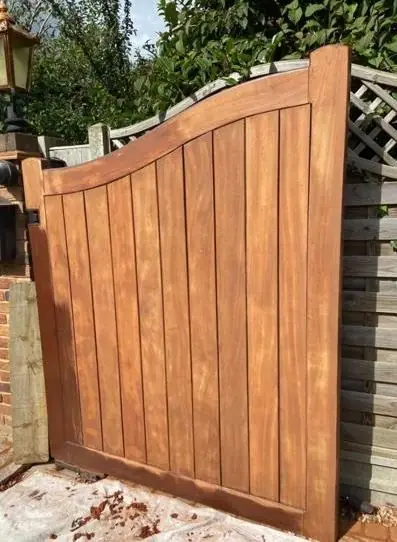
Rural jobs come with practical questions. Where can the van park off a narrow lane without blocking machinery or sitting on a verge? Can a paddock be emptied for a day or two? Is there water on site for washing down? We sort these out at the quote, and on bigger runs of fencing the work can be split into sections so animals always have somewhere to go.
Staining depends on the weather: the timber needs to be dry, and rain on fresh stain before it has soaked in spoils the finish. Late spring to early autumn usually gives the most reliable windows on Gayton’s exposed ground. The full process, including how long new pressure-treated timber should be left before staining, is on our fence and gate staining page, and our Gayton page covers the other work we take on in the village.
Last updated by Dean, DH Painter & Decorator.