Painter & decorator covering Northampton and surrounding areas

Metal Gate and Railing Painting in Gayton

Rust treatment and brush-applied enamel for wrought-iron gates and railings on Gayton's older stone properties and steel gates on newer homes.

  • Over 30 years experience
  • Free quotes & advice
  • Fully insured & trained
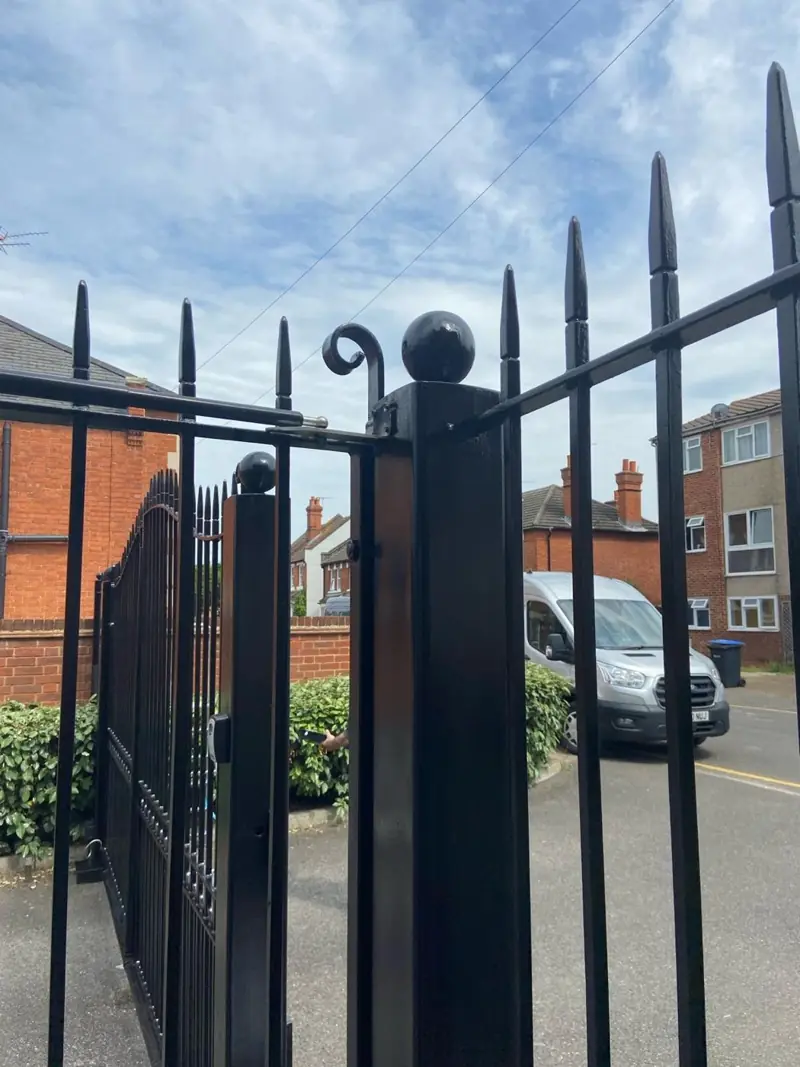
Close-up of black spear-top railings and a ball-finial gate post after repainting

Dean paints and restores metal gates, railings and ironwork in Gayton, NN7, which we cover from Northampton, just under five miles away. Older properties in the village have traditional ironwork, and the listed Gayton House gates show the kind of fine lattice detail that needs patient hand brushwork.

The Gayton House gates and what fine ironwork demands

Gayton House was demolished in 1972, but its gatepiers and gates survive in the conservation area and are Grade II listed. The listing describes ashlar piers carrying wrought-iron gates with lattice panels and spike finials. They are mentioned here because they show the type of ironwork found on older property around the village and what painting it involves, not because we have worked on them. A lattice panel has dozens of crossing bars, each with four faces and a joint where water collects. Spike finials have sharp tips and narrow necks where paint thins and rust starts. Spraying that kind of detail leaves thin edges and runs; a brush worked into each crossing is the reliable way to get full coverage.

Any work on listed ironwork, including a change of colour, should be cleared with West Northamptonshire Council first, as listed building consent may be needed.

Identifying the metal before preparing it
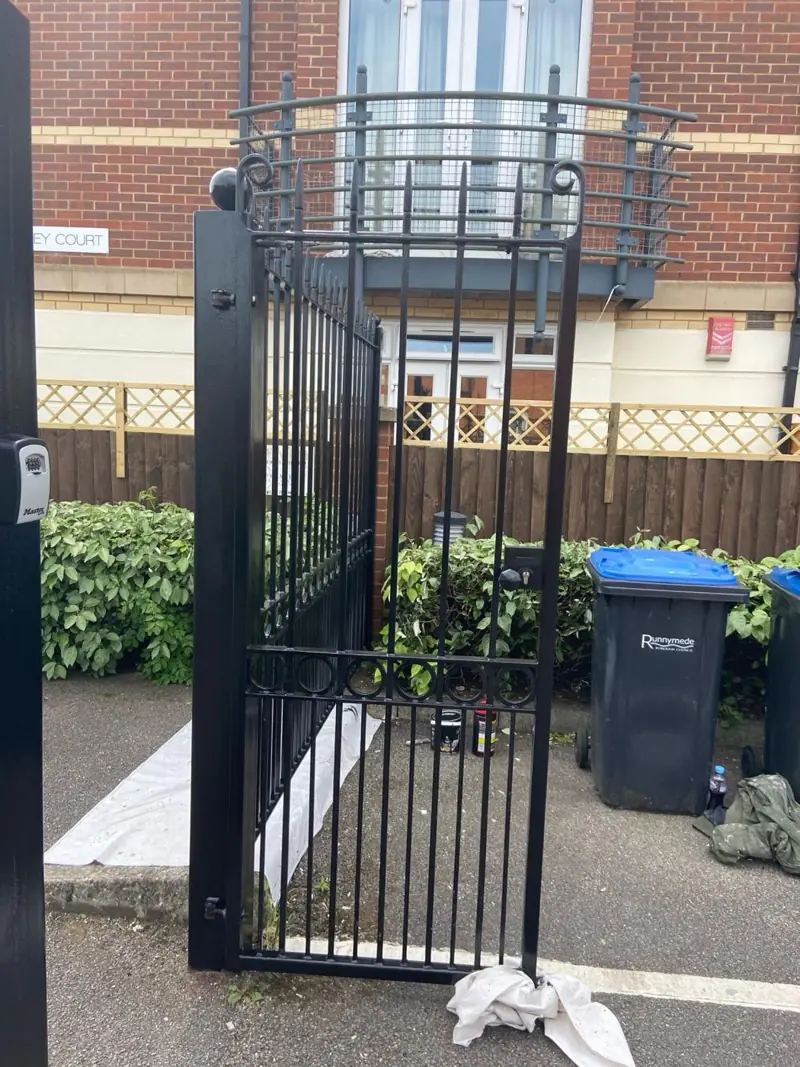
Black metal pedestrian gate freshly repainted outside a red-brick block of flats

Gates and railings on Gayton’s older houses are likely to be wrought or cast iron, while gates added to newer infill homes are more often fabricated mild steel or galvanised steel. The preparation differs for each:

  • Wrought iron is fibrous and tough, often under many old layers, and can be wire-brushed firmly back to sound metal.
  • Cast iron finials and panels are brittle, so heavy scraping or hammering is avoided and decorative parts are cleaned with hand tools.
  • Mild steel rusts quickly once its coating breaks and needs the rust removed and a rust-inhibiting primer applied the same day.
  • Galvanised steel needs a primer designed to grip zinc, or the top coat will peel.

Old paint on period ironwork may contain lead. Where that is a risk we work by hand with wet methods and dust control rather than dry power sanding, and collect the debris.

Iron set into stone

On the older properties, gates and railings may be fixed into limestone, ironstone or ashlar, as the Gayton House gates are hung on ashlar piers. Iron expands as it rusts, and where a hinge pin, railing foot or gate catch is set into stone, that swelling can crack the stone around it. So the fixings get extra attention: rust is cleared from around each one as far as can be reached, the joint is primed thoroughly, and any gap where water sits is pointed out to you so it can be sealed or repaired by the right trade. We sheet the stone around the base while working, because paint and rust stains on porous limestone are hard to remove.

Weather, trees and keeping the finish going
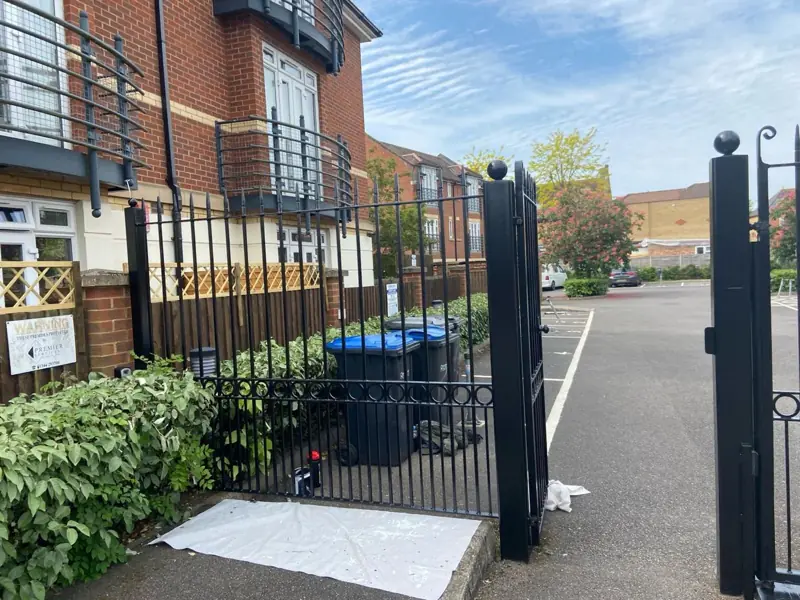
Black metal railings and gate repainted, dust sheet protecting the paving below

The village’s ridge-top position and its tree groups both shorten the life of metal paint. Gates on north-west and north-east boundaries take driving rain off the open valley, and gates under trees stay damp and collect leaf debris along their bottom rails. Those bottom rails, the hinge knuckles and the tops of horizontal bars get the most attention. A brush-applied metal enamel over a rust-inhibiting primer gives a tough film, and touching in small chips each year stops rust spreading under the paint. In the conservation area, black, dark green and other muted traditional colours are the usual choices for ironwork.

The step-by-step method is on our metal gate and railing painting page. Cost depends heavily on how ornate the ironwork is, and our painter and decorator cost guide explains what affects a quote. For the village’s other painting needs, see our Gayton page.

Last updated by Dean, DH Painter & Decorator.
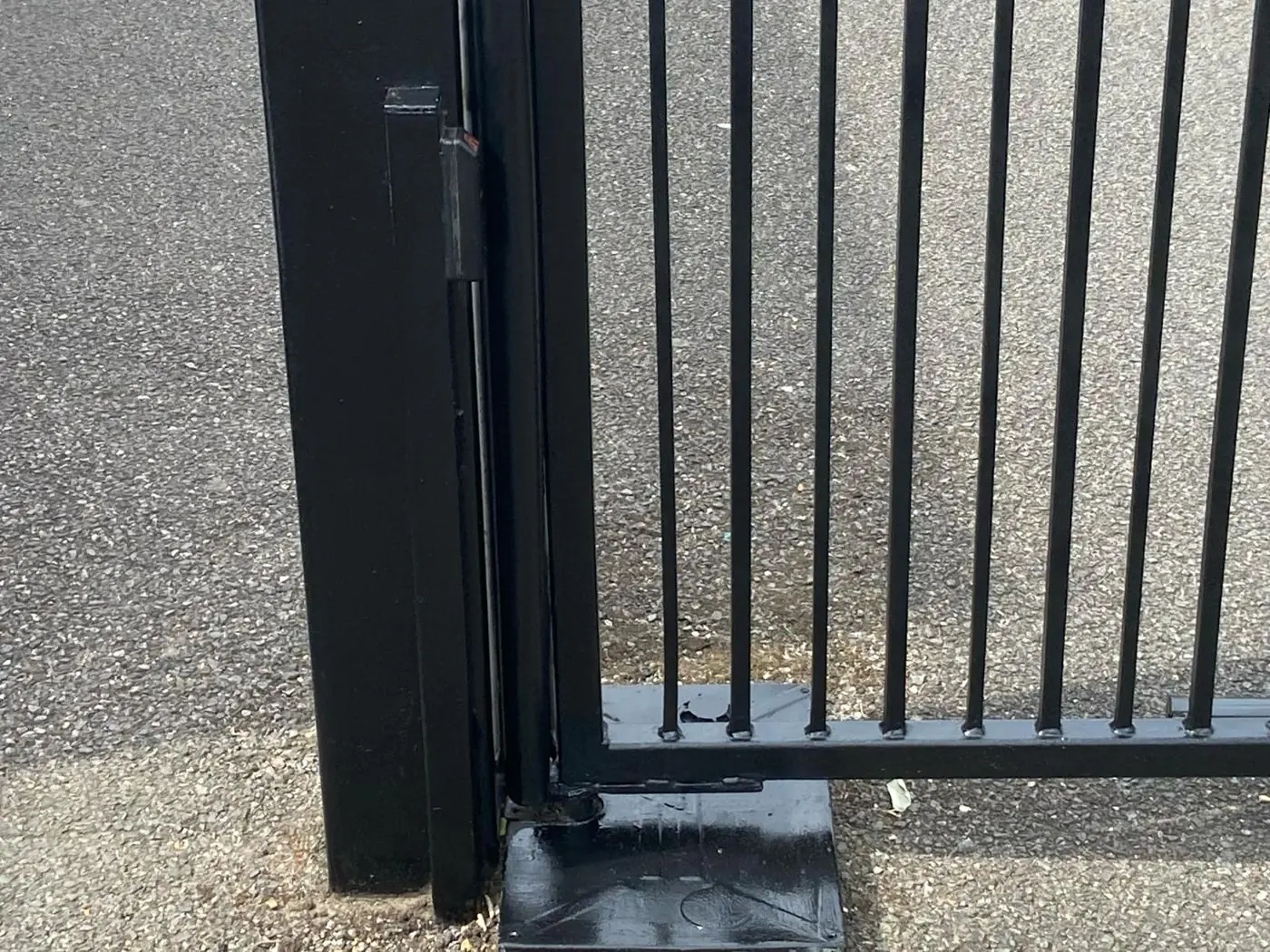
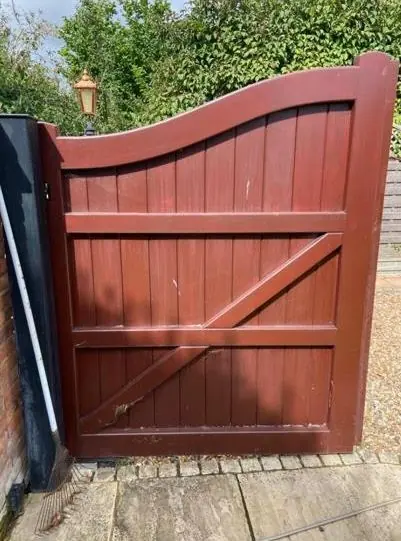
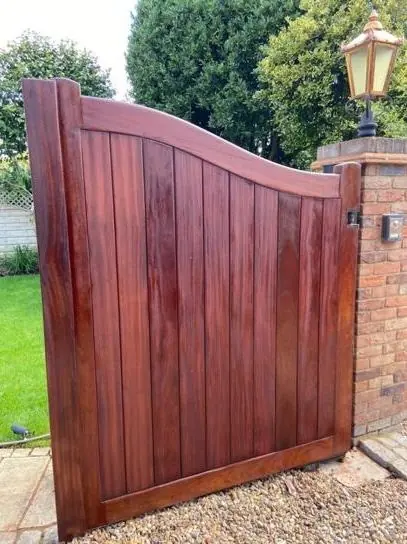
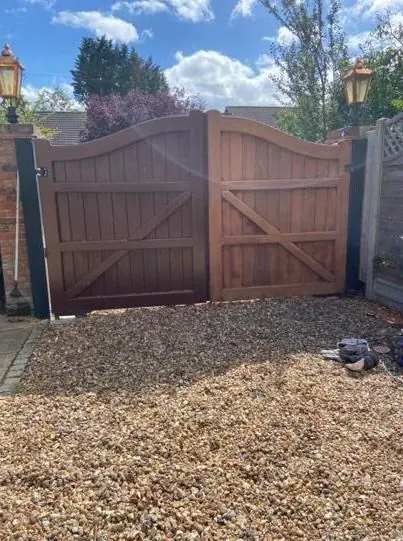
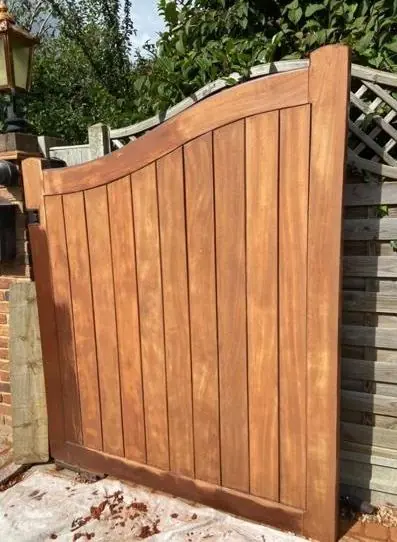
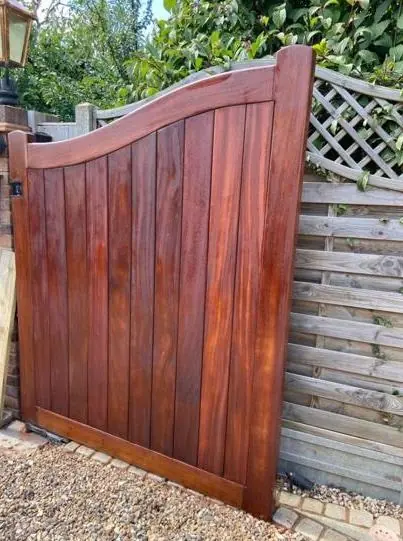
Close-up of a black gloss finish on a gate post, hinge and base plate Back of a hardwood gate with ledge and brace, stained a deep mahogany red Hardwood gate with a rich mahogany stain, finished by a Northampton decorator Pair of arched hardwood driveway gates stained, viewed across a gravel drive Curved-top hardwood gate stained a warm honey tone, dust sheet still beneath it Swan-neck hardwood side gate freshly stained a glossy red mahogany beside lattice fencing

Metal gates & railings in Gayton: your questions answered

Can't see your question? Call us on 07539 779 036 and we'll happily talk it through.

Can you repaint ironwork on a listed property in Gayton?

Yes, with the right checks first. Listed ironwork in Gayton includes the Grade II gates at Gayton House, and several houses in the old core are listed too. Repainting listed ironwork in the same colour and finish is generally maintenance, but a change of colour or a different finish may need listed building consent from the council. We hand-prepare and brush-paint, so the original detail is kept.

My gate in Gayton is set into a stone pier and the stone is cracking. Is that rust?

It often is. Iron swells as it corrodes, and a rusting hinge pin or fixing leaded into limestone or ironstone can split the stone around it. We clear and prime as much of the fixing as can be reached and seal the paint film around it, but if the stone is already cracked you will need a stonemason to reset the fixing properly.

Should ornate lattice gates be sprayed or brushed?

Brushed, in our view. Lattice panels and spike finials like those on the old Gayton House gates have many crossing bars and sharp edges, and spray tends to leave thin coats on edges and runs in the joints. Brushing each crossing gives an even film where rust usually starts. It takes longer, which is why ornate ironwork is priced on detail rather than size.

What colour should railings be in Gayton's conservation area?

Black, dark green, dark grey and other muted traditional colours sit well against the limestone and ironstone of the historic core, and they follow the parish plan's aim of preserving its character. Bright or metallic finishes stand out more. If the railings belong to a listed building, get the council's agreement before changing the colour from what is there now.

What customers say about Dean

Most of our work comes from recommendations and returning customers. These are real reviews from customers after the job was finished, in their own words.

More customer reviews

After completing my gates I was then assured Dean was more than competent to repaint the inside of my property from top to bottom. It’s a large 4 bedroom house and was done to a very high standard. Once again I would highly recommend him.

Customer review Gates, then a full four-bedroom interior

I contacted Dean to get the outside of the house painted; the house is all roughcast render. He has done a fantastic job; the house is looking brand new. The same he did for our garage, painted our bedrooms x2, did extra jobs for us like skirtings and door frames, and painted even our gates. I could not recommend him enough; he is attentive, smiling, always on time, and nothing too much; I am so happy with what Dean has done; he went above and beyond. I have recommended him to all my friends and family.

Read full review
Customer review Roughcast render, garage, bedrooms and gates

Dean did a great job for a good price i'd be very happy to recommend him always on time polite and friendly.

Customer review Painting and decorating

Start your project

Get a free painting and decorating quote

Tell us a little about the job and we'll arrange a visit to look at it properly. Quotes and advice are always free, with no obligation.

What happens next

  1. We get back to you to arrange a convenient time to visit.
  2. Free visit. We look at the job and talk through colours, finishes and any repairs.
  3. Written quote. A clear price covering preparation, materials and the finish we agreed.

Request a free quote

Please enter your name.

Please check your email address.

Please enter a valid phone number.

Prefer to talk? Call 07539 779 036.

Call 07539 779 036Call nowFree quote