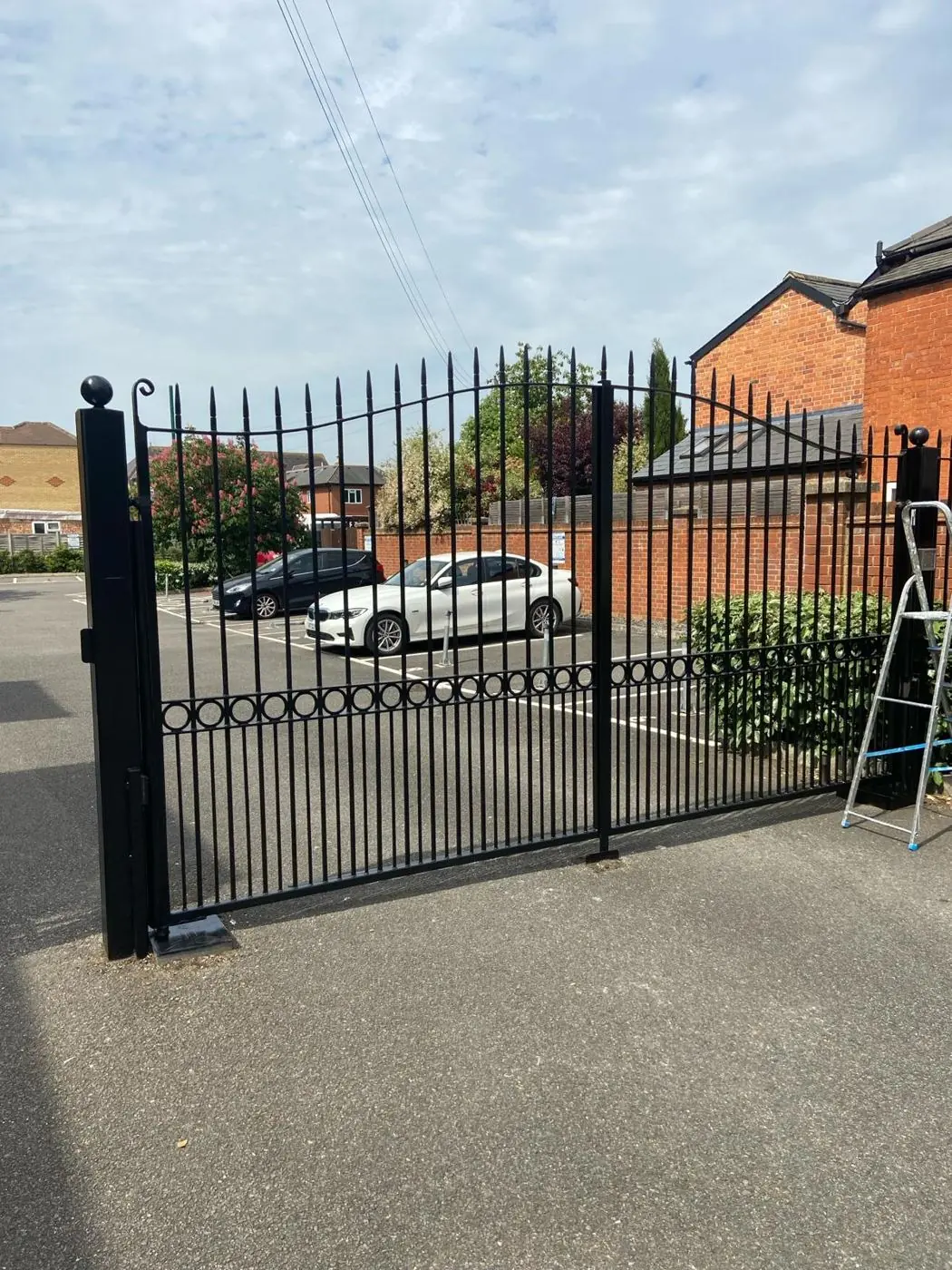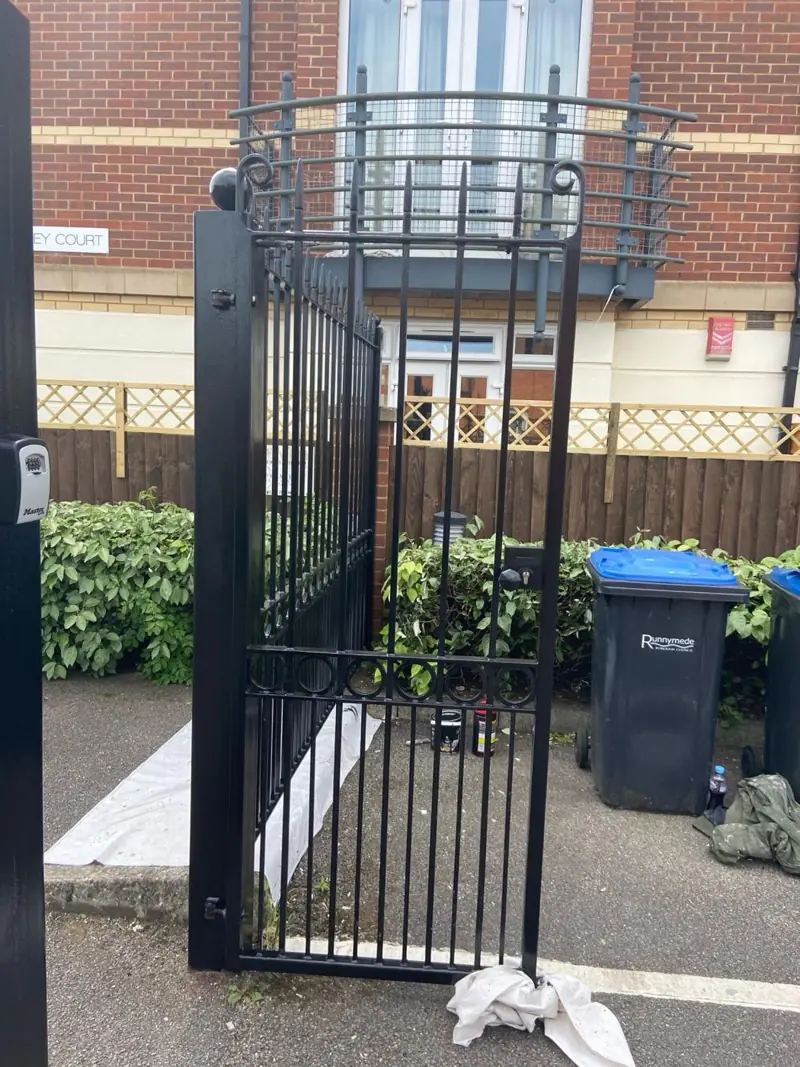
Dean paints metal gates and railings in Blisworth, NN7, on the Grand Union Canal 4.6 miles south-west of Northampton. Ironwork in the village is scattered, mostly gates in limestone walls and railings on bigger plots near the church, and some canal-side properties need extra attention to rust.
Ironwork in a village of stone walls
Blisworth does not have long runs of street railings. Its boundaries are mostly limestone walls, and metalwork turns up in particular places: a pedestrian or carriage gate hung in a wall, railings on the larger houses set in big plots around the church and Church Lane, and handrails or gates on properties nearer the canal. That makes most jobs here a single gate or a short section of railing, but each one tends to be fixed directly into stone, which shapes the whole approach. On the 1930s brick terraces and the post-war estates, metalwork is more likely to be a modern mild steel or galvanised side gate, which needs its own primer rather than the treatment used on old wrought iron.
Where iron meets limestone
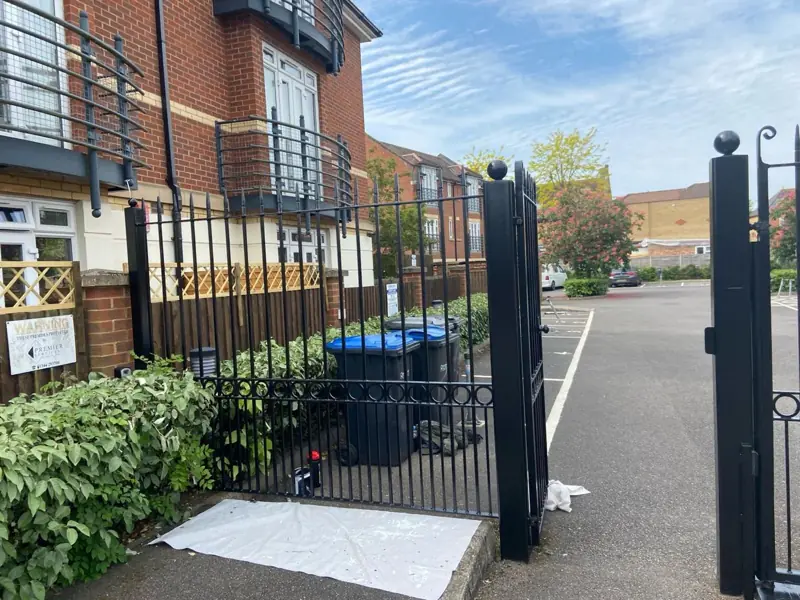
When iron rusts it expands. A gate pin or railing foot leaded or mortared into a limestone pier can swell enough to crack the stone around it. So on any Blisworth gate set into a wall, the fixings are the first thing we look at:
- Wire brush and scrape back to sound metal, paying most attention to the base of each bar and the hinge pins.
- Treat remaining rust with a rust converter or inhibiting primer, working the primer into joints and scrolls.
- Seal the point where metal enters stone so water cannot sit there.
- Leave the stone itself unpainted and clean, masking it before any coat.
If a fixing has already split the stone, that is a repair for a mason using lime mortar, in line with the conservation area appraisal’s warning about inappropriate wall repairs. We will point it out rather than fill it with cement.
Colour, consent and the listed houses
Around the church, Blisworth House, The Old Rectory and Church House are all listed and sit inside the conservation area. For railings and gates on or around a listed building, repainting in the existing colour is the safe course; a change of colour or finish may need listed building consent. Black and very dark greens are the usual traditional choices, and both sit well against the honey stone and ironstone bands. Gates set in walls elsewhere in the village suit the same palette.
Damp by the canal, sap under the trees
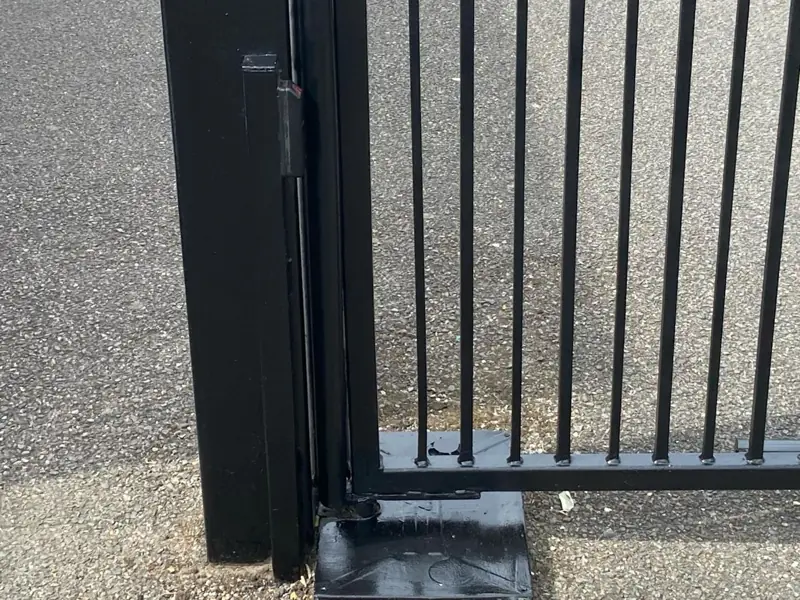
The Grand Union Canal runs down the west side of the village, and metal near water stays damp for longer each morning and rusts faster once the paint is broken. We start canal-side work later in the day once surfaces have dried, and favour a primer and top coat system built for exposed ironwork.
Under the mature limes and beeches near Blisworth House and the cemetery, the problem is sap and leaf litter rather than standing water. Some of those trees are protected by Tree Preservation Orders, so we cannot cut them back to make room and we have to place equipment with care. Sticky deposits are washed off and the metal dried before priming, or the coating will not bond.
Getting to the gate
Church Lane is a tight, walled lane, with little room to park or lay out sheets, so a gate there is usually worked from one side with everything carried in. On High Street, the traffic and bus stops mean we keep the working area tight and tidy. Full details of how we identify the metal and choose the primer are on our main metal gate and railing painting page, and the rest of the village is described on our Blisworth page.
Last updated by Dean, DH Painter & Decorator.