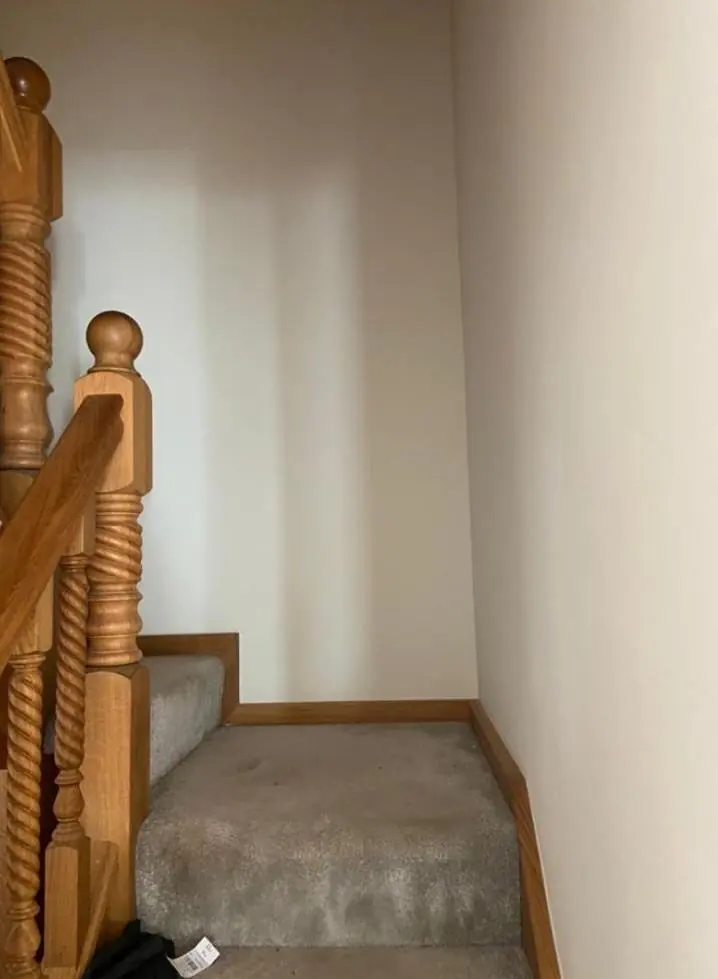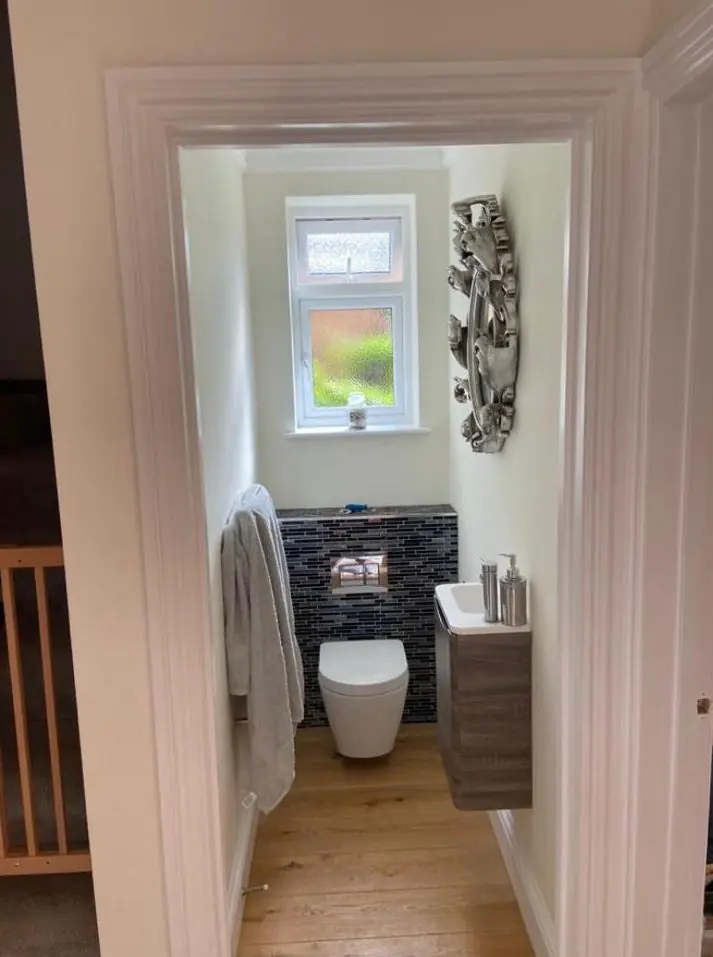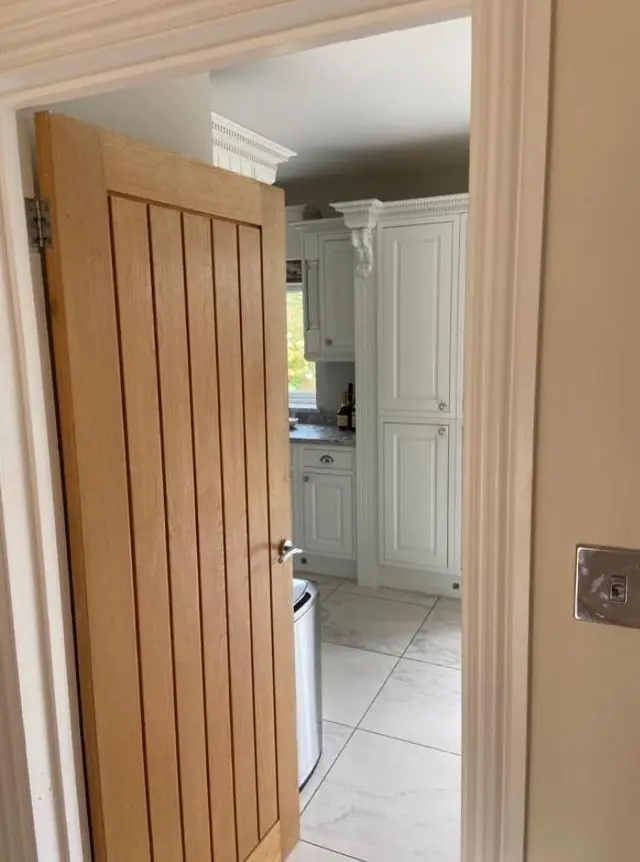
Dean applies decorative and traditional finishes in Stoke Bruerne, around 6.6 miles south of Northampton. In this village that mostly means limewash on old limestone walls, picking out period joinery, and painted panelling that suits the converted farm buildings.
Limewash belongs on the old stone
The cottages around the green and along Mill Lane, Chapel Lane and Rookery Lane go back to the 17th and 18th centuries, built from coursed and squared limestone rubble. Inside, many still have lime plaster on solid walls. For walls like these limewash is more than a look. It lets the wall release moisture, it bonds into lime plaster rather than sitting on top as a film, and it gives a soft, uneven depth of colour that changes with the light through a small casement.
Limewash goes on in several thin coats onto a damp wall, and it needs mist-spraying and protection from fast drying, so it isn’t a one-day job. It can’t go over modern vinyl emulsion, which is common in old cottages after decades of DIY. Where a wall has been sealed, we look at whether the old paint can come off or whether a breathable mineral paint with a limewash-style finish is the more practical choice. On a listed cottage, such as Old Dower House or Hoperidge Cottage, removing historic finishes may need consent, so we check before any stripping starts.
Model farm barns: panelling and texture against stone
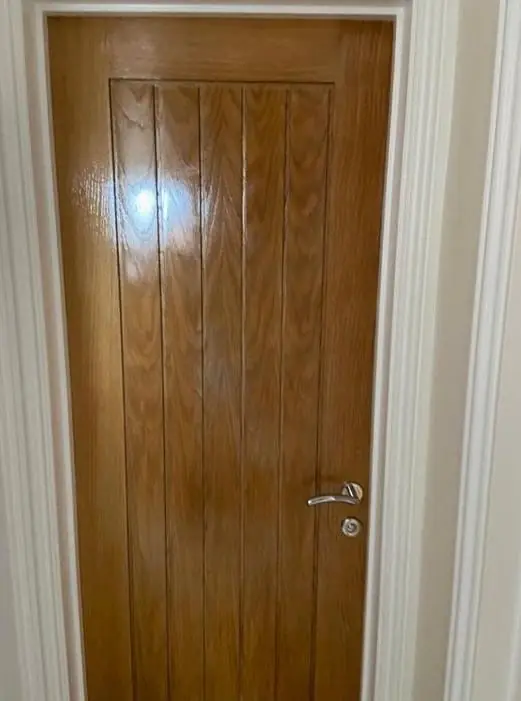
Rookery House and the U-plan model farmyard opposite were built by the Grafton Estate, the farm buildings in 1839-44 for the 4th Duke of Grafton. The barns are now four homes, and like the village’s other converted outbuildings they tend to combine retained stone walls with new plaster. That suits a few decorative approaches:
- Painted wall panelling on the new-build walls, so a plain plastered room gains some of the weight of the old structure
- A two-tone or dado-height split that ties new and old walls together
- Limewash or a mineral finish on exposed stone, leaving its texture to show
New plaster under any of these has to be properly mist-coated first, which is covered in our guide to painting new plaster.
Picking out detail in the grander houses
The bigger houses carry more joinery. Rookery House’s main sash has sixteen lights, Bruerne House rises to three storeys behind its garden walls, and the Victorian buildings on Chapel Lane and Bridge Road add a later layer. Where shutters, panelled doors, dado rails or fire surrounds survive in houses of this kind, picking them out in a contrasting colour or sheen draws attention to the craftsmanship. Hand-painted work like this needs flat, clean prep under it; our main decorative finishes page explains the process and the faux effects we do.
When a decorative finish isn’t the right call
Some surfaces in Stoke Bruerne are better left alone. Bare limestone outside, the dry stone boundary walls and the Victorian red brick belong to what the conservation area protects, and the appraisal warns against unsympathetic repairs. A faux stone or brick effect on a 1630s cottage would also fight the real material a few metres away. Modern houses on Wentworth Way have none of these limits, and a feature wall, a glaze effect or a colour-blocked hallway can work well there. The pubs, tearooms and guesthouses by the top lock are a separate case again. A painted or stencilled feature on a bar back wall or a tearoom panel can suit them, but the work has to fit around summer trade, so it usually lands in the colder months when the towpath is quiet. Our Stoke Bruerne area page covers everything we do in the village from our Northampton base.
Last updated by Dean, DH Painter & Decorator.