DH Painter & Decorator applies decorative paint finishes in Hackleton, about 4.7 miles south-east of Northampton. Dean suits each finish to the house: limewash-style and heritage flat paints in the 17th and 18th-century limestone cottages, and panelling, two-tone schemes and feature walls in the estate homes behind Main Road.
Start with the age of the house
Hackleton’s homes fall into clear groups. Late 17th and 18th-century limestone cottages and farmhouses face Main Road, among them Hackleton House, dated 1754, with its 12-pane sashes. A small cluster of Victorian red-brick buildings stands around Chapel Lane. Behind the road, cul-de-sacs of semis, detached houses and bungalows went up between 1939 and 2000, and smaller schemes such as Oak Way followed later. A decorative finish that looks right in one group can look out of place in another, so the house comes first and the effect second.
Soft, chalky surfaces for old lime walls
In the older cottages, rooms are low and walls are uneven lime plaster. A sheen shows every bump, and a crisp modern effect looks odd beside old stone and timber. Limewash-style paints and heritage flat finishes suit these rooms better. Their soft, slightly mottled surface sits comfortably on walls that are not flat, and the breathable versions let solid limestone walls dry out, which a plastic-based coating would not.
Picking out detail is the other part of the job. Where a cottage keeps panelled doors, old beams or a fireplace surround, painting them a shade deeper than the walls, or in a different sheen, draws the eye without overdoing it. In a Victorian house with a picture rail or cornice, a contrast colour above the rail can bring down a tall ceiling. Thinking about whether a feature should be painted at all comes before any of this, and Dean will say so if he thinks a timber is better left as it is.
Panelling, colour blocking and feature walls in the estate houses
Estate houses have plain walls and regular rooms, which suit more modern work:
- Half-height panelling with a two-tone split along the top rail, often in a hallway or dining room.
- Colour-drenched rooms, with walls, woodwork and sometimes the ceiling in one shade.
- A single wall in a strong colour or a layered glaze, usually a chimney breast.
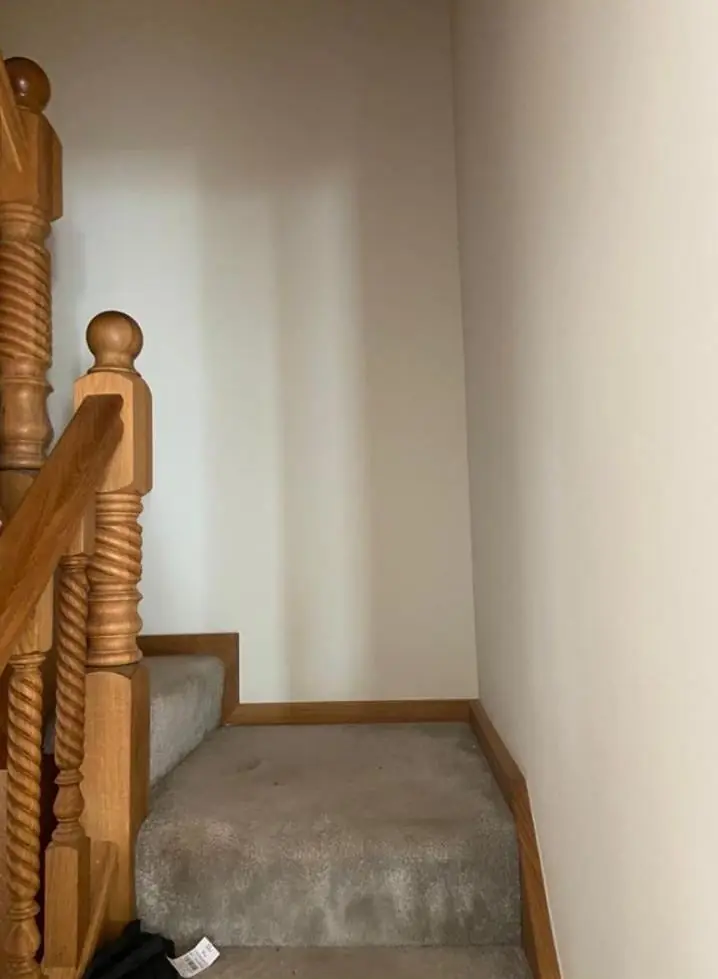
- Painted stairwell panelling, where tall landing walls in two-storey semis give space for it.
New panelling only looks good when the joints, pins and mitres disappear, so it is filled, caulked, sanded and primed before two finishing coats. The bungalows on the housing-association estate have lower rooms, where a feature wall or a low panelled section works better than full-height boarding. On Oak Way and Lyne Walk the walls may still carry thin builder’s emulsion, so they get a proper base coat before any glaze or colour block goes on, or the effect shows every patch underneath.
Where we would hold back
Some effects do not belong in Hackleton’s older houses. A painted imitation of stone tends to look false a few feet from real buff limestone and ironstone. Bare stone walls inside a cottage should not get a modern sealed coating. The beamed ceilings in the Jetty Cottages are a similar case: the timber is the decoration, so any effect around it should stay quiet. On the Grade II buildings along Main Road, a scheme that covers or alters original features may need listed building consent, so check with West Northamptonshire Council before committing. Choosing the colours for any of this goes hand in hand with our colour and finish advice.
The full range of effects we offer is on our decorative finishes page. For the rest of our work in the village, about 4.7 miles from Northampton on the B526, see the Hackleton area page.
Last updated by Dean, DH Painter & Decorator.