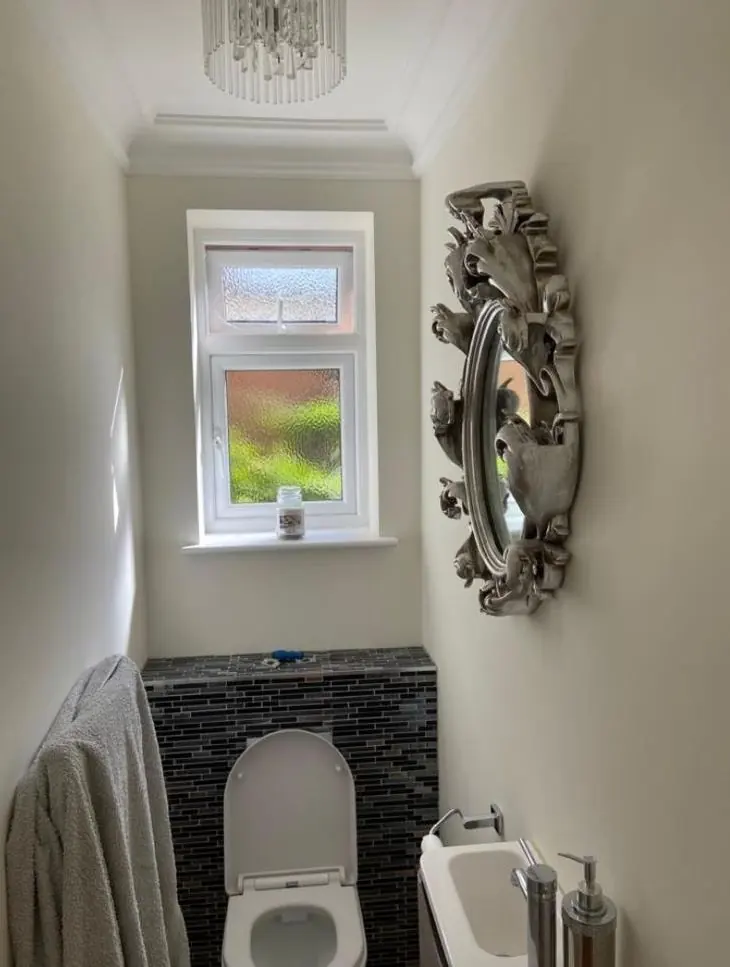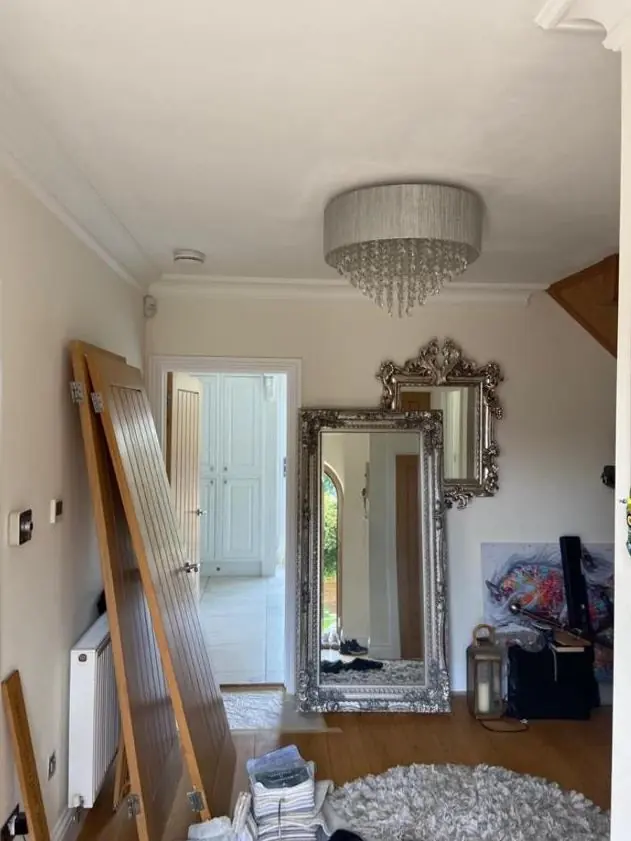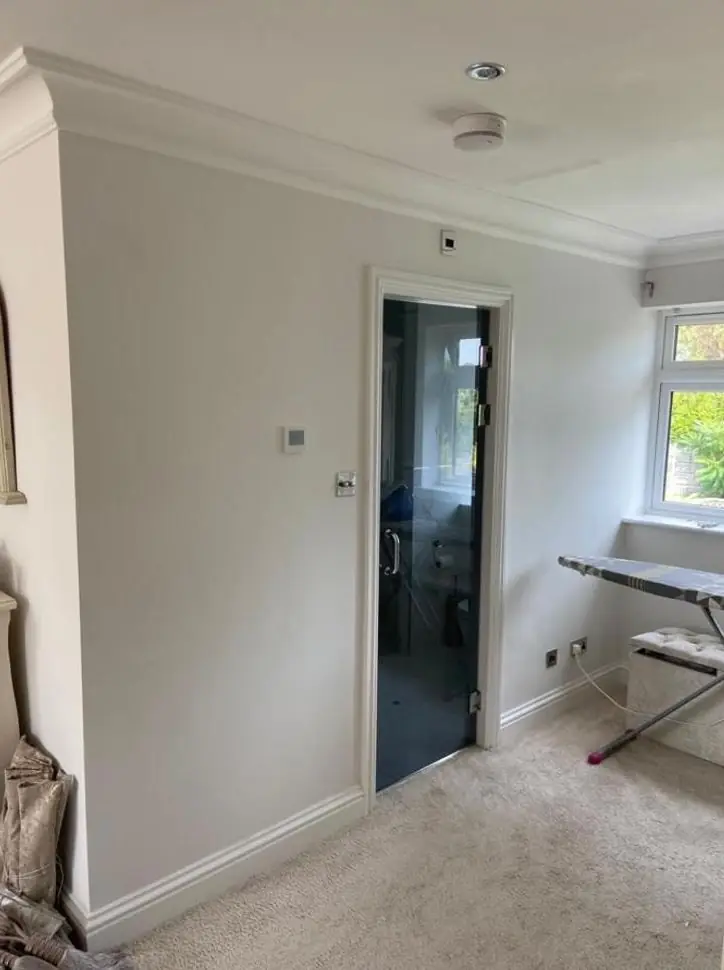
Dean offers decorative finishes in Yardley Gobion, the NN12 village 9.7 miles below Northampton on the A508. He works by hand on period joinery such as door surrounds and fanlights, suggests softer effects for the limestone cottages, and adds panelling or feature walls to the post-war houses.
Houses with detail in the joinery
Yardley Gobion’s grander houses carry the kind of detail that decorative painting is for. Prospect House, dated 1757, has a rococo shell hood over its front door. Stonebank at 9 Moorend Road was given a Gothic re-fronting around the turn of the 20th century, with an octagonal turret, crenellations and curved sash meeting bars. Other 18th-century houses in the village have fanlights, raised and fielded panelled doors and timber door surrounds with friezes and pilasters. On work like this, the decorative skill is mostly restraint: picking out the right element in the right colour, keeping edges crisp and never flooding the carving with paint.
Bringing carved work back by hand
A shell hood or a moulded pilaster may have had many coats over two centuries or more, and the sharpness of the carving slowly disappears under them. Heavy sanding or a power tool would remove the detail along with the paint. We prepare by hand: scraping off what is loose, rubbing down with fine abrasives folded to the profile, and filling only where the timber itself is damaged. On a listed building, stripping historic paint or altering joinery may need listed building consent, so that gets checked with West Northamptonshire Council first. Where a surround is staying in its current colour, the frieze, the pilaster capitals or the inner panels of a fielded door can be picked out in a second shade or a different sheen, bringing the shape back without changing the scheme.
Softer effects for the limestone cottages
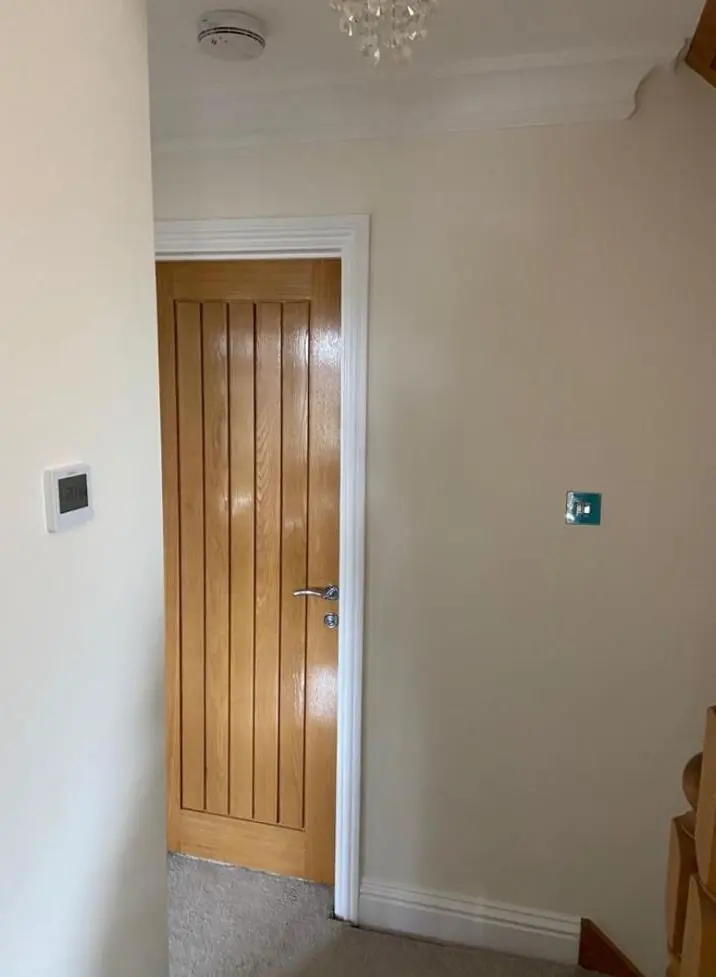
The 17th and 18th-century cottages on Moorend Road, the High Street and at Mount Pleasant are plainer buildings, with plank doors, side-hung casements and low, uneven walls. A high-gloss feature wall or a sharp geometric effect tends to look out of place in rooms like these. Quieter finishes suit them better: a wall split into two tones at a low dado height, an internal plank door in a deep heritage colour, or a chalky mineral paint whose slight variation in tone works with the unevenness of old plaster instead of fighting it. Because those walls often need breathable paint, the decorative finish has to be breathable too, which rules out some glaze-based effects.
Panelling and feature walls in the post-war houses
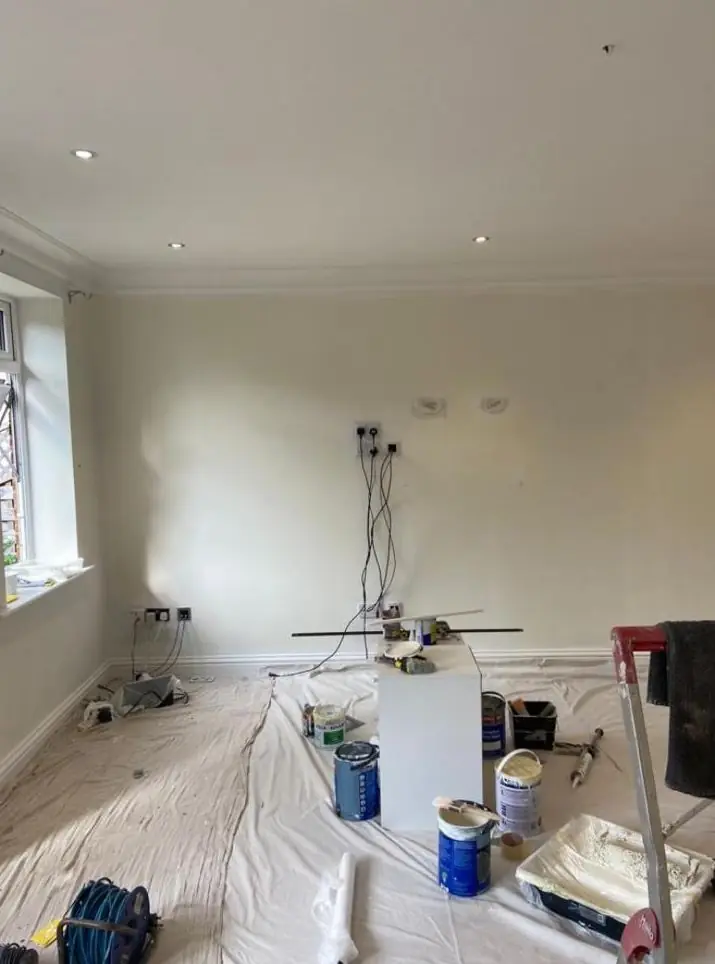
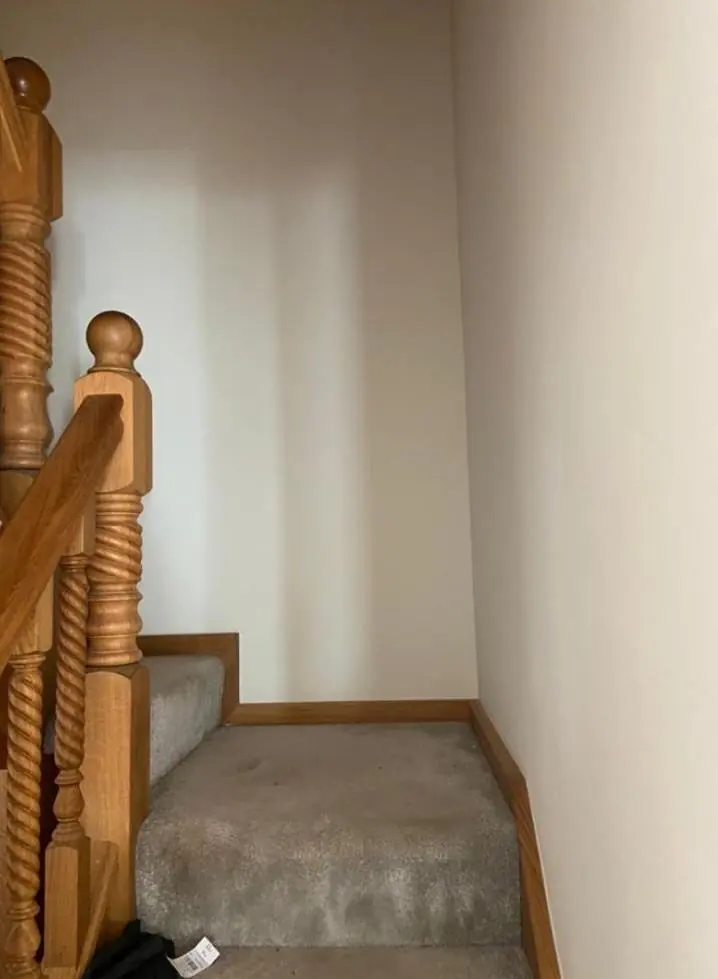
The estate to the south of the village, built mainly between the 1950s and 1970s, has flat walls and standard room heights, which suits a different kind of decorative work. Here it can make sense to add character the house never had: a painted panelled wall in a hall or bedroom, a colour-blocked arch, a two-tone stairwell or a single wall in a stronger colour. Panelling on modern plasterboard needs every pin hole, joint and mitre filled and sanded until it disappears, then a hard-wearing eggshell or satinwood that copes with knocks. If an effect is likely to feel busy in a smaller room, we will say so.
Planning detail work in the village
Northampton, where we are based, is about 9.7 miles north up the A508. The range of effects we offer is on the decorative finishes service page, and plain joinery work is covered under doors, skirtings and woodwork. Detail work is priced on time and complexity, and the cost guide explains what affects a quote. For more on the village’s buildings, see the Yardley Gobion area page.
Last updated by Dean, DH Painter & Decorator.