Dean carries out decorative finishes in Roade, about 5.4 miles south of Northampton. In the old core that usually means limewash and traditional finishes suited to limestone and lime plaster, or hand-picked joinery on Georgian houses; in the 20th-century houses west of the A508 it means feature walls and modern paint effects.
Limewash on stone that has already been painted
Most of the limestone in Roade’s conservation core has never been painted and should stay that way. A few walls are different. Part of the stonework of The Old Forge, the late 17th-century row at 9 to 13 High Street, has been painted in the past. Where stone already carries a finish, the right recoat is a breathable one: limewash or a mineral paint that lets moisture out, never a plastic masonry paint.
Limewash is a decorative finish in its own right. It goes on thin in several coats, dries lighter than it looks when wet and settles into a soft, slightly uneven colour that suits rubble stone. It needs a damp wall to cure, so we avoid hot, drying days and protect fresh coats from rain and frost. On a listed building we would only recoat like for like, because changing an external finish can need listed building consent.
Inside the cottages: lime plaster and old timber
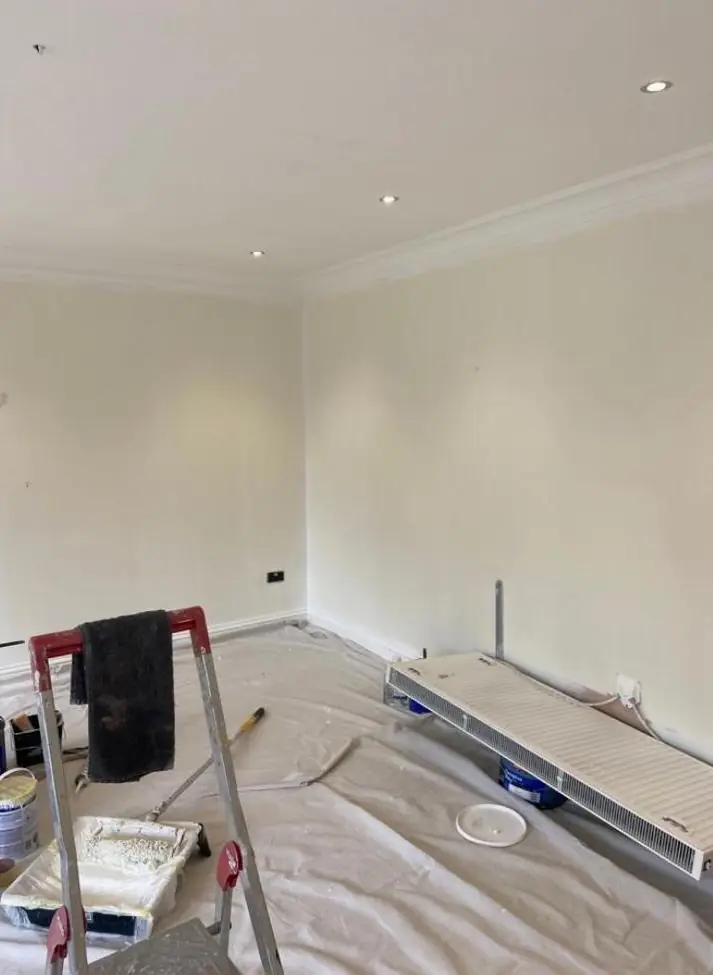
The same thinking carries indoors. Lime-plastered walls in the High Street and Memorial Green cottages take limewash or soft distemper-style paints well, and the result has a depth that flat vinyl emulsion cannot match. These finishes are also more forgiving of the uneven walls you get in houses built of coursed rubble.
Old chamfered spine beams and bressumers are where decorative work should hold back. We clean and protect them, or treat bare timber with a suitable wax or oil if you want, but we do not paint them in imitation wood grain or gloss them. The timber is the decoration.
Georgian joinery on Hartwell Road
The 18th-century houses on Hartwell Road carry the most joinery in the village: 12-, 16- and 20-pane sashes, panelled doors with overlights, and at Pear Tree House a timber trellis porch. Where panelling or moulded architraves survive inside houses of this age, picking out mouldings in a second tone or giving panels a traditional eggshell finish suits the period. Outside, a trellis porch is fiddly to paint well. Every lath and joint is brushed by hand so it is properly sealed against the weather.
Tylecote House on Hartwell Road shows a different period. Its red brick, tile hanging and timber mullion and transom windows with leaded lights belong to the Arts and Crafts style of the 1890s. Painting mullions and transoms around lead cames is slow, precise brushwork, and the colours tend to be deeper and more earthy than Georgian off-whites.
Feature walls and effects in the newer houses
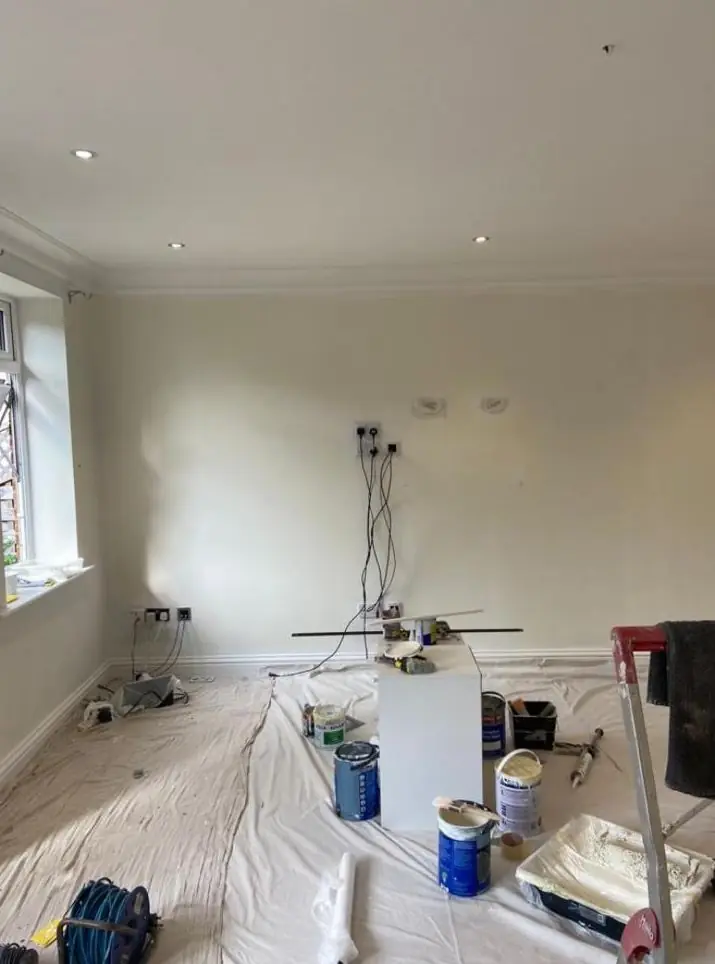
Across the A508, the 20th-century houses suit a different kind of decorative finish. Colour-blocked walls, two-tone splits at dado height, painted arches behind a bed and soft colourwashed effects all work well on flat, modern plaster. They are usually done in a day or two and make a plain room in one of the western closes feel more considered without changing its layout.
Extensions and loft rooms on these houses are a good place for a stronger effect, because they have no period detail to compete with. New plaster must be mist-coated and fully dry first, otherwise a colourwash or glaze can blotch where the plaster draws it in unevenly. We check the wall with a moisture reading before starting any layered finish.
Each of these finishes depends on careful preparation underneath. Our main decorative finishes service explains the effects we offer, and our Roade area page describes the village’s housing in full. For an idea of what a job like this involves, see our cost guide.
Last updated by Dean, DH Painter & Decorator.