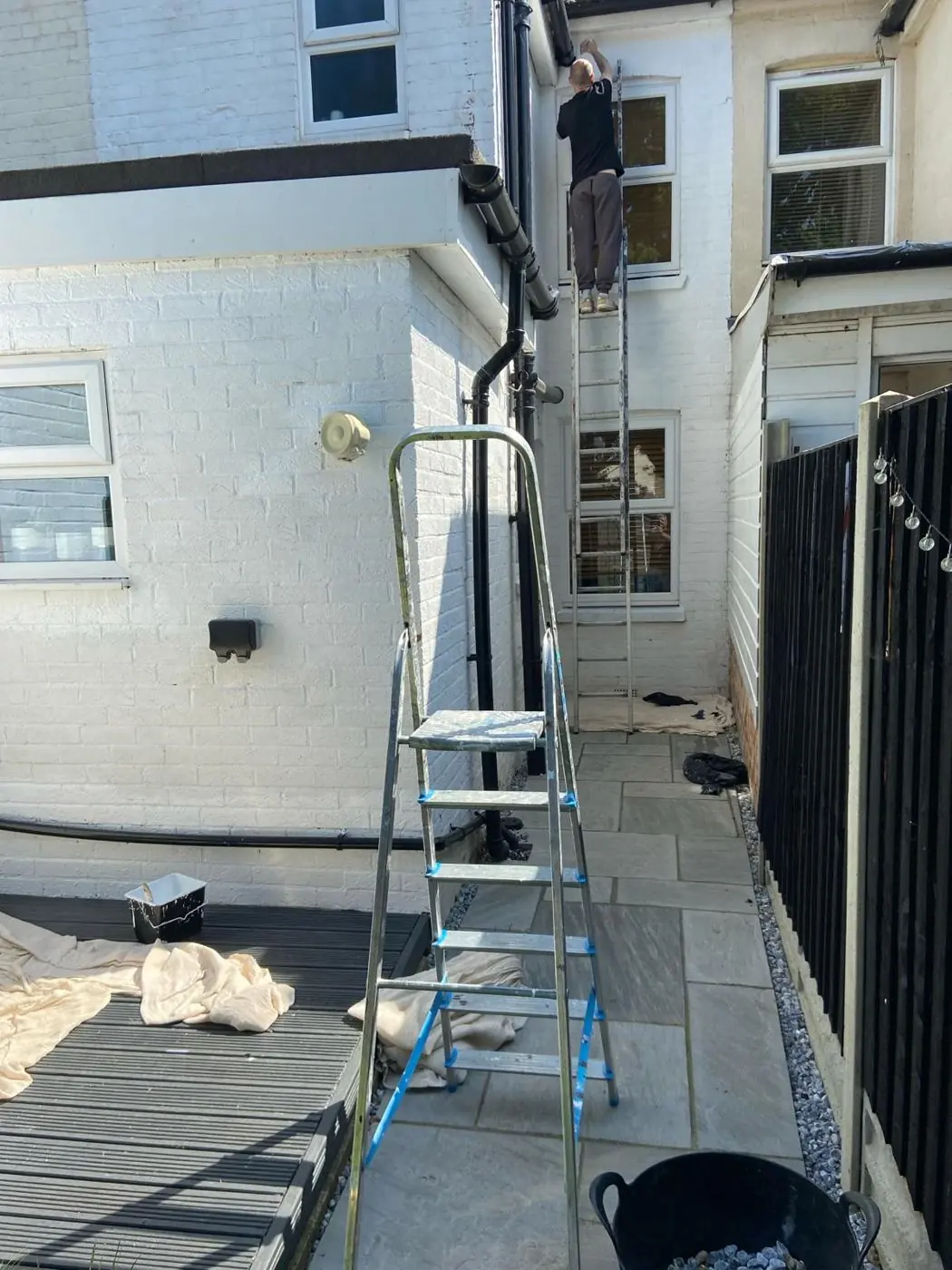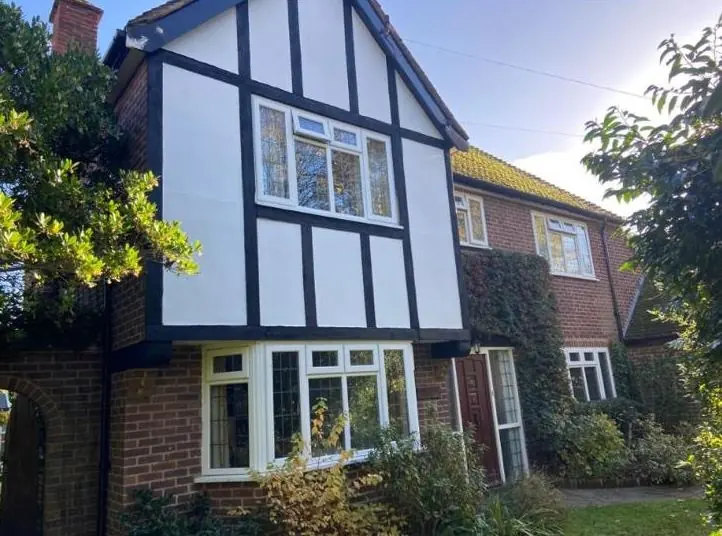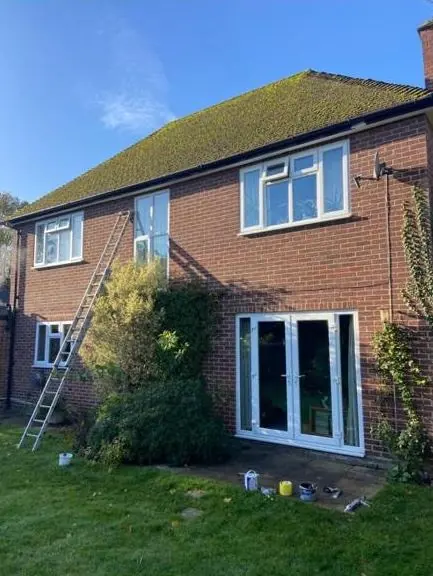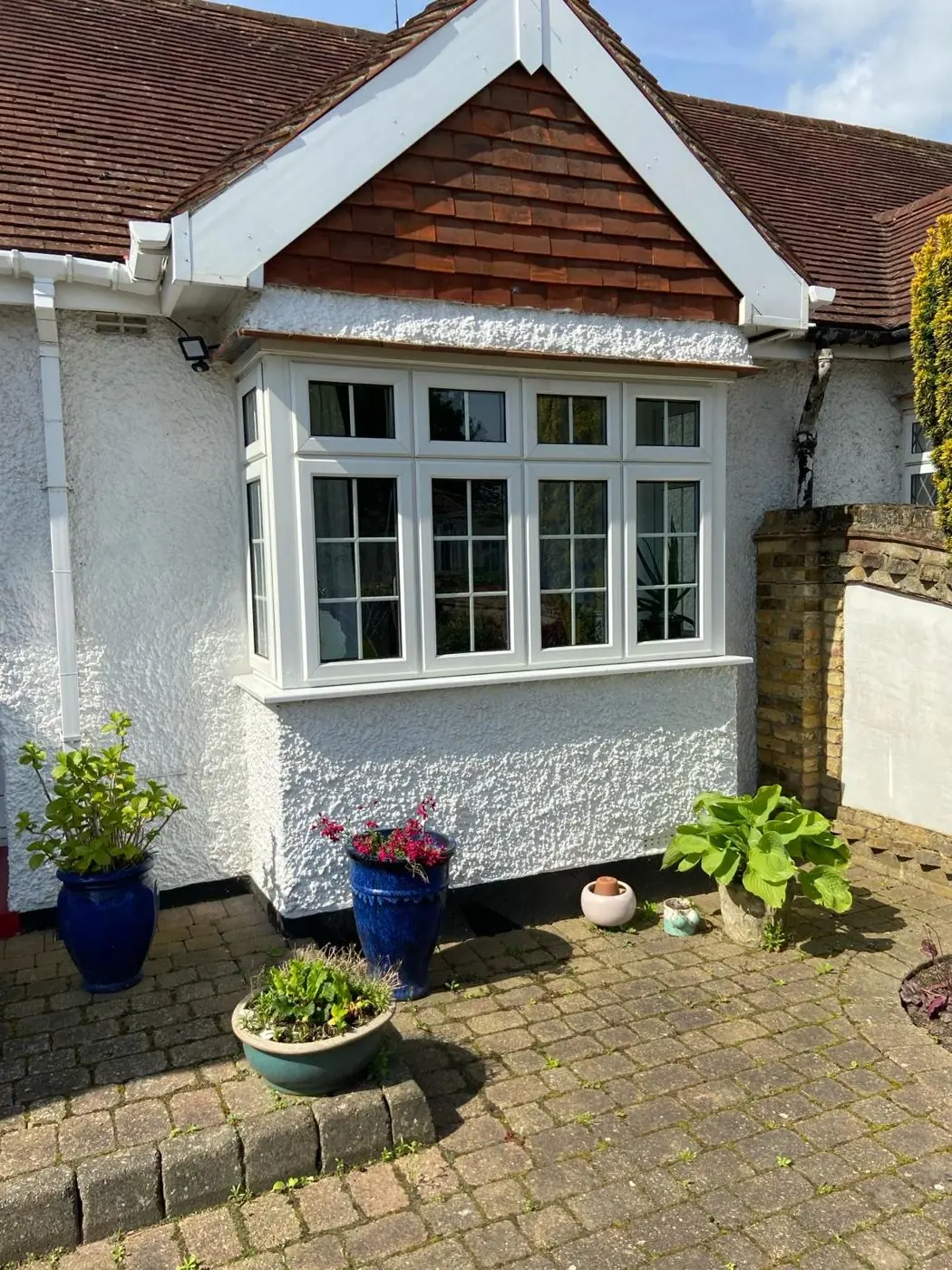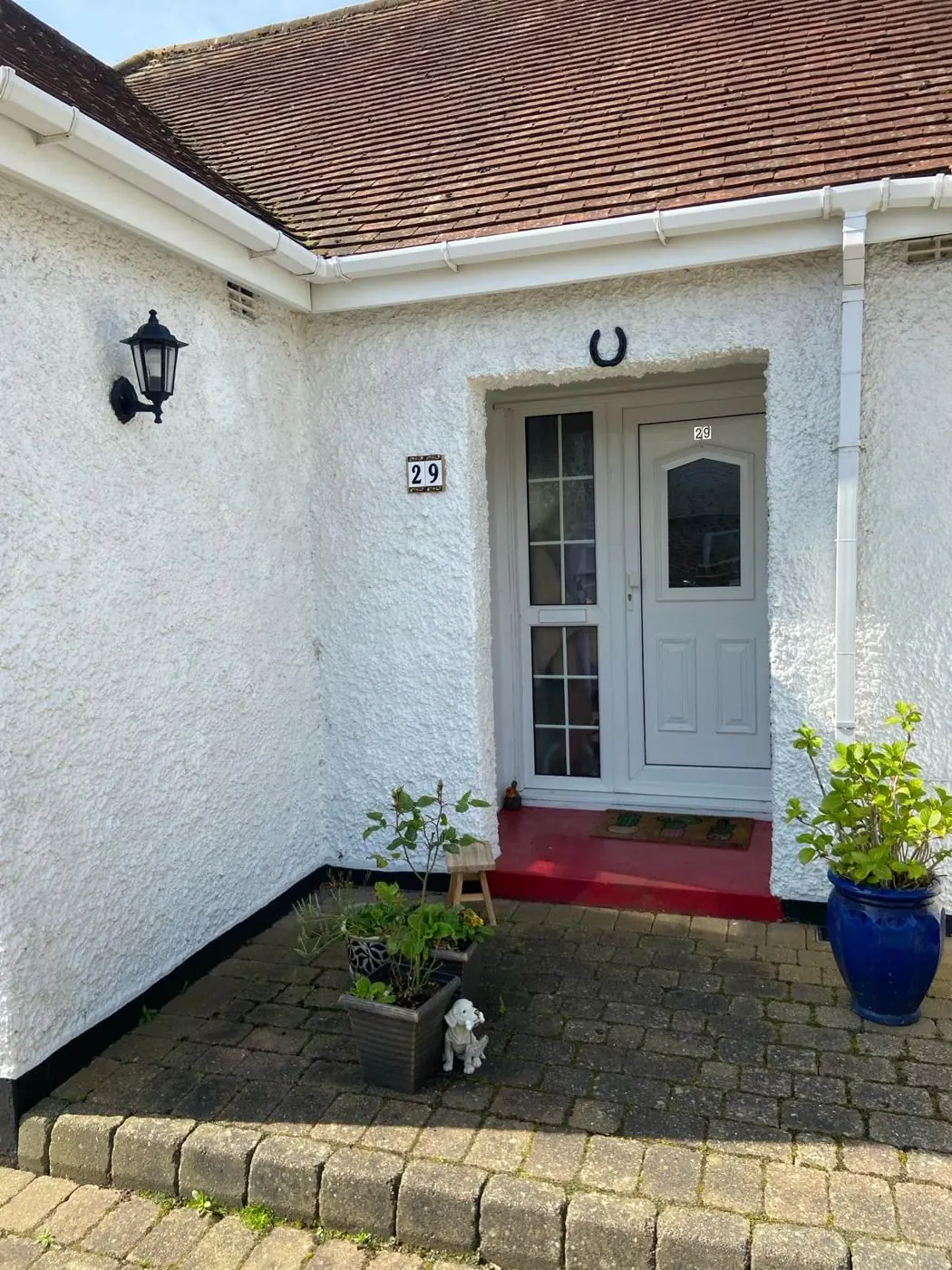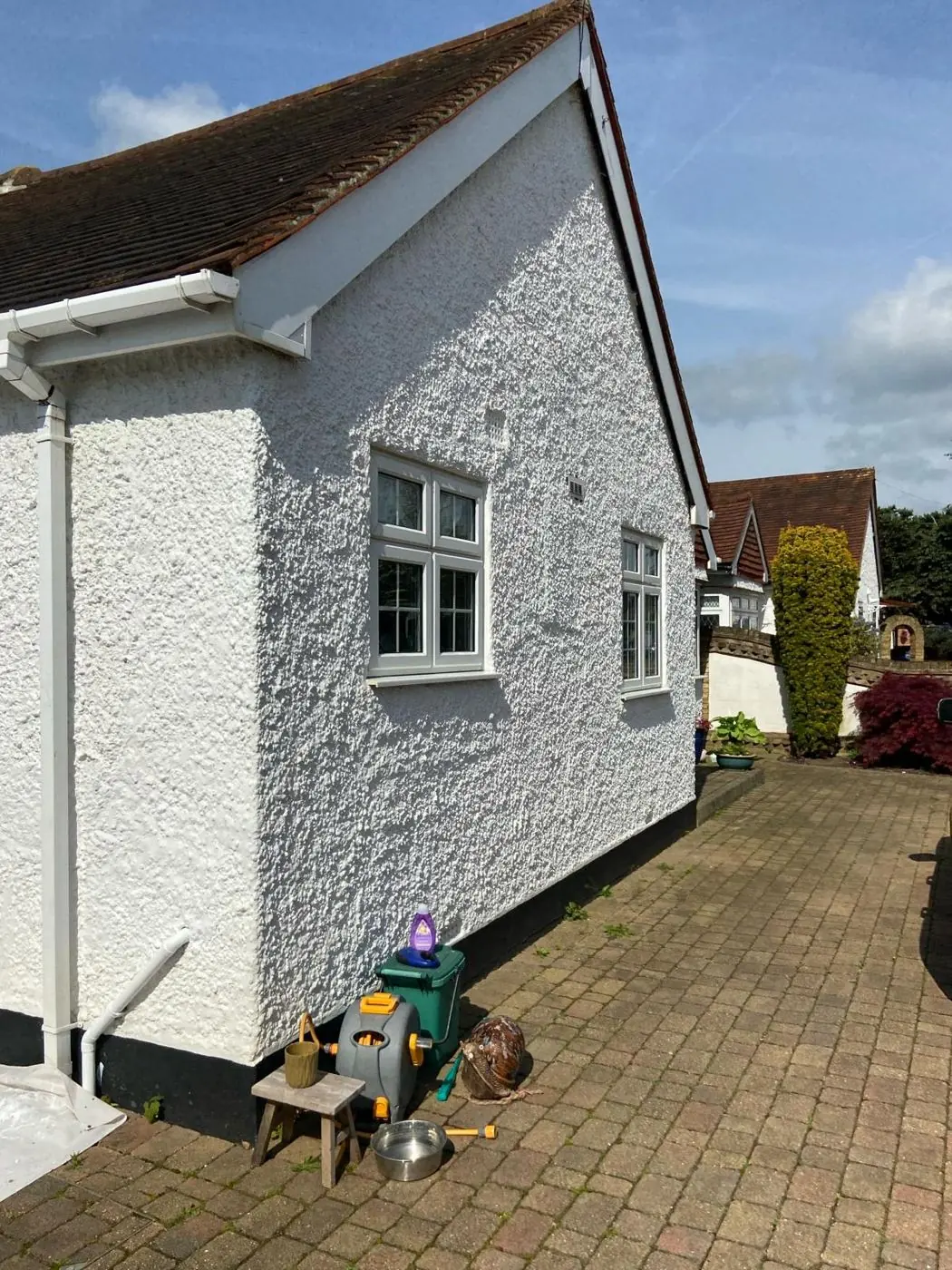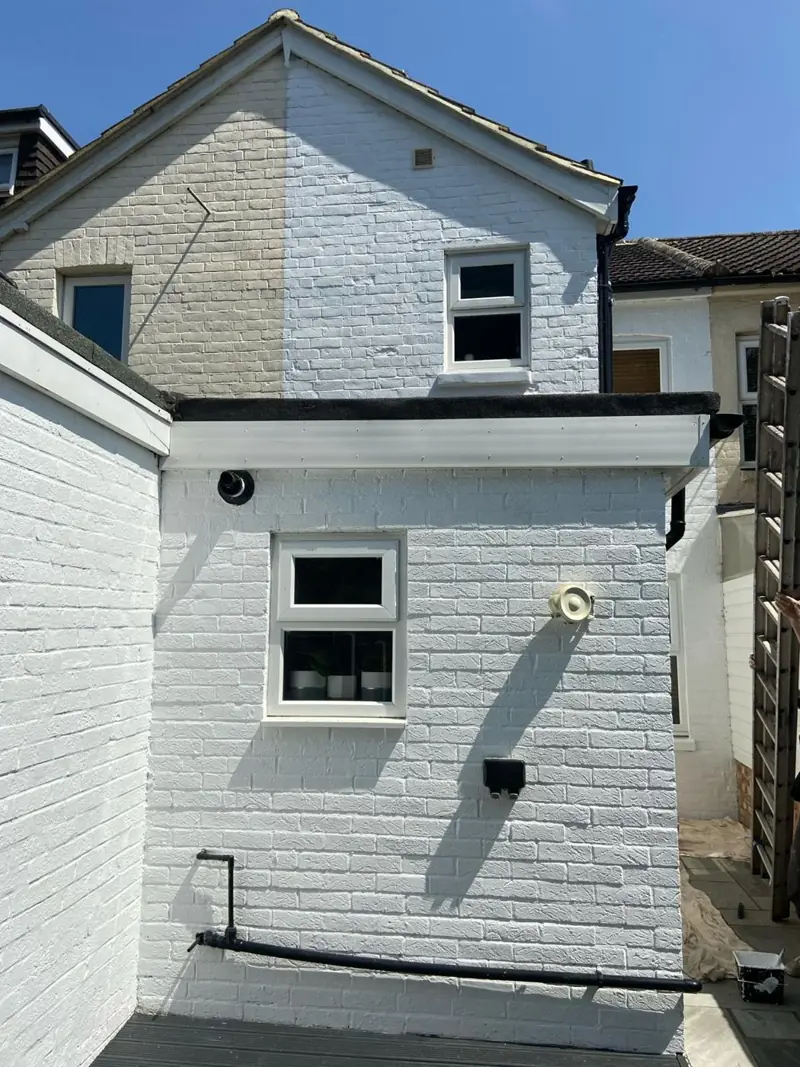
DH Painter & Decorator repaints timber fascias, soffits and bargeboards in Yardley Gobion, about 9.7 miles south of Northampton. Dean covers the slate- and tile-roofed stone houses of the conservation area and the softwood rooflines of the post-war estate to the south, with free quotes.
Rooflines on the village’s houses
The eaves you will see in Yardley Gobion depend on the age of the house. The 18th-century formal houses have red clay tile roofs over timber eaves, and timber bargeboards appear at gables on both the old cottages and the post-war houses. The 19th-century terraces at Mount Pleasant and the western end of Moorend Road have slate roofs, and the brick detailing there includes cornices. The post-war estate to the south, the largest group of houses in the village, has the kind of softwood fascia and soffit boards most people picture when they think of this job.
The oldest cottages are a special case. Some are still thatched with low eaves and rolled gable ends, and a thatched roof has no fascia board at all. On those houses our roofline work is limited to the woodwork below the thatch, and the thatch itself is kept clear of ladders, tools and paint.
Exposure, trees and gutters
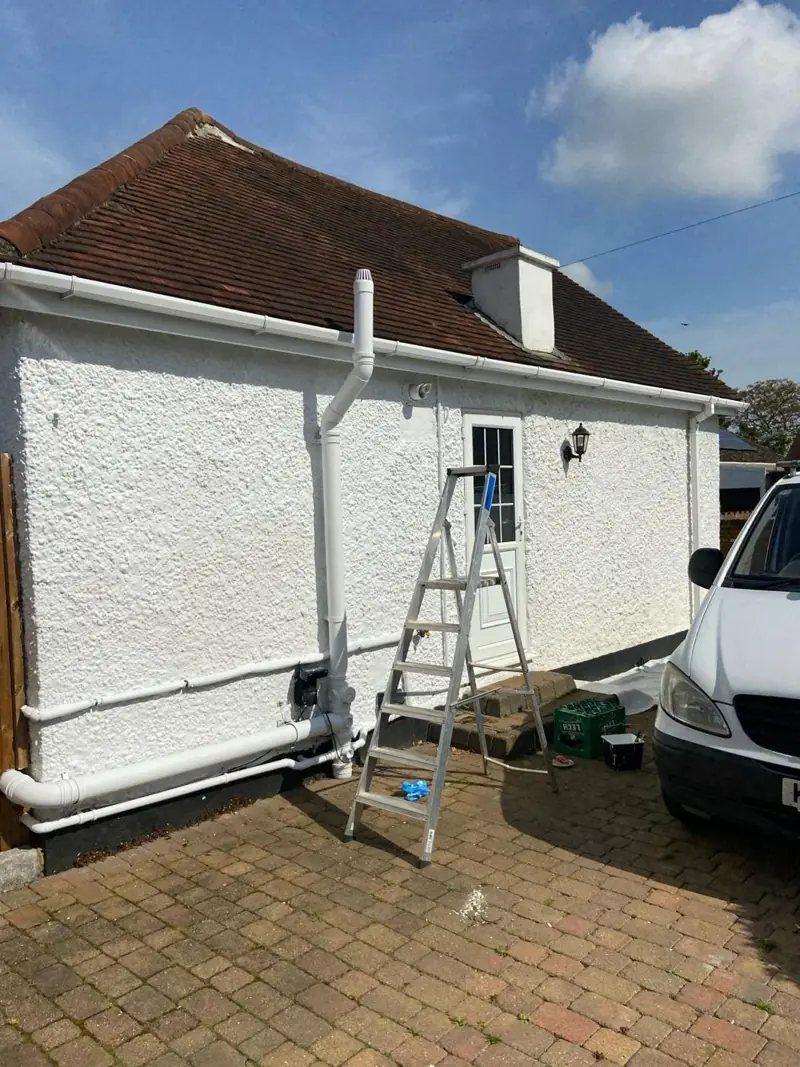
Rooflines take more punishment here than in town. The village sits on the ridge of the Tove Valley side, so the boards on north- and east-facing elevations catch driving rain coming across the open valley. The many mature trees around Elm Green, Chestnut Green and in large gardens add a second problem: leaves block gutters, the gutters overflow, and the water runs down the back of the fascia, soaking the timber from behind. That is why we look at the gutters and the joints in the boards, not only at the paint.
On a typical job we will:
- clear moss and leaf debris from the line of the board and treat green growth on shaded sections
- scrape back flaking paint and check for soft timber, especially at board joints and the gable ends
- cut out and splice small areas of rot, or point you to a joiner where a board needs replacing
- spot-prime bare timber and build up an exterior system suited to the exposed face
Timber, not uPVC, in the conservation area
The conservation area appraisal objects to traditional details being swapped for modern alternatives such as uPVC. Timber eaves and bargeboards on the stone houses are part of that, so keeping them sound and painted is usually the better route than boxing them in with plastic cladding. On a listed building, any change of colour or material at the roofline may need consent from West Northamptonshire Council. The estate homes have no such limits, and some owners there choose a different colour when the boards are next repainted.
Reaching the eaves on narrow streets
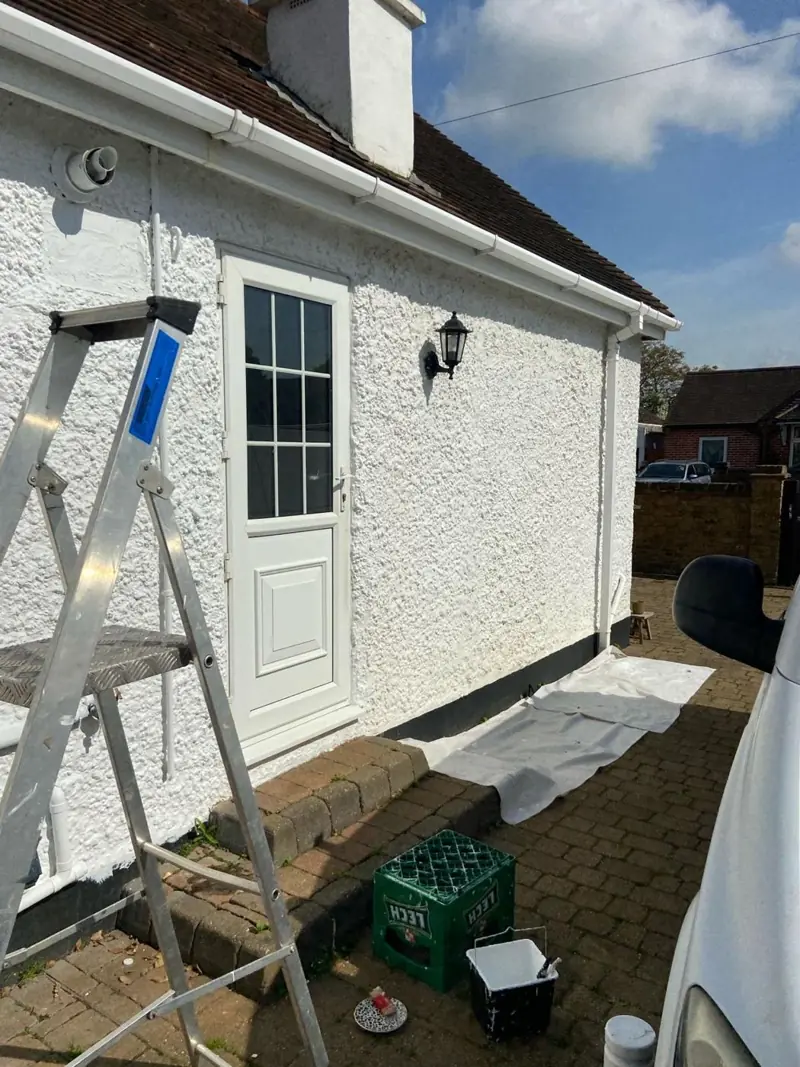
On the estate, most fascias can be reached from a ladder standing on a driveway or front garden. In the old village it is harder. Houses on Moorend Road and parts of the High Street sit on the street edge with narrow pavements and pinch points, so a tower or ladder may stand on the footway and need a permit, and work has to keep the path passable. Some High Street properties have rear access from footpaths behind the plots, which can make the back eaves easier to reach. Dean checks all this at the free survey, and it shapes the quote; the cost guide explains what drives the price.
For our general method and the materials we use, see the main fascia and soffit painting page. Yardley Gobion is covered from our Northampton base; the village overview describes its other house types.
Last updated by Dean, DH Painter & Decorator.