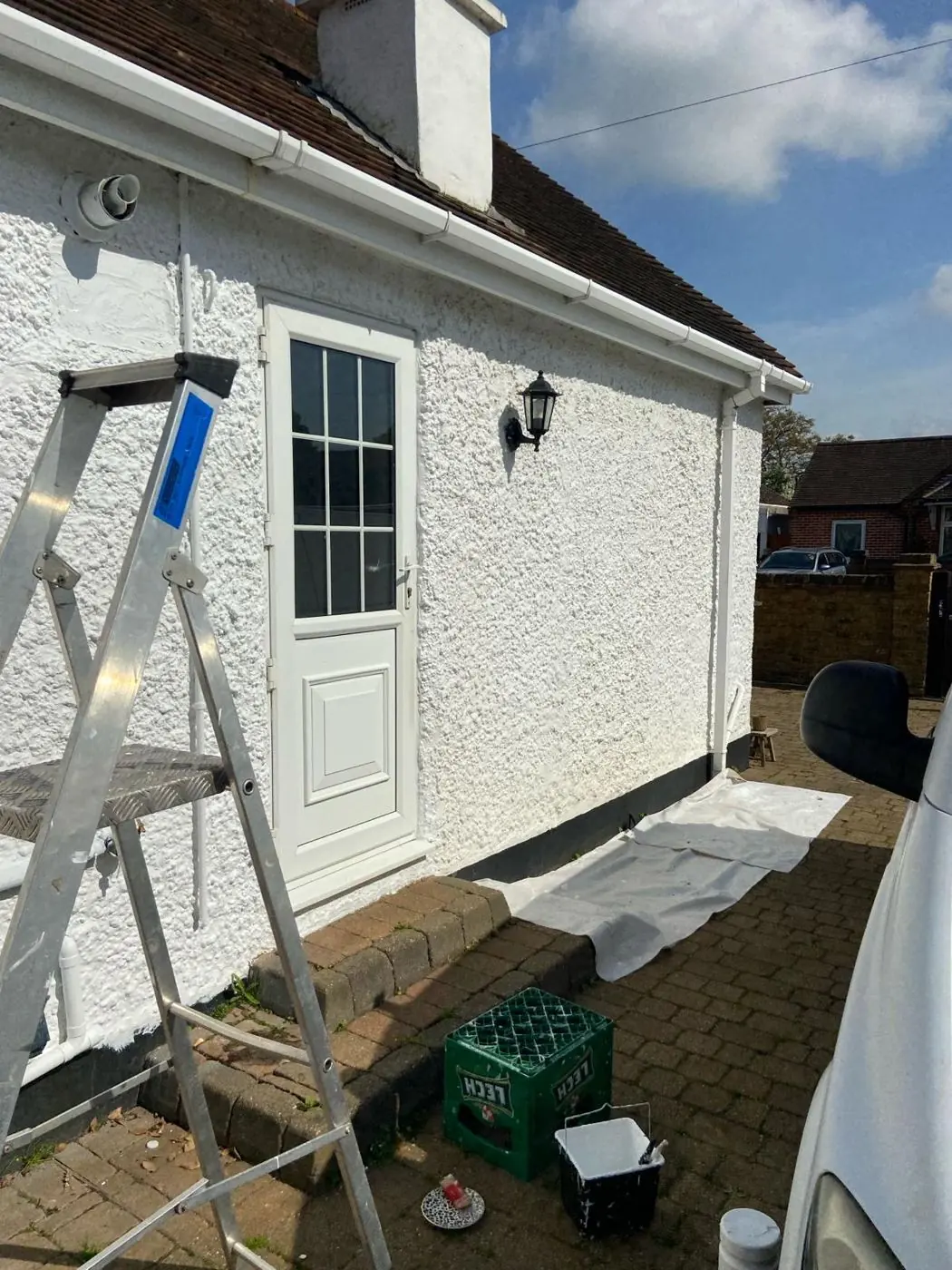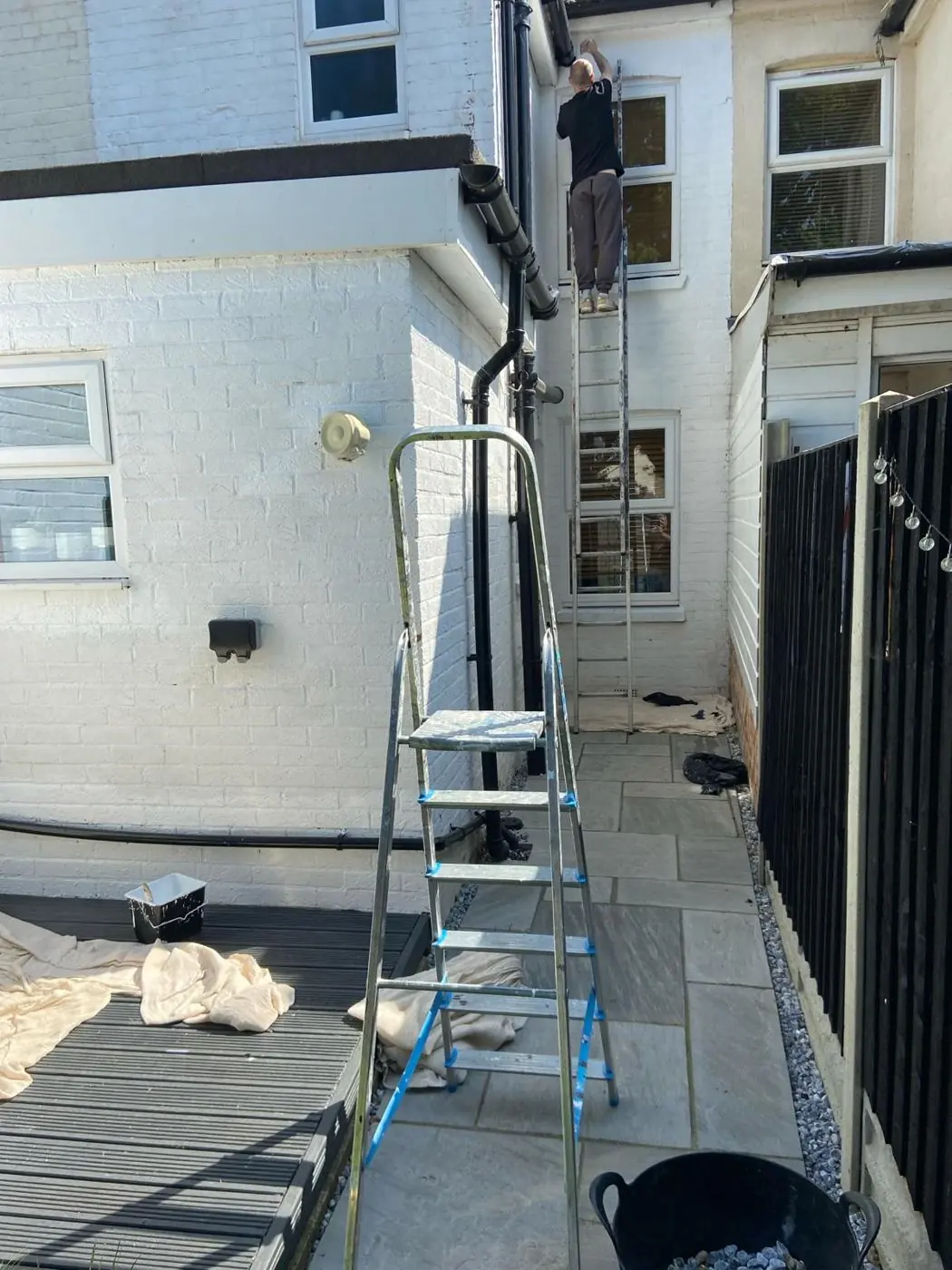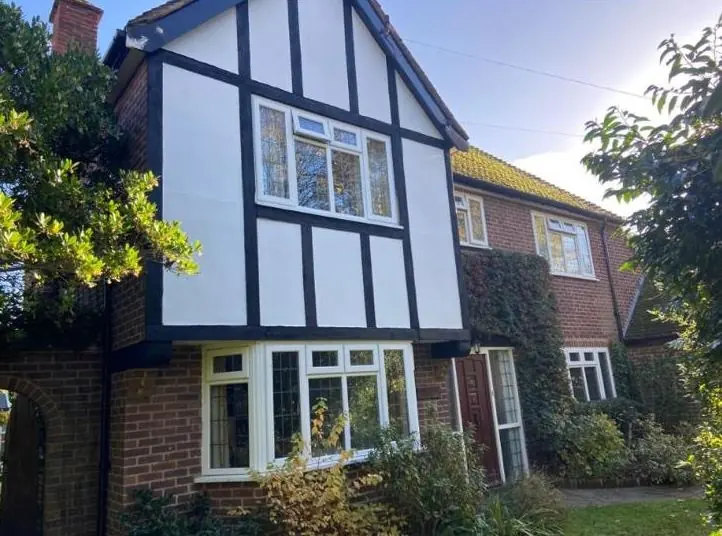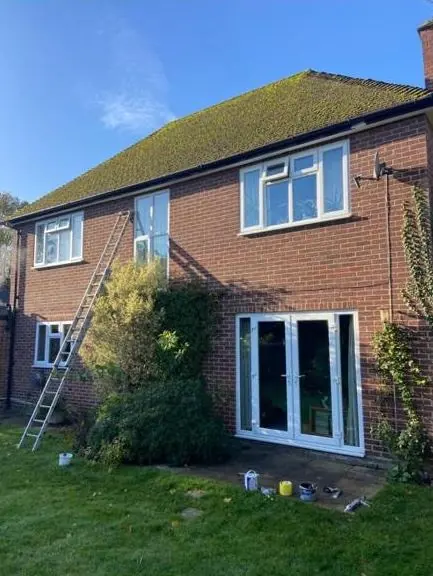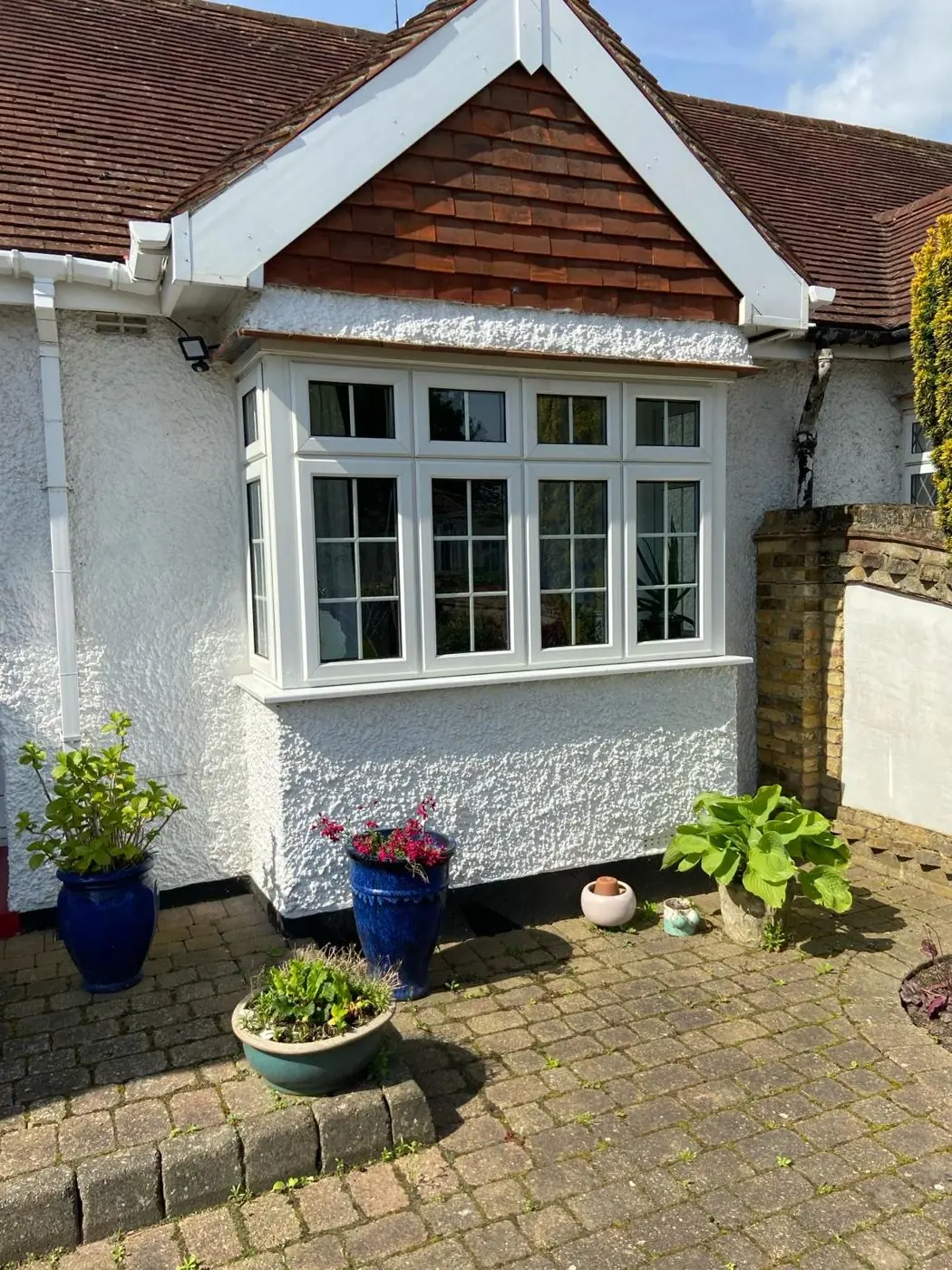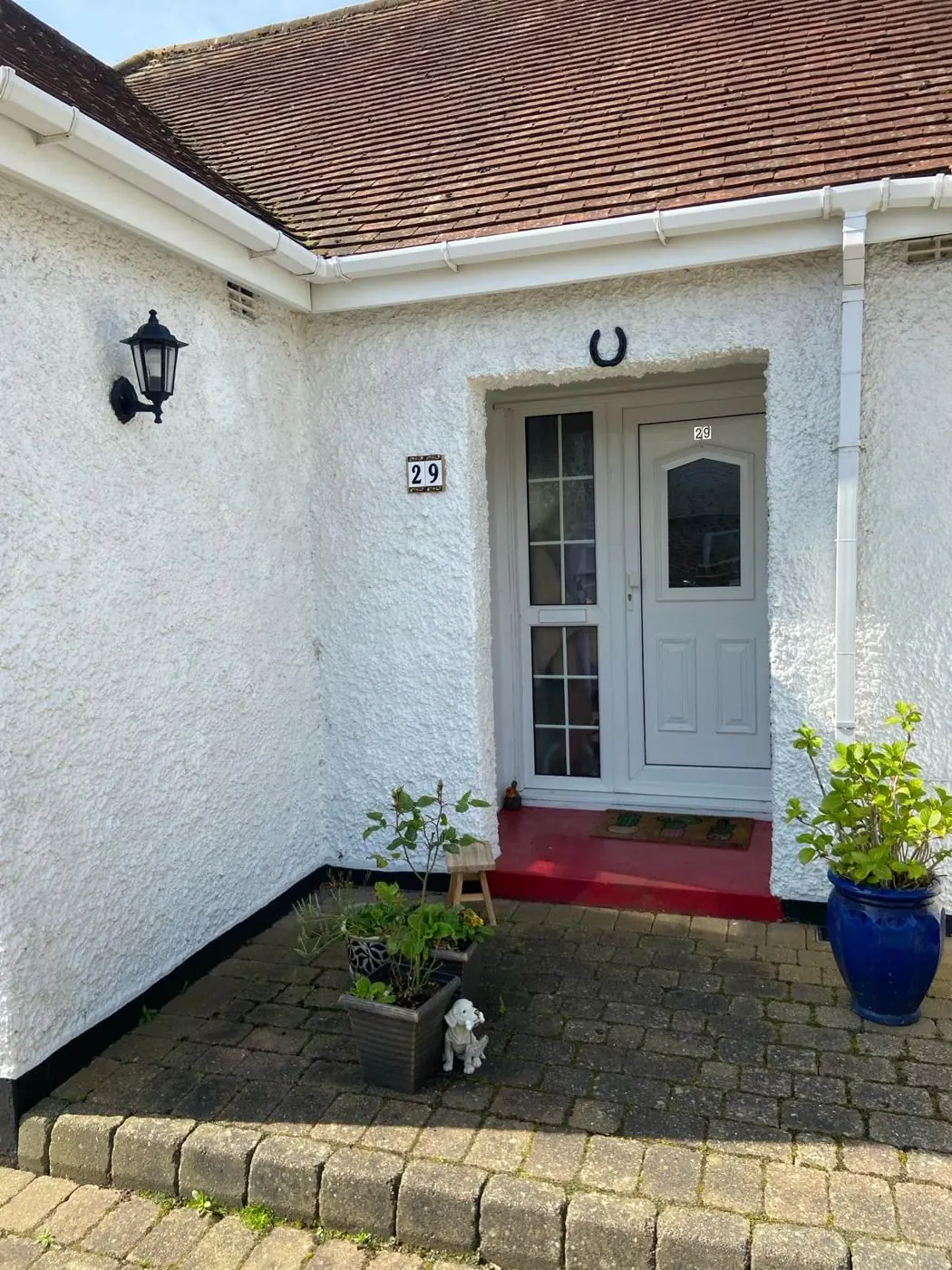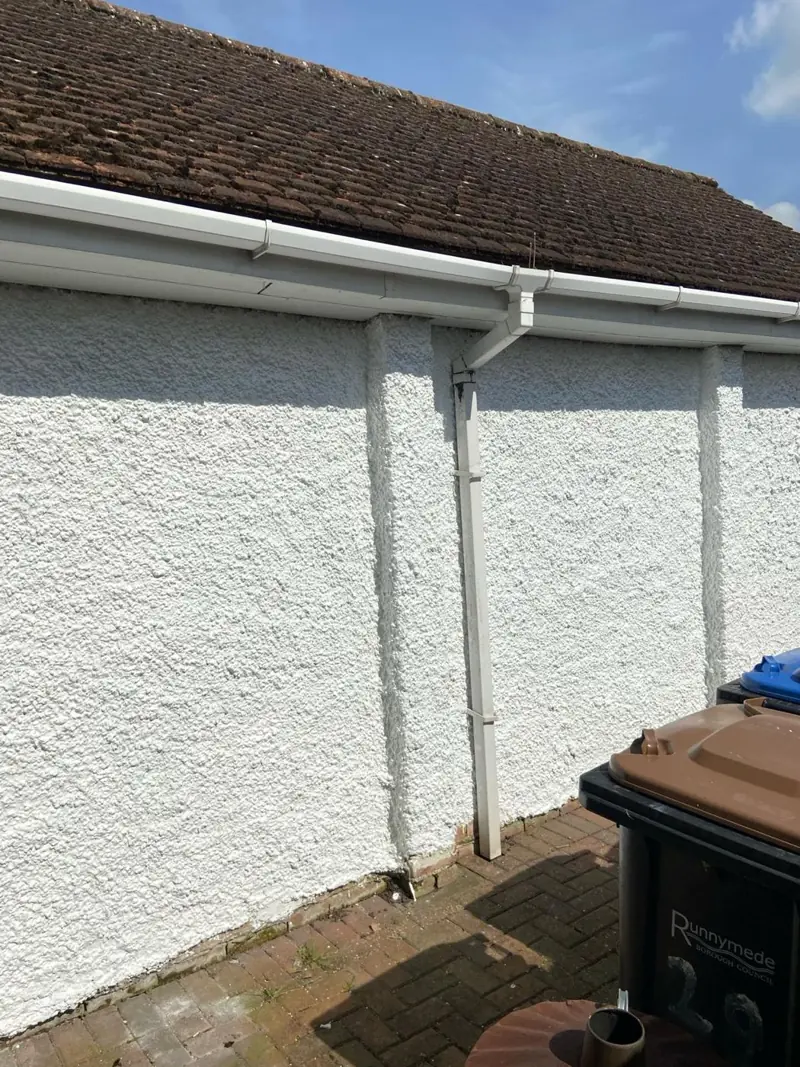
We paint fascias, soffits, bargeboards and gutters across Hackleton, the NN7 village about 4.7 miles south-east of Northampton. Most of this work is on the 1939-2000 estates north of Main Road, where bungalows are easy to reach from the ground and two-storey houses need ladders or a small tower.
Single-storey rooflines on the bungalow estates
Hackleton’s housing includes bungalows, among them a housing association bungalow estate among the cul-de-sacs off Main Road. They are the easiest rooflines in the village to paint. The fascia is low enough to reach from a short ladder or hop-up platform, so every board can be inspected closely, joints and corners are easy to reach for filling, and the gutter run can be cleaned out at the same time.
The catch is ownership. Part of the bungalow stock belongs to Grand Union Housing Association, which may hold responsibility for the outside of the building or have rules about colours. If you rent, the association needs to agree the work first. If you bought your bungalow, check that your fascias are not shared with an attached neighbour before you choose a new colour. We are happy to quote for adjoining owners together so a shared roofline is painted in one go.
Semis and detached houses on the cul-de-sacs
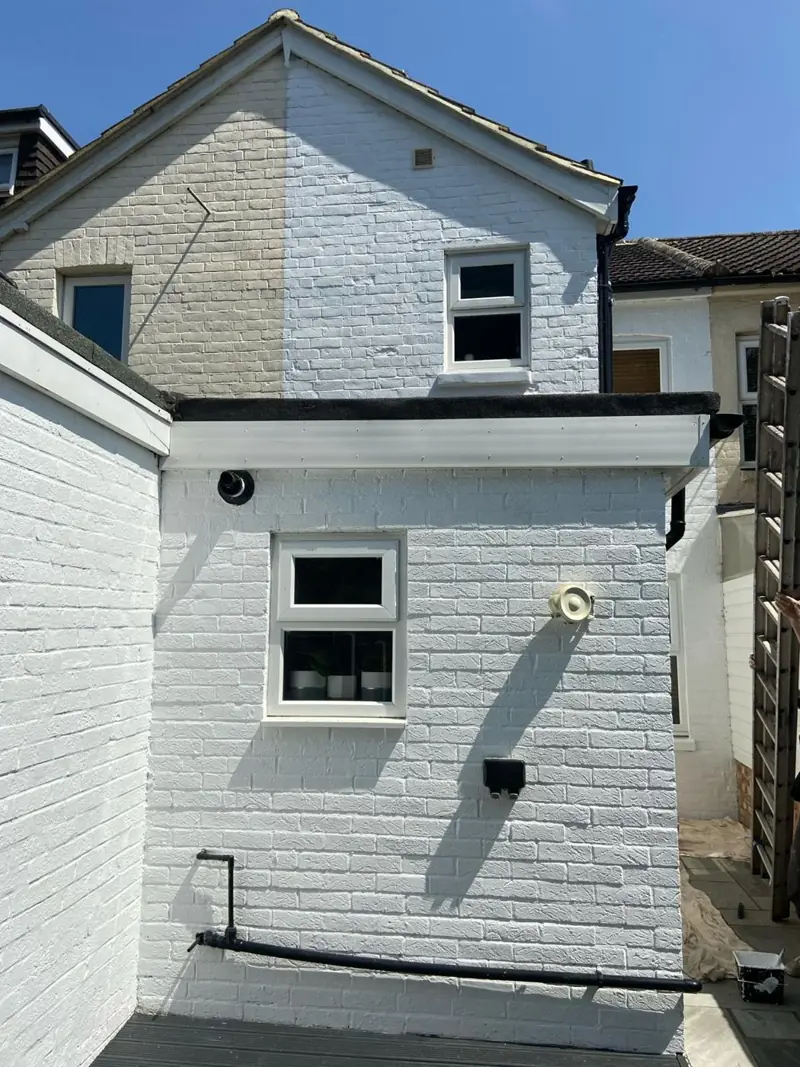
On the two-storey houses built between 1939 and 2000, the eaves are high enough to need proper ladder work or a small tower, especially along the gable ends. Cul-de-sac drives make setting up easier than on Main Road, but the turning heads can be tight. We agree where ladders and the van will go so neighbours can still get in and out. Where these houses still have painted timber fascias, these are the checks we make before we price:
- soft or split timber at the ends of boards and behind leaking gutter joints
- soffit boards sagging or opening up where they meet the wall
- flaking paint that has let water into the end grain
- gutters and downpipes that need painting, or that have been swapped for plastic
Rotten sections need a carpenter before we paint, and we will tell you that when we look rather than paint over soft wood. Some houses already have uPVC fascias. Those do not need painting, though they can be cleaned when we are doing the rest.
Weather off the open fields
Several of the estates back onto open farmland and ridge-and-furrow fields, so their rear elevations get no shelter from the weather. The roofline on those sides tends to fail first, with paint lifting on the exposed fascia while the front still looks fine. When budget means doing one elevation, it is usually the back. Our guide to exterior painting weather explains why we book roofline work in the drier months.
Bargeboards in the older part of the village
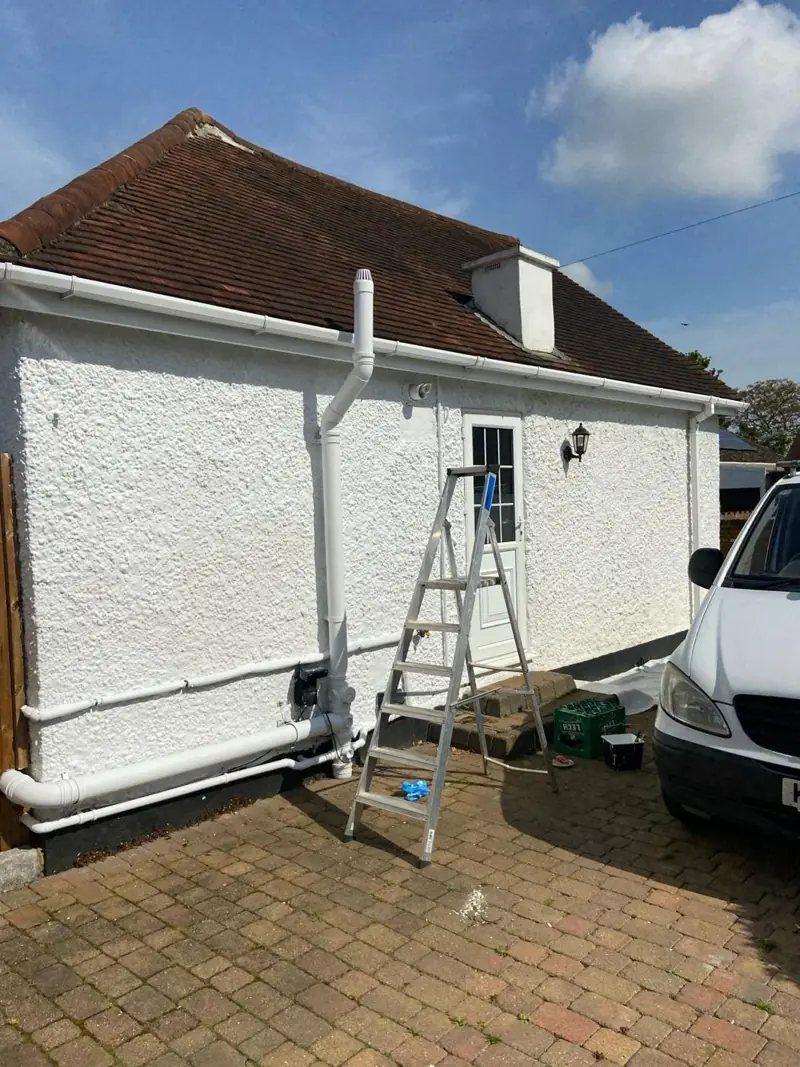
In the stone and brick core the roof timber is different. The Victorian red-brick buildings around Chapel Lane carry bargeboards on their gables, and the limestone cottages on Main Road have their own eaves boards and verges under slate or tile roofs. These are painted by hand from ladders on narrow lanes or the B526 footway, so the setup is planned around pedestrians and traffic, and the stone below is protected from drips. There is only one thatched roof left in the village, at 43 Main Road, and it has no fascia to paint at all. On slate and tile roofs in the core, the verge and eaves timber is often original or an old replacement, so we probe it for soft spots and check that the paint is not the only thing holding a split board together.
The step-by-step method we use is on the fascia and soffit painting page. For more on property types across the parish, read the Hackleton village overview.
Last updated by Dean, DH Painter & Decorator.