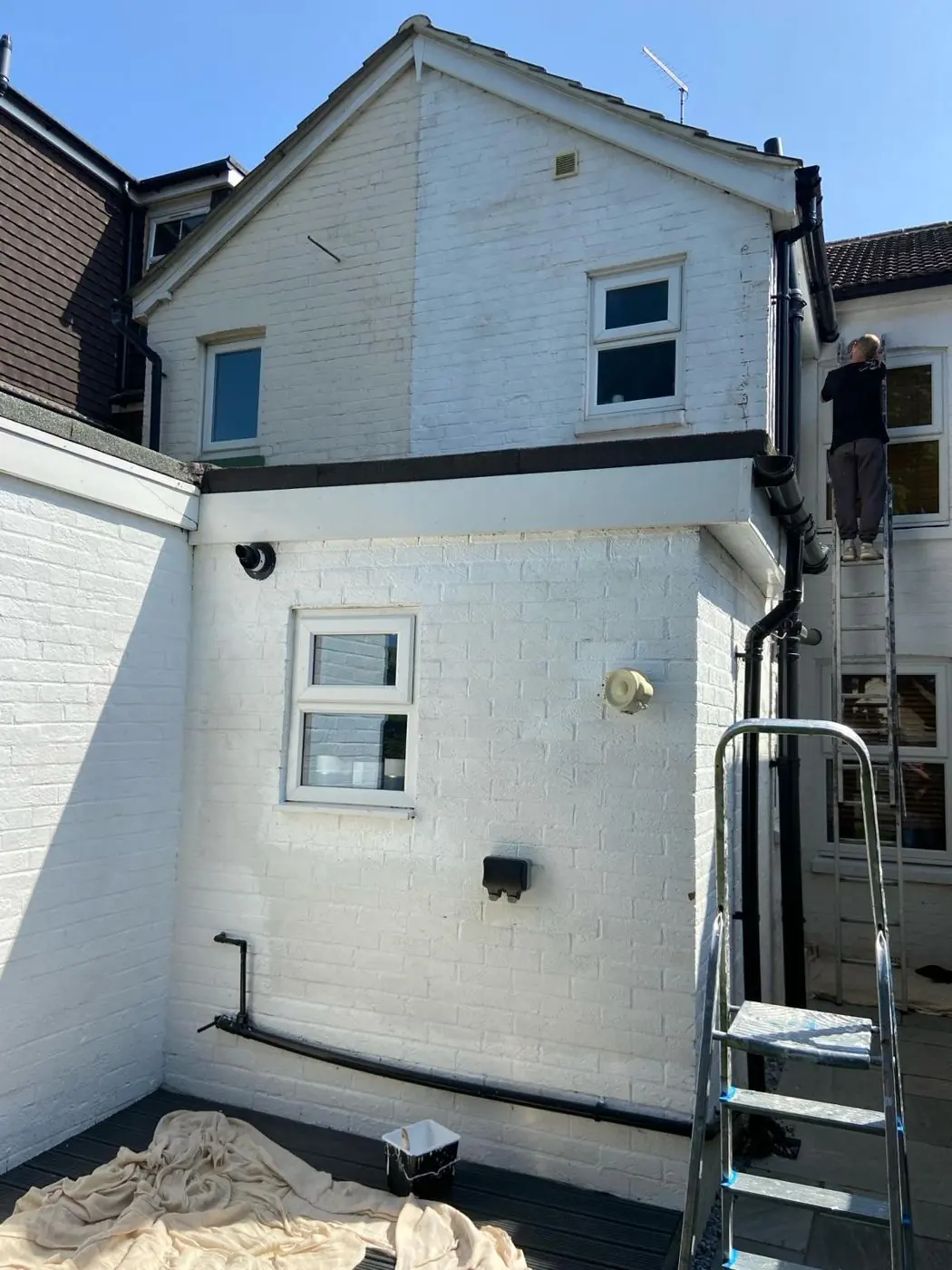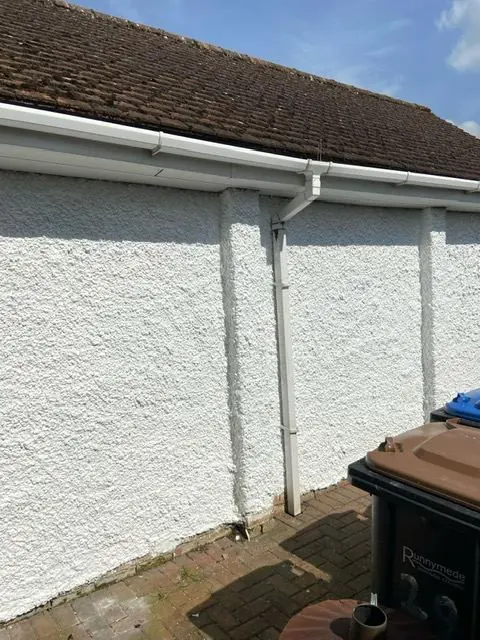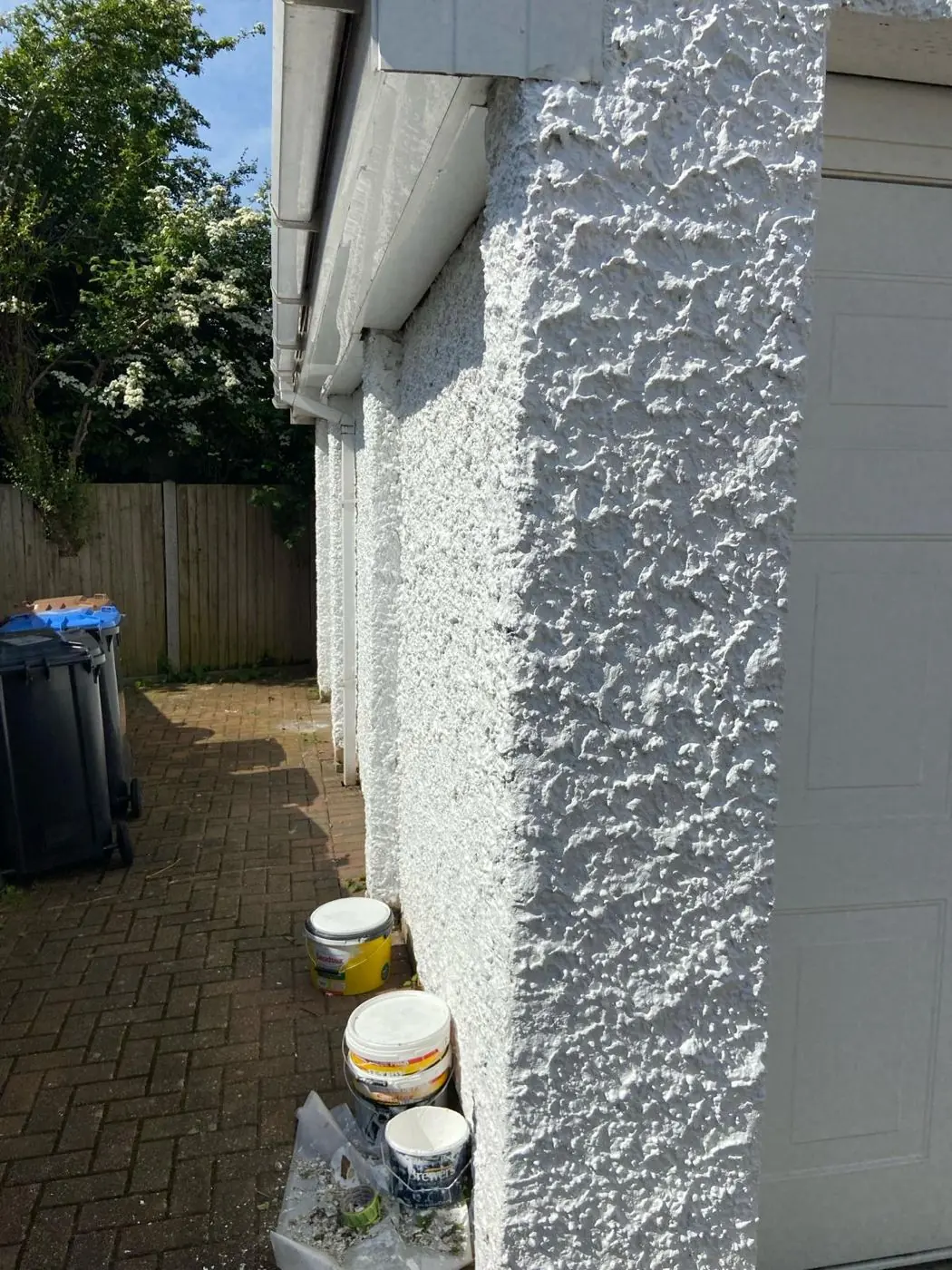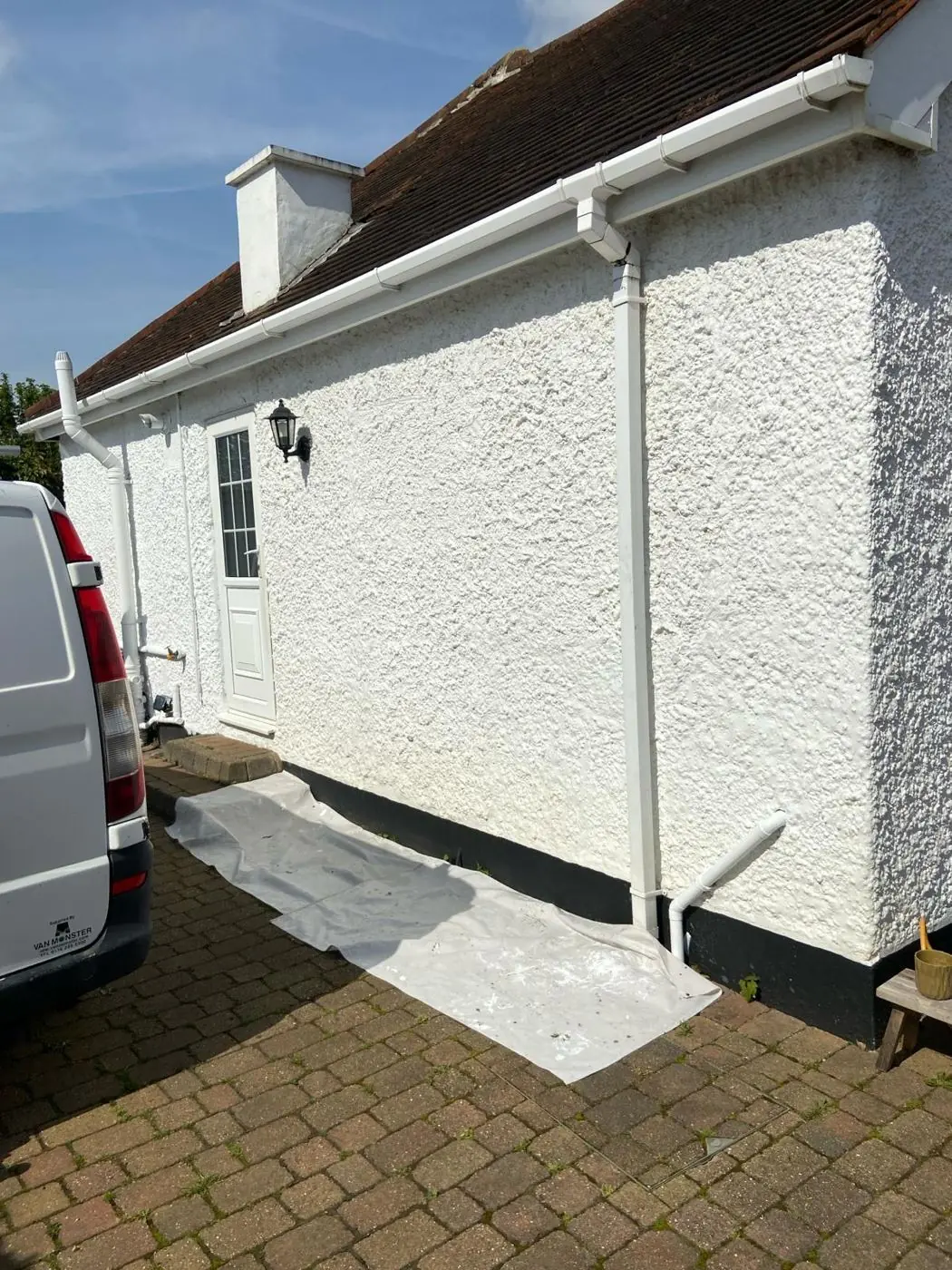
DH Painter & Decorator repaints timber fascias, soffits and bargeboards in Paulerspury, about 9.8 miles south of Northampton in NN12. Dean works on the slate- and tile-roofed houses that have conventional eaves joinery, and advises on the thatched cottages, which mostly don't.
Roof type decides what eaves joinery there is
Roofs in Paulerspury come in several materials. The listed 18th-century cottages are covered in straw thatch, plain tile, slate, or corrugated iron laid over the original thatch. The early 19th-century houses, such as the Hunt House and the Former Rectory, have hipped slate roofs, and the Barley Mow has slate too. Each roof type leaves different timber at the eaves, so the first job is to see what’s actually there.
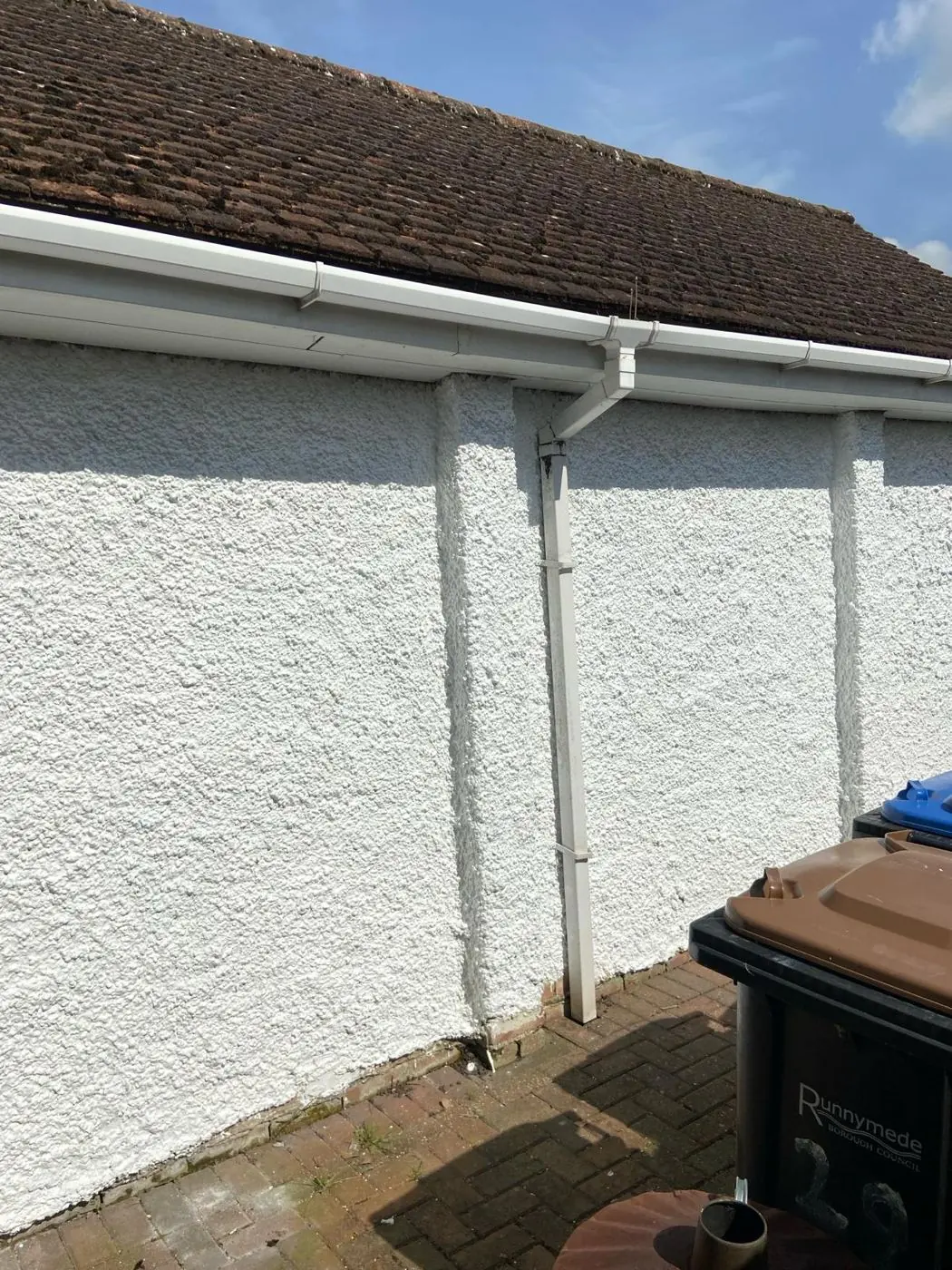
On slate and tile roofs you’ll usually find a timber fascia board, sometimes a boxed soffit, and bargeboards on the gable ends. Those boards get the full force of the weather blowing off open farmland and take the drip from the gutter, so they’re often the first exterior timber to fail. A thatched roof is different, because the thatch runs out over the wall and there’s normally no conventional fascia at all.
Thatch: low eaves and no heat
Thatched cottages such as The Thatches on Park Lane and 34 Careys Road at Pury End have low eaves and eyebrow dormers. Any timber that does need painting there, such as dormer frames or boards at a gable, is close to dry straw. We don’t use heat guns or blowtorches near thatch. Old paint comes off by scraping and sanding, which takes longer but carries no fire risk. Ladders are also set to keep weight off the thatch edge.
Corrugated iron over thatch
Some cottages in the parish now have corrugated iron over the original thatch. The sheets often sit on timber battens and edge boards that were added when the iron went on, and those boards can be in poor condition. If the iron itself needs painting, that’s metal work with its own primer, and the trims and boards next to it are treated as timber. We’ll tell you which parts are worth painting and which need a carpenter first.
Preparing old timber eaves for a lasting finish
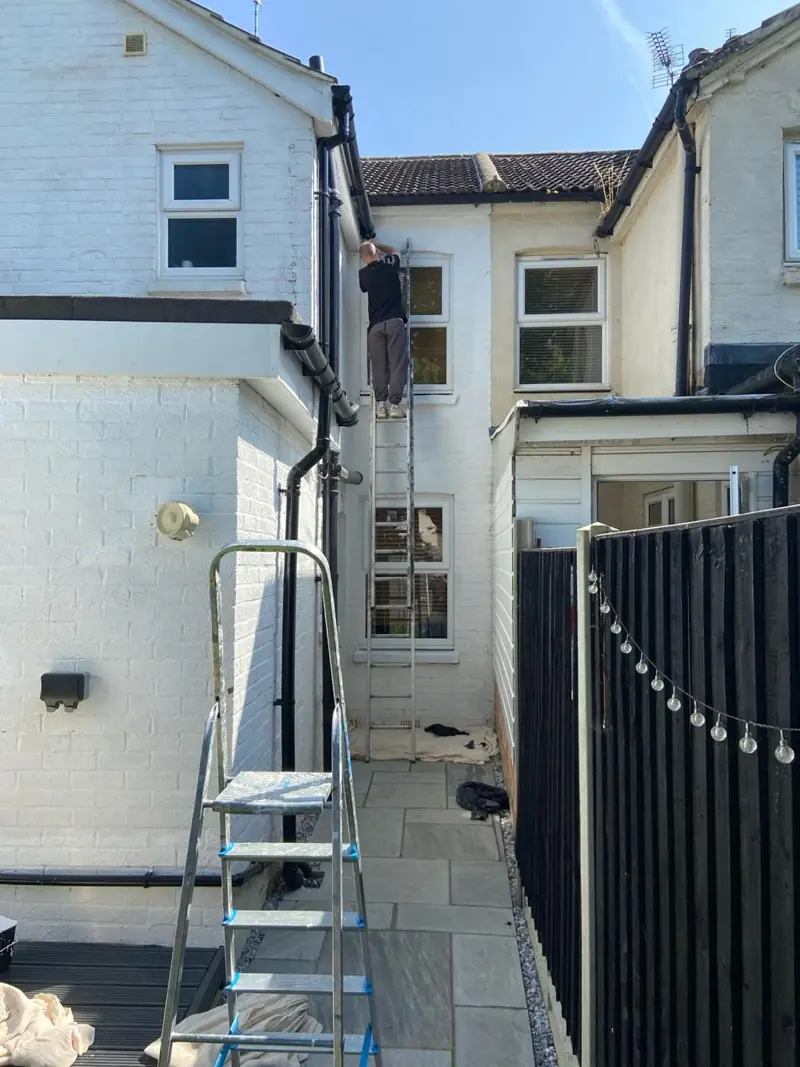
On the older slate and tile houses, the eaves timber may carry many layers of paint. The order of work is:
- Check each board for rot, especially at joints and where the gutter brackets are fixed.
- Scrape and sand back to a sound edge, cutting out soft wood for repair.
- Prime any bare timber and fill the joints and old nail holes.
- Finish with a microporous gloss or satin that flexes with the wood and lets moisture escape.
Gutters are cleared and brackets checked at the same time, because an overflowing gutter will spoil new paint on the fascia within a season or two. On listed houses, changing the eaves colour or swapping timber for uPVC may need listed building consent from West Northamptonshire Council. Like-for-like repainting is normal maintenance.
Getting up to the eaves across the ends
Paulerspury is a spread-out village. Pury End, Tew’s End, Plumpton End, the church end, Pury Hill and Heathencote each have their own lanes, and many listed cottages are on minor roads such as Lumber Lane, Scriveners Lane and Lower Street. Some eaves can be reached from ladders. Hipped slate roofs on the larger houses run round all four sides and may need a tower. Dean checks access and parking on the site visit before he quotes.
For more on the process, see the main fascia and soffit painting page. The Paulerspury page covers the other work we do in the village.
Last updated by Dean, DH Painter & Decorator.