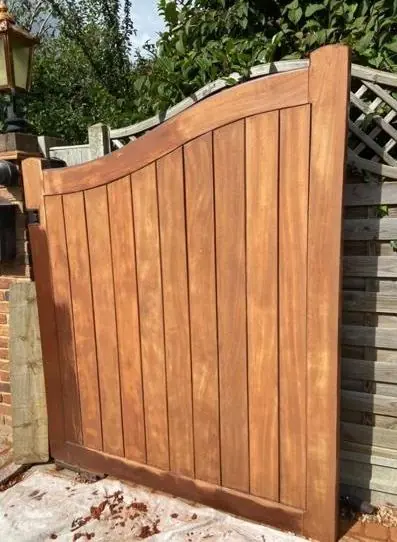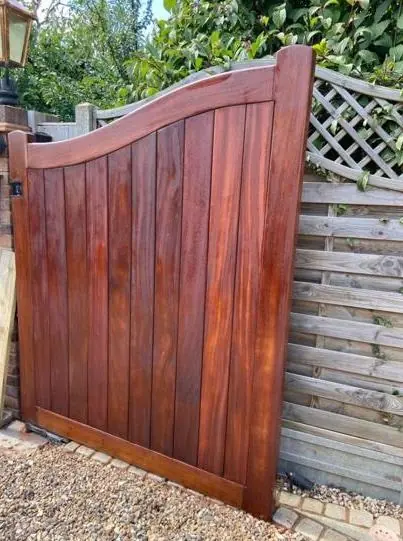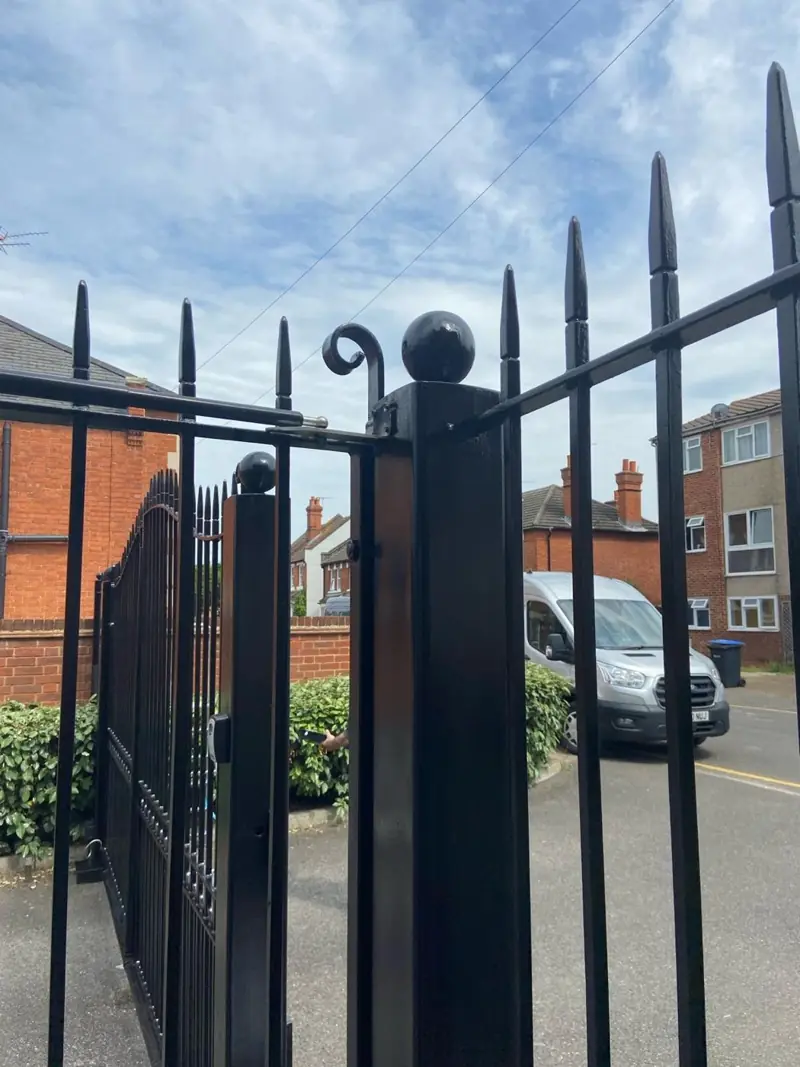
DH Painter & Decorator stains and treats timber fences and gates in Yardley Gobion, the NN12 village about 9.7 miles south of Northampton. Dean handles open timber fencing on older plots and panel fencing on the post-war estate, and quotes are free.
Village boundaries: walls, hedges and timber
Garden boundaries in Yardley Gobion are a mix. In the old village, limestone walls capped with black ceramic tiles or cockscomb stones line many plots, alongside hedges and metal railings. Timber open fencing marks some plot boundaries on Moorend Road. On the post-war estate south of the village, panel fencing between back gardens is the norm. The village is ringed by arable farmland with substantial hedgerows, so on the village edge a back fence may sit against a hedge rather than a neighbour’s garden.
That gives two quite different staining jobs. Open fencing in front of a stone cottage is seen from the street and needs a colour that sits quietly against limestone. Estate panel fencing is about protection and a tidy, even finish along a long run.
Shade, green growth and slow drying
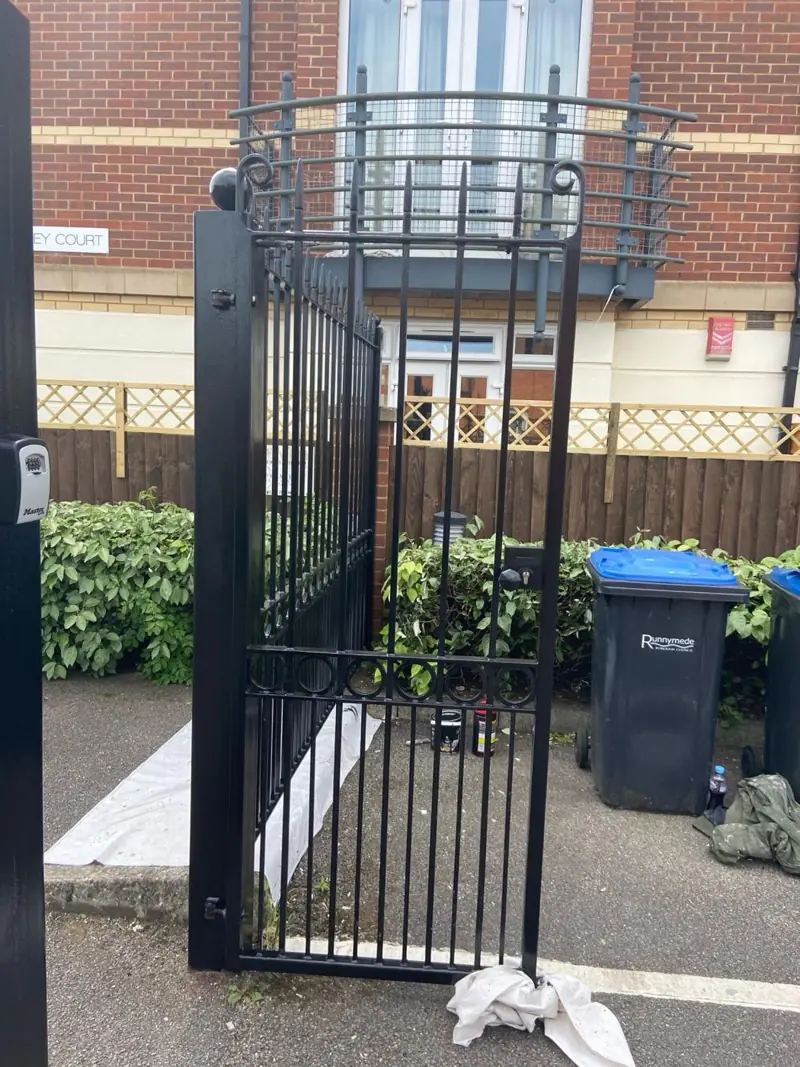
The thing that most affects fence staining here is trees. There are many large trees in gardens and on the greens, some protected by Tree Preservation Orders. Under them, fences stay damp, collect leaf litter at the base and turn green on the shaded side. Stain applied over algae or damp timber will not soak in and comes away within a season.
So the order of work on a Yardley Gobion fence is usually:
- brush down and treat green growth with a fungicidal wash, then rinse
- clear soil and leaves from the bottom rail and gravel boards
- wait for a dry spell long enough for the timber to dry right through
- apply a penetrating stain or a breathable wood finish, two coats on the weather side
We do not cut back trees. Work to a tree with a stem of 75mm or more in the conservation area needs six weeks’ notice to the council, so if branches are pressing on a fence, speak to a tree surgeon first.
Choosing a finish for the setting
For open fencing and gates in front of the old cottages, muted greens, greys and natural wood tones sit well with the light yellow and grey limestone. Bright orange stain looks out of place against stone walls and hedges. On the estate there is more freedom, though a colour that goes with your neighbour’s side of a shared fence saves arguments. Our colour advice service can help if you are stuck.
Gates that get used every day
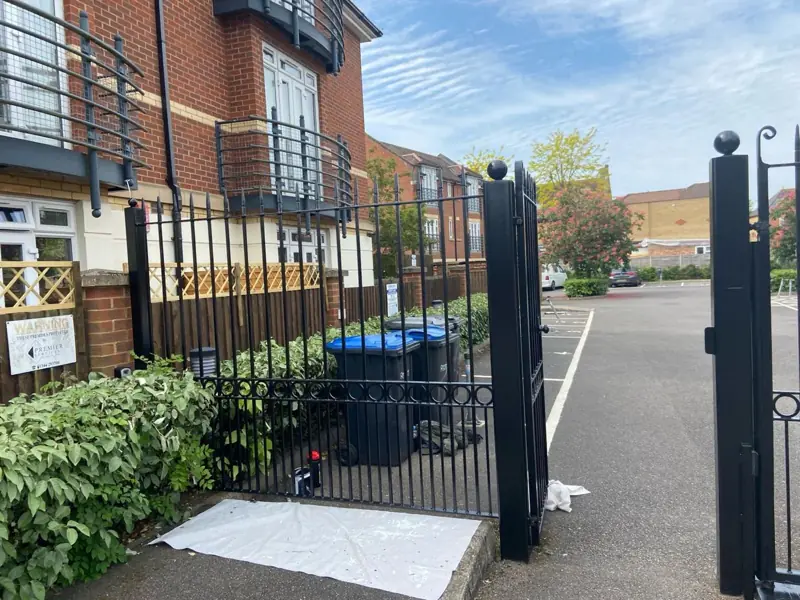
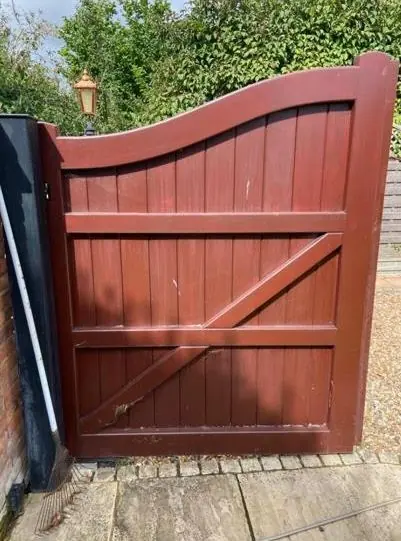
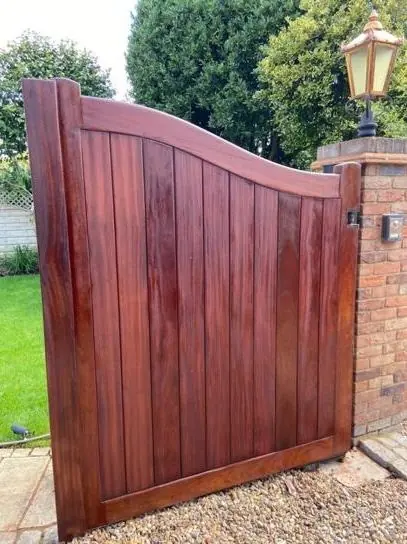
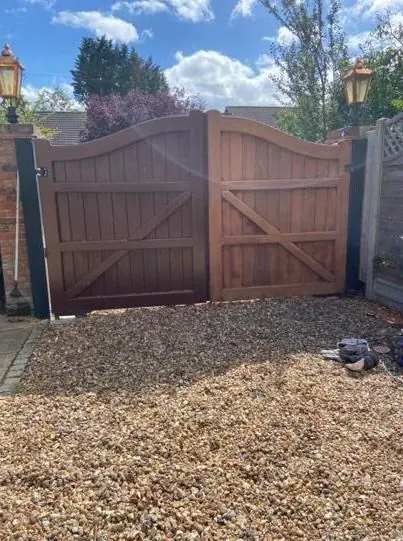
Timber gates take harder wear than the fence either side. A side gate on an estate house is opened several times a day, and a front gate set into a stone wall in the old village often has its top rail and hanging stile facing straight into the weather coming over the Tove Valley. Water gets into the end grain at the top of each board and at the joints of the frame, and the gate starts to drop. We sand back rough areas, seal the end grain, and build up an extra coat where hands and weather hit hardest. Latches, bolts and hinges are taken off or masked so they keep working.
Getting fence panels done without fuss
On the estate, most gardens are reached through a side gate or across a driveway, which keeps the job simple. In the old village, some High Street properties have rear access from the footpaths that run behind the plots, and that can be the easiest way to bring materials to a back fence. Where the only access is through the house, we lay down sheets and carry tins through rather than lifting anything over walls.
For the trade background, including the difference between stains, oils and paint for timber, see the main fence and gate staining page. We cover Yardley Gobion from Northampton, and there is more on the village’s stone walls and housing on the Yardley Gobion page.
Last updated by Dean, DH Painter & Decorator.