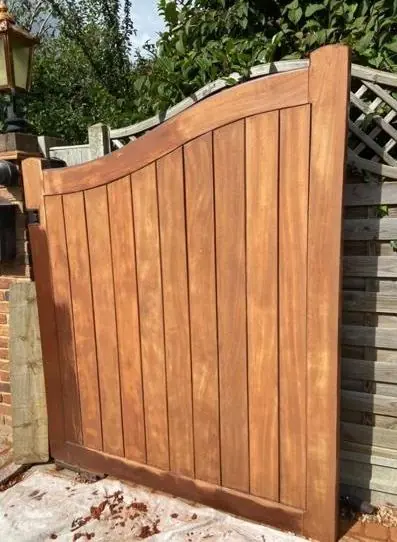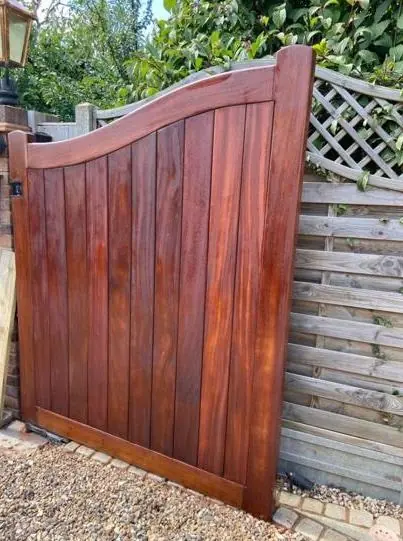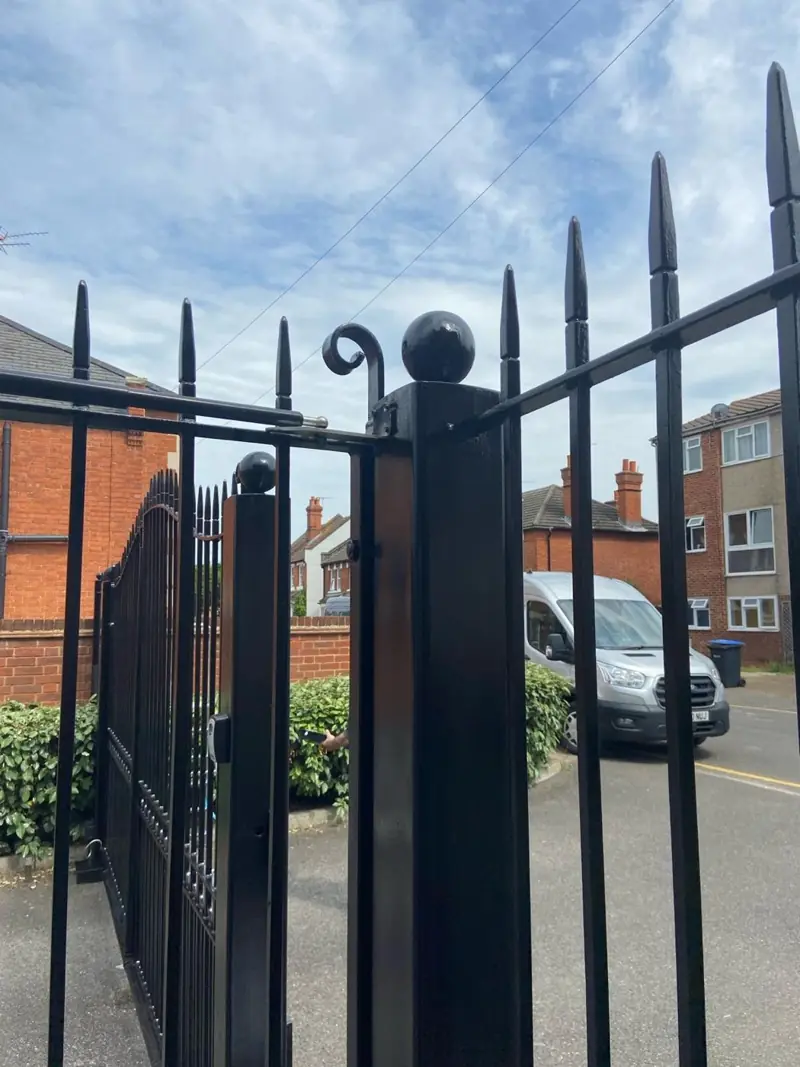
DH Painter & Decorator stains and paints garden fences, posts and timber gates in Hackleton, 4.7 miles south-east of Northampton off the B526. Most of the work is on the estate gardens behind Main Road, where exposed boundaries and wet clay ground wear timber out faster than in sheltered town gardens.
Boundaries that face open country
Hackleton is surrounded by open farmland and old ridge-and-furrow fields, with Salcey Forest beyond Piddington to the south. Many gardens on the estates built north of the main road between 1939 and 2000 finish at a fence with fields on the other side. A boundary like that has no neighbour’s garden, shed or hedge to shelter it. Wind-driven rain hits the whole face of the panels, and the sun bleaches the field side unevenly. The result is a fence that looks fine from the patio but has gone grey, dry and split on the side you never see.
If we are staining a boundary like this, we ask about access to the far side. Treating only the garden face leaves the field side bare, and bare timber takes up water and moves. Where the outer face can be reached safely and with permission, coating both sides makes the fence last noticeably longer.
Clay ground and the brooks
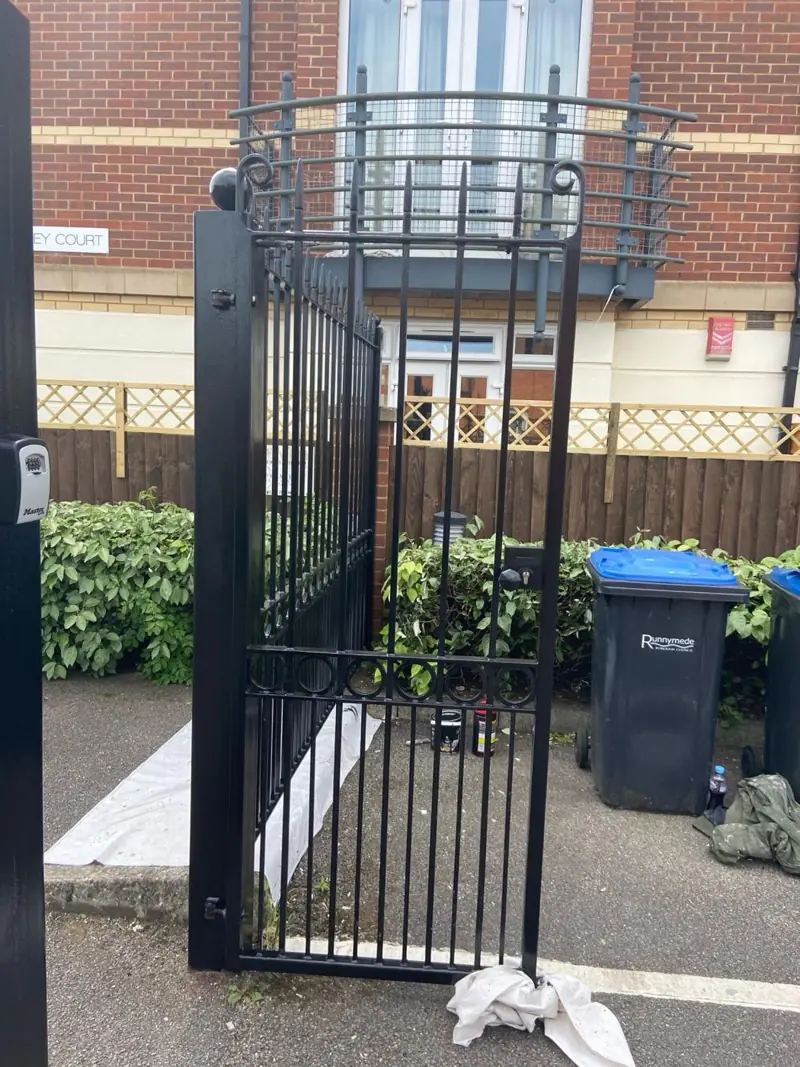
Under Hackleton’s gardens lies a marl and clay soil that holds water. The local watercourses belong to the Upper Nene catchment and flood readily; in early 2020 farmland on both sides of the B526 went under water. For a fence that means the bottom of every post, the gravel boards and the lowest rails sit in damp ground for long spells. The first things we check are:
- post bases at ground level, where rot starts unseen
- gravel boards and the bottom edge of panels that touch the soil
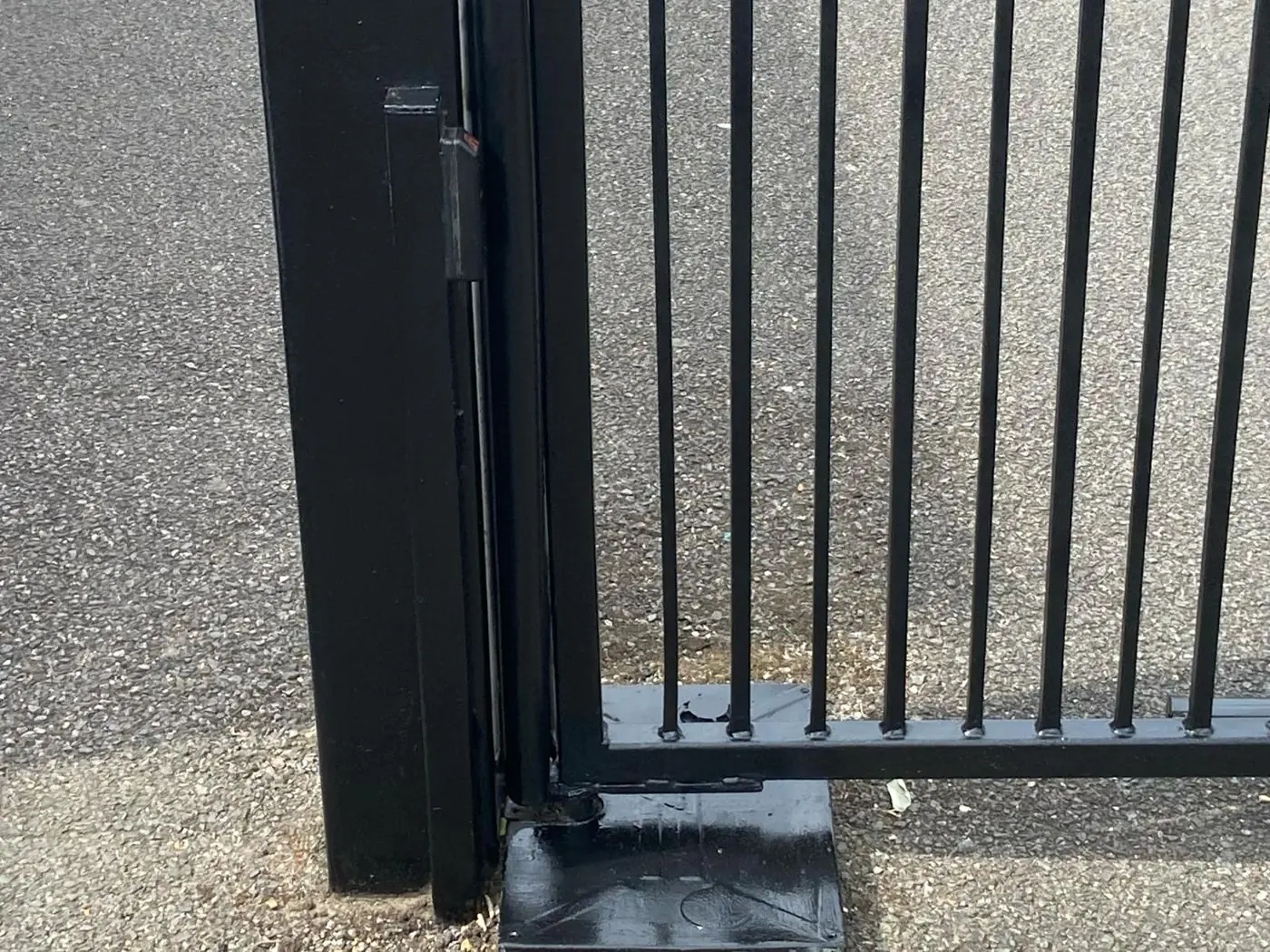
- gate stiles and the hanging post, where hinge screws loosen as timber softens
- green algae on the shaded, damp side of the run
Stain cannot save a post that has already rotted through. If a post moves when pushed, it needs replacing before we apply a finish, and we will say so at the quote stage. On sound timber, we clean off algae, let the wood dry fully, then use a penetrating product that lets water out as well as keeping it off. Keeping soil and leaf litter clear of the gravel boards afterwards helps as much as the coating.
Gates on drives and side paths
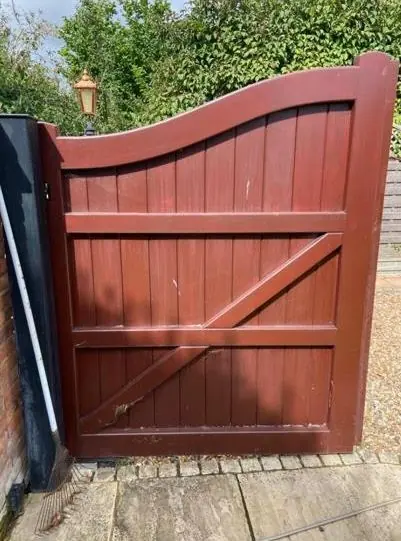
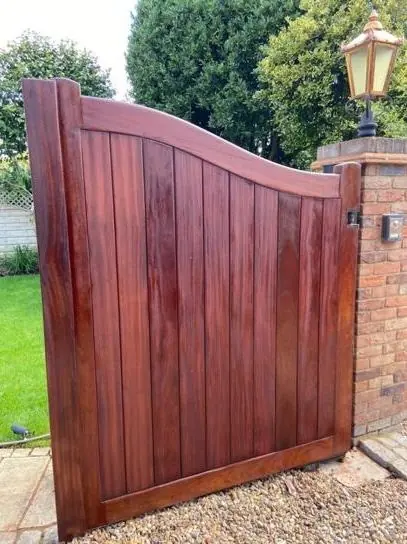
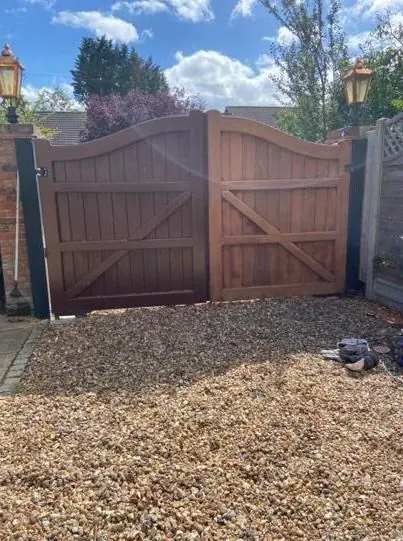
A side gate or a pair of driveway gates on an estate house works harder than a fence. It is opened every day, its bottom rail and braces catch splash from paths, and its end grain is exposed at every joint. We take off the hardware where we can, work the stain into the joints and end grain, and finish the top and bottom edges as well as the faces. For a gate that has gone grey, we raise the grain and sand it back before any colour goes on, so the finish soaks in evenly.
Colour choices for the village
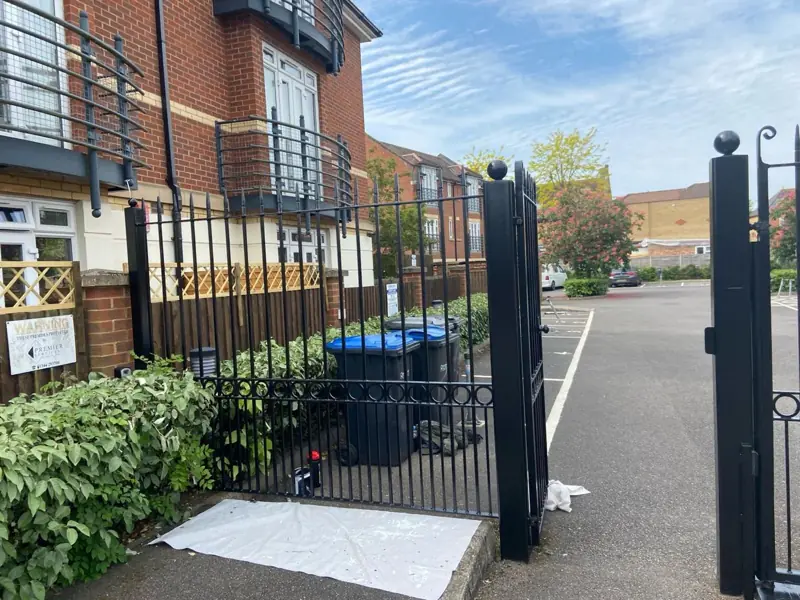
Hackleton has no conservation area, so garden fence colours are up to you, unless you live in a housing association home where the landlord has a policy. For gardens that border the fields, a mid or dark natural brown or a muted green sits quietly against the farmland. The older Main Road cottages mostly stand on the back edge of the footway with no front garden, so any timber gate there is likely to be at the side or rear, where a traditional colour chosen to suit the pale limestone usually looks right.
The products and preparation steps are on our fence and gate staining page, and for the wider picture of the village, see our Hackleton area guide. If you would like a sense of budget before booking, our painting and decorating cost guide explains what affects a quote.
Last updated by Dean, DH Painter & Decorator.