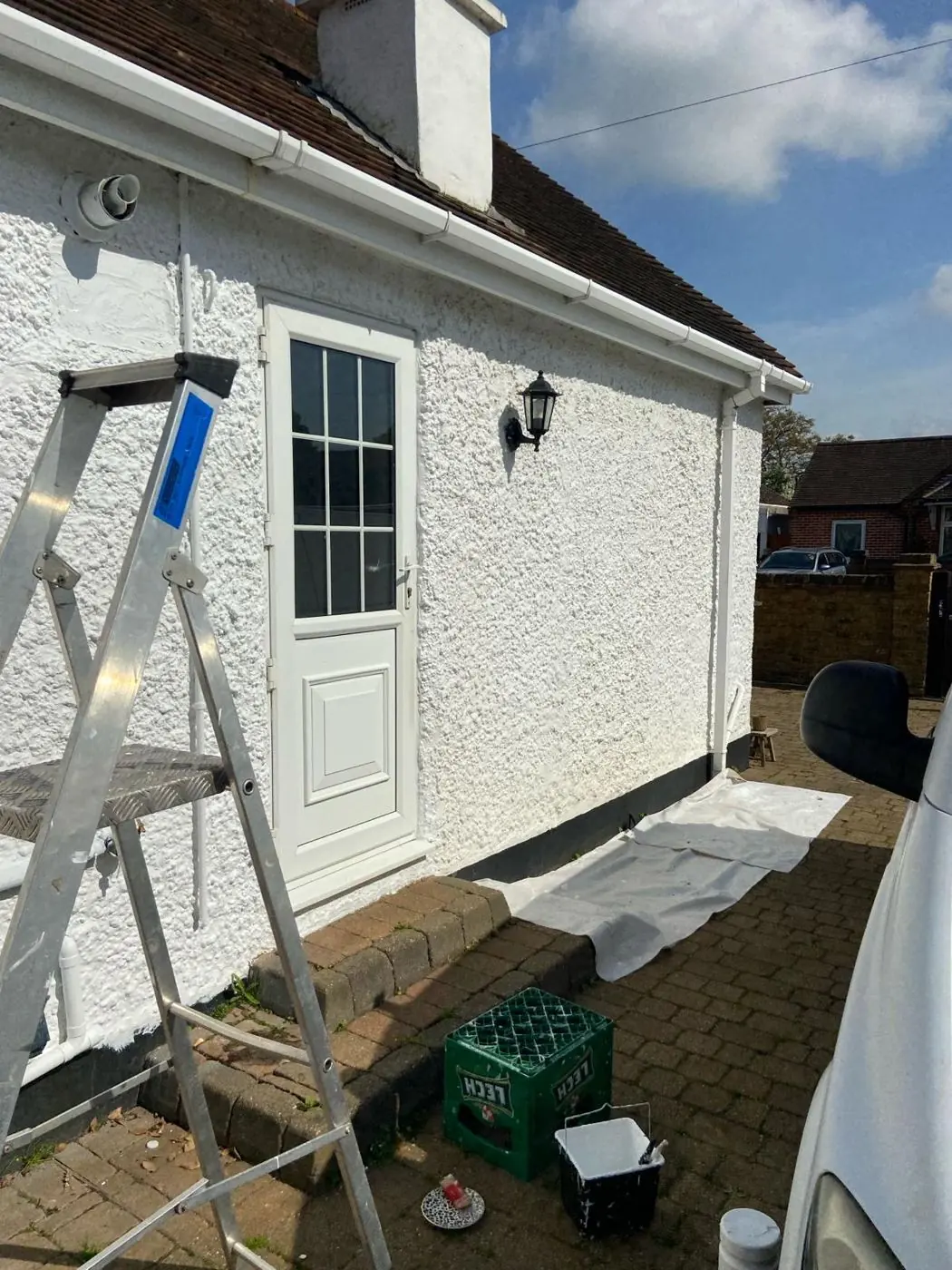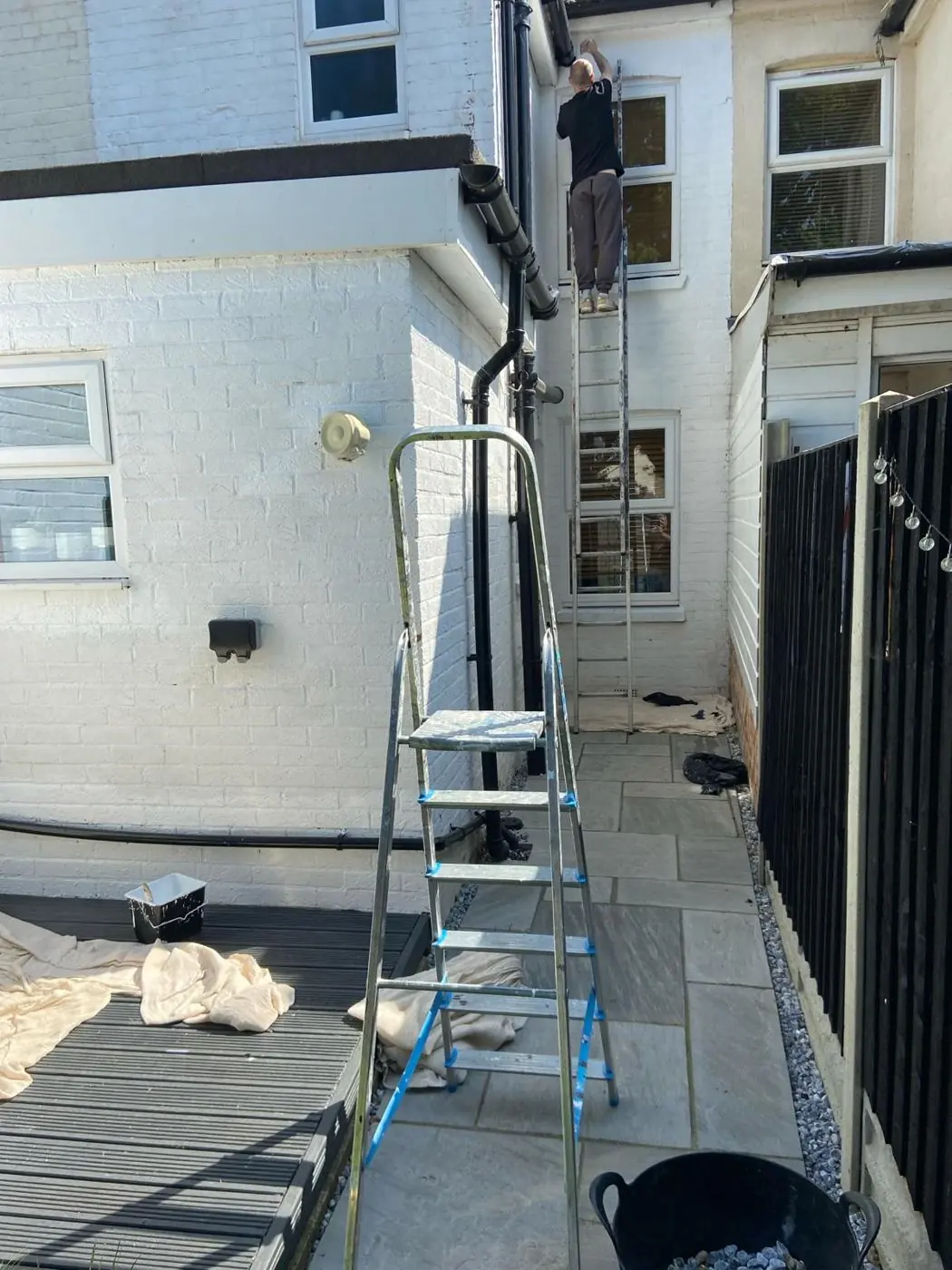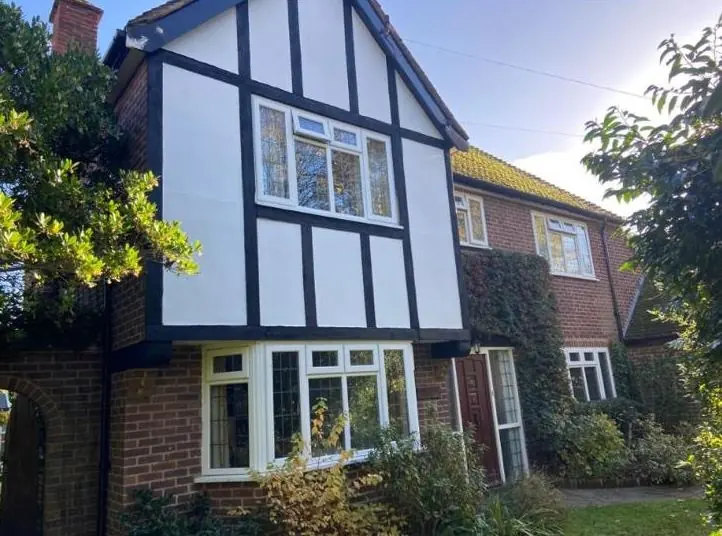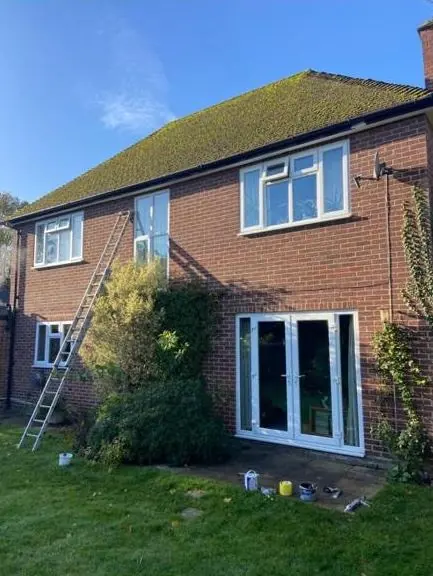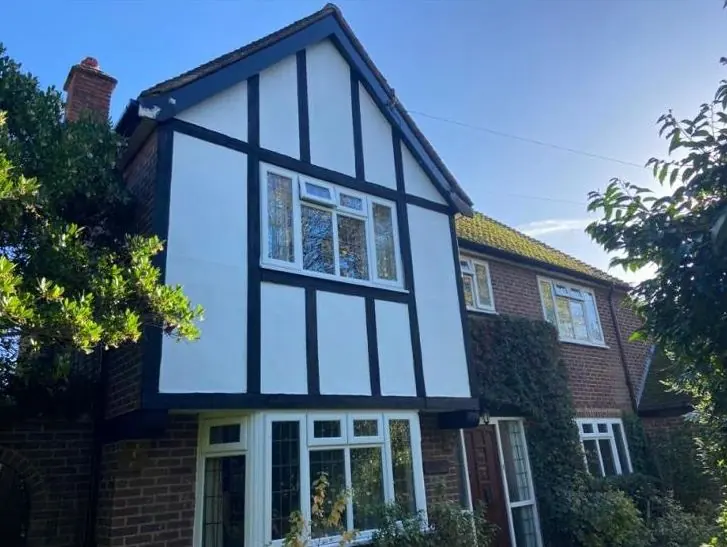
We paint render and masonry in Roade, NN7, about 5.4 miles south of Northampton. The old core east of the A508 is mostly bare limestone that should stay unpainted or, where already painted, take a breathable mineral finish; rendered houses on the western side take conventional masonry paint.
Most of old Roade should stay unpainted
The local building stone is limestone, and the Jurassic limestone, clay and shale under the village are laid bare in the deep railway cutting, a geological SSSI. The listed cottages on the High Street and Memorial Green, the church and the Baptist chapel are all limestone rubble, laid to let moisture move in and out through the stone and its joints. That is why the first part of any masonry enquiry in the conservation core is a question, not a quote: does this wall need paint?
For bare stone the answer is nearly always no. An acrylic or plastic masonry paint forms a skin over the face, water collects behind it, and in a frost the face of the stone can spall. If a stone wall looks tired, cleaning, repointing in lime or simple repairs will do more for it than a coat of paint. We will tell you that on the visit rather than sell you a coating it should not have.
Stonework that has already been painted
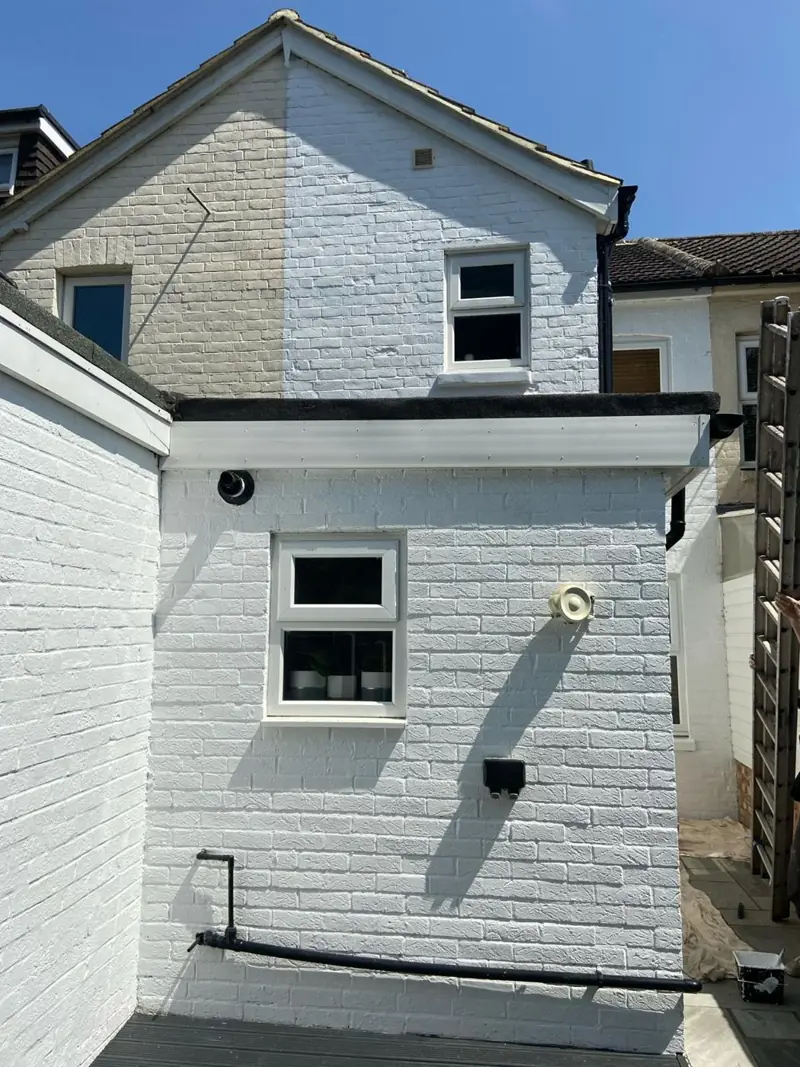
Some old walls in Roade were painted long ago. Part of the stonework on The Old Forge and 9-13 High Street is a listed example. When a wall like that needs freshening up, the aim is to keep it breathing:
- Find out what is on the wall now. Limewash, distemper and modern masonry paint behave differently, and a small test area tells us which one we are dealing with.
- Brush off loose, powdery material by hand rather than with harsh pressure washing, which drives water into the joints.
- Recoat with a mineral silicate paint or a limewash, matched to what is already there.
- Keep to the existing colour on listed walls, since a change can need listed building consent.
Where a wall has been coated in modern plastic paint that is now trapping damp, removal is a specialist job and we will say so honestly rather than paint over the problem.
Ironstone dressings and datestones
Several houses on Hartwell Road mix limestone walls with ironstone quoins, window dressings and datestones. 1 Hartwell Road has ironstone dressings and quoins, and Pear Tree House carries a 1717 datestone in ironstone. Ironstone is softer than the surrounding limestone and paint on it is very hard to get off again, so we mask it carefully whenever we paint nearby joinery or a previously painted panel. A stray brush mark on a datestone is a problem that lasts.
Rendered houses west of the A508
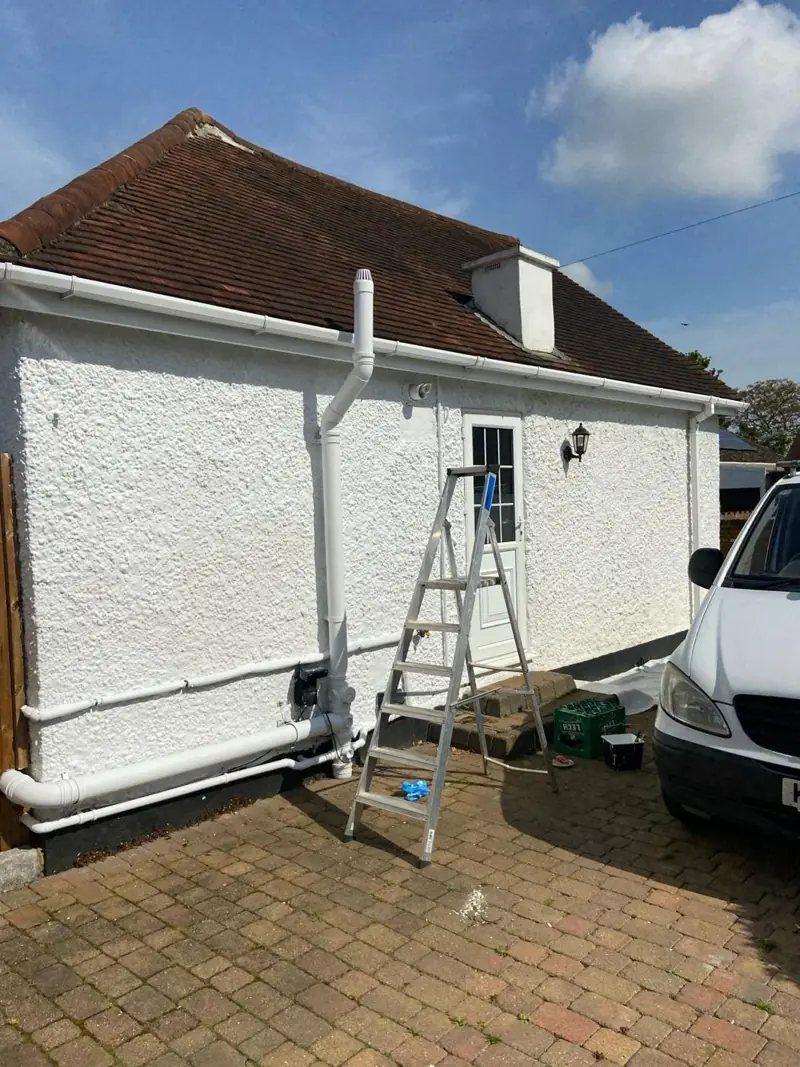
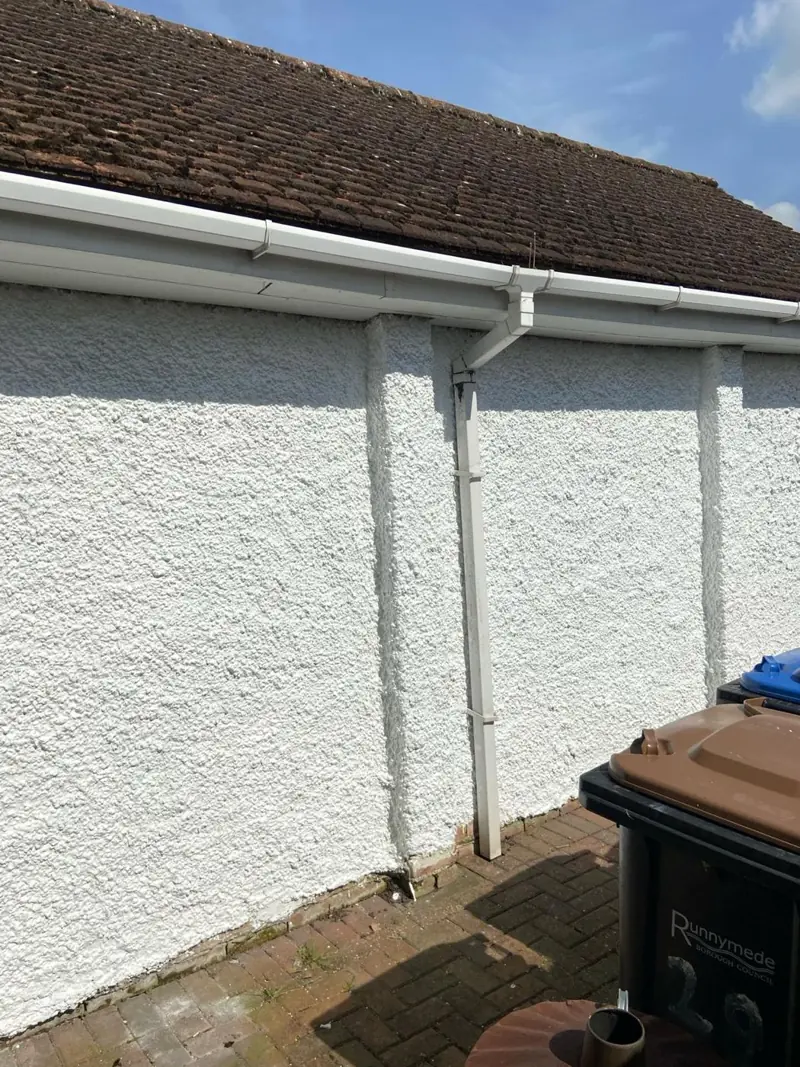
The 20th-century housing on the closes and ways west of the main road is a different matter. Where these houses have render, roughcast or painted panels, a standard masonry system applies: algae wash, scraping and stabilising chalky areas, crack filling and two coats of breathable masonry paint. The sources we work from do not record what the western houses are built of, so we judge each one on the visit. A brick house with a rendered porch panel or painted plinth is a smaller job, often paired with fascias or the front door. Our guide to painting render and roughcast covers the choices in detail, and the main render and masonry painting page sets out the full process.
Elevations facing open farmland on the edge of the village tend to collect green growth on the shaded side and fade faster on the sunny side, so we look at each face of the house separately. For a sense of how the two halves of Roade differ, see our Roade area page.
Last updated by Dean, DH Painter & Decorator.