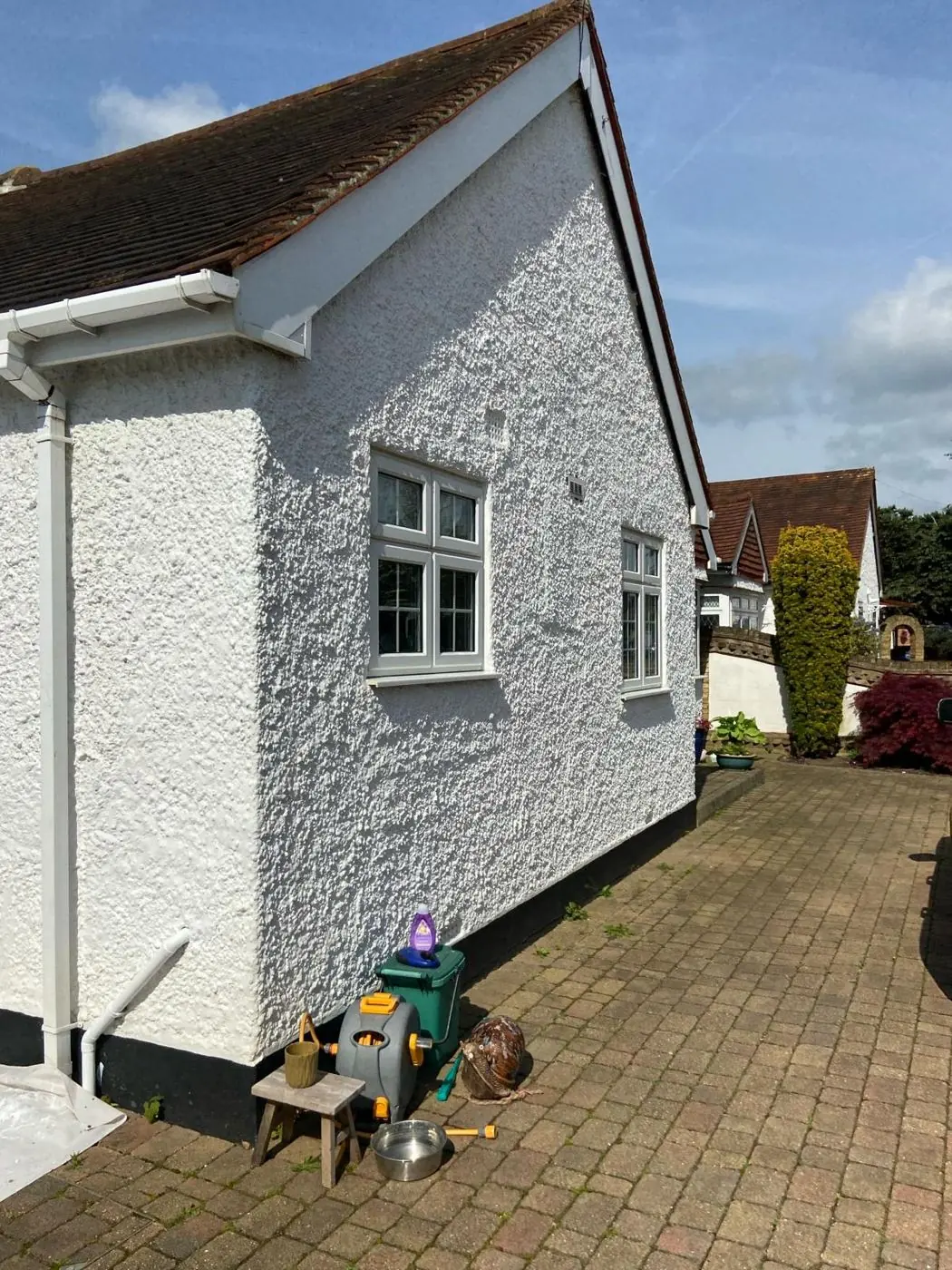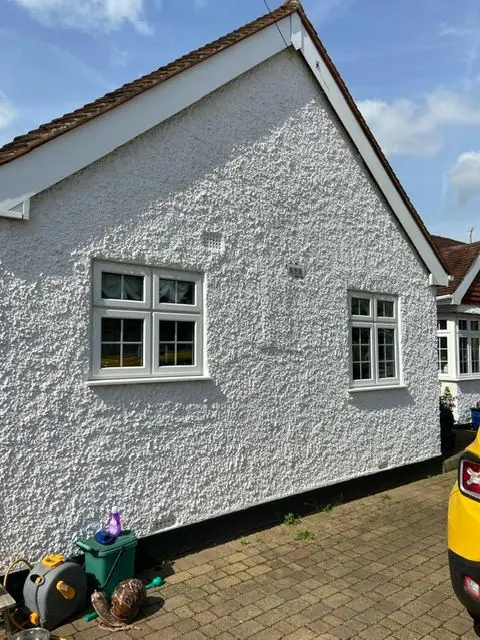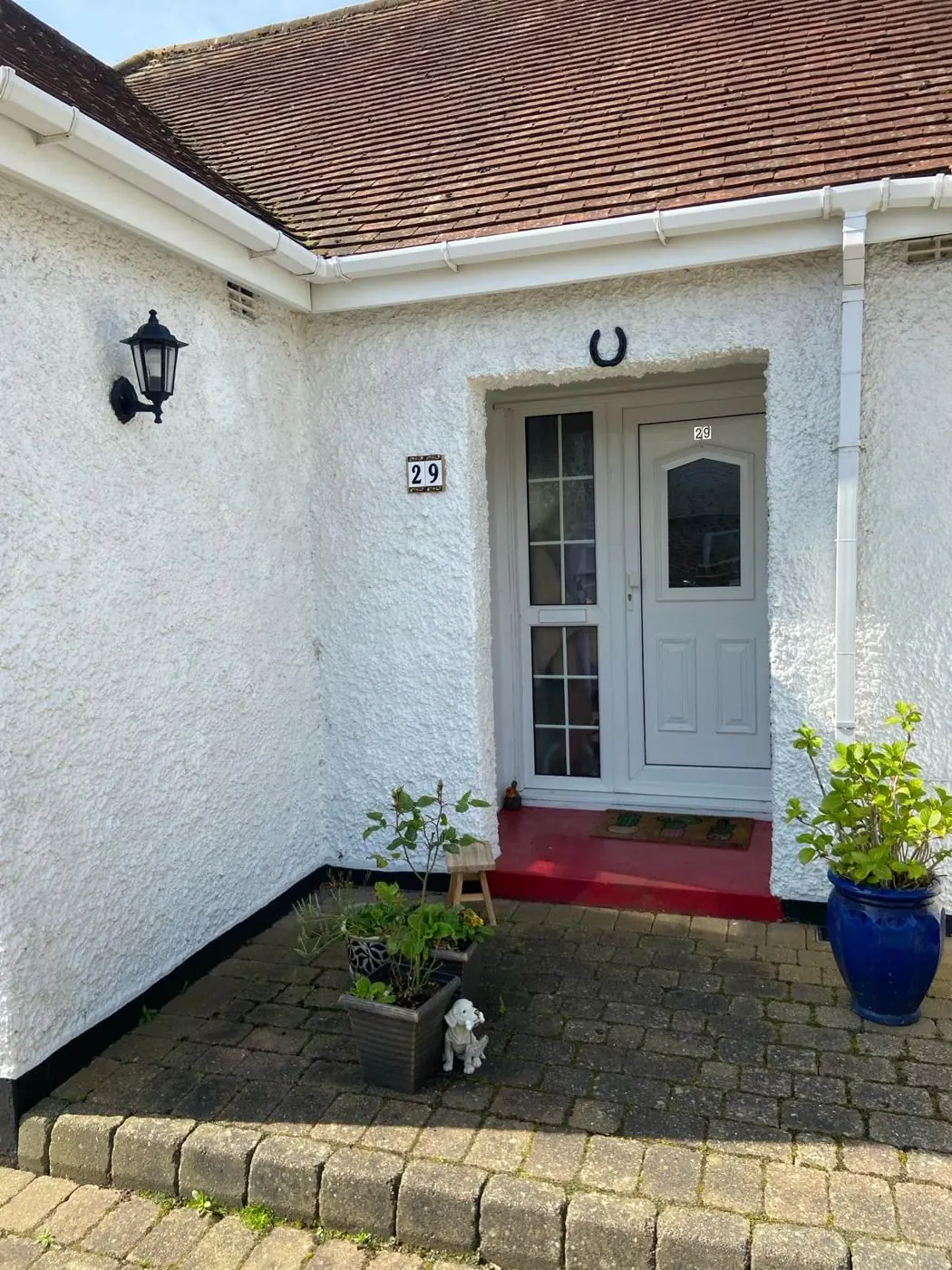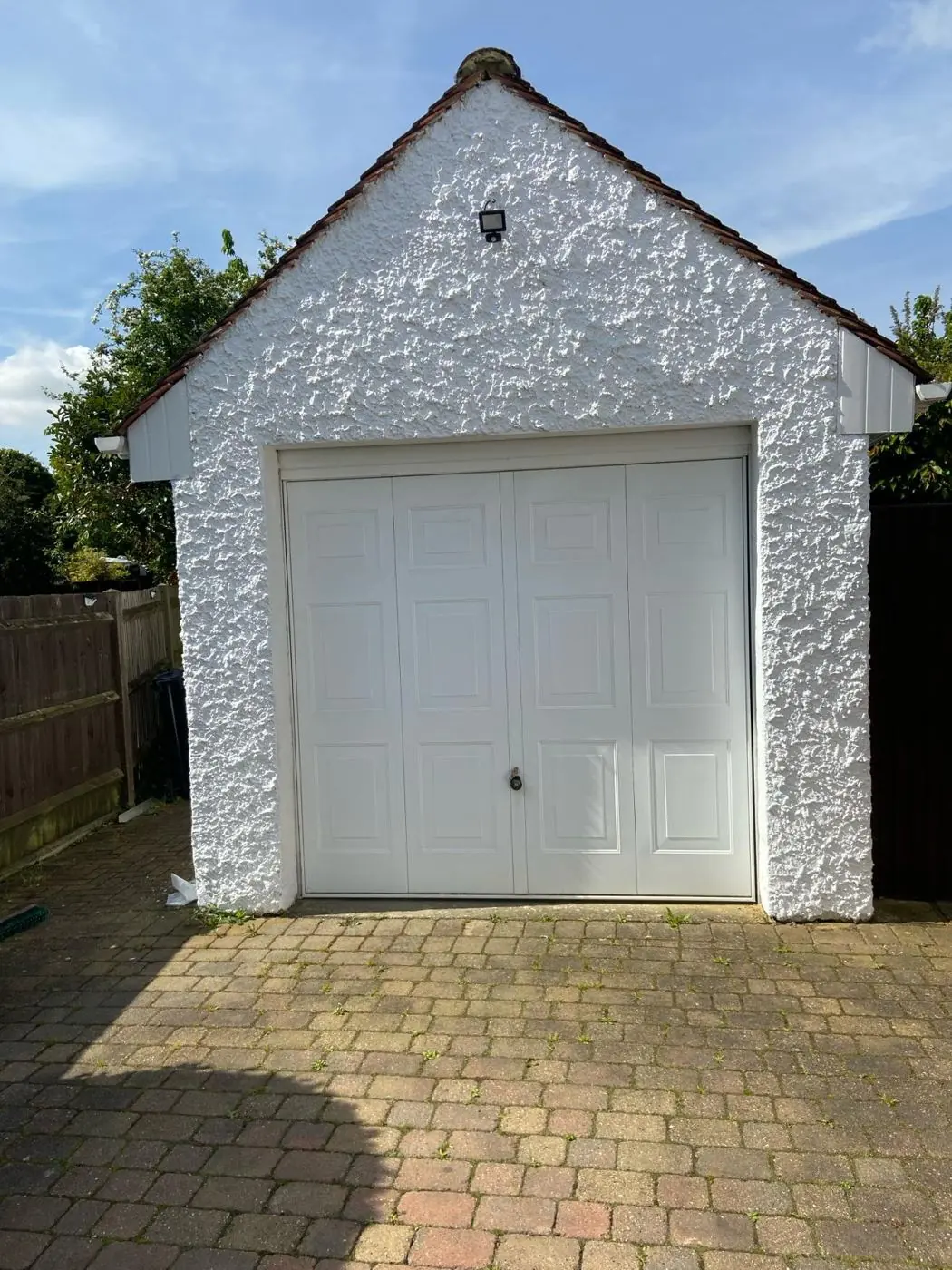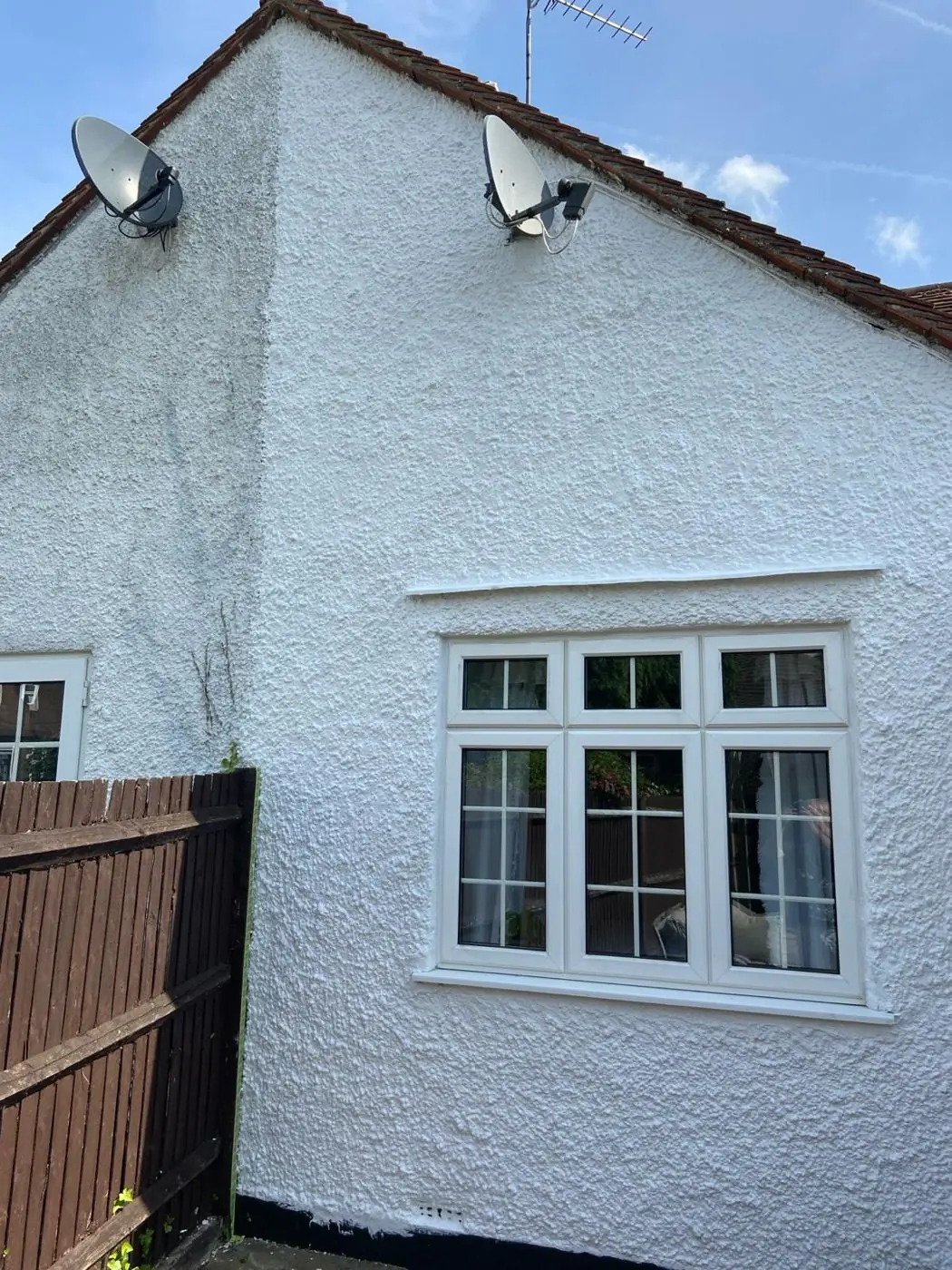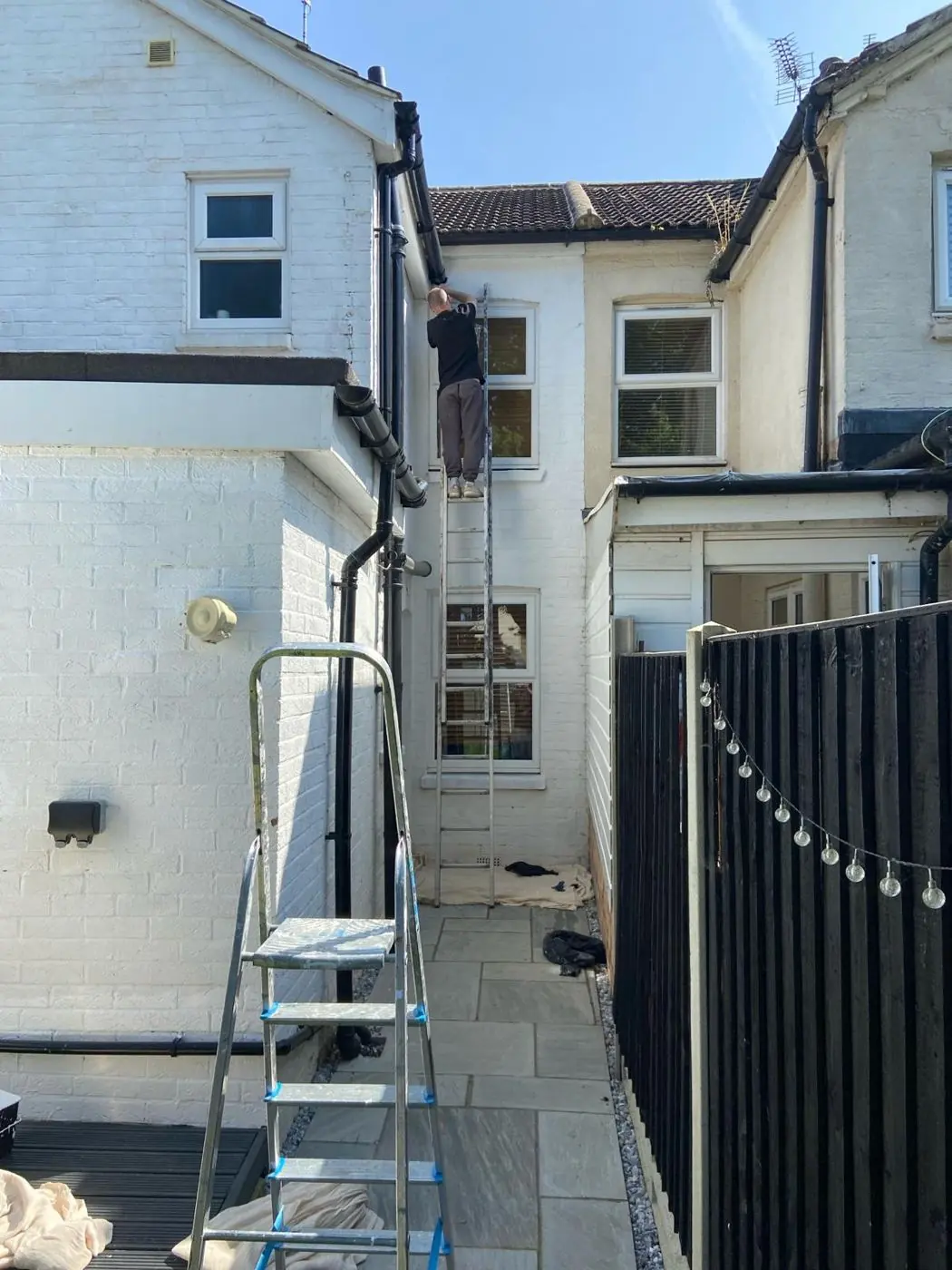
We paint render and masonry in Paulerspury, a village about 9.8 miles south of Northampton in NN12. Most walls here are limestone, so Dean uses breathable mineral or lime-compatible coatings on old render and painted stone, and advises leaving bare limestone rubble unpainted.
Start with what the wall is made of
Very little of Paulerspury is built in the modern way, with cavity brick and cement render. The 18th-century cottages and farmhouses use coursed limestone rubble or coursed squared limestone, the RCHME records the village sitting on limestone and Boulder Clay, and solid walls like these move moisture in both directions. Whatever goes on the face must let that moisture out. A plastic-type acrylic masonry paint traps it behind the film, and in a wet winter the paint blisters and the stone or render underneath starts to break down.
So the first question on any masonry job here is whether the wall should be painted at all. Bare limestone rubble that has never been coated is generally better left as it is. The walls that do need paint fall into three groups.
Three kinds of wall you’ll meet in the parish
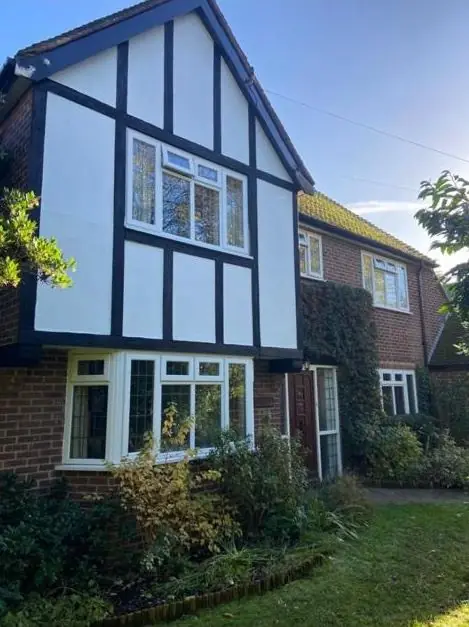
- Old lime-based render. The Former Rectory is coursed squared limestone with a rendered front and rendered stacks. Render of this age is usually lime-based. Cracks and hollow patches are repaired with a compatible lime mix, not cement, and then finished with a breathable masonry coating.
- Painted stone. The Barley Mow and No. 55 on High Street is painted limestone rubble. Recoating a wall like this means testing what the existing paint is and staying with a vapour-open system.
- Rendered brick additions. Some cottages, including 8 Lumber Lane and Elm Farmhouse at Heathencote, had walls raised in brick and rendered in the 20th century. That gives one elevation two different substrates.
When one wall needs two coating systems
The mixed walls are where mistakes happen. A raised section of rendered brick above old stone can look like one surface once it’s painted, but the two parts behave differently. The newer render may take a standard breathable masonry paint. The stone below, if it’s painted at all, needs a mineral or lime-compatible finish. We map out where one material stops and the next starts before choosing products, so the lower stone isn’t sealed just because the upper render was easier to cover.
Damp at the base of the wall is common on old stone cottages on clay. Before painting, we look for causes such as raised ground levels, blocked drainage or hard cement pointing, and point them out, since paint alone won’t fix a wall that’s staying wet.
Listed walls and the Chain Gate lodges
With 23 listed entries in the parish, a fair share of the masonry here is protected. The Grade I Chain Gate lodges on the A5, built in 1822-3 for the Easton Neston estate, combine limestone ashlar, Coade stone and rendered brick, a reminder of how mixed estate masonry can be. On any listed house, painting a previously unpainted wall or changing a wall colour may need listed building consent from West Northamptonshire Council. The Hunt House shows the other side of the rule: its limestone ashlar and ironstone dressings are a finished face and shouldn’t be painted.
Access and planning in a spread-out village
Masonry work often needs scaffold or a tower, and space for it varies across Pury End, Plumpton End, Tew’s End and Heathencote. A cottage tight to a narrow lane is a different setup from a farmhouse with a yard. Dean visits to check access, test the existing coating and look at the render’s condition before quoting.
Our guide to painting render and roughcast covers preparation in more depth, and the main render and masonry painting page explains the full process. For other work in the village, see the Paulerspury page.
Last updated by Dean, DH Painter & Decorator.