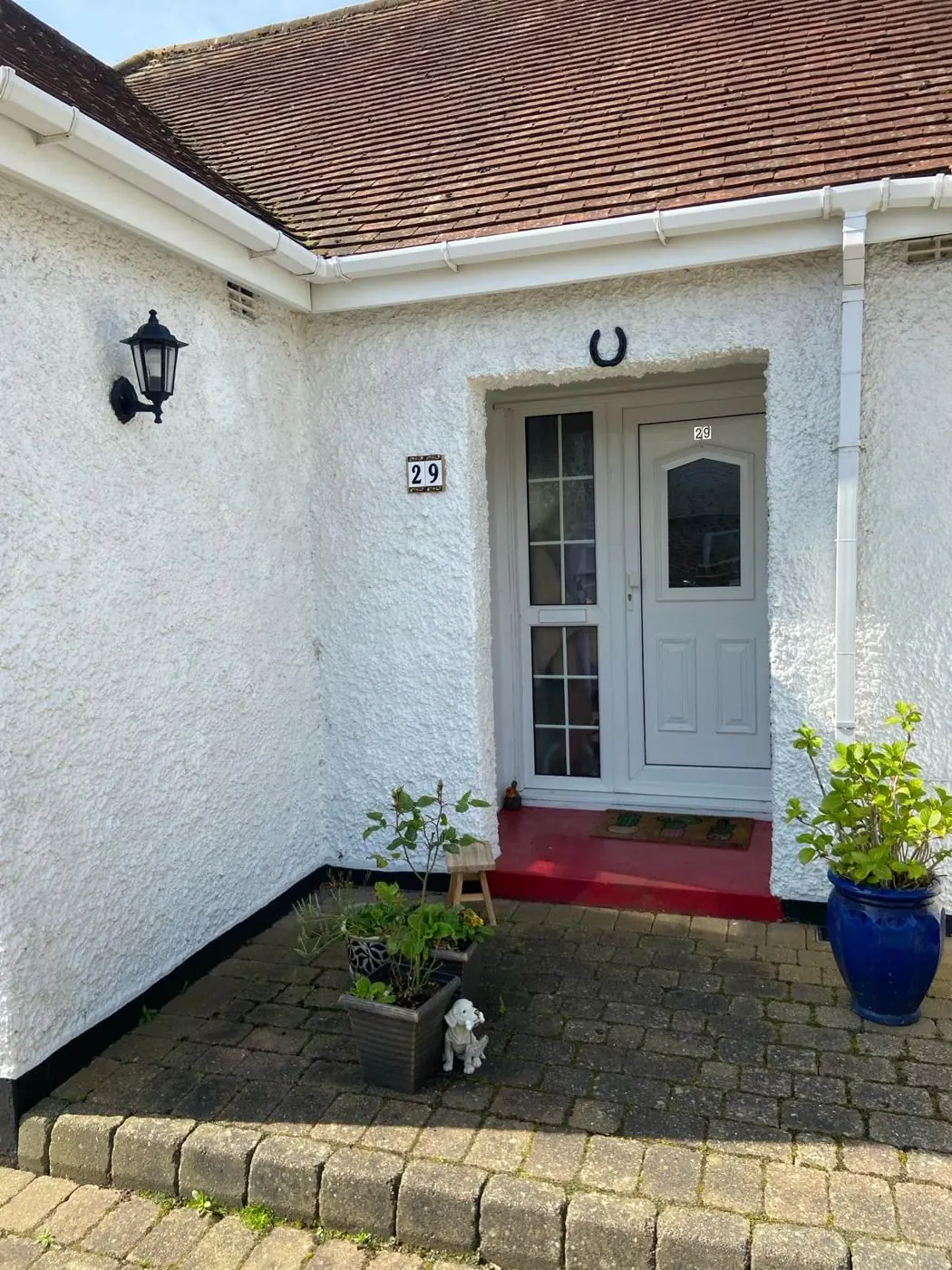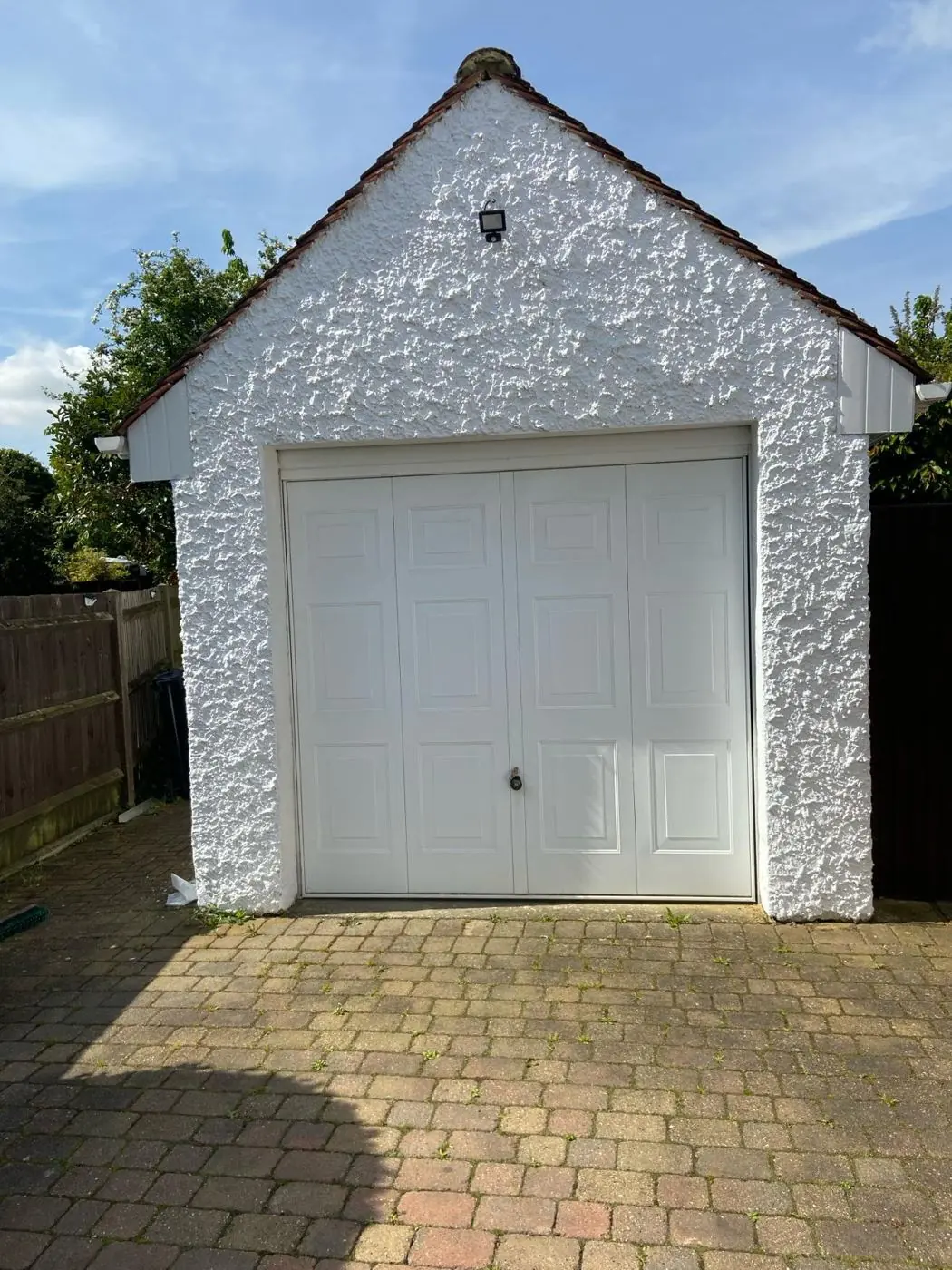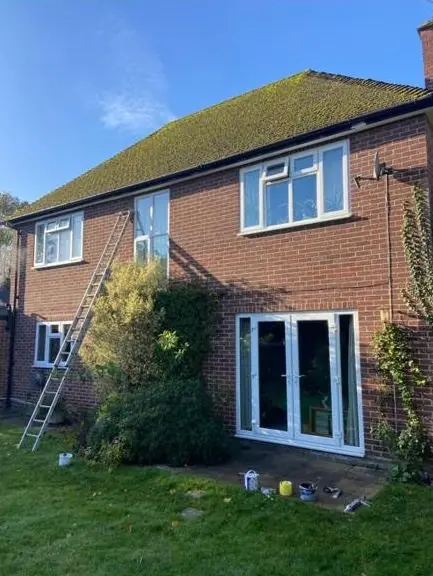
We take on render and masonry painting in Stoke Bruerne, 6.6 miles south of Northampton in the NN12 postcode. In this village the first question is often whether a wall should be painted at all: most of the older stone and brick should stay bare, and walls that are already painted or rendered need breathable mineral or lime-compatible coatings.
Most walls here are better left unpainted
Stoke Bruerne’s older buildings are built of coursed and squared limestone rubble with ironstone and red brick detail, and the canal-era and Victorian buildings use more red brick. The chapel on Chapel Lane, dated 1879, was built from George Savage’s village brickyard bricks. The conservation area appraisal treats this unpainted stone and brick as part of the village’s character and lists unsympathetic wall repairs and pointing as one of the main threats to it. If someone asks us to paint a sound, bare limestone front, Dean will usually advise against it, and he will say so at the quote visit.
The same goes for the dry limestone boundary walls, some finished with cock and hen coping, that run along the Lanes. They are left as stone. When we work next to them we sheet the coping so no masonry paint or limewash drips down the face.
Where masonry painting is the right job
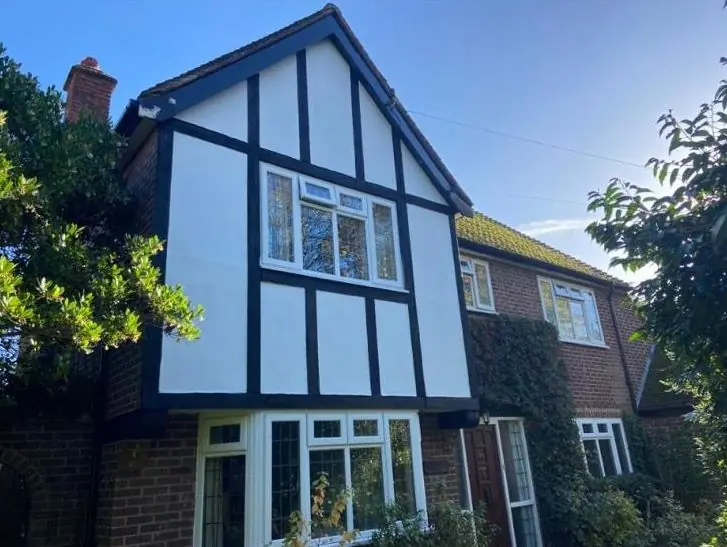
Painted masonry still turns up across the village, and it needs looking after properly:
- Stone or brick faces that an earlier owner painted, where the coating is now flaking or blistering
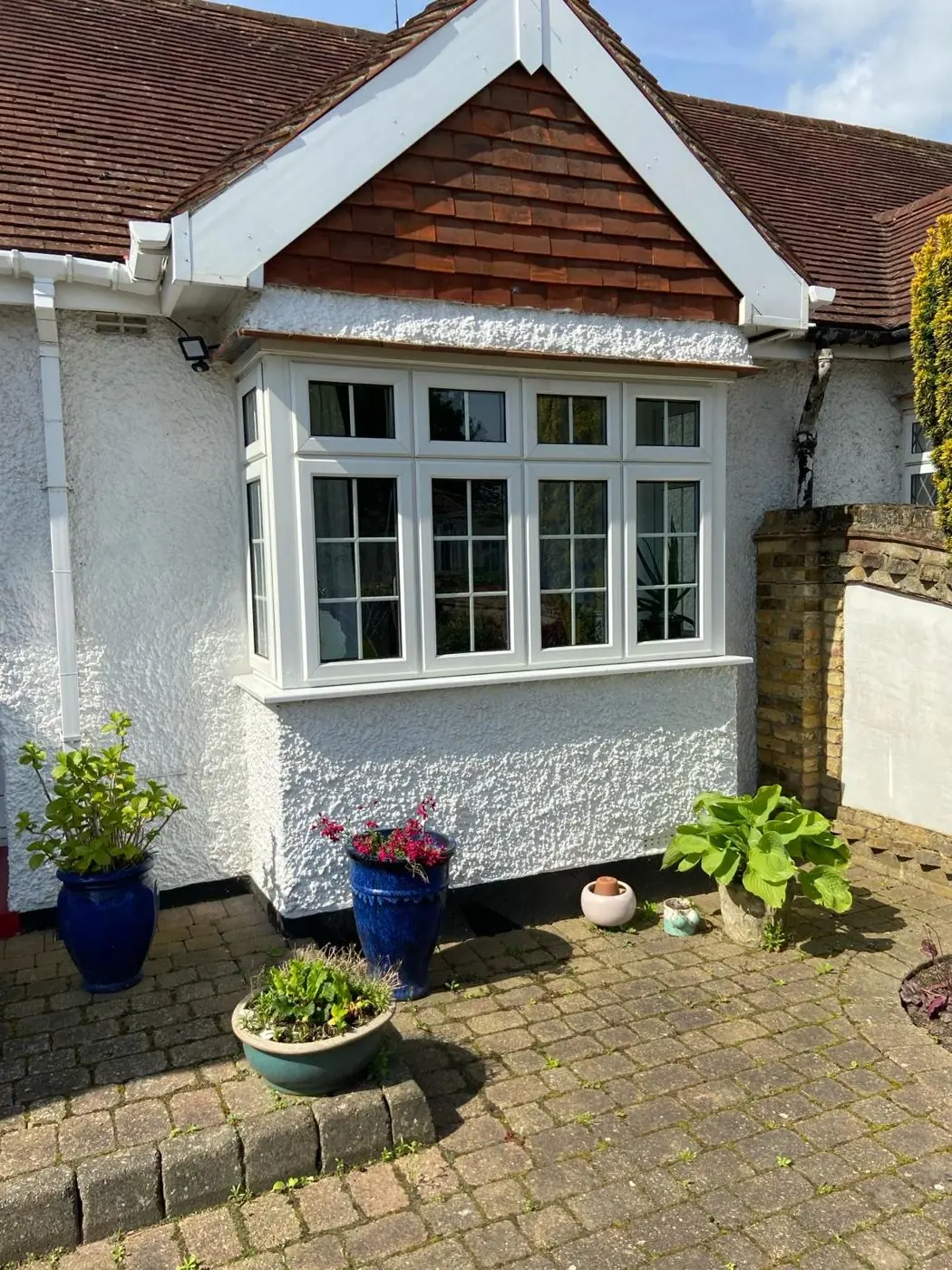
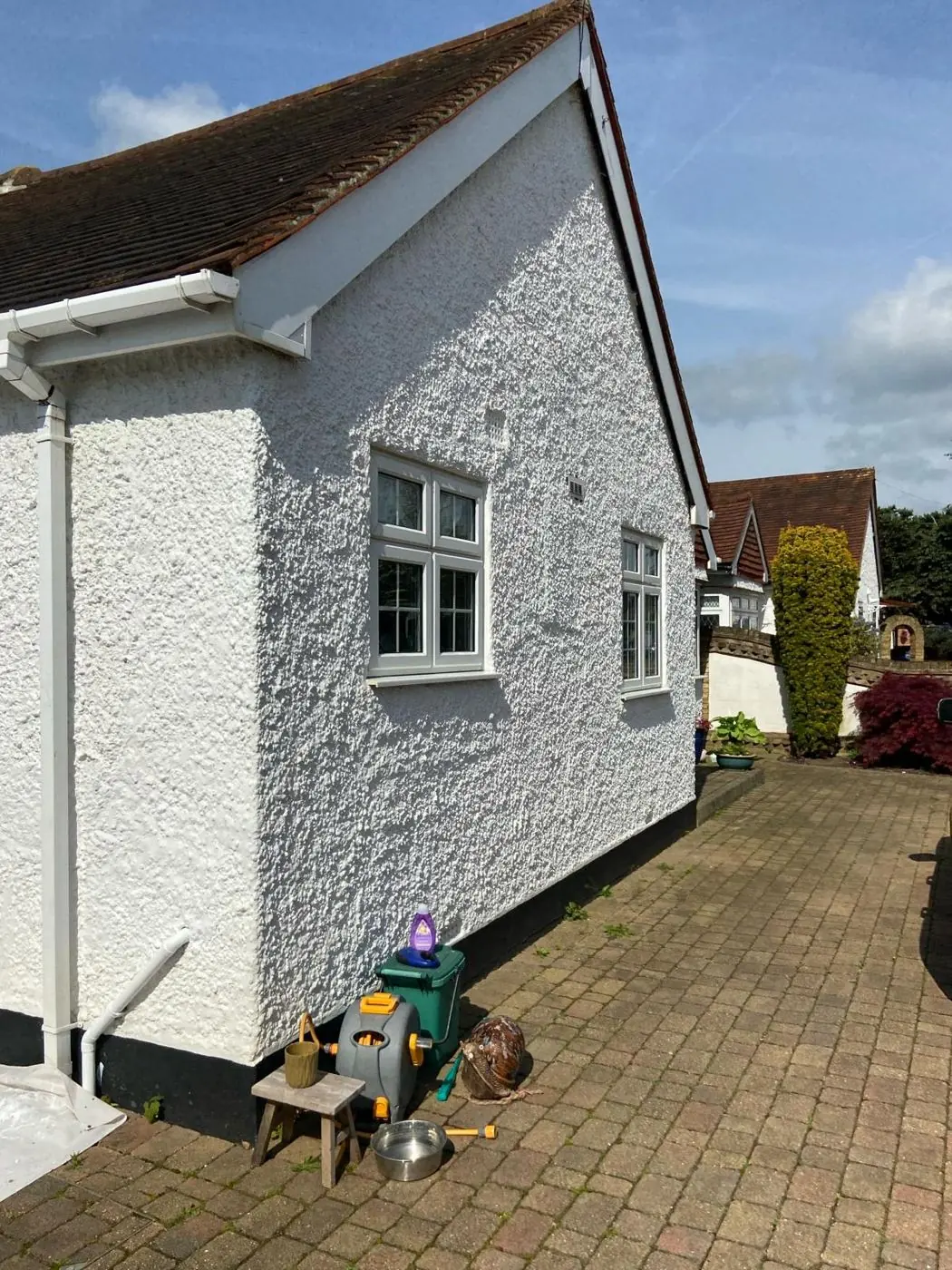
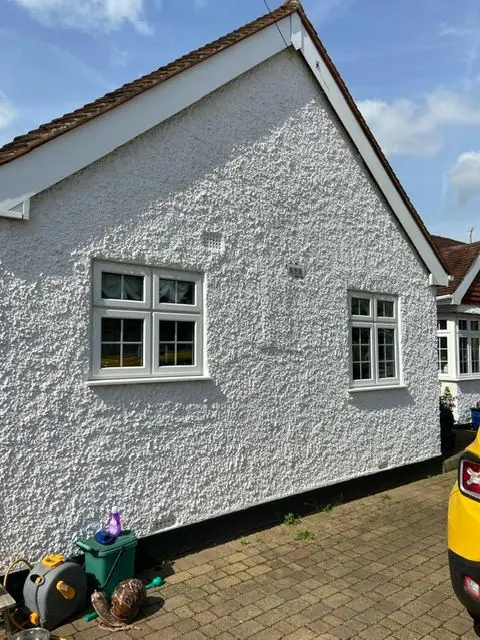
- Rendered or lime-plastered walls on cottages, extensions and converted outbuildings
- The mixed old and new wall surfaces on the Rookery Farm barns, now four homes, and similar conversions
- Rendered walls, plinths and garden walls on the post-1950s houses in the south-west of the village
Matching the coating to the wall
The common mistake on solid walls is a modern acrylic masonry paint. It forms a skin, and on a 17th-century cottage with no cavity and no damp course, moisture that would normally escape through the face gets held in the stone behind it. That shows up later as blown paint, salt staining and damp patches inside. Here is how we normally match the product to the wall:
| Wall | Typical location | What we would use |
|---|---|---|
| Solid limestone or ironstone rubble, previously painted | Green, Mill Lane and Rookery Lane cottages | Limewash or a mineral silicate paint once loose acrylic is removed |
| Lime render or lime plaster | Older cottages and outbuildings | Limewash built up in thin coats |
| Mixed old stone and new blockwork | Barn conversions off Rookery Lane | Breathable mineral paint across both so they weather alike |
| Cement render on modern blockwork | Wentworth Way and newer infill | Standard masonry paint after repairs |
Canalside walls get extra attention. The two- and three-storey buildings on the towpath sit in damp air off the water and the locks, so the faces nearest the canal stay wet for longer and we leave longer between coats. Tree shade along Rookery Lane has a similar effect, and green growth is cleaned off and treated before any coating goes on.
Consent, colour and pointing
The village has 12 listed buildings in its conservation area, plus the overlapping Grand Union Canal Conservation Area through the middle. Changing the colour of a listed wall, or stripping an old finish, may need listed building consent, and external cladding needs planning permission across the conservation area. Pointing isn’t something we paint over. If the joints are failing, it’s better to have them repointed in lime by a mason first, then we come back and finish.
For how render and roughcast are cleaned, repaired and coated in general, see our guide to painting render and roughcast and the main render and masonry painting page. Other work in the village, inside and out, is listed on the Stoke Bruerne hub.
Last updated by Dean, DH Painter & Decorator.