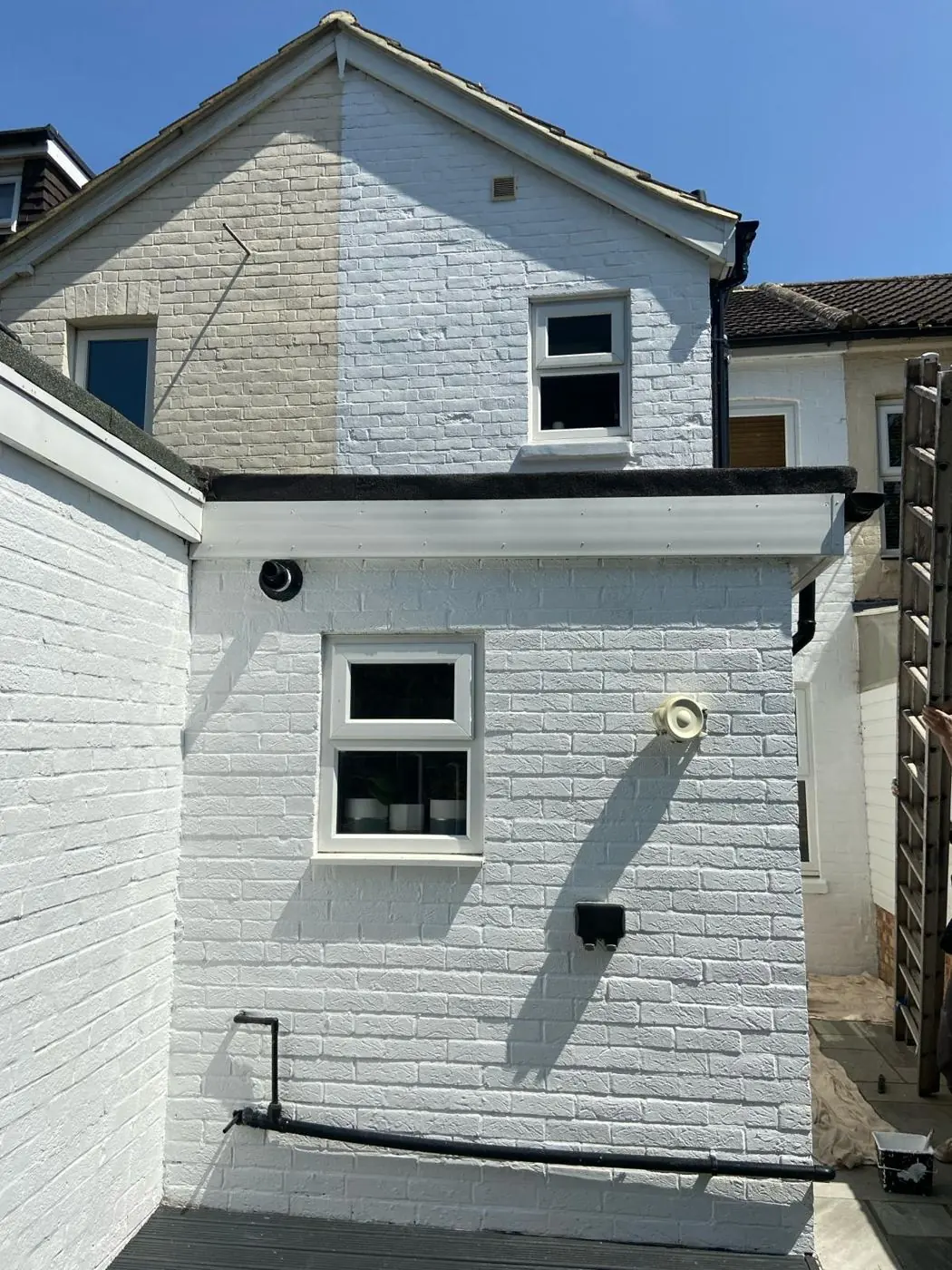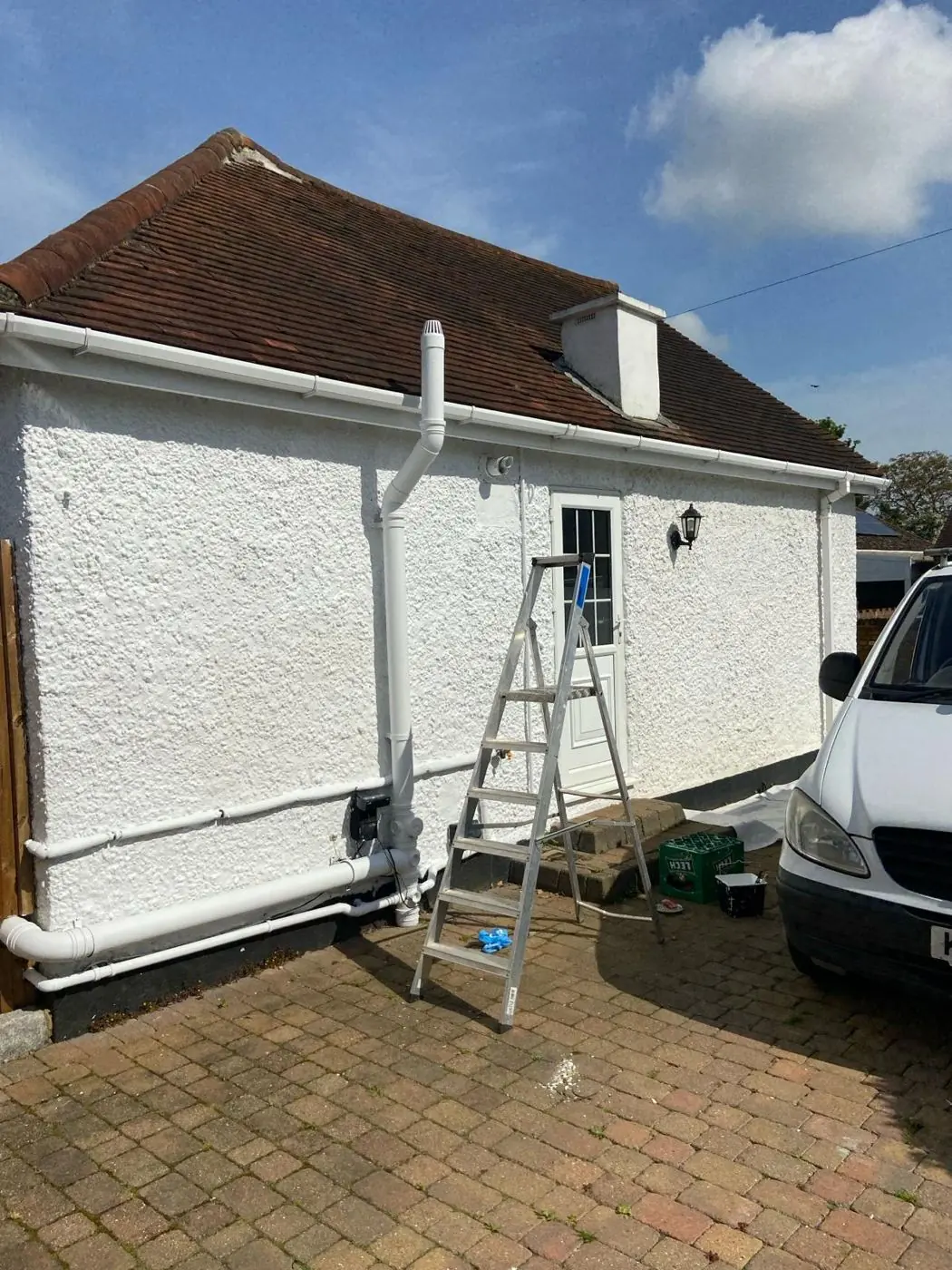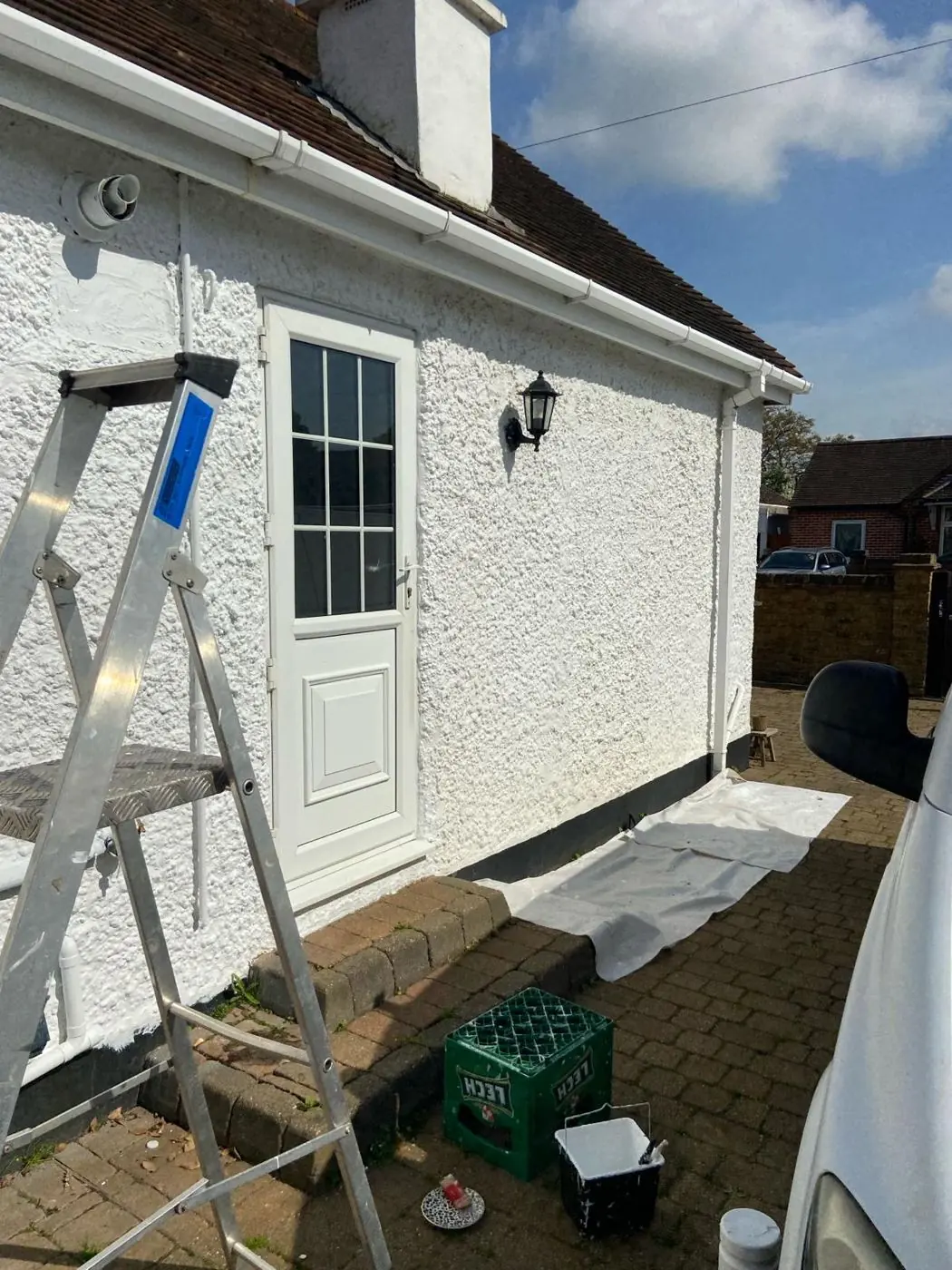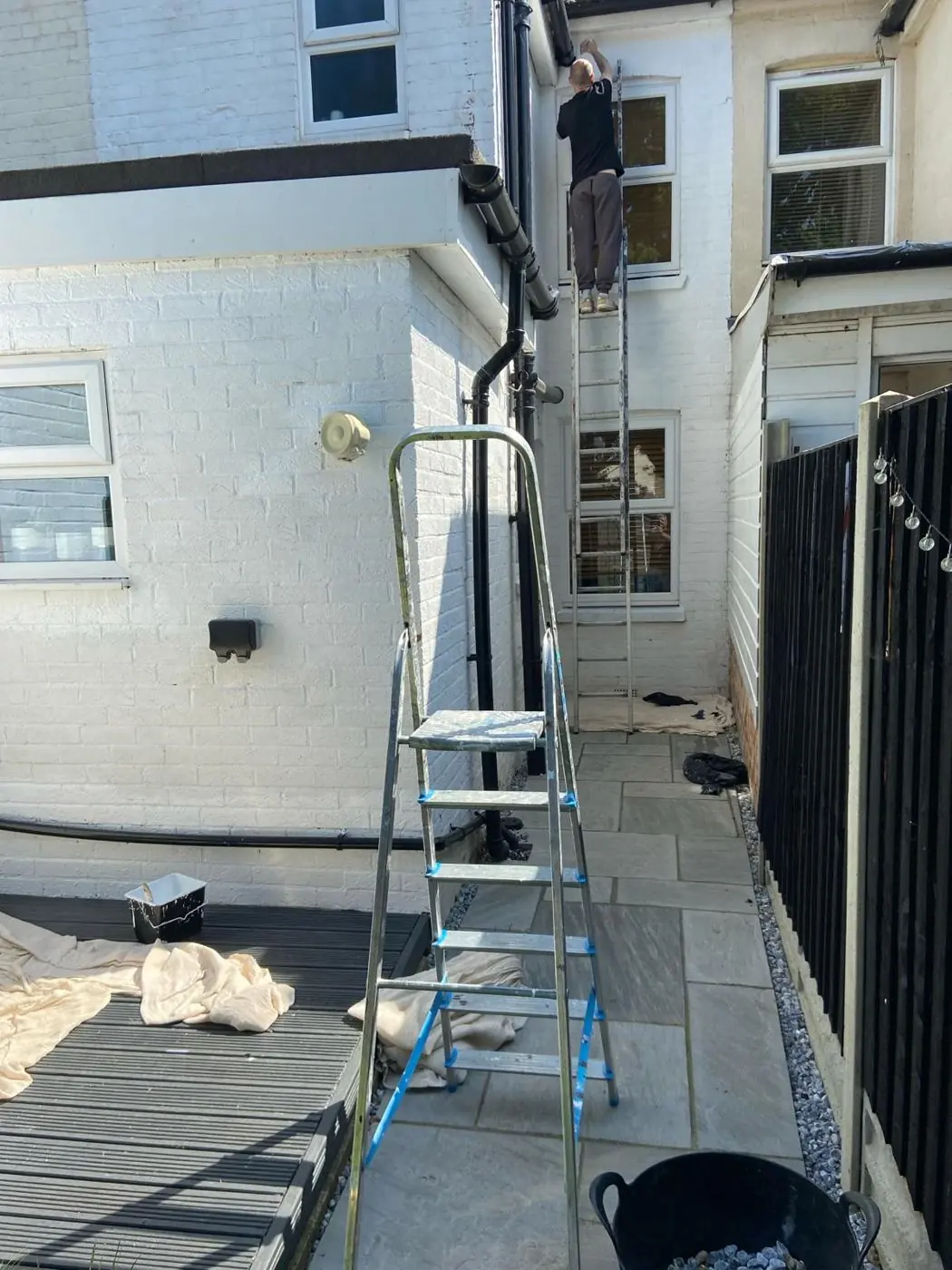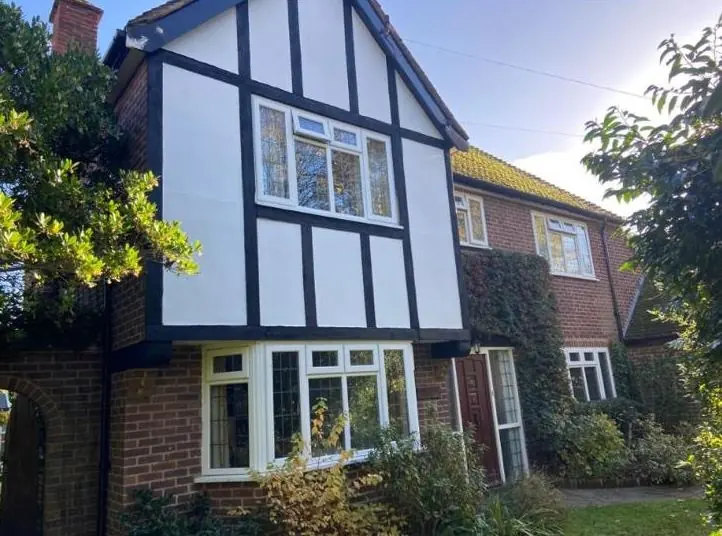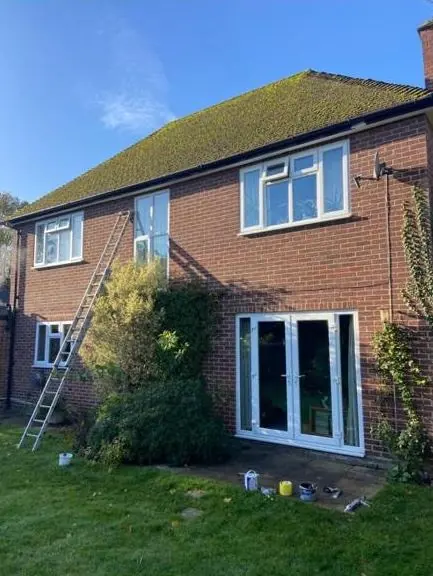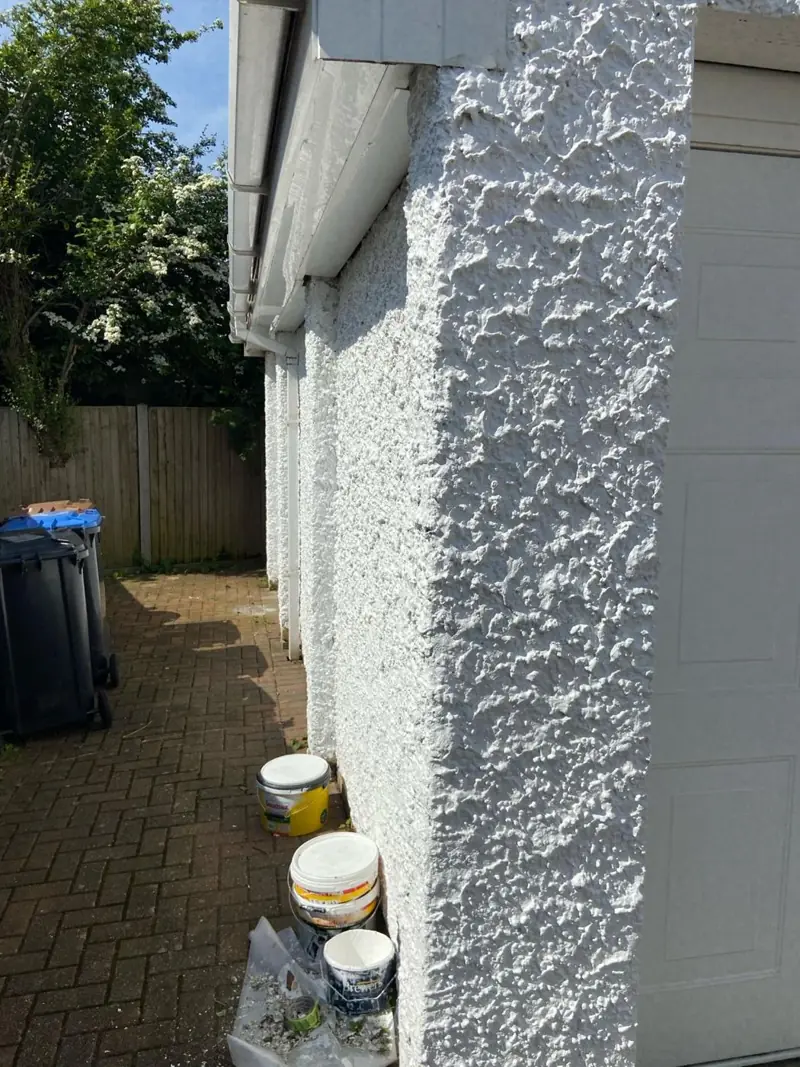
DH Painter & Decorator repaints render and painted stonework across Yardley Gobion, an NN12 village roughly 9.7 miles from Northampton town centre. Most walls here are old limestone, so Dean uses breathable mineral or lime-based paints and leaves bare stone and brick detailing unpainted.
Most of the village is bare stone, and should stay that way
Yardley Gobion is a limestone village. The cottages on Moorend Road and the High Street are coursed rubble, and the formal 18th-century houses are squared stone or ashlar. The 2013 conservation area appraisal does record several examples of painted stonework and a couple of early 19th-century rendered houses of classical, formal design. That sets the scope of masonry painting here: it is about looking after finishes that already exist, with paints that suit the wall, not putting paint on bare stone for the first time.
If your stone has never been painted, Dean will advise you to leave it bare. Once limestone is coated it is very hard to go back, and in a conservation area that worries about small, cumulative changes, a newly painted front can stand out badly.
Why plastic masonry paint is the wrong choice on limestone
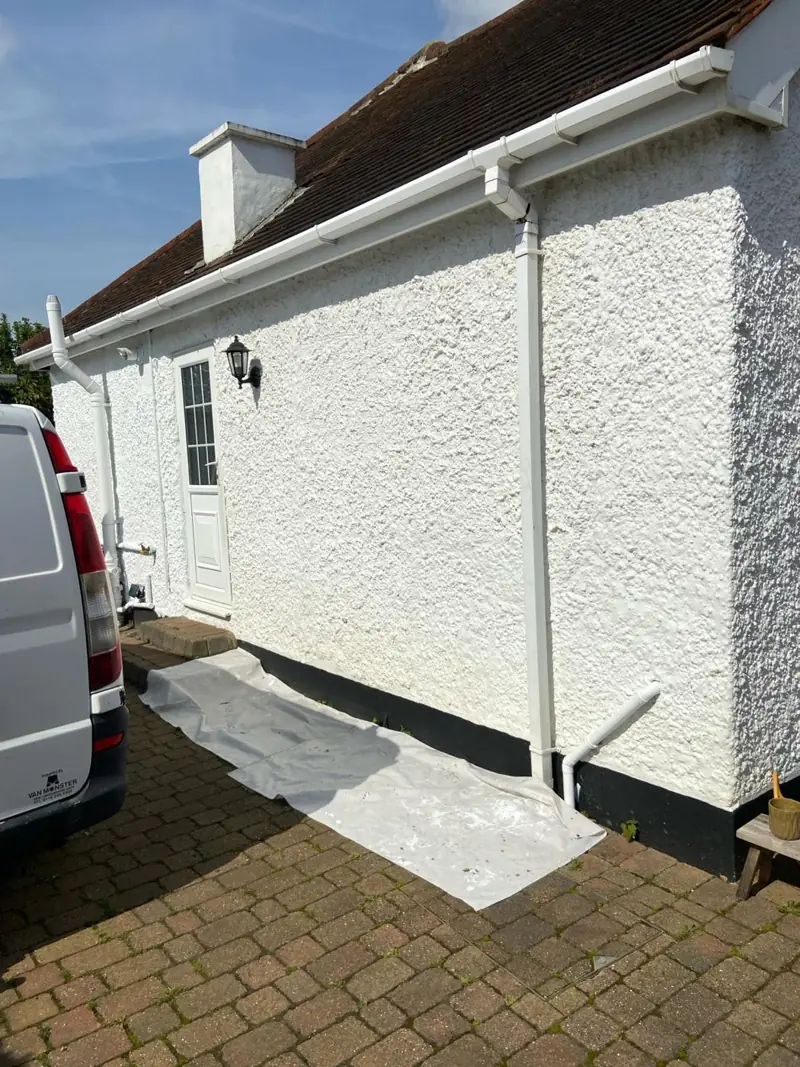
Old rubble walls and the lime mortar and render on them were built to take in moisture and release it again. A standard acrylic masonry paint forms a film that slows that drying. Water then collects behind it, the stone or render softens, and the paint blisters and falls away in sheets, often taking the face of the wall with it. On an exposed site like this, where the village looks out over the Tove Valley and the north- and east-facing walls catch the weather, that cycle can run quickly.
For the rendered houses and the painted stone, we use:
- limewash on lime render and soft stone where a traditional finish is wanted
- silicate (mineral) paints on sound mineral surfaces, which bond into the substrate and stay vapour-open
- breathable masonry systems only where testing shows a previous modern coating has to stay
Our guide to painting render and roughcast explains the difference between these finishes in more detail.
What we leave alone
Several parts of the village’s masonry are not ours to paint. At Mount Pleasant, the converted workhouse, the 1871 tramp ward is brick, banded with a white brick string course, because stone to match could not be had from the Grafton estate quarry. Nos 50 to 54 Moorend Road are red brick with yellow brick detailing. These bands, quoins and arches are part of the buildings’ history, and when we paint nearby woodwork or a rendered panel they are masked off and kept clean.
The same goes for the limestone garden walls topped with black ceramic tiles or cockscomb copings. They are listed in the appraisal as a defining feature, and they are not painted.
Preparation, consent and timing on the ridge
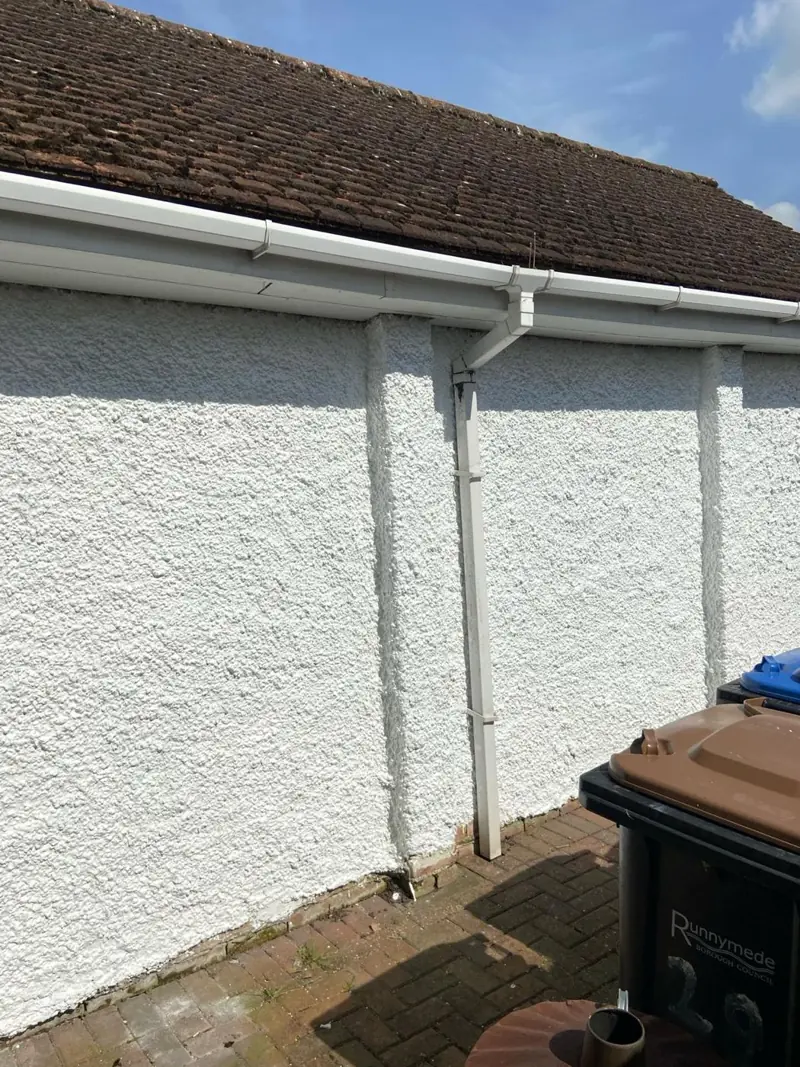
Before any coating goes on, we check what is already there. A scratch and water test shows whether old paint is limewash, a mineral finish or an acrylic film. Loose material is brushed down, and green growth from mature garden trees is treated with a fungicidal wash and left to dry. Cracks in lime render are repaired with lime, not cement.
Listed houses in the village include Nos 17 and 19 High Street and Melita Cottage on Grafton Road. Changing the colour of a listed house’s render, or swapping limewash for a different paint system, is likely to need listed building consent, so we suggest asking West Northamptonshire Council first. Limewash and silicate paints both need mild, frost-free weather to cure, which on this valley-side site generally means late spring through to early autumn.
The trade background, including paint types for modern render on newer homes, is on our main render and masonry painting page. For the rest of the village, see painting and decorating in Yardley Gobion.
Last updated by Dean, DH Painter & Decorator.