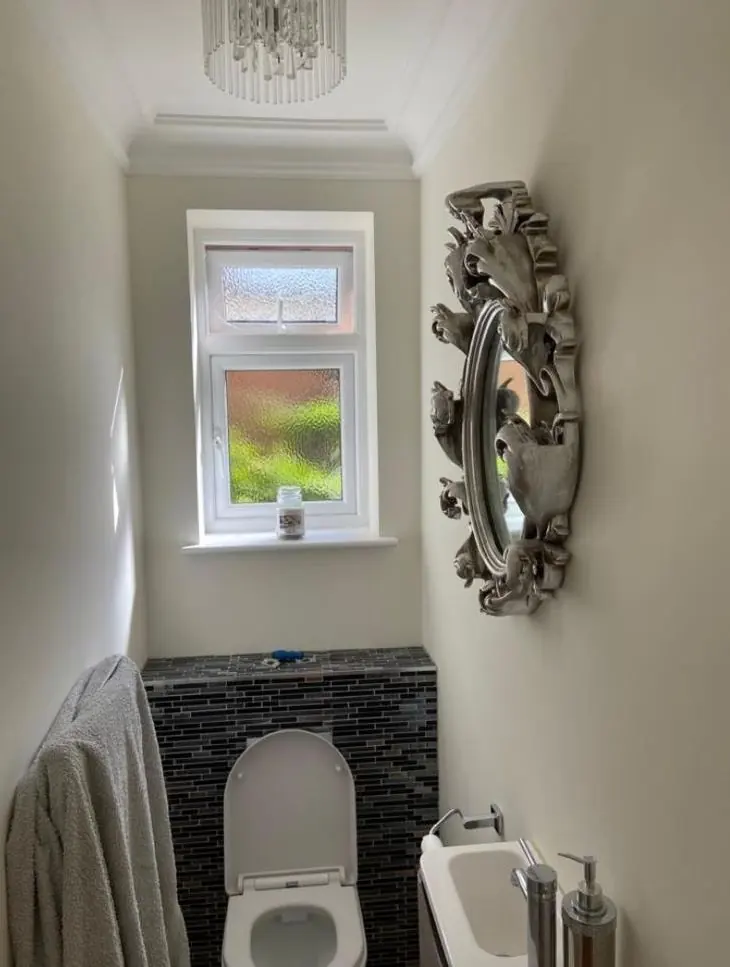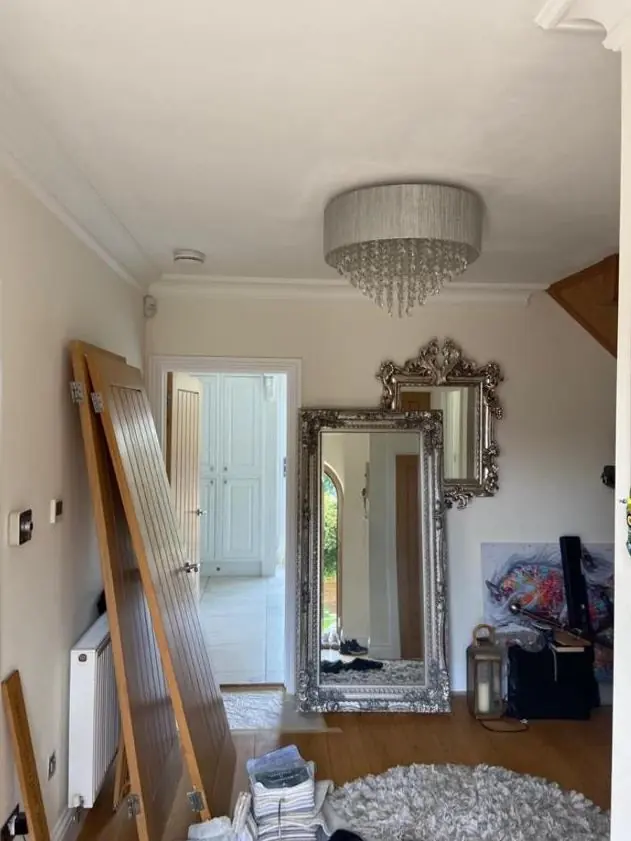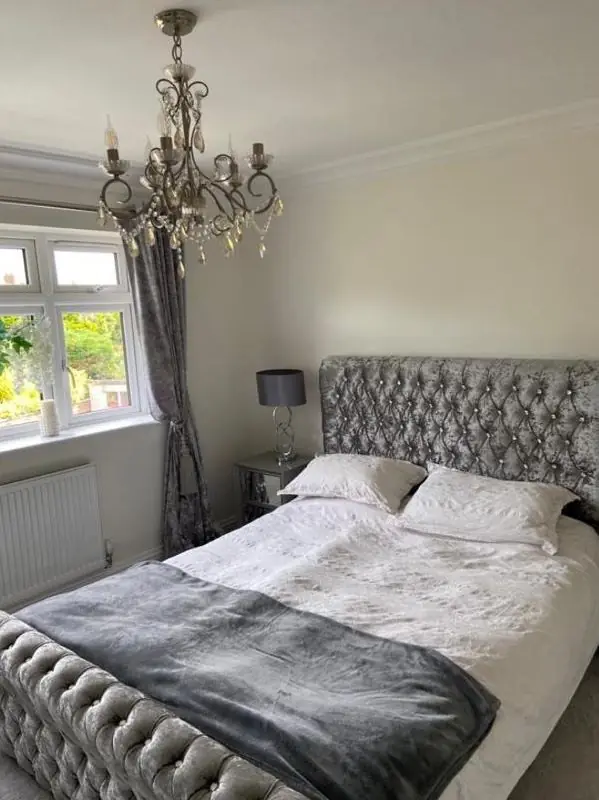
We hang wallpaper in Yardley Gobion, a village in NN12 about 9.7 miles south of Northampton town centre. In the old limestone cottages the walls are rarely flat, so lining and careful pattern matching matter; the post-war houses in the south of the village are quicker to paper.
Stone rubble behind the plaster
Most of Yardley Gobion’s historic houses are built of coursed limestone rubble, and the plaster on their inside walls follows the stone. Walls bow, corners wander and window reveals are seldom square. On a modern plasterboard wall a length of paper simply hangs; on a cottage wall in the conservation area it has to be coaxed, and the first drop sets the line for the whole room. We hang that first length to a plumb line rather than to the corner, because the corner of a 17th or 18th-century cottage is unlikely to be true.
Much of the work is done before any paste is mixed. Loose or hollow lime plaster has to be found first, because the weight of a wet, heavy paper can pull a weak patch away from the stone. We tap the walls, mark hollow areas and tell you plainly which need a plasterer and which we can consolidate and fill ourselves.
Cross-lining, and why vinyl suits newer walls better
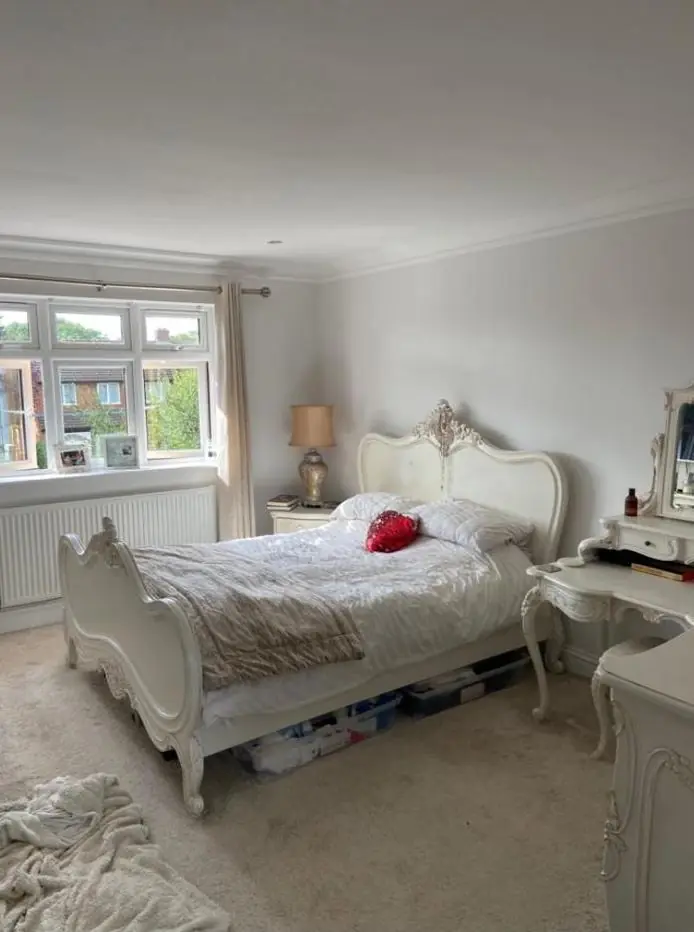
On old lime plaster we usually cross-line: lining paper hung horizontally, then the finish paper hung vertically over it so the joins never coincide. Lining evens out the small ripples in a stone-backed wall, gives the decorative paper a consistent surface to grip, and means it can be stripped years from now without dragging soft plaster off with it.
The paper itself matters as much as the hanging. Solid stone walls with no cavity need to release moisture, and vinyl-faced papers stop that happening. On original lime plaster, traditional printed papers, paper-backed designs or breathable non-wovens hung with a starch or cellulose paste are kinder to the wall. Heavy vinyls are better kept for the newer houses. More on paper types and paste is on our wallpaper hanging service page.
Big repeats under low eaves
Many of the cottages on Moorend Road and the High Street have low ceilings under low eaves, and that shapes both the choice of design and the way it goes up. A large repeat may only show once between skirting and ceiling, and on a leaning wall the eye catches any motif that seems to run downhill. We decide where the pattern breaks at the ceiling so the strongest part of the design sits whole at eye level. Pattern runs start from the focal point, usually the chimney breast, so any mismatch caused by wandering walls ends in a quiet corner behind the door. Small, loose patterns and hand-drawn stripes forgive uneven walls; tight geometrics and crisp stripes show every bow.
Newer houses south of the old village
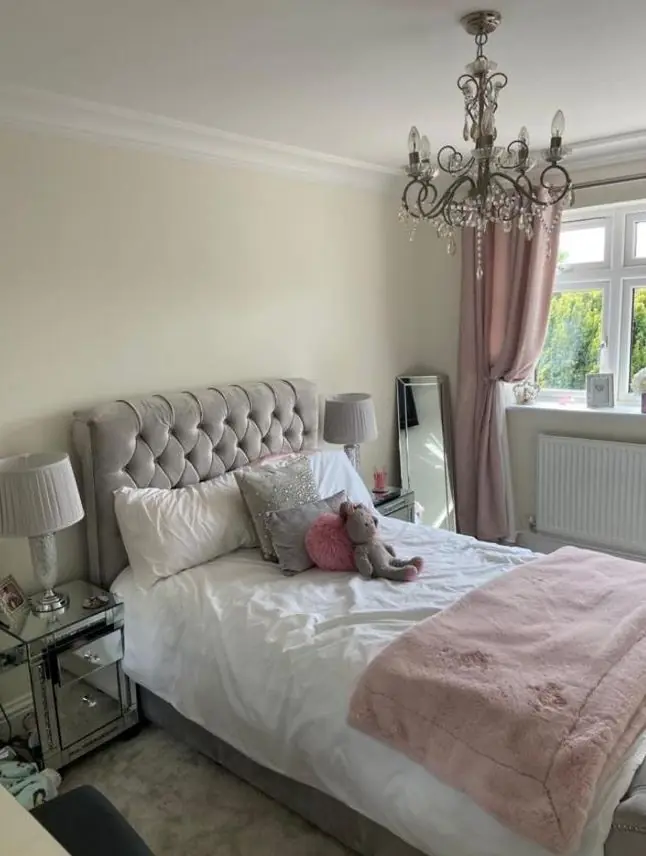
The post-war estate that more than doubled the population between 1961 and the early 1970s is a different job. Walls are modern plaster or plasterboard, corners are close to square, and room heights are standard, so feature walls, bedrooms and stairwells are quick to plan. Plasterboard is sealed before papering so the paper can come off later without tearing the board’s face. If an estate house has had a recent extension, the new plaster must dry out completely before any paper goes over it.
Arranging papering in the village
We cover Yardley Gobion from Northampton, a short run down the A508. Chestnut Road, Moorend Road and the entrance to Mount Pleasant are narrow, so we sort out parking in advance and bring the pasting table and rolls in by hand when needed. If your home is listed, removing historic wall finishes may be worth raising with West Northamptonshire Council first. The Yardley Gobion page describes the village’s housing in more detail, and our cost guide explains what affects the price of a papering job.
Last updated by Dean, DH Painter & Decorator.