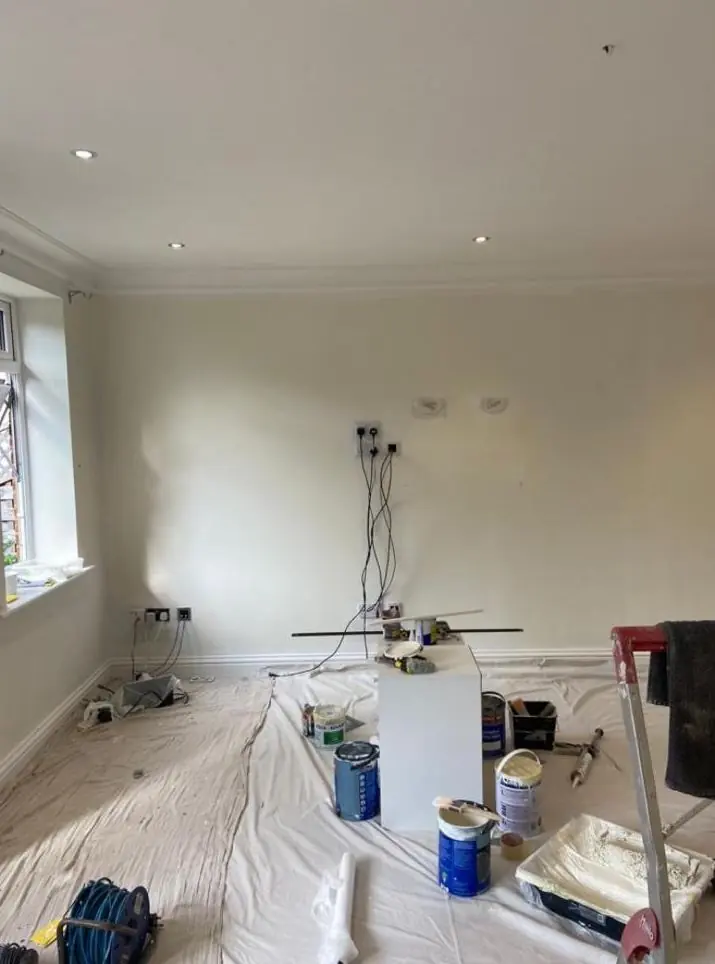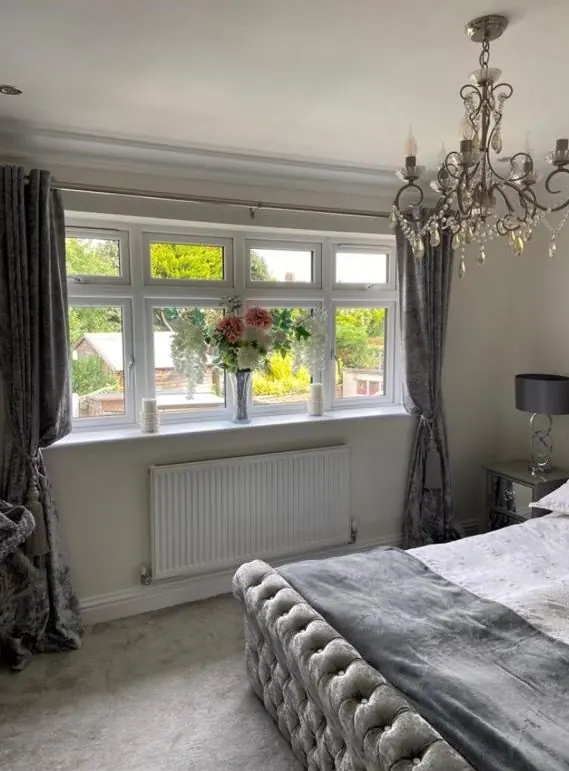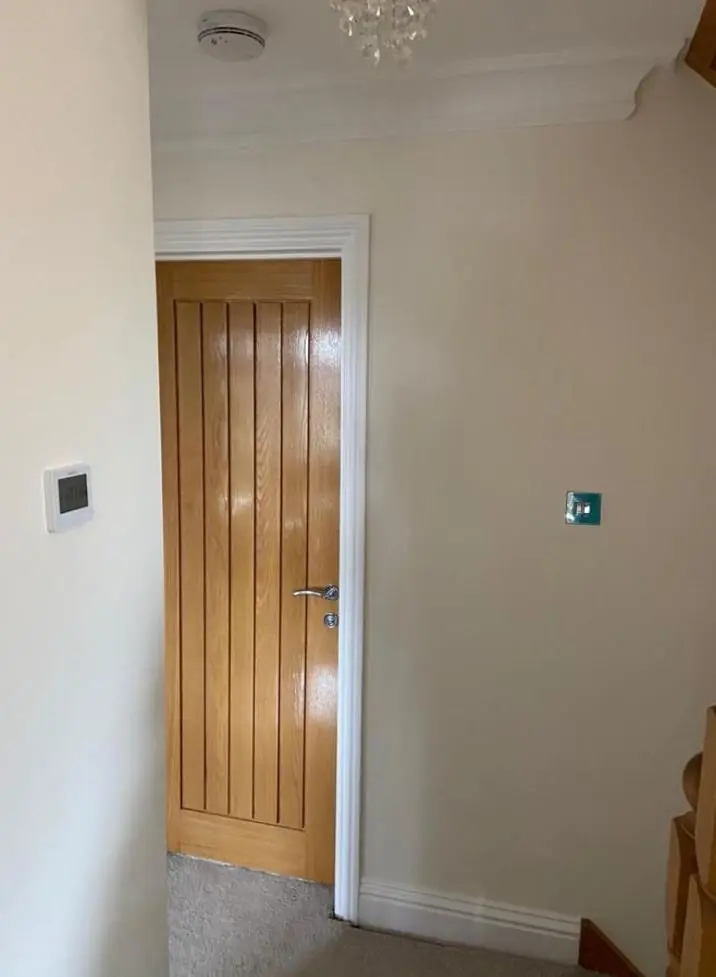
DH Painter & Decorator hangs wallpaper in Paulerspury, about 9.8 miles south of Northampton in the NN12 postcode area. Dean lines uneven lime-plastered walls, plans patterns around the out-of-square rooms typical of the village's old stone houses, and chooses papers and pastes that suit walls that need to breathe.
No straight lines in an 18th-century cottage
Many of the listed cottages and farmhouses in Paulerspury date from the 18th century. Their walls are coursed limestone rubble finished with lime plaster that follows the stone underneath, so you get bellied walls, leaning corners and ceilings that rise or drop across a room. A plain paint finish can hide some of this. Wallpaper shows all of it, because a pattern is a grid of straight lines and the room is not.
Good papering in these houses comes down to decisions made before the first length goes up: where the pattern is centred, which corner takes the mismatch and how the drops follow a ceiling line that is not level.
Setting out a pattern in a crooked room
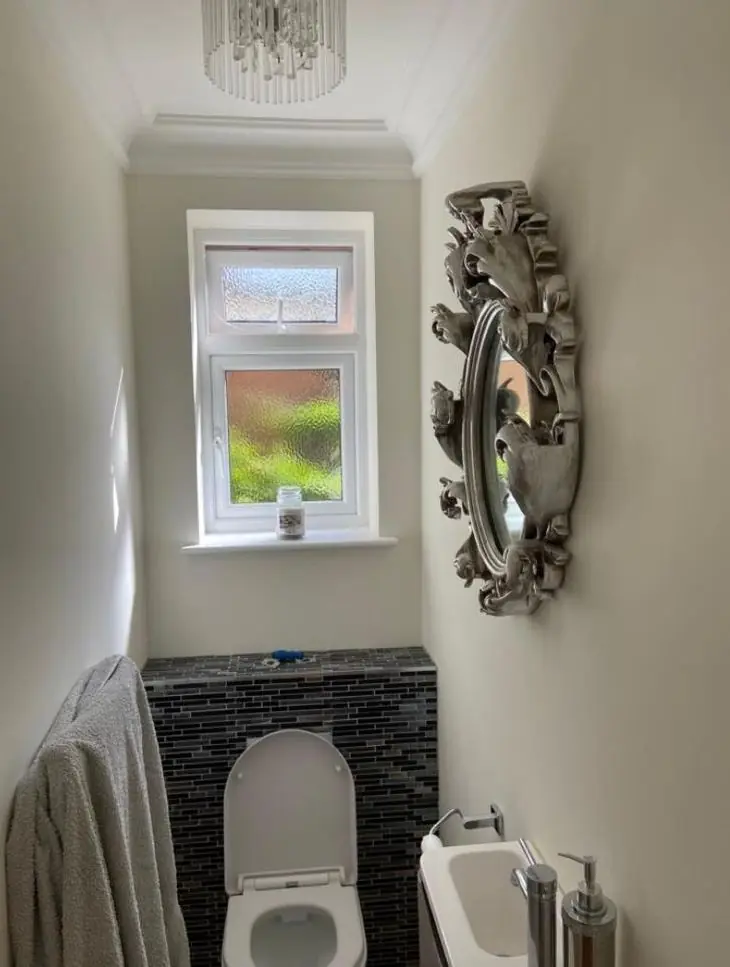
We start by hanging a plumb line, never by trusting a corner. In a cottage room the plumb line and the corner can be well apart from top to bottom, so we choose where that difference ends up. Usually it goes in the least-seen corner, often behind a door or beside a deep window reveal, where the last drop meets the first.
A few rules of thumb for the village’s older rooms:
- On a chimney breast, centre the pattern on the breast itself rather than the wall, since that is where the eye lands.
- Where the ceiling line wanders, a pattern with a strong horizontal repeat will show the slope. Small, scattered or vertical designs hide it far better.
- Small 2- and 3-light casements set deep into thick stone walls mean a lot of returns into the reveals, so we allow for extra paper and extra time around each window.
- Exposed beams in converted farmhouses such as Kirby, Manor or Elm Farmhouse break walls into short runs. Each run is set out on its own, so the pattern still lines up across a beam.
Lining first, and why it matters on lime plaster
Old lime plaster is soft, often patched with gypsum over the years, and uneven in how it absorbs paste. Hanging a decorative paper straight onto it risks shrinking seams, bubbles and patches where the paper never grips. A lining paper hung horizontally (cross-lined) evens out the suction, bridges fine cracks and gives the finish paper a consistent surface to sit on.
Moisture matters too. Solid stone walls on limestone and Boulder Clay can carry damp at the base, especially on ground floors. Heavy vinyl papers act like a plastic sheet across a damp wall and can let mould form behind them. On these walls we would point you towards breathable papers, such as traditional pulp or many non-woven types, and away from solid vinyls. If a wall is visibly damp, the cause needs sorting before any paper goes on, and we will tell you so.
Taller rooms and period papers
The early 19th-century houses in the village, with their 12- and 16-pane sashes and higher ceilings, suit a different style of papering: full-height drops, sometimes a frieze or dado arrangement, and papers with a larger pattern repeat. Longer drops make any slight drift off plumb add up, so the line is checked on every length. Listed status can apply inside as well as out, so if you are papering a listed room and plan to remove early wallcoverings, check with West Northamptonshire Council first.
Arranging a visit
Paulerspury is spread over several ends, from Pury End and Tew’s End to Plumpton End and Heathencote, and Dean visits to measure each room and check the walls before quoting. You can read how we strip, prepare and hang on the main wallpaper hanging page, and see more about the village’s houses on our Paulerspury page.
Last updated by Dean, DH Painter & Decorator.