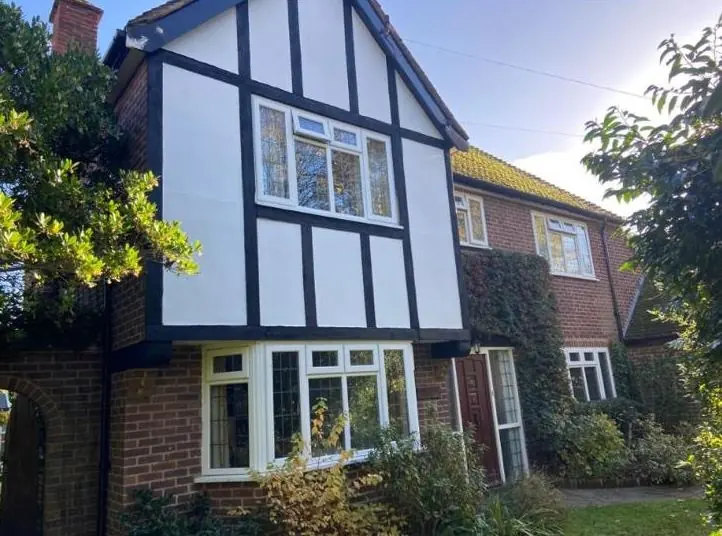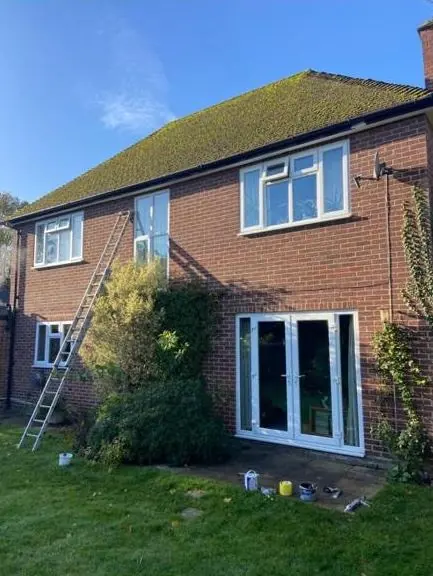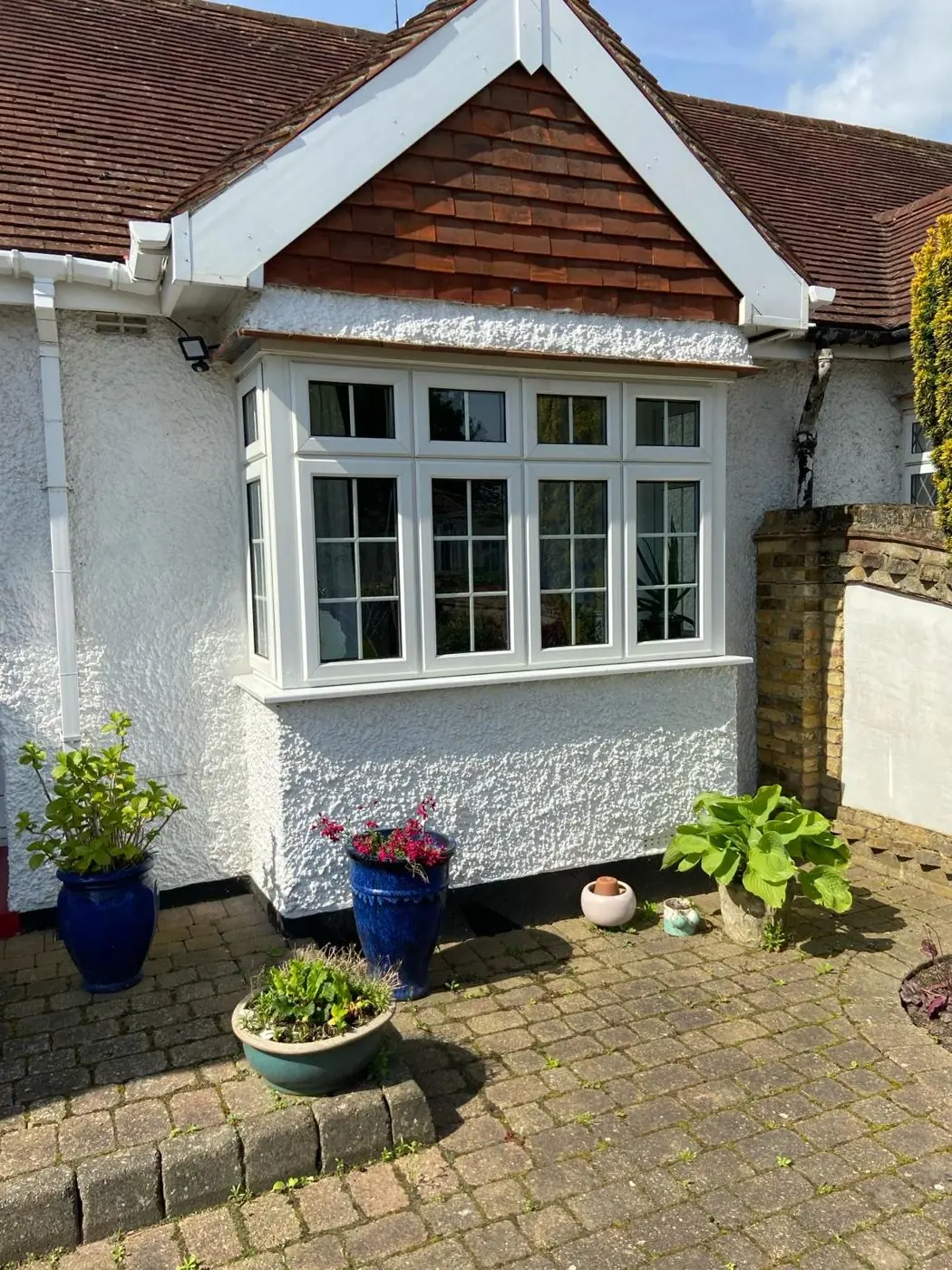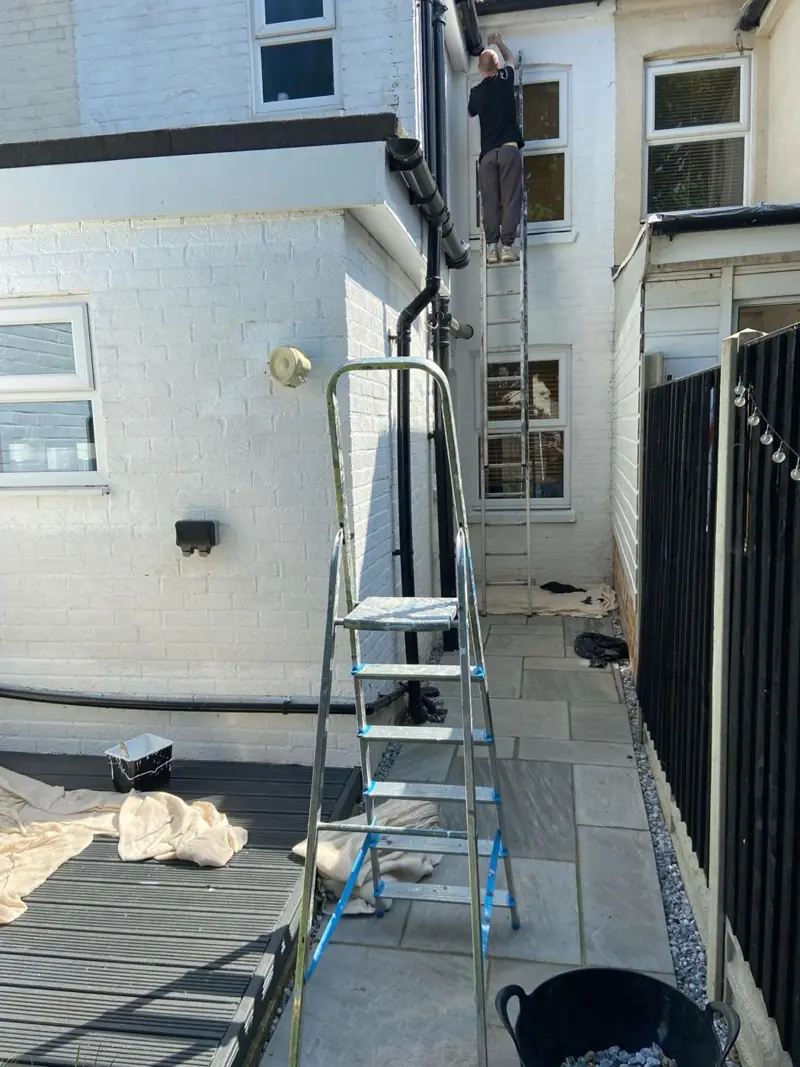
Dean paints the outside of homes in Lower and Upper Harlestone, NN7, which sit 4.3 miles north-west of Northampton on and off the A428. Most of the work here is windows, doors, porches and bargeboards on stone cottages inside the Harlestone Conservation Area, rather than whole walls.
On a stone village, the paint goes on the woodwork
Harlestone is built mostly of lias, laid as squared coursed stone on the cottages and as ashlar on grander buildings such as Park Farmhouse and the Fox and Hounds. That stone has nearly all been left bare, and the 2017 conservation area appraisal says it should stay that way: render and the wrong masonry paints stop old walls breathing. So an exterior job in Harlestone is usually a joinery job. It means 12-pane sashes under flat-arch heads, plank and panel doors, porches, gable bargeboards and the odd timber outbuilding, with the stone around them masked and left alone.
That changes how we price and plan. Time goes into scraping back, filling, repairing soft timber and priming, because a pair of 12-pane sashes has far more edges to cut in than a modern window with two large panes. The general method is set out on our exterior painting service page. What follows covers what is particular to this village.
The conservation area and the proposed Article 4 Direction
Lower Harlestone has been a conservation area since 1972, and the 2017 appraisal extended the boundary to take in Upper Harlestone and the old parkland. The appraisal also proposed an Article 4 Direction covering, among other things, painting a previously unpainted house, or a significant change of colour. We have not seen confirmation that it was adopted, so before any colour change we suggest a call to West Northamptonshire Council.
The design guidance itself is clear. Frames that are painted should be white or a sensitive colour, timber and metal windows are preferred to uPVC, and the original stone lintels stay. With 49 listed buildings in the parish, some homes will also need Listed Building Consent for anything other than like-for-like redecoration. We work like-for-like as standard and will tell you where we think consent is worth checking.
Lower and Upper Harlestone are two different jobs
| Part of the village | What the buildings are like | What it means for the work |
|---|---|---|
| Lower Harlestone, along the A428 | 18th and early 19th century cottages and farmhouses set right on the road, plus the Blore estate cottages of 1851 | Traffic grime on joinery, careful ladder and vehicle placement, side or rear access via back lanes and alleys |
| Upper Harlestone | The oldest thatched cottages, the Port Road Victorian terrace, Edwardian semis and the 1940s Swedish Houses on three winding valley roads | Quieter access, but tree cover and the brook mean damp, slow drying and algae on north faces |
On the A428 frontage, sashes and front doors collect road dirt and spray, so we wash them down thoroughly before any sanding and expect a shorter repaint cycle than on a sheltered cottage up the valley. In Upper Harlestone the problem is moisture rather than dirt. We clean off green growth, let the timber dry and pick a settled spell. Our guide to the right time of year for exterior painting covers the seasons; in a wooded valley like this one, autumn dew can sit on the timber well into the morning.
Thatch, leaded lights and Port Road’s colours
The late 17th century cottages in Upper Harlestone have thatch with low eaves and no fascia boards, and leaded-light casements with wooden lintels. We do not use heat guns anywhere near thatch, so stripping is done by scraper and abrasive alone, and the lead cames and old glass are taped and protected while the surrounding frames are painted.
The Victorian terrace on Port Road is the place where colour has more room. Its stylised timber doors and white glazing bars to eight-light side-hung windows suit a two or three colour joinery scheme, kept within the conservation guidance. The appraisal also notes that some doors in the village are painted in strong colours while others are left natural, so we can oil a plank door rather than paint it if that matches the house. Dean can talk through door finishes at the quote visit, and the Harlestone area page covers the village’s other building types.
Last updated by Dean, DH Painter & Decorator.