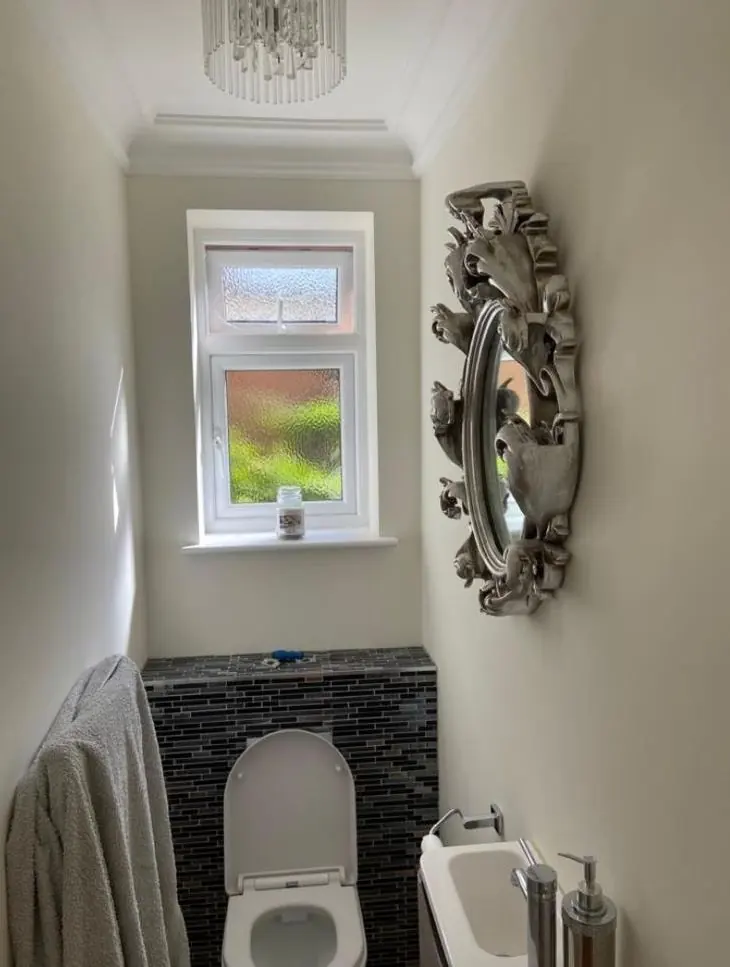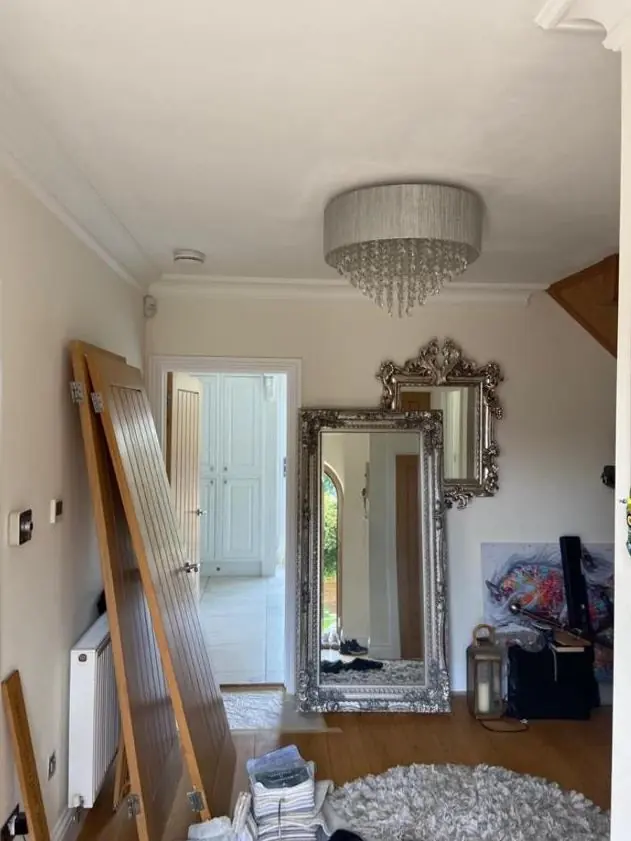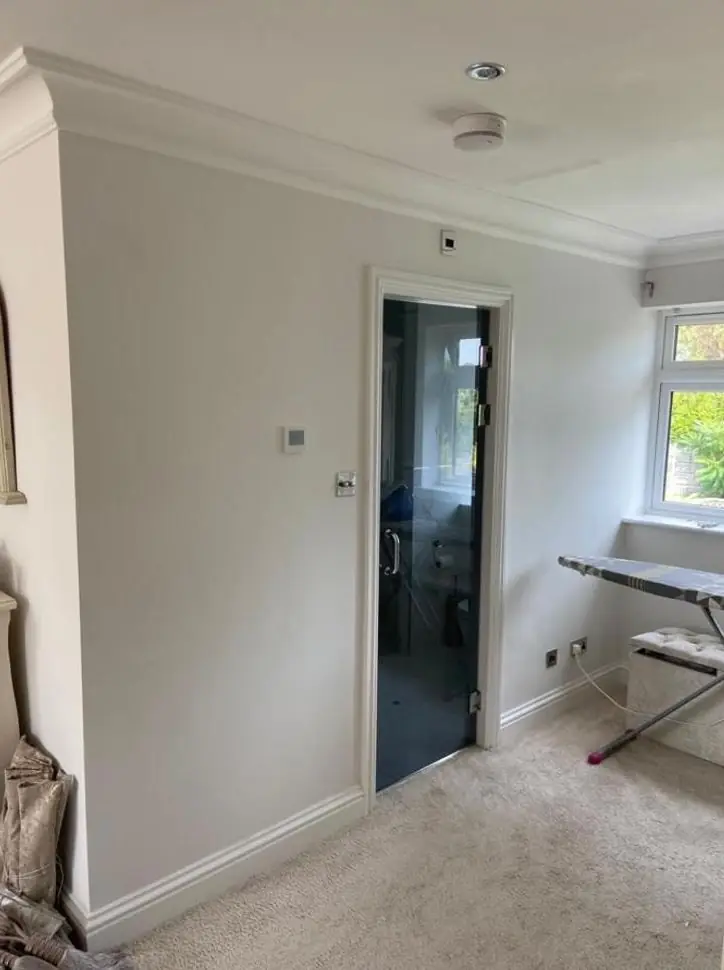
We carry out decorative paint finishes in Harlestone, a conservation-area village 4.3 miles north-west of Northampton in NN7. Most of the call here is for traditional finishes that suit old lias-stone fabric, and for picking out detail on period joinery, rather than modern faux effects.
Limewash, distemper and other traditional coatings
In a village with 49 listed buildings and a conservation area covering both settlements, the decorative finish most likely to suit an old interior is a traditional one. Limewash and soft distemper were the normal finishes on solid stone and lime plaster walls for centuries, and they’re still the right choice where a wall already carries them.
Limewash isn’t a paint in the modern sense. It’s thin, built up in several coats, and it cures by reacting with the air. The result is a soft, slightly mottled surface that changes tone as the light moves across it, which suits the uneven plaster in a 17th or 18th century lias cottage far better than a flat modern emulsion. It also lets the wall breathe, which matters on solid walls with no cavity.
It needs the right conditions. Limewash must be kept damp while it cures, applied thinly and protected from fast drying, so we plan coats around the weather and the heating. It won’t sit on top of modern vinyl emulsion, so where a cottage wall has been painted in plastic paint we’ll explain the options, which range from a breathable mineral paint to taking the old coating off.
Period detail in the larger listed houses
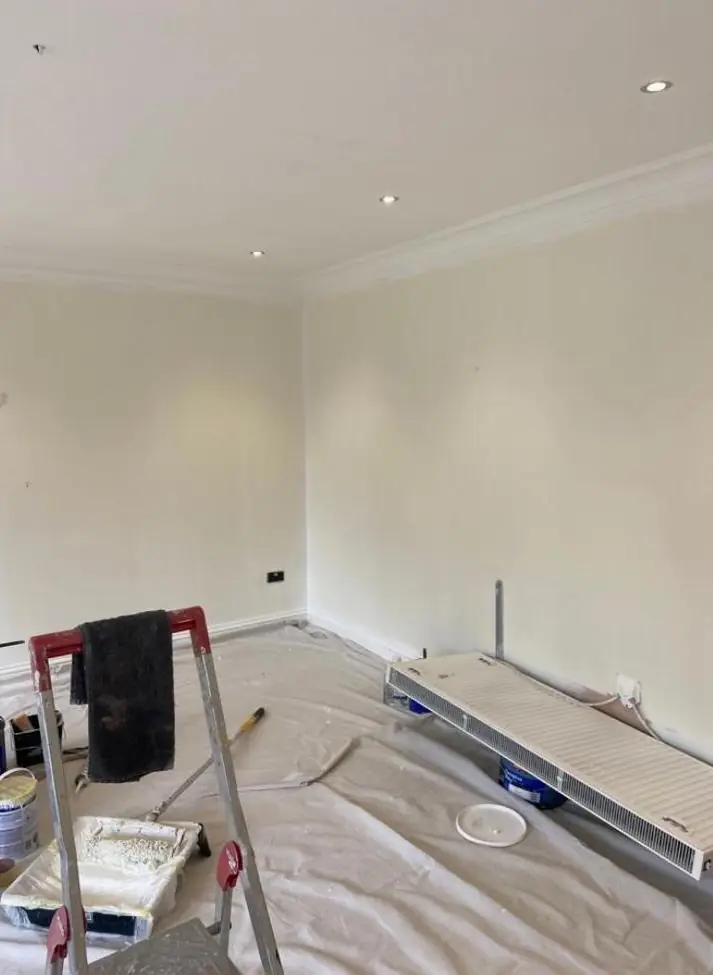
The grander buildings in the parish, such as the Old Rectory and Park Farmhouse, are where decorative interior work has the most to work with. Park Farmhouse is a mid 18th century lias ashlar house with 12-pane sashes, and houses of that age and status were built with more formal rooms. If your house has cornices, panelled shutters, dado rails or a carved fire surround, these can be picked out in a slightly different tone or sheen from the walls to bring the detail forward without shouting.
Work like this in a listed house should be like for like. Repainting decorative detail that’s already painted is normally maintenance, but stripping it back to bare wood, or painting timber that was never painted, can need Listed Building Consent. We’ll point out which items to clear with West Northamptonshire Council before we start.
Multi-colour joinery on Port Road and the Edwardian gables
Not every decorative job is indoors. The Victorian terrace on Port Road has stylised timber front doors and eight-light side-hung windows with white-painted glazing bars, and the Edwardian semis in Upper Harlestone carry timber detail on their front gables. Houses like these were often painted in two or three colours, with mouldings, panels and bargeboard detail picked out against the main joinery colour.
A scheme like that has to stay within conservation-area guidance. Window frames stay white or a sensitive colour, and a big colour change on a house exterior could fall under the proposed Article 4 Direction, which the sources we read don’t confirm either way. Within those limits, a door with its panels and mouldings picked out in a deeper shade can look smart and still sit quietly in the street.
Where a decorative finish is the wrong answer
- Bare lias stone: no faux or colour-washed effect on unpainted stone walls, inside or out. The appraisal is clear that coatings harm historic stone, and once painted it’s very hard to undo.
- Heavy glazes on lime plaster: oil-based glaze effects seal the wall and can trap damp in a solid-walled cottage.
- Busy effects in small cottage rooms: rag-rolled or sponged walls tend to crowd the compact rooms of the estate and thatched cottages. A plain limewash often looks richer.
For modern houses on Harlestone Road or Glebe Lane, the full range of feature walls, two-tone splits and panelling described on our main decorative finishes page is open to you. More background on the village’s buildings is on our Harlestone page, and the cost guide covers how decorative work is priced.
Last updated by Dean, DH Painter & Decorator.