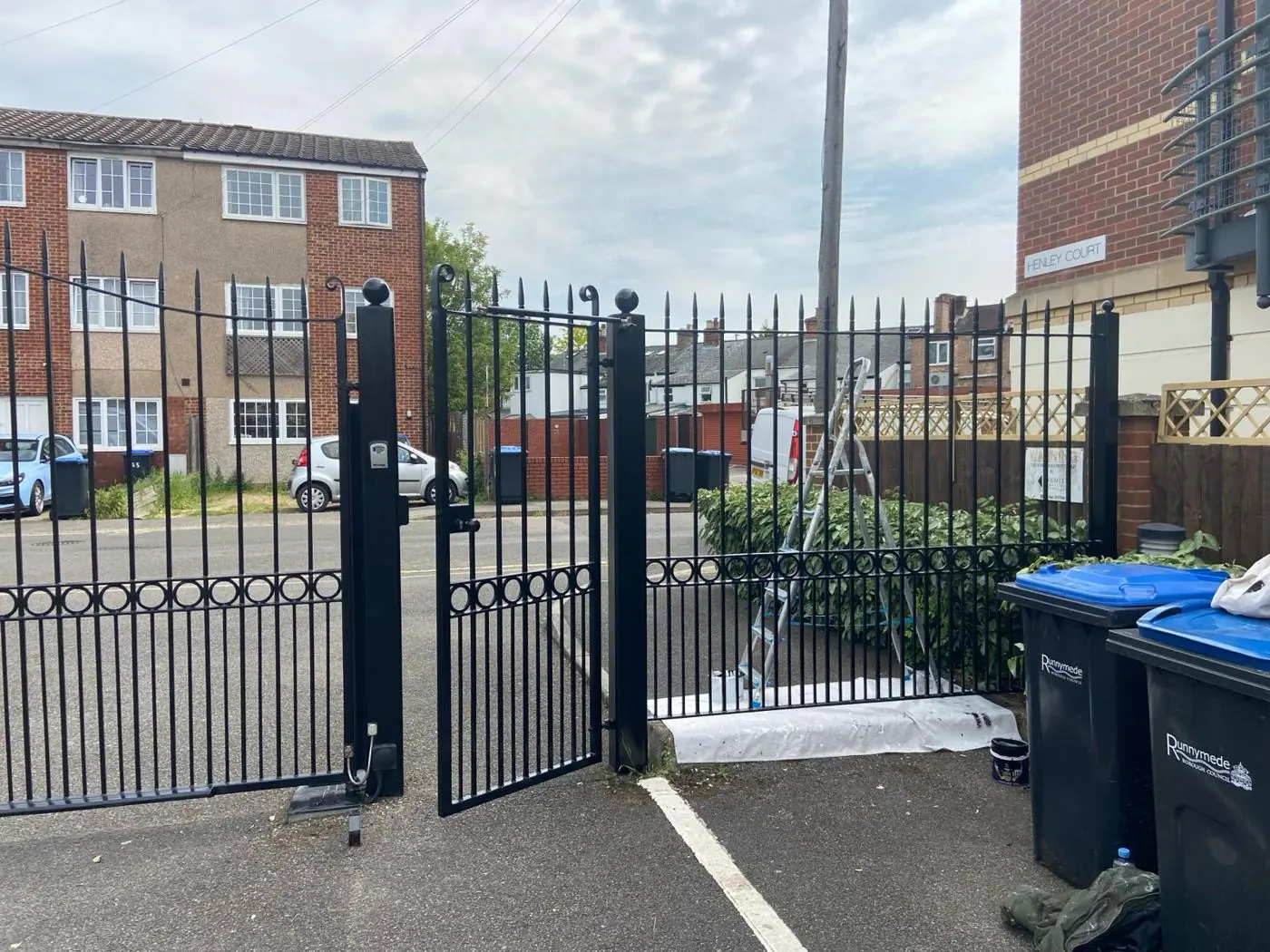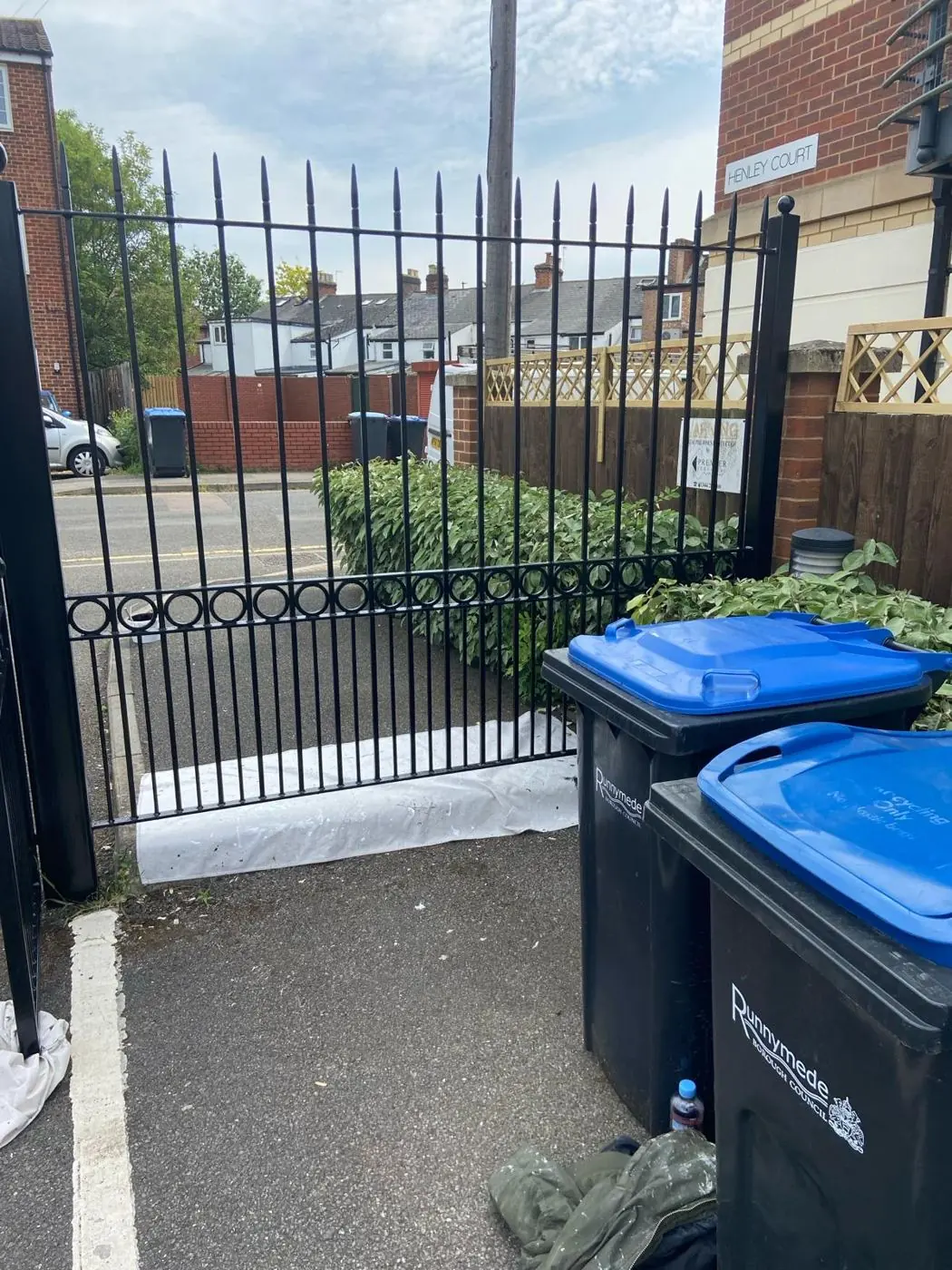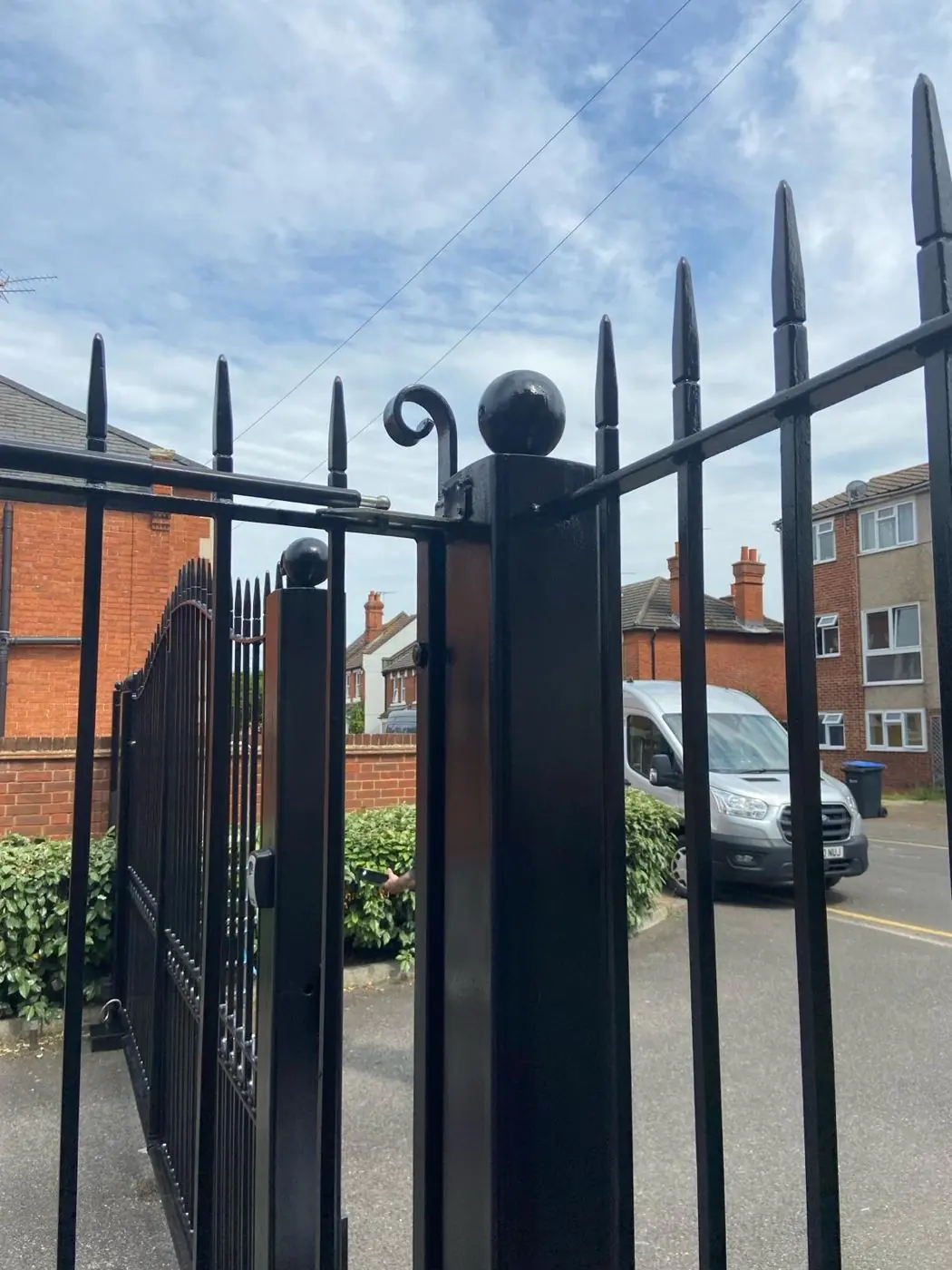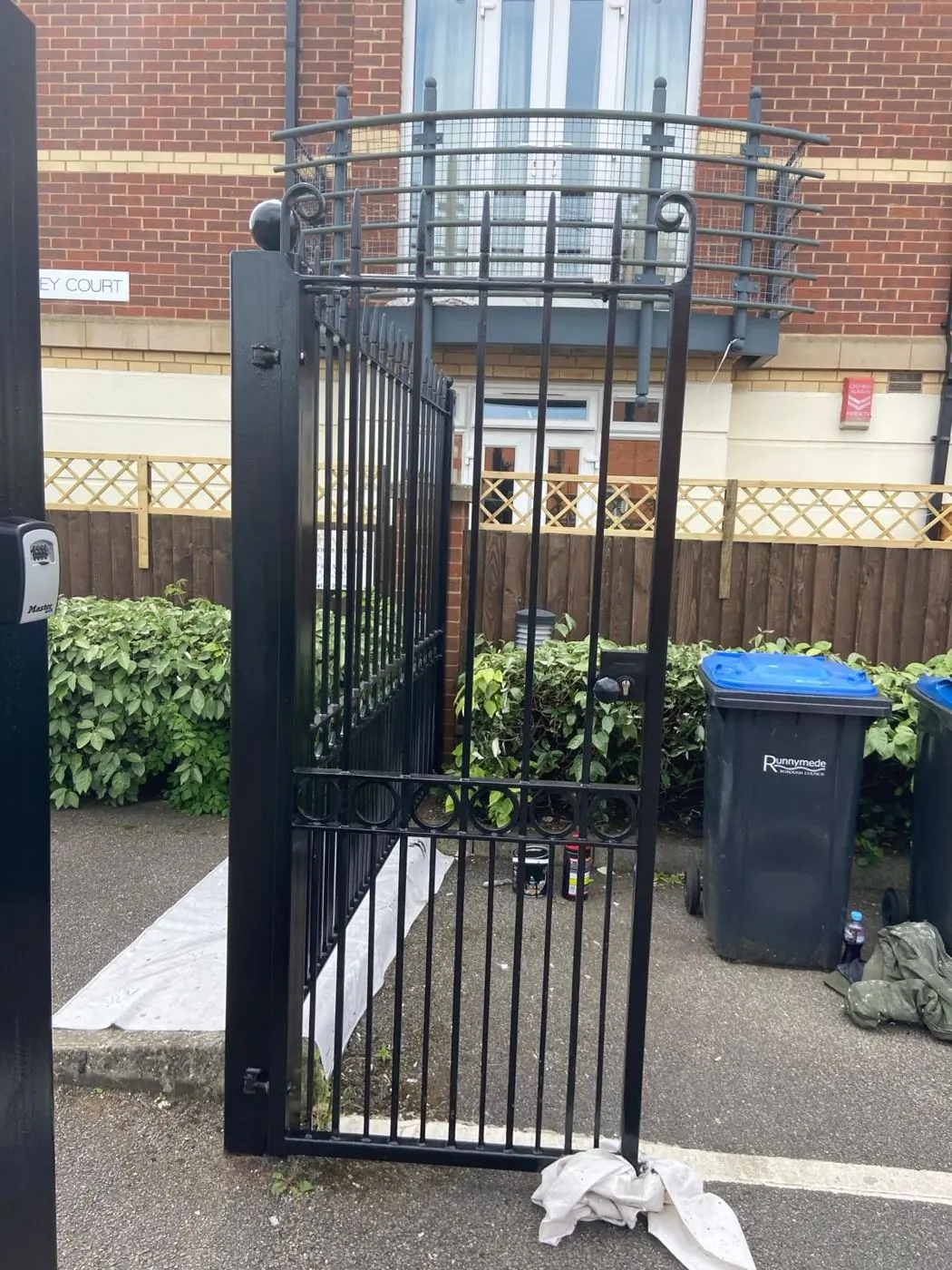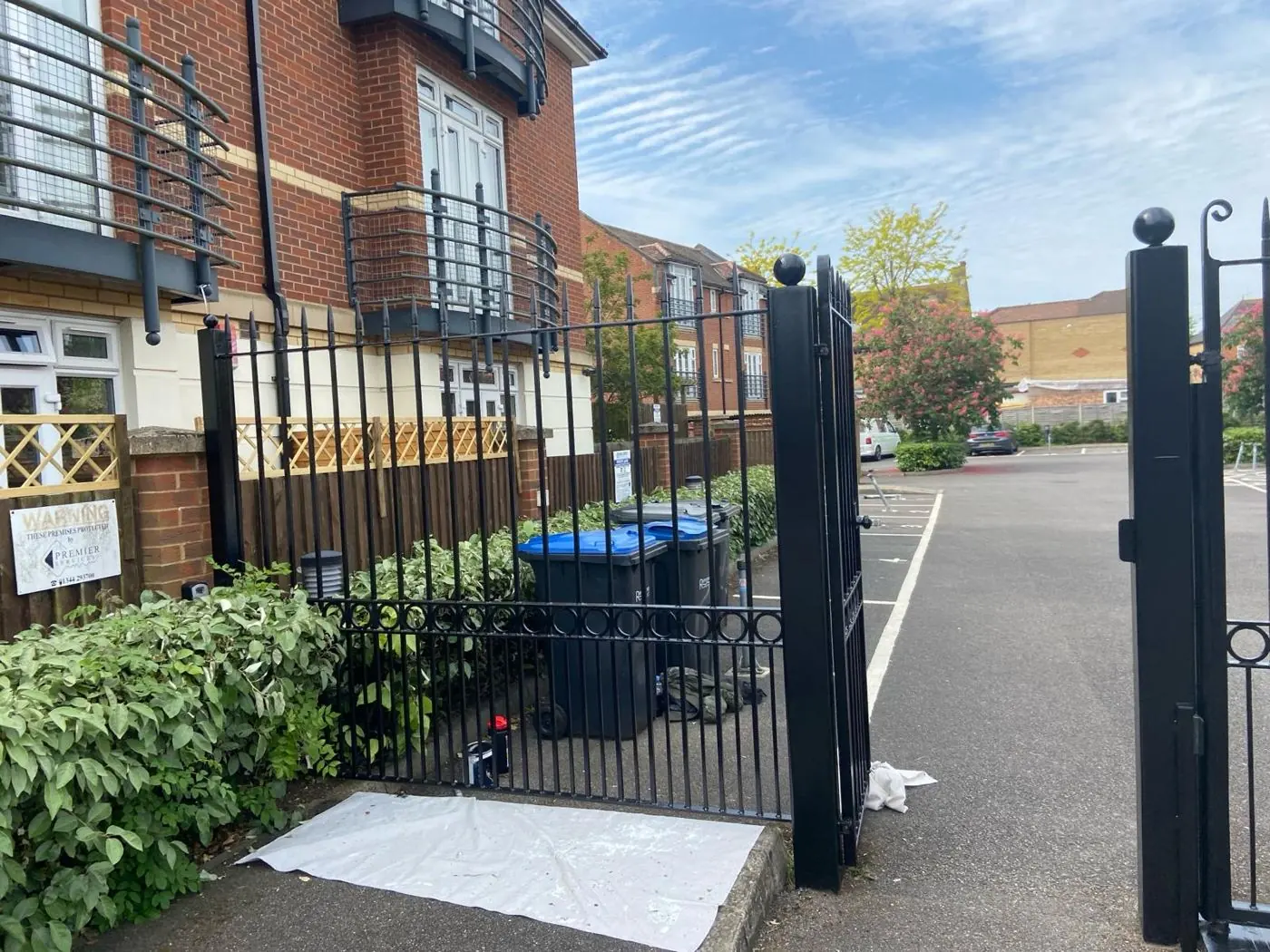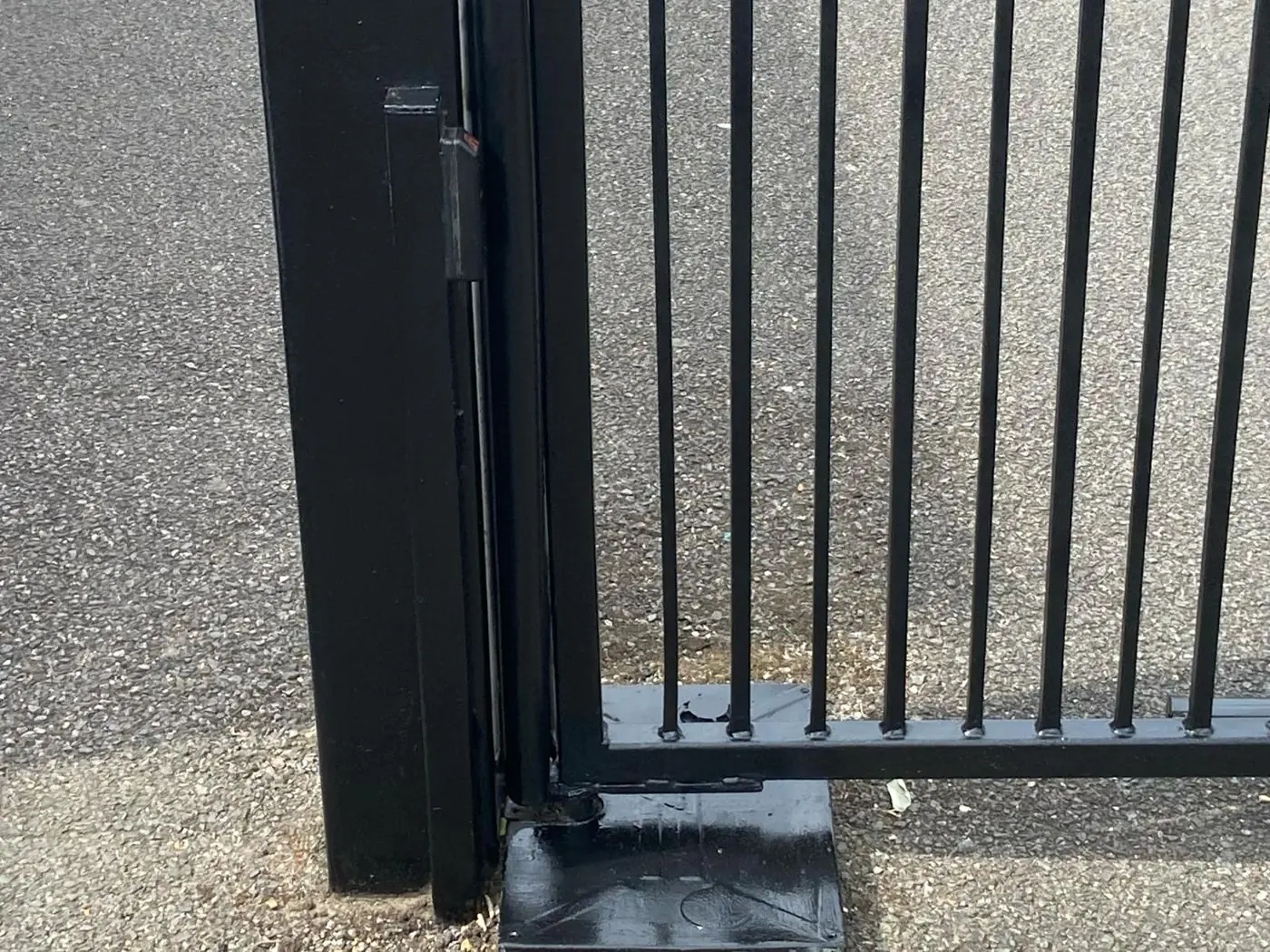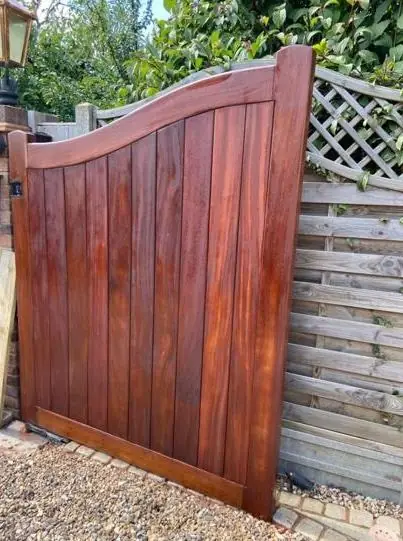
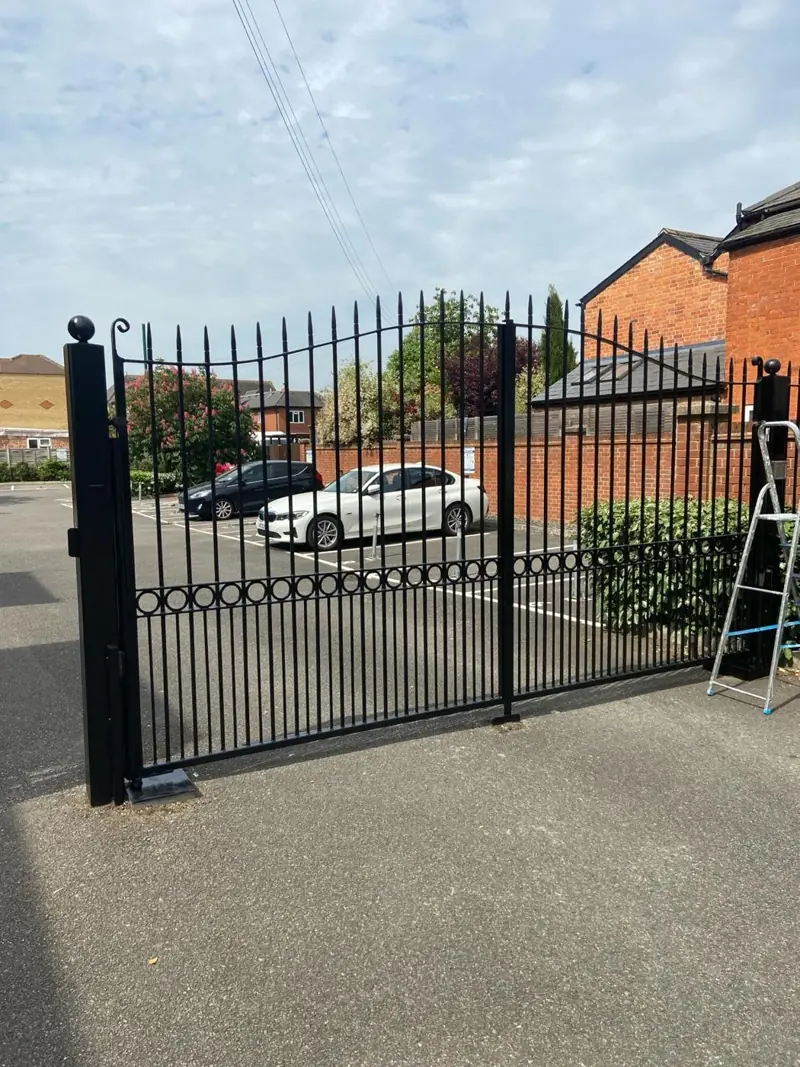
Dean paints metal gates, railings and cast iron windows in Harlestone (NN7, 4.3 miles north-west of Northampton). Much of the village's ironwork belongs to the 19th century Althorp Estate buildings, so the work combines careful rust treatment with thin coatings that keep fine detail sharp.
Ironwork you will find in Harlestone
After Earl Spencer bought the estate in 1829, the Althorp Estate built workers’ cottages across both halves of the village. Nos. 43 to 52 in Lower Harlestone are the Blore-designed group, dated 1851. Those cottages, along with others of the same family, have cast iron casements with diamond-pane glazing set in lias stone. Add estate railings, metal gates between stone piers, and historic items such as the pump near No. 69 Upper Harlestone, and the village has more old ironwork than its size suggests.
The pump and the two K6 telephone kiosks appear among the parish’s recorded historic structures. Those are matters for their owners and the council, and we would only touch protected ironwork with the right consent in place. Ironwork on private houses is mostly simpler: garden gates, handrails and boundary railings, many of them fixed between or on top of stone, which affects how we protect the surroundings.
Cast iron casements: thin coats, crisp bars
Diamond-pane casements are the most delicate metal job in the village. Their glazing bars are narrow, and every heavy coat of paint thickens them until the diamond pattern starts to blur. Our approach:
- Remove loose paint and rust by hand, using wire brushes, scrapers and abrasive. We don’t use heavy impact, because cast iron is brittle.
- Spot-prime bare metal with a rust-inhibiting primer as soon as it is clean, before it can flash rust in the damp valley air.
- Build up thin, even coats of a metal-appropriate finish, cutting in carefully to the glass and to the putty or glazing compound.
- Check that the opening lights still close freely, and keep paint out of hinges and catches.
The design guidance for the Harlestone Conservation Area prefers timber or metal casements to uPVC, so keeping these windows in good order is far better than replacing them. If your cottage is listed, repainting like-for-like is the safe route.
Gates and railings near the road and under trees
Two local conditions shorten the life of paint on Harlestone ironwork. Along the A428, gates and railings set right against the highway get road dirt and spray from passing traffic, which holds moisture against the metal. Up the valley in Upper Harlestone, tree cover and the brook keep surfaces damp, and the appraisal names biological growth as a threat to walls in the village. In both places we wash down first, remove all corrosion back to sound metal, and pay most attention to the places where rust starts: the bottom rail, the feet of the railings where they enter stone copings, and the joints on gate frames.
Where railings sit in a stone wall or between gate piers, we protect the stone completely. Character walls along the A428 and New Road should not be painted, and overspray or drips on lias are hard to remove. The full step-by-step method for different metals is on our metal gate and railing painting service page.
Colour and permission
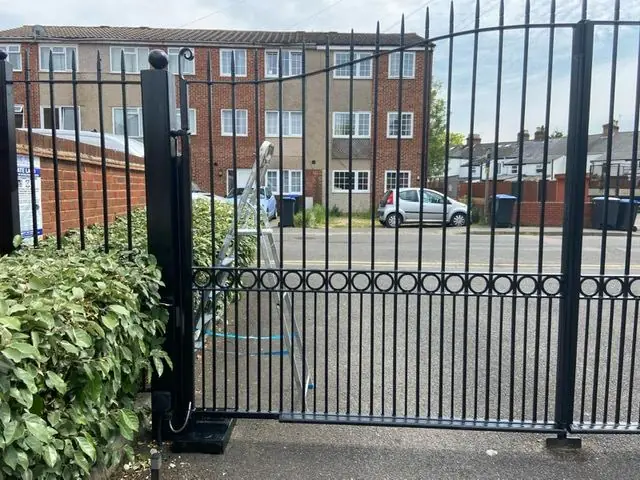
Black is a common traditional choice for railings, and the existing colour of cast iron casements should normally be kept. Changes to boundary railings and gates, and significant colour changes, are among the items a proposed Article 4 Direction in the 2017 appraisal would bring under planning control. If you are planning something other than maintenance, check with West Northamptonshire Council first. For what affects price, see our cost guide, and for other work in the village, the Harlestone area page.
Last updated by Dean, DH Painter & Decorator.