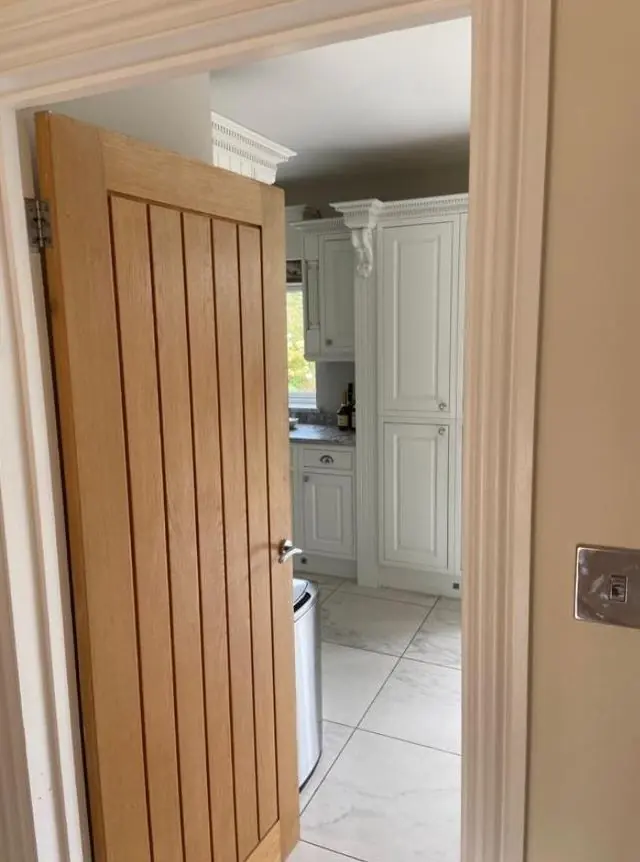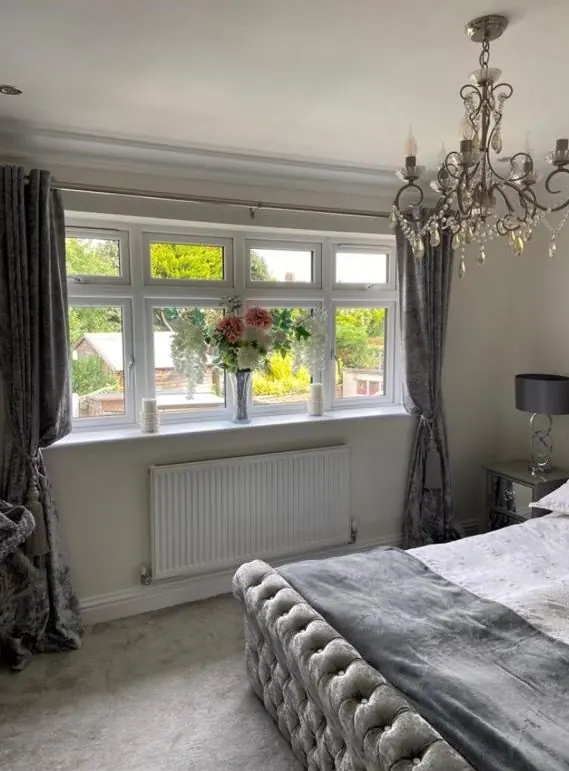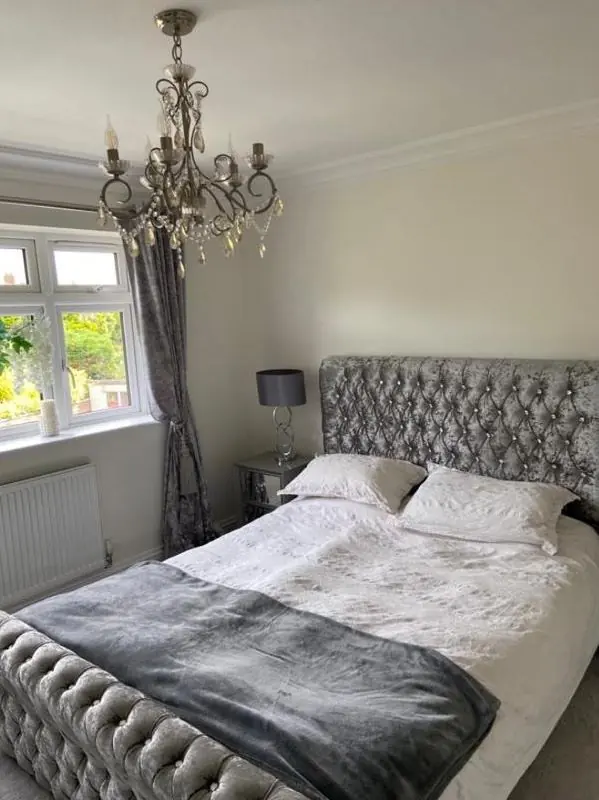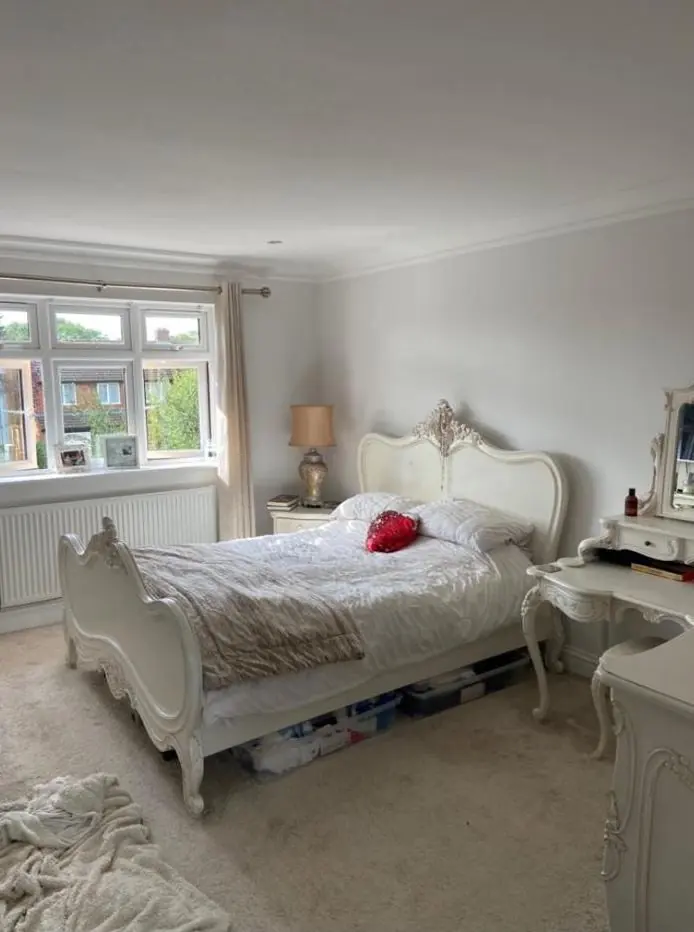
Dean paints interiors in Harlestone, NN7, working from our Northampton base 4.3 miles to the south-east. The job changes a lot depending on whether you live in a 17th or 18th century lias-stone cottage, a 19th century estate cottage or one of the 20th century brick houses in Upper Harlestone.
Solid lias walls and the paint that goes on them
The oldest homes in Harlestone are built of coursed lias stone. Upper Harlestone keeps the three earliest surviving dwellings, thatched cottages of the late 17th century, and Lower Harlestone along the A428 has a run of 18th and early 19th century cottages and farmhouses. These walls are solid, with no cavity, and the plaster on the inside is likely to be old and uneven. Some of it may still be lime.
That matters for interior painting. A lime-plastered solid wall needs to let moisture move through it. If it is sealed with a heavy vinyl emulsion or an acrylic eggshell, the damp has nowhere to go, and you get bubbling, flaking and dark patches along the skirting a year or two later. So before choosing a product, we test the plaster. Where it is lime, we use breathable emulsions or a claypaint type finish. Where it has been reskimmed in gypsum, a standard trade emulsion is fine.
Old plaster also has a character that some owners want to keep. Filling every undulation flat on a 300-year-old wall makes it look like a new build. We fill cracks and holes, but we leave the gentle movement in the surface unless you ask for it gone.
Three generations of house in one parish
Harlestone isn’t all old stone, and the brief for a room depends on which kind of house it’s in.
| Where | What you find inside | What it means for the paintwork |
|---|---|---|
| Upper Harlestone thatched cottages | Late 17th century, leaded-light casements, plank doors | Breathable paints, masked lead cames, hand-brushed doors |
| Althorp Estate cottages, Lower and Upper Harlestone | 19th century squared lias, cast iron diamond-pane casements, ribbed doors | Careful cutting in around metal windows, oil or water-based enamel on old softwood |
| Port Road terrace and Edwardian semis | Victorian and Edwardian brick, timber side-hung windows | Conventional plaster, period colours on joinery |
| 1950s houses, Glebe Lane and Harlestone Road infill | Modern brick and plasterboard or gypsum plaster | Standard prep, durable wipeable finishes |
In the cottages with leaded lights, the window joinery is painted inside as well as out. Lead cames and old glass are easy to mark with a scraper, so we mask and cut in by hand rather than run a blade over the glass afterwards.
Listed interiors: ask before we start
There are 49 listed buildings in the parish, from St Andrew’s Church at Grade I to the 47 at Grade II, which include cottages, Park Farmhouse, the Old Rectory and the Fox and Hounds. Listing covers the inside of a building as well as the outside. Repainting a wall that is already painted, like for like, is usually treated as routine maintenance. Stripping historic finishes, removing old panelling or painting bare original timber may need Listed Building Consent from West Northamptonshire Council.
If your home is listed, tell us when you book the visit. We’ll go through the rooms with you, mark anything that might need consent and keep to like-for-like work until you’ve checked with the council. It’s slower, but it avoids an enforcement letter.
Getting in and out of the house
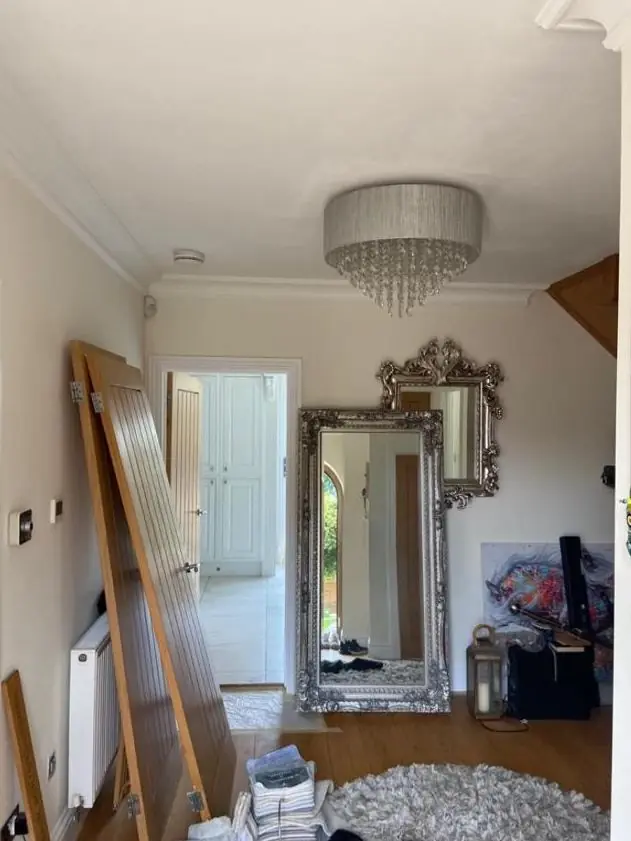
Lower Harlestone’s cottages sit close to the A428, and traffic is fast and heavy at peak times. Parking a van outside the front door isn’t always possible. Many properties have side or rear access through back roads or small alleyways, and we use those where we can, carrying dust sheets and steps through in small loads. In Upper Harlestone the houses are grouped along three winding valley roads, so we agree where to park before the first day.
Inside, we sheet floors from the door inwards and keep one room usable at a time. For whole-house work, we plan the order around how you live in the place. The steps we follow in every room are set out on our main interior painting page, and there’s more on the village’s buildings on our Harlestone page. For budgeting, see our painter and decorator cost guide.
Last updated by Dean, DH Painter & Decorator.