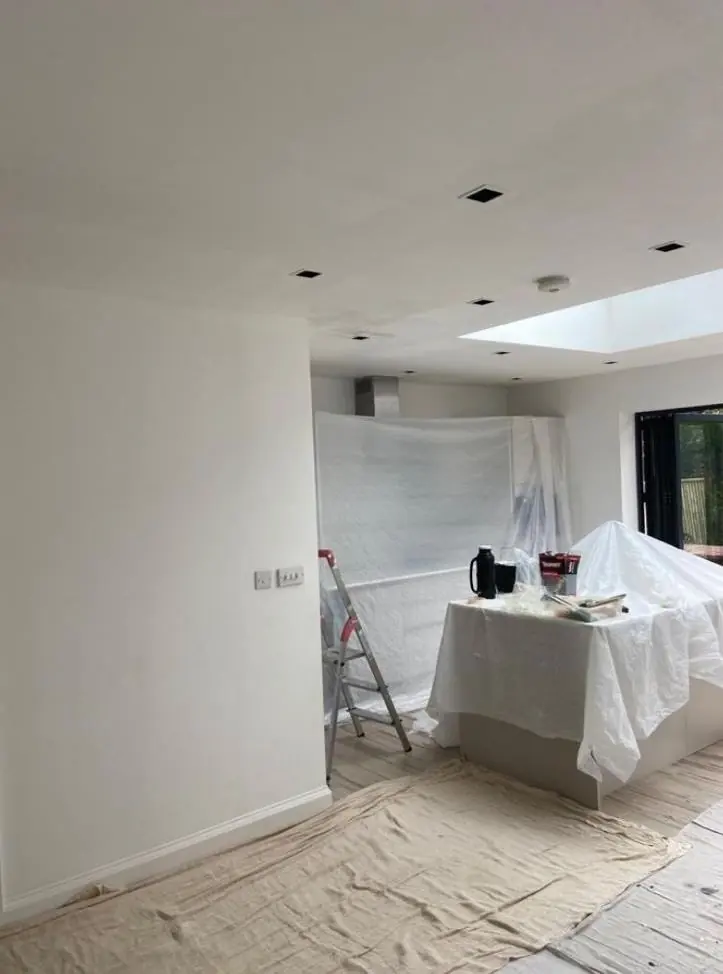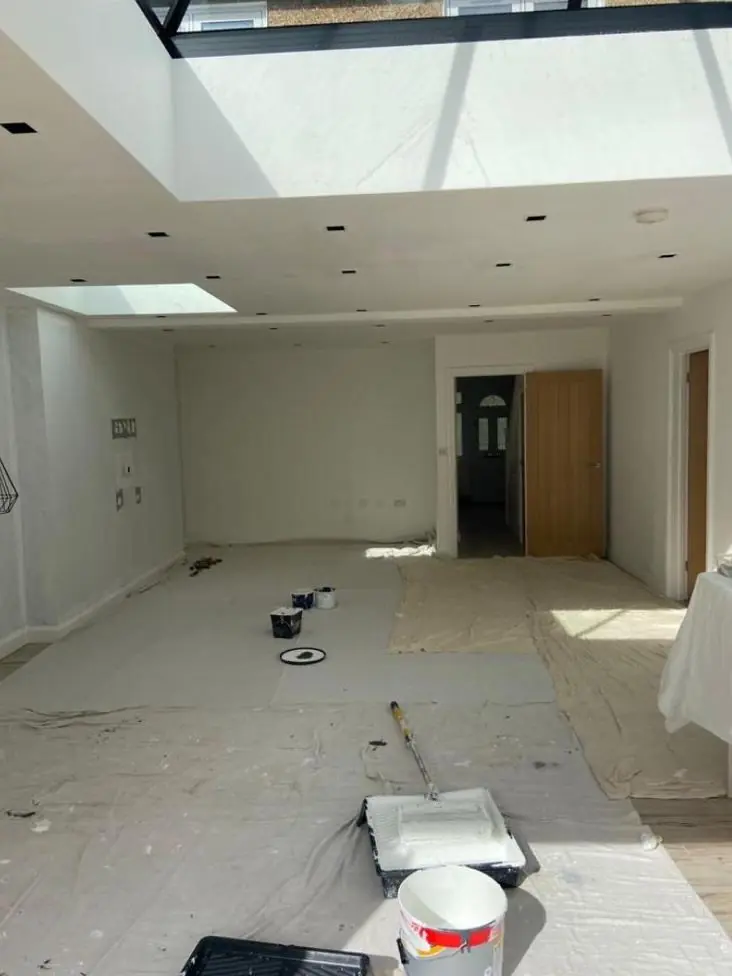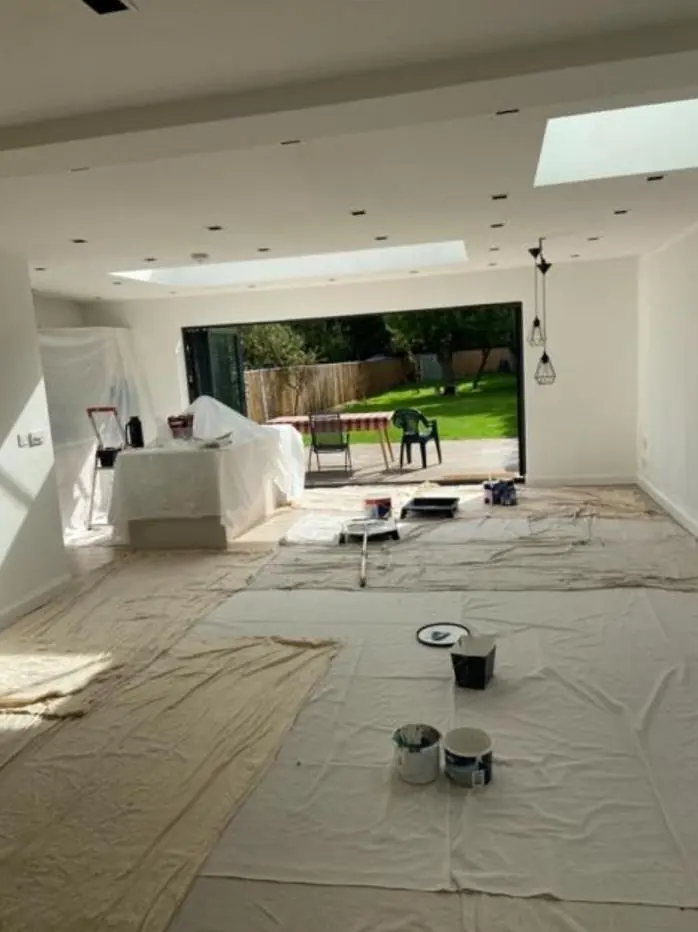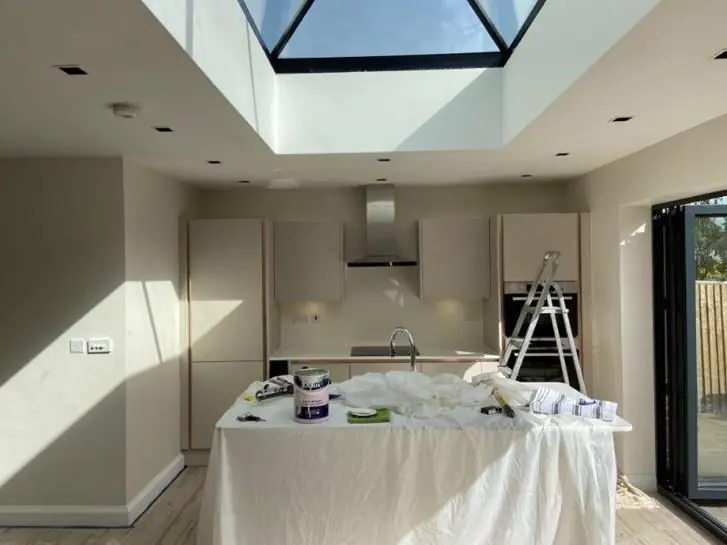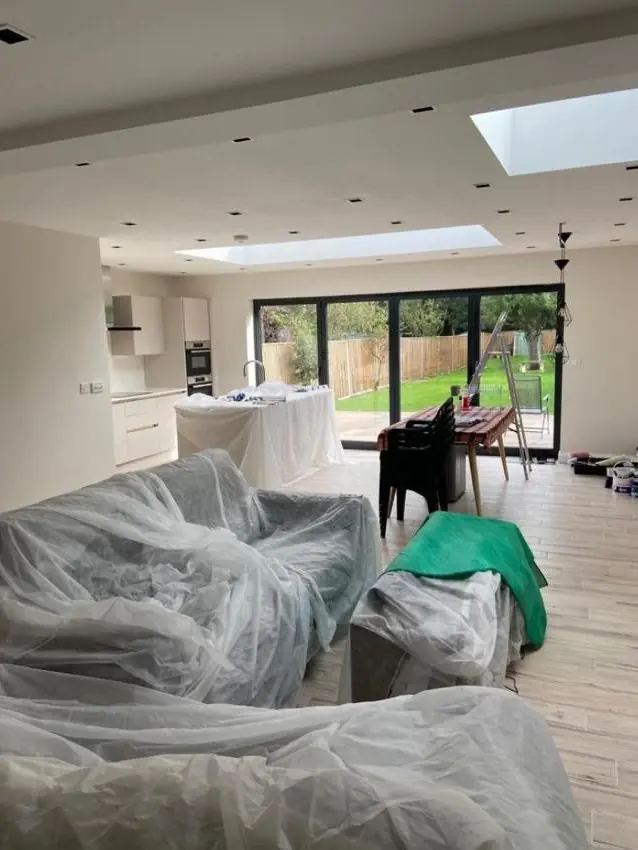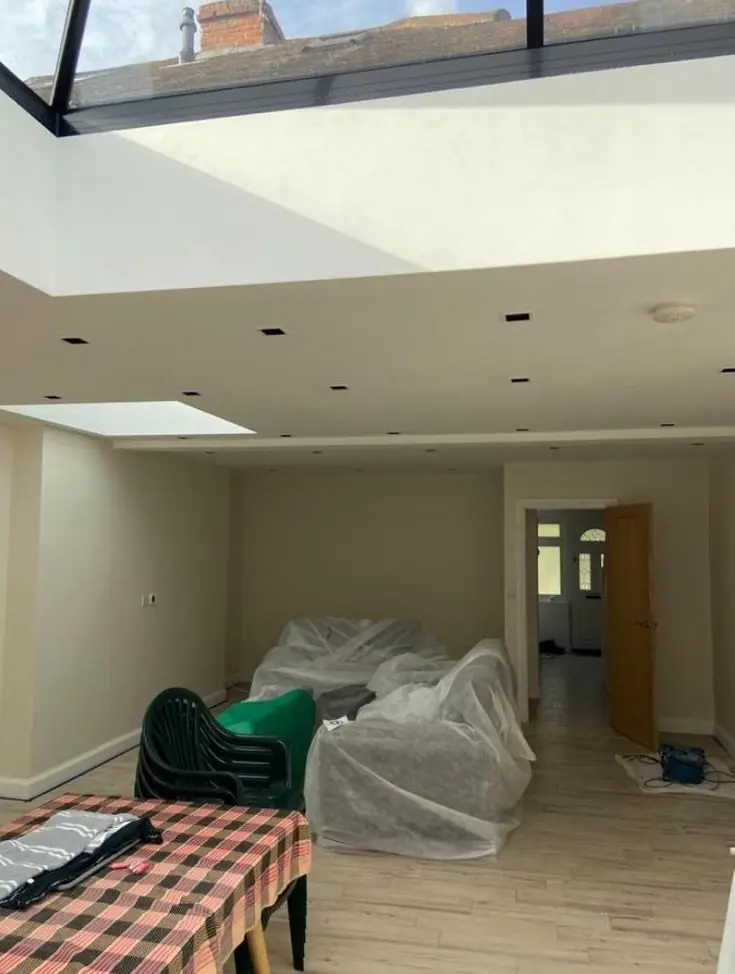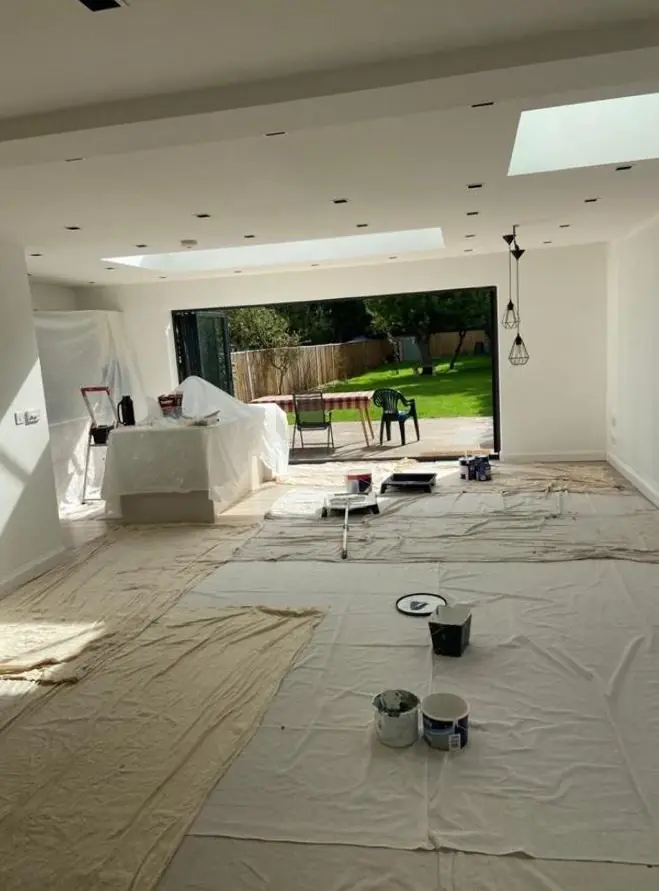
Dean decorates new plaster, extensions and re-skimmed rooms in Hackleton, about 4.7 miles south-east of Northampton town centre. Most of this work is on the 1939 to 2000 estates and the newer homes on Oak Way and Lyne Walk. In the older stone cottages, we first check whether a wall is gypsum or lime.
Replacing builder’s emulsion on Oak Way and Lyne Walk
Since 2000, Hackleton’s restricted-infill policy has kept new building small. Oak Way and the affordable homes off Lyne Walk are the main recent schemes, with a mix of private and housing-association homes. New houses like these are usually handed over with a single thin coat of builder’s emulsion straight onto fresh plaster, and over the first year or two the structure dries out and settles. Fine cracks appear at ceiling junctions, along plasterboard joints and above door frames.
When you get to the first proper redecoration, the job is mostly preparation. We rake out and fill the settlement cracks, caulk the joints between ceilings and walls and around architraves, and spot-prime the repairs. Builder’s emulsion is often chalky and patchy, so a coat of sealer may be needed before your chosen colour goes on. If you redecorate too early, before the house has settled, the cracks can come back. We will tell you honestly if it’s worth waiting.
Extensions on the post-war cul-de-sacs
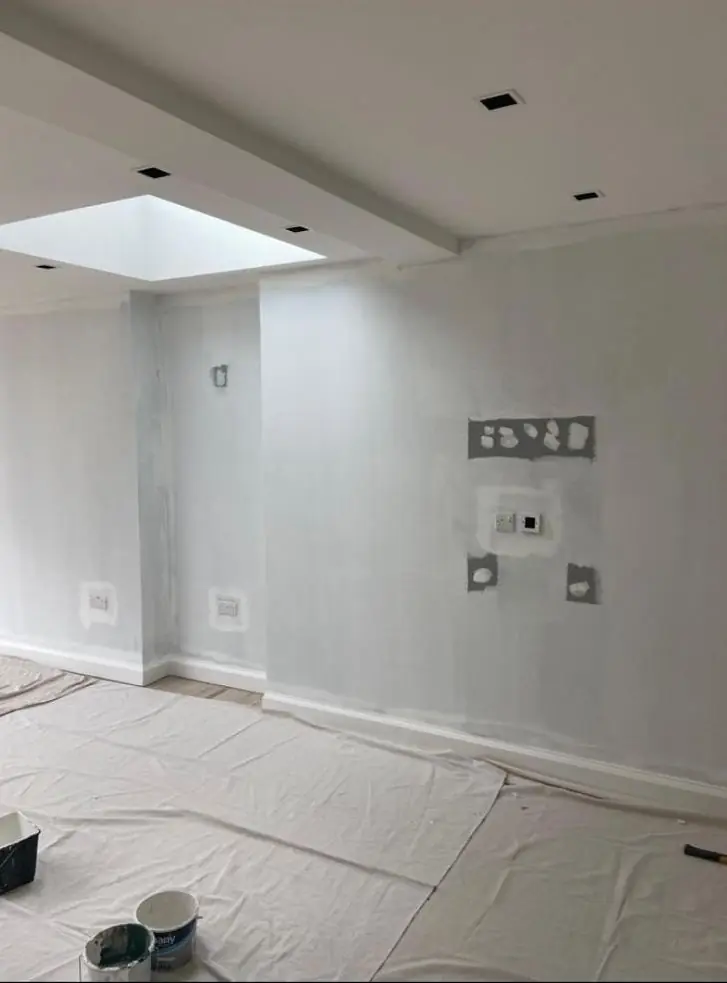
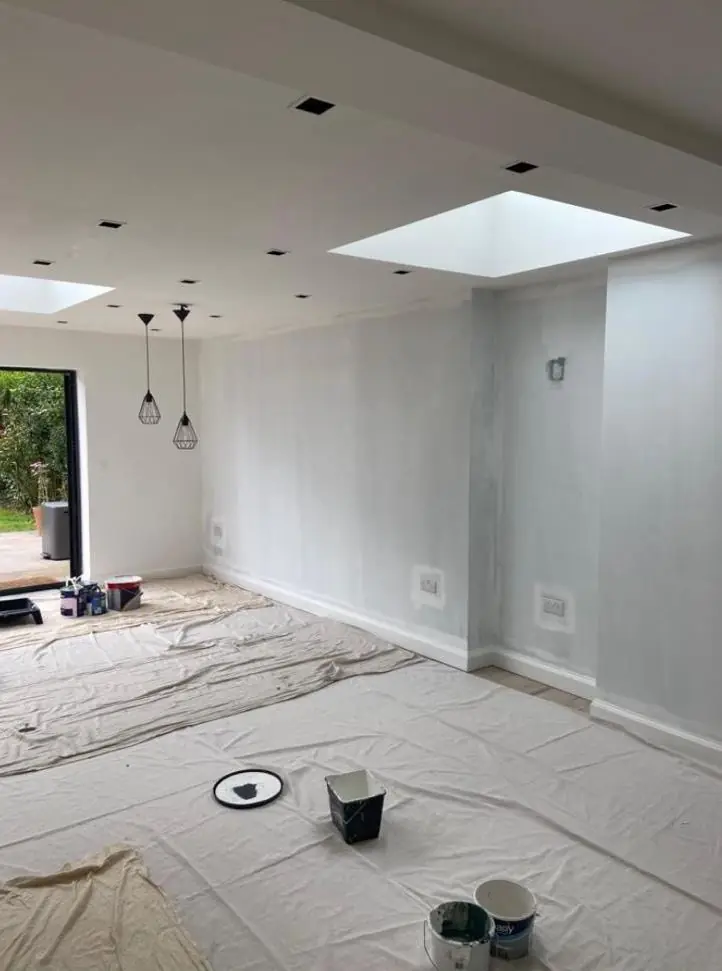
The semis, detached houses and bungalows built between 1939 and 2000 on cul-de-sacs north of Main Road are where extensions and re-skims are most likely, such as a kitchen extension at the back, a garage conversion or a loft room. New gypsum plaster needs to be fully dry before decorating. It should look an even pale pink with no dark patches, especially in corners and behind radiators. It then needs a mist coat, which is a watered-down, breathable first coat that soaks in and gives the finish coats something to grip.
The ground here is marl and clay over limestone, and the local brooks are in the flood-prone Upper Nene catchment. In a wet winter, a new extension on clay ground can take a long time to dry. We would rather check plaster with a moisture meter than go by the plasterer’s date. The join between old house and new is worth looking at too. Where the extension meets the original wall, a hairline crack often opens as the new foundations settle. We fill it flexibly before the finish coats, not after.
Lime plaster in the limestone cottages
The limestone cottages and farmhouses along Main Road were built in lime mortar, and some will still have lime plaster inside. If a cottage room has been patched with new lime plaster, or part-skimmed in gypsum next to old lime, the two surfaces need different treatment. Lime plaster cures slowly and must be able to release moisture, so it takes a breathable mineral or clay paint, not a mist coat of ordinary vinyl emulsion. We check what is on each wall before ordering paint, because using the wrong product on lime leads to flaking within a season or two. If damp is showing on a cottage wall that sits below the level of the road, as some on the south side of Main Road do, we would want the cause looked at before any new plaster is decorated.
What a Hackleton new-plaster job usually includes
| Property | Typical plaster work | What we watch for |
|---|---|---|
| Oak Way, Lyne Walk | First redecoration over builder’s emulsion | Settlement cracks, chalky base coat |
| 1939-2000 estate homes | Rear extensions, garage conversions, re-skims | Drying time, old-to-new junction |
| Main Road cottages | Lime patching or mixed lime and gypsum | Breathability, compatible fillers |
Our mist coat guide explains the mixing ratios and drying checks. To see what’s included when we decorate a whole extension, visit the main new plaster and extension painting page. You’ll find more about the village on our Hackleton page.
Last updated by Dean, DH Painter & Decorator.