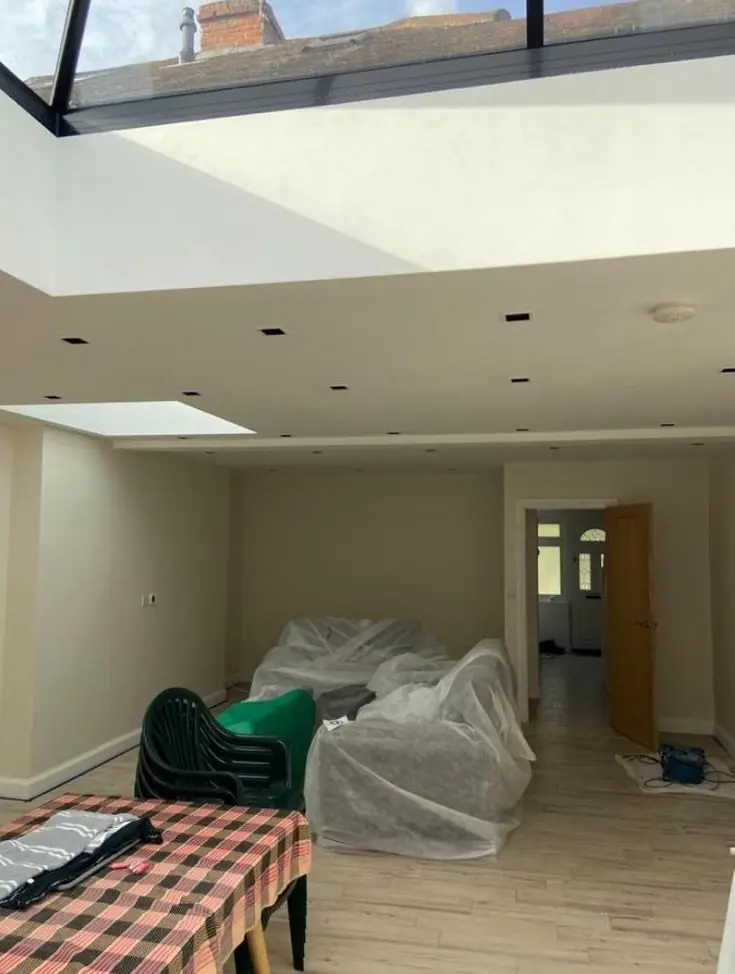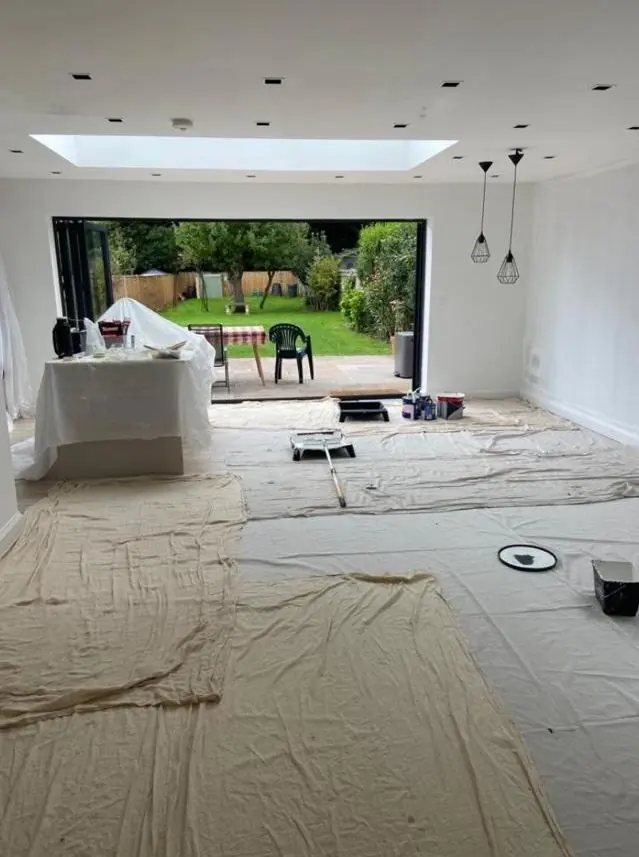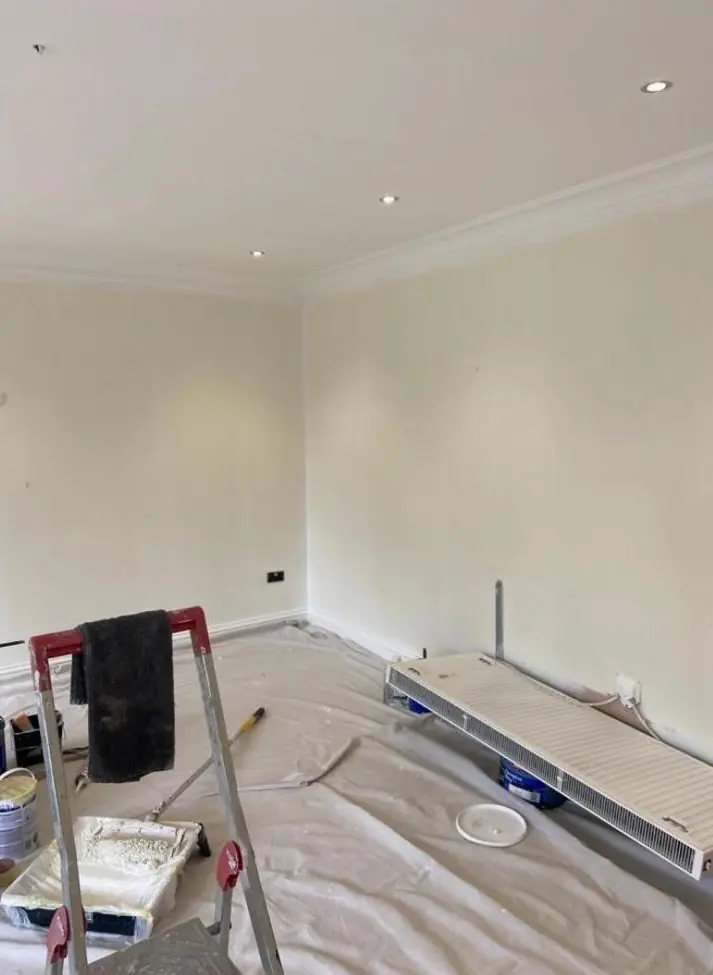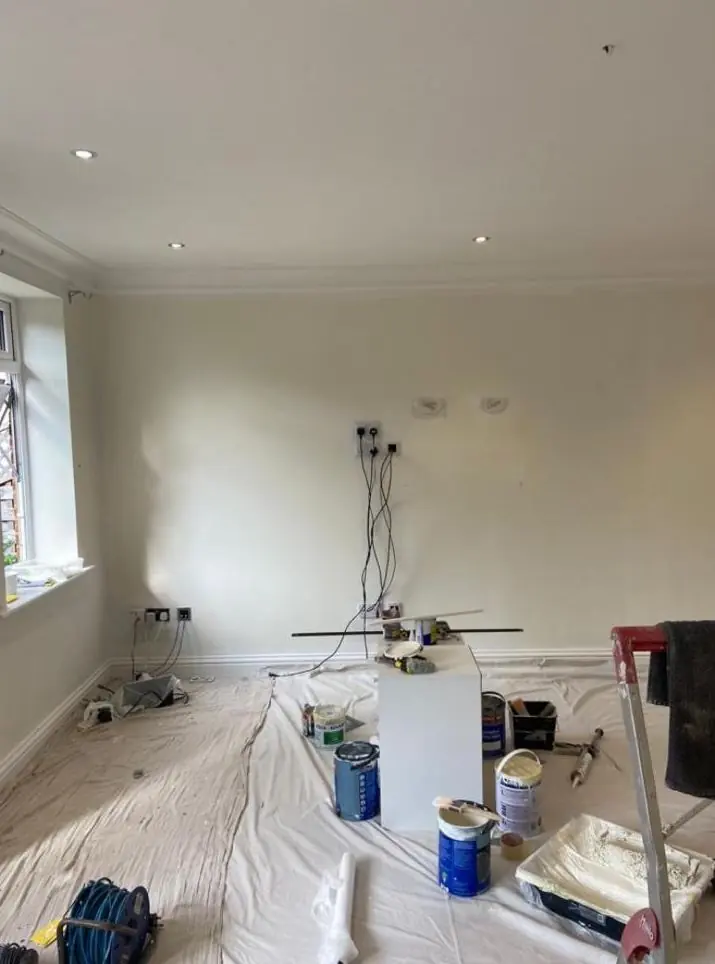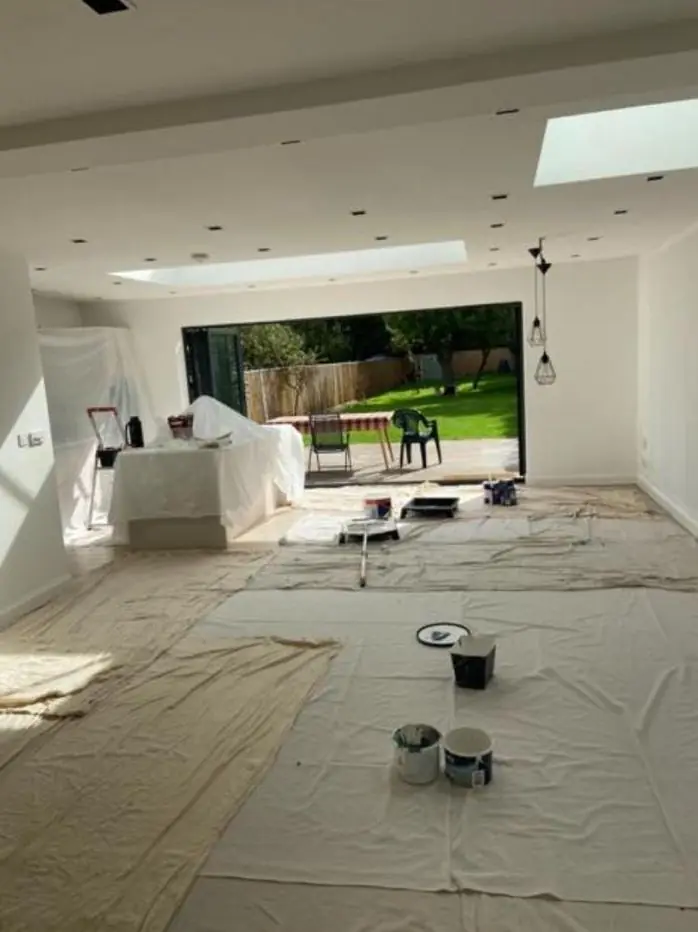
Dean decorates new plaster in Stoke Bruerne, about 6.6 miles south of Northampton: extensions, barn conversions, re-skimmed rooms and new infill houses. Fresh gypsum gets a breathable mist coat before finish coats, and where new work meets old lime plaster on solid stone walls, we choose paint that lets both breathe.
Where new plaster comes from in a Restricted Infill Village
Since the 1997 South Northamptonshire Local Plan, Stoke Bruerne has been a Restricted Infill Village. New building is limited to small infill, small groups of houses and conversions. In a village like this, most fresh plaster comes from three kinds of job:
- Conversions of old farm buildings and outbuildings. The U-plan model farm buildings at Rookery Farm, built in 1839-44 for the 4th Duke of Grafton, are now four homes, and other outbuildings have gone the same way.
- Extensions and re-skims on cottages and farmhouses, where a kitchen or bathroom has been opened up and replastered.
- Infill houses on small plots along Rookery Lane, Chapel Lane and Mill Lane, built with modern materials.
Each of these needs a slightly different plan. The standard steps for drying, mist coats and finish coats are on our main new plaster and extension painting page, and the mist coat guide explains why the first coat matters so much.
New skim beside old solid walls
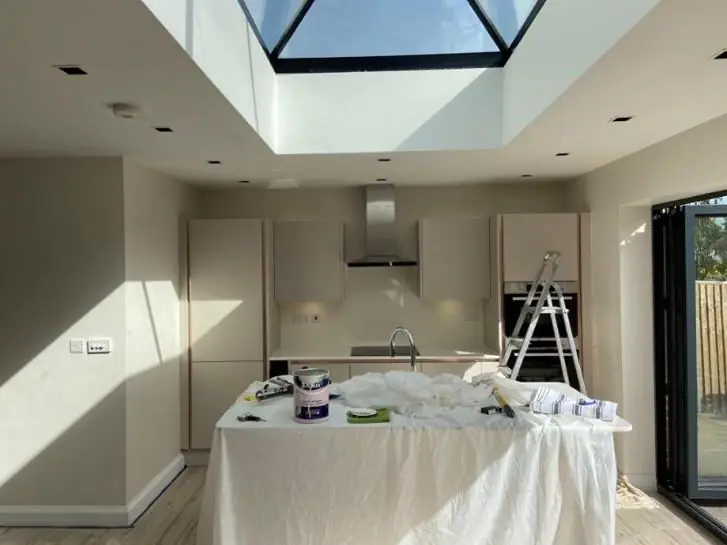
Converted barns and extended cottages almost always mix old and new surfaces in the same room. You might have a new plasterboard ceiling, a freshly skimmed partition and an original limestone wall with lime plaster, all meeting in one corner.
Gypsum and lime behave differently. New gypsum skim needs a thinned contract matt or purpose-made mist coat so the finish coats bond. Old lime plaster on solid stone needs to keep breathing, and an ordinary vinyl emulsion over it can trap moisture that later shows as blistering. Where the two meet, we usually run a breathable paint across the whole wall, so it looks the same and works on both surfaces.
The joint between new and old is where cracks show first. The building settles, the new plaster shrinks slightly as it dries, and a hairline crack opens along the line. We cut those out, fill with a flexible filler and sand flush before the finish coats, rather than painting over them and having them reappear in a month.
Drying times under trees and beside the canal
New plaster has to be properly dry before it is sealed, and in Stoke Bruerne that can take longer than you would expect. Plots shaded by the mature trees along Rookery Lane, rooms in houses near the canal, and thick-walled barns with small windows all dry slowly, especially in winter. We check every wall, including reveals and corners behind radiators, for the even pale colour of dry plaster before we start.
Barn conversions often have high, vaulted ceilings or exposed roof trusses. Plastered panels between beams need careful cutting-in, and we protect the timber from emulsion. A tower or podium usually has to come in through the front of the house, because many village plots have no rear access.
Planning the decorating stage
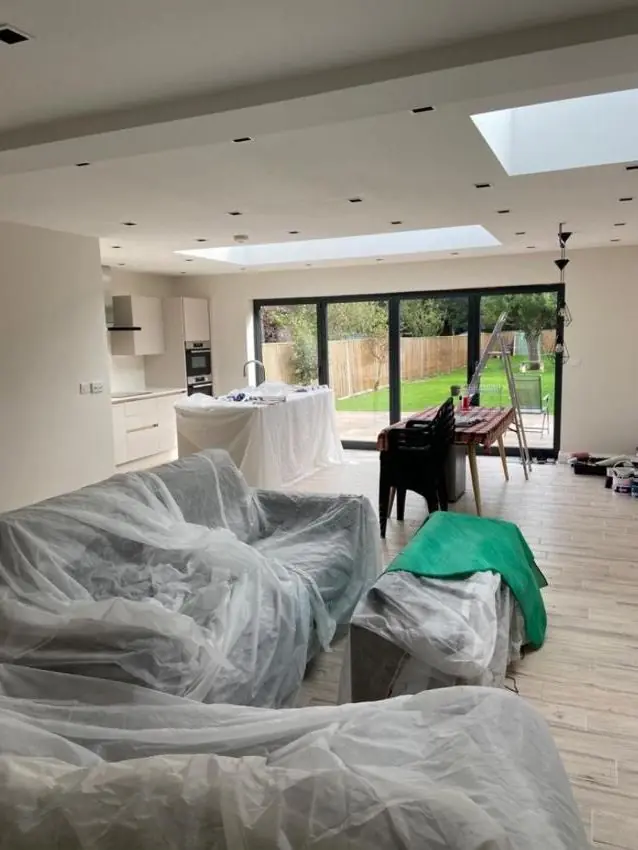
We usually come in once the plasterer, electrician and joiner have finished but before the new flooring goes down, if that can be arranged. That makes protection simpler and lets us paint new MDF skirtings, architraves and doors in the same visit.
If you have a conversion or extension underway in the village, our Stoke Bruerne area page has more about the property types we cover there. Give us a date for when the plaster went on, and we can work out a sensible start date with you.
Last updated by Dean, DH Painter & Decorator.