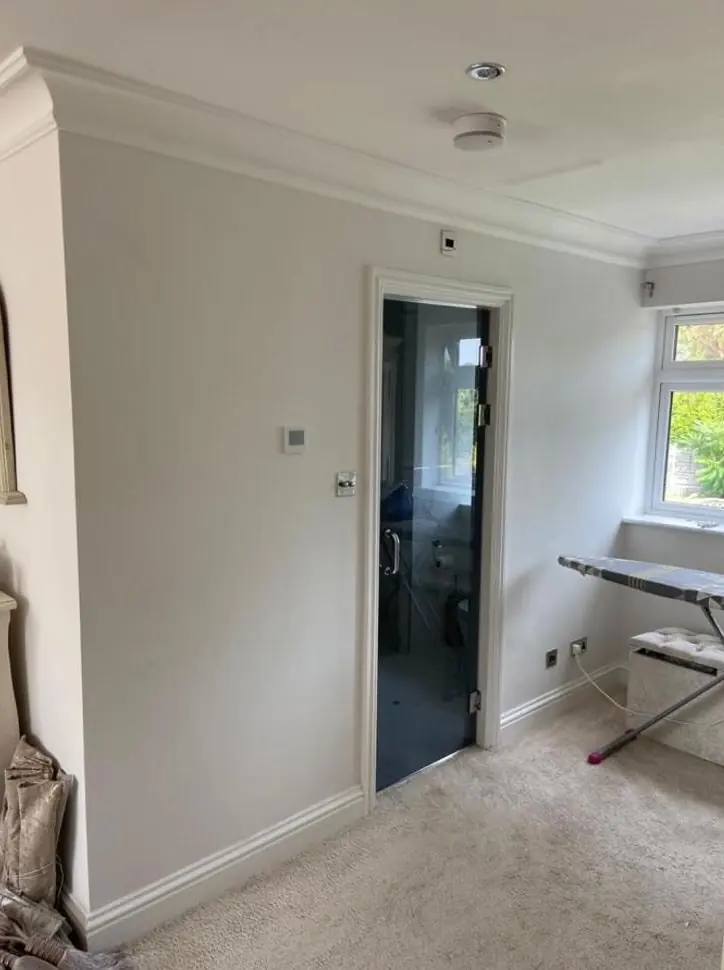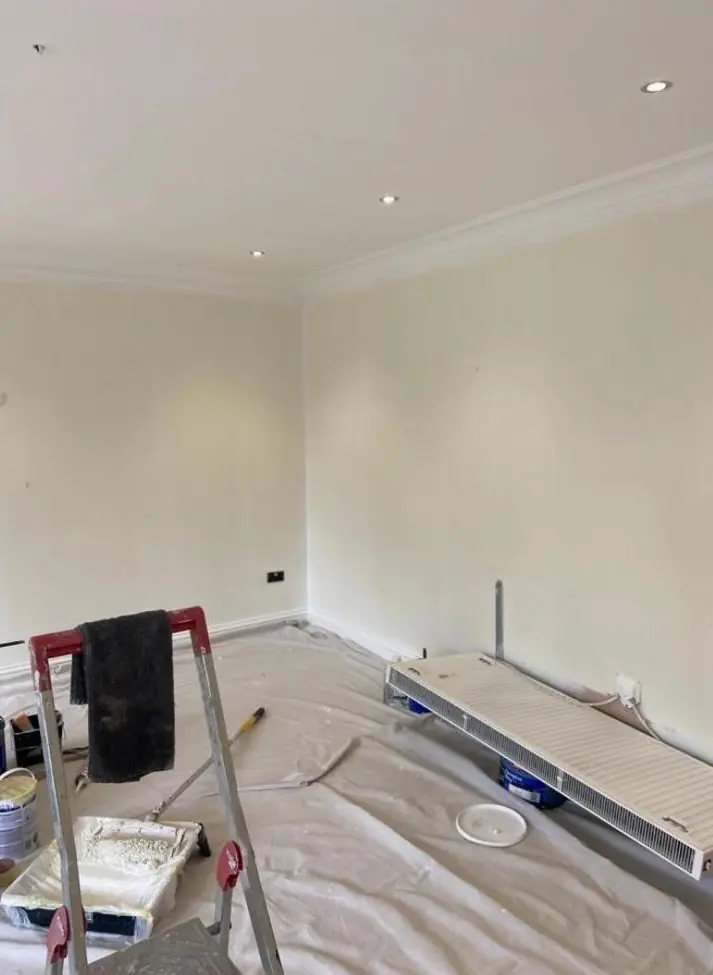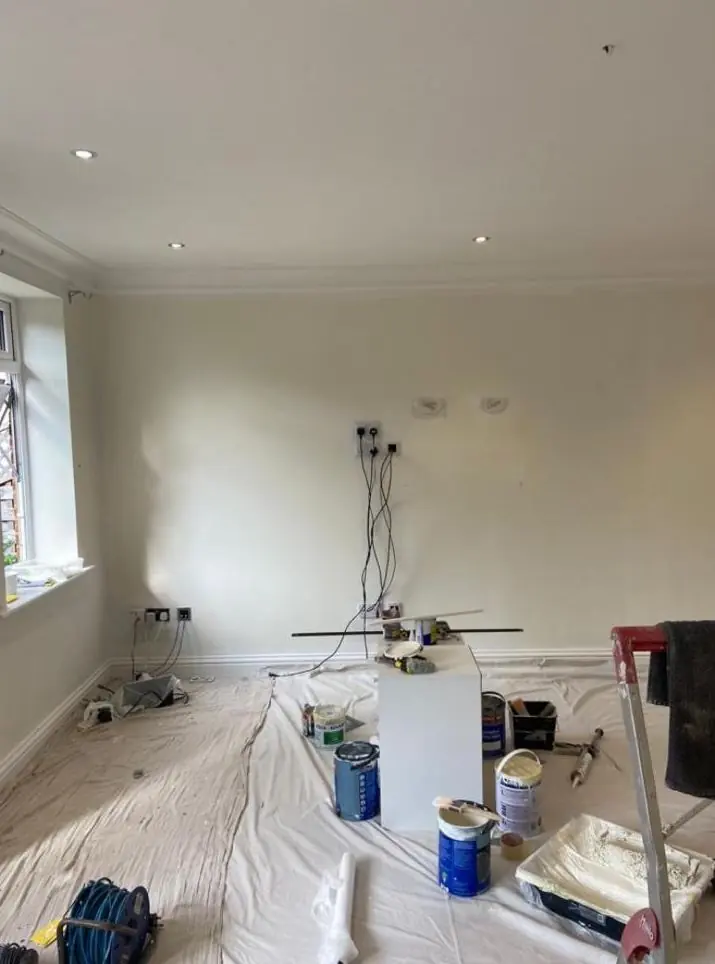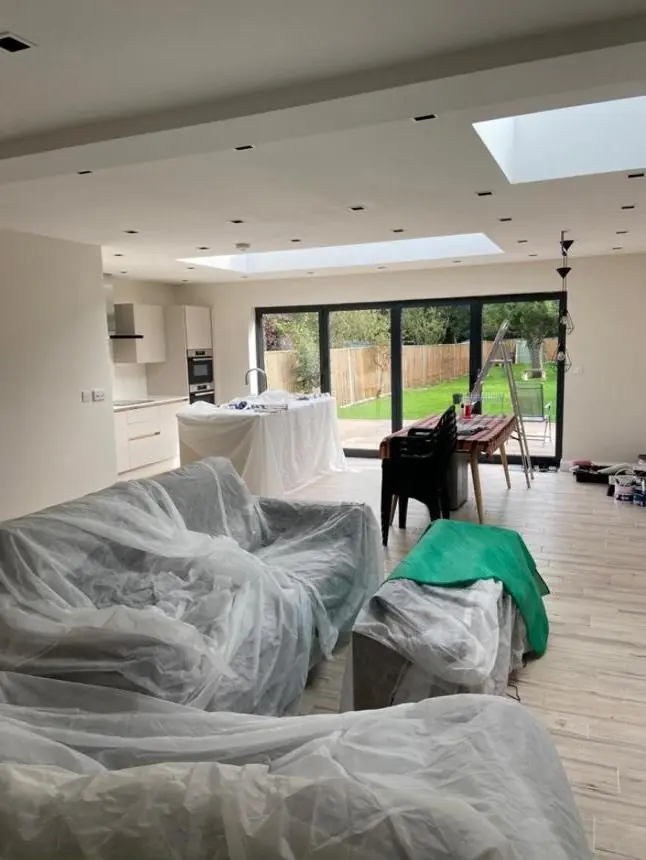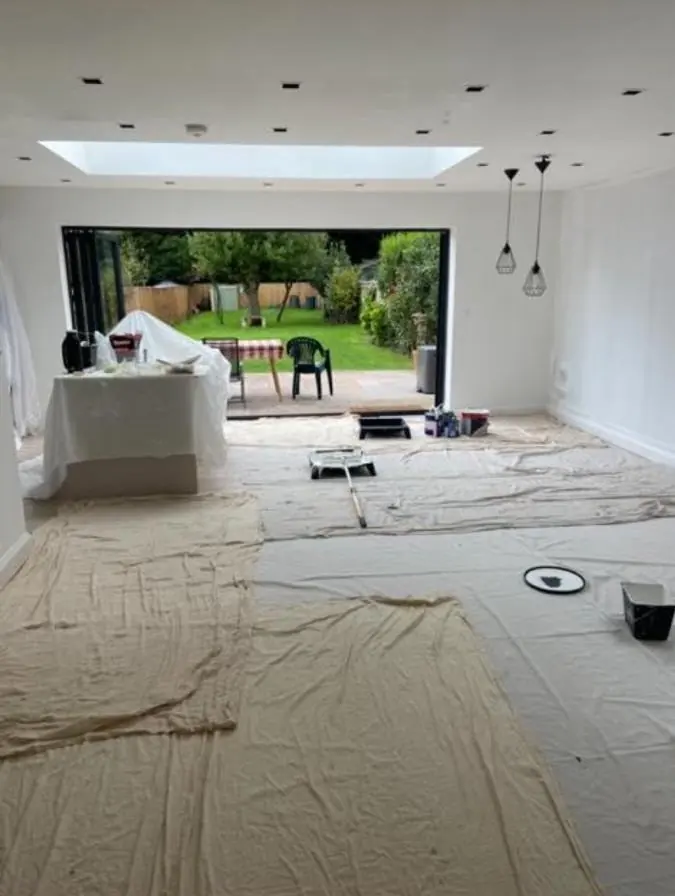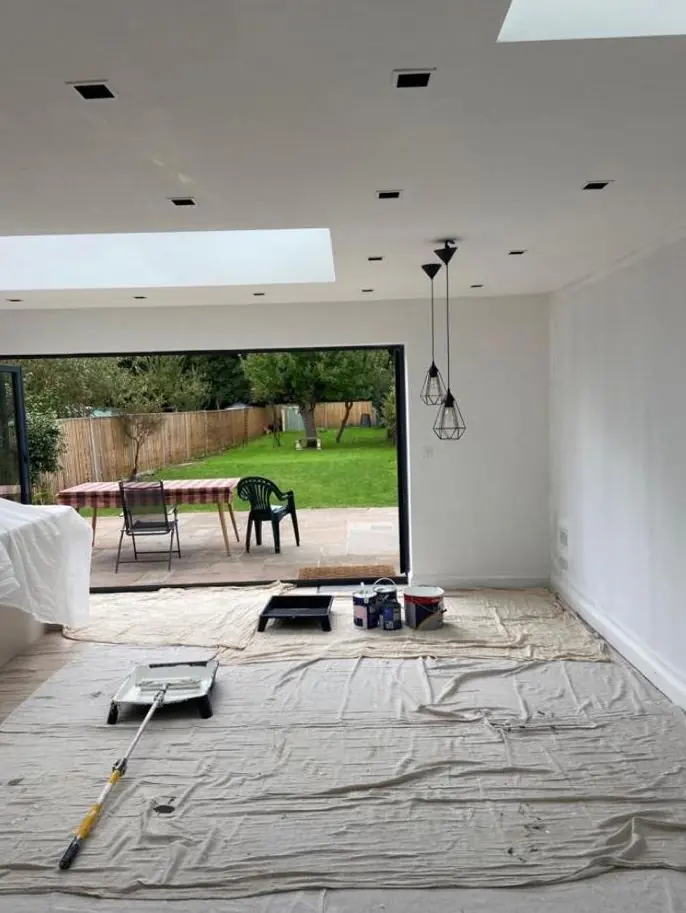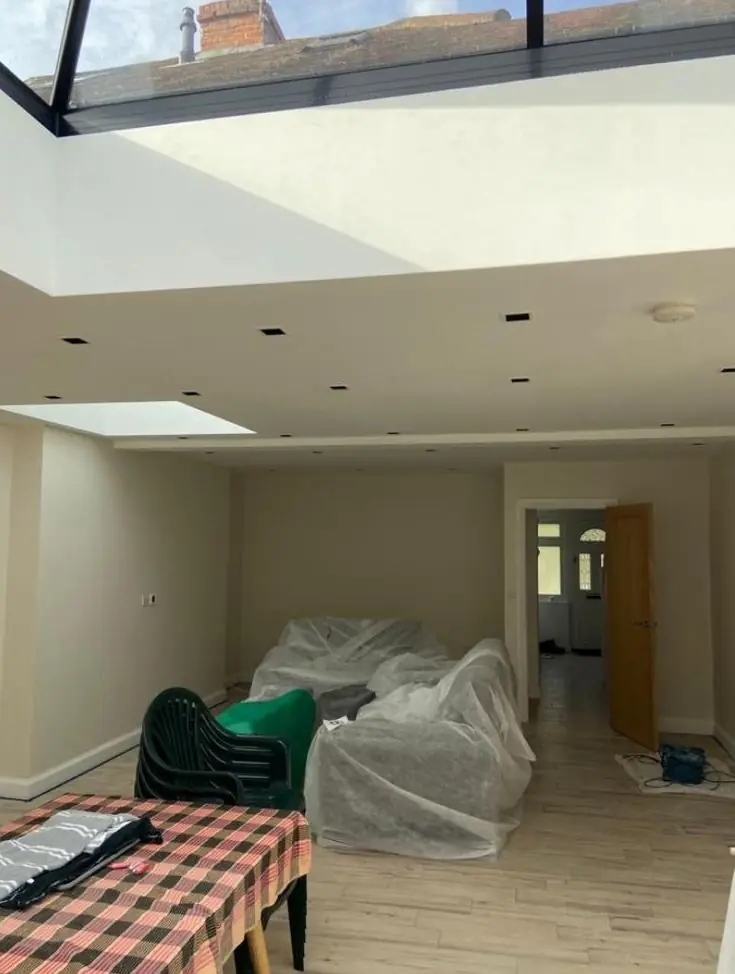
DH Painter & Decorator paints new plaster and extensions in Yardley Gobion, 9.7 miles south of Northampton town centre. Fresh gypsum plaster gets a mist coat once it is dry, and where a new room meets the old lime-plastered walls of a cottage we choose finishes that let both surfaces sit together.
Where new plaster turns up in the village
Most new plaster in Yardley Gobion comes from extensions and alterations to the houses built south of the village between the 1950s and 1970s. That estate more than doubled the village, and houses of that age are often extended, opened up or replastered when the original plaster is past saving. In the historic core, new plaster usually means a rear extension or a room being opened up in a 17th or 18th-century limestone cottage, where fresh gypsum sits next to walls that may still have their original lime plaster.
The two situations need different approaches, and the second takes more thought.
Mist coats on estate extensions
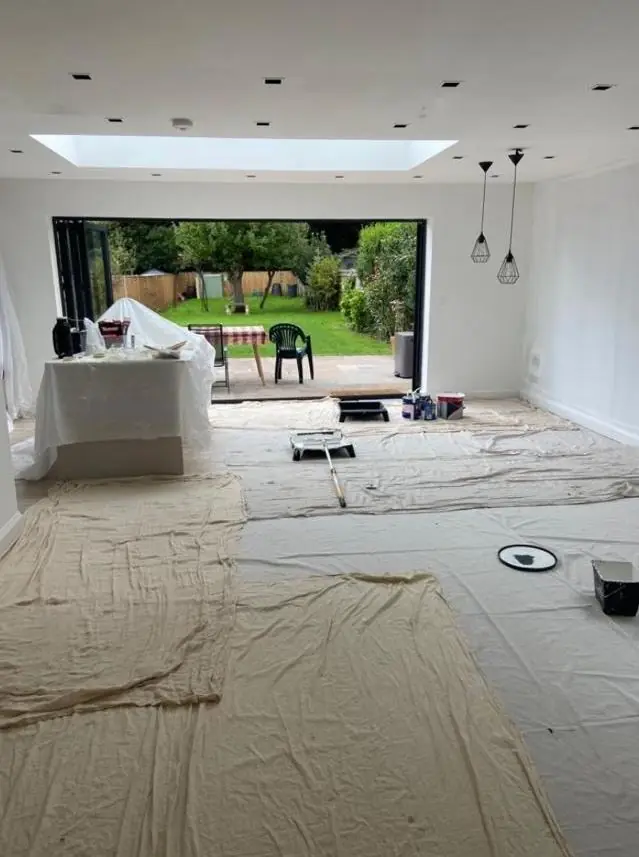
Fresh gypsum plaster is very absorbent. If you roll a standard emulsion straight on, the plaster soaks up the water too fast, the paint does not bond, and it can peel in sheets later. The fix is a mist coat: a thinned contract matt or a dedicated plaster primer that soaks in and gives the next coats something to grip.
Timing comes first. New skim needs to dry evenly from dark brown to pale pink before any paint goes on, and a newly plastered extension also has screed and fresh blockwork drying out, so it needs ventilation. We check moisture levels before starting. Our guide to painting new plaster with a mist coat sets out the drying times and mixing ratios, and the main new plaster and extension painting page covers the full process.
On a post-war house the job is then straightforward: mist coat, sand off any nibs, fill fine cracks at board joints and corners, and two full coats. If the extension is a kitchen-diner, a wipeable matt is worth considering on the walls.
Joining a new room to an old limestone cottage
The older houses along Moorend Road and the High Street are built of coursed limestone rubble. Where the original lime plaster survives on the inside, the walls are uneven and rely on being able to breathe. A modern extension built with gypsum and plasterboard does not behave the same way.
Where old and new walls meet, a few things matter:
- Do not seal the old lime walls with vinyl emulsion just to match the new room. Use a breathable mineral or clay paint on the old plaster, then pick a colour that matches the paint chosen for the new room.
- Expect a fine crack at the junction where the two structures meet and move differently. A flexible decorator’s filler and a little patience work better than hard filler.
- The texture will differ. Old lime walls undulate and new skim is flat, and paint shows that difference clearly. Matt finishes hide it, while sheen shows it.
- Check that any new opening in a listed building has the right consent before finishes are chosen. The village’s listed buildings include several cottages on Moorend Road and the High Street.
Weather and access for extension jobs
Yardley Gobion is exposed on its valley-side ridge. North- and east-facing rooms cool quickly, and a new extension on that side of a house can take longer to dry out over winter. If the plasterer finishes in late autumn, it is often better to wait for warmer spells before painting than to rush the mist coat onto damp walls.
Access matters too. Extensions are usually at the rear, and on Moorend Road, Chestnut Road and around Mount Pleasant, rear access can be limited. Where footpaths run along the backs of High Street plots, they can make carrying materials in easier. We look at how to get in during the quote visit.
Find out more about the village’s housing on our Yardley Gobion area page.
Last updated by Dean, DH Painter & Decorator.