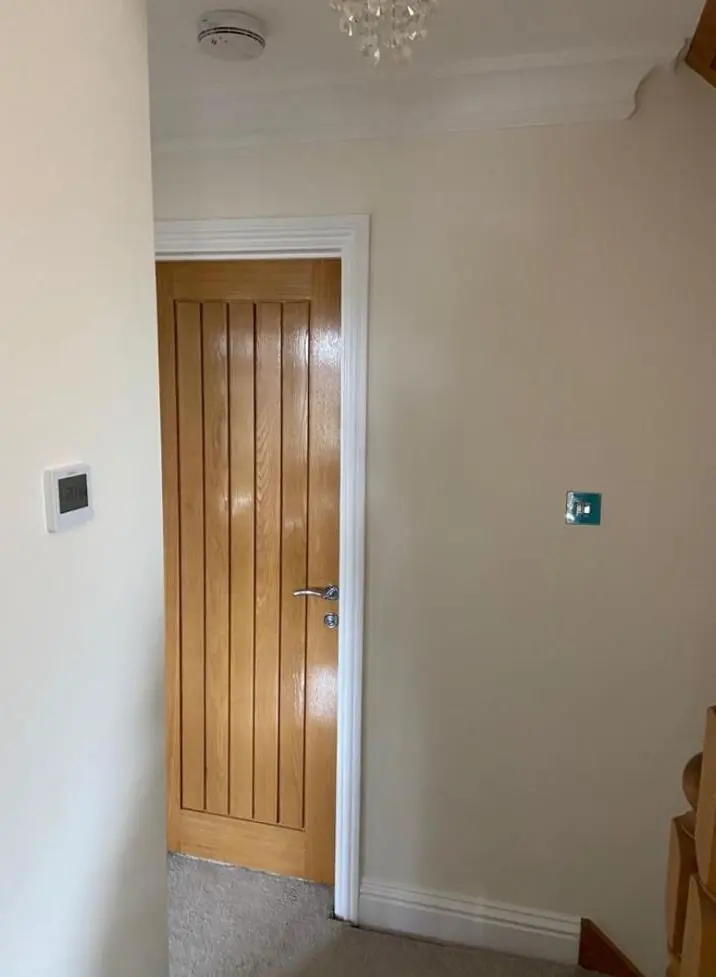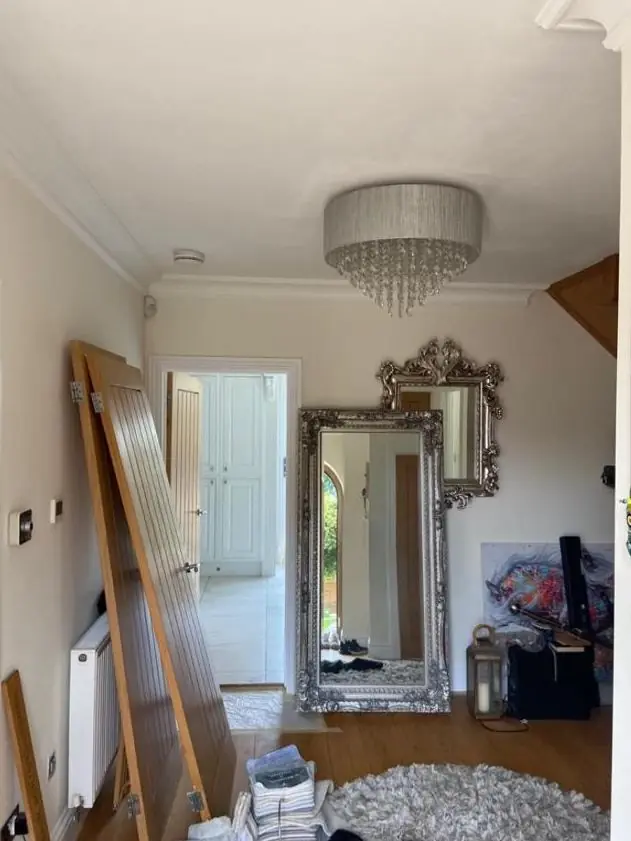
We decorate hallways, stairs and landings in Headlands, NN3, about 2.2 miles north-east of central Northampton. Most homes here are 1939 semis with a narrow hall and a straight flight to a half landing, so the job centres on safe access to the stairwell wall and on spindles carrying layers of old gloss.
How a Headlands staircase is laid out
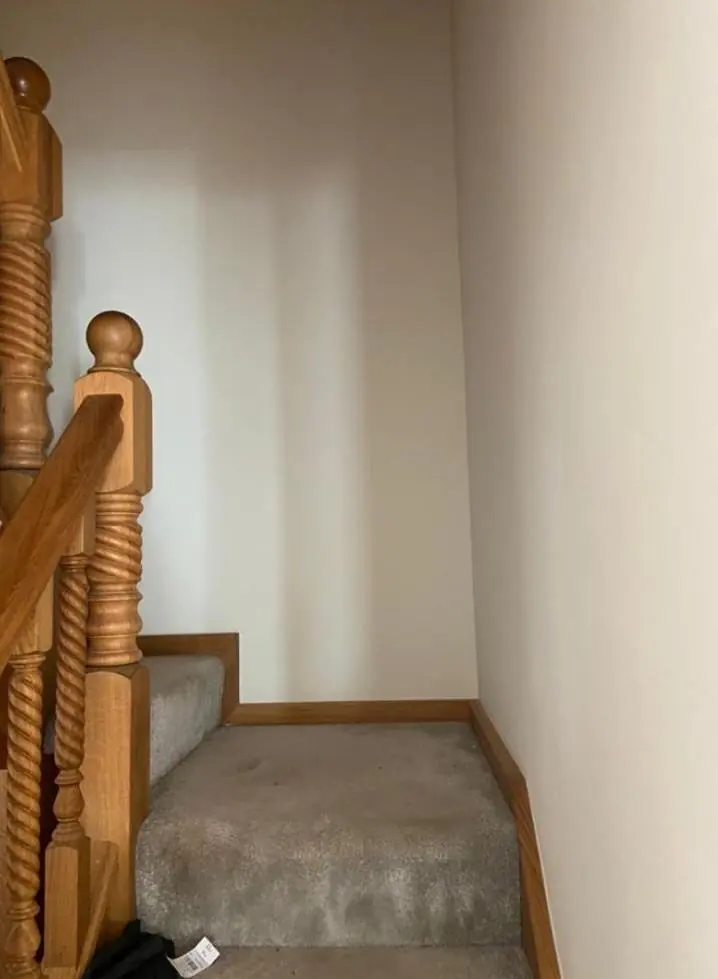
The interwar semis along The Headlands, Longland Road, Bush Hill and Birchfield Road East follow a familiar plan. The front door opens into a compact hall, the stairs rise in a straight flight along the party wall or the side wall, and they turn at a half landing before reaching the bedrooms. That arrangement creates one awkward surface: the wall rising above the flight, which is taller than any other wall in the house and has a drop beneath it.
Because the hall is narrow, there is little room to set up equipment, and everyone still needs to get up and down to bed. We plan the work so the stairs stay usable every evening, with the platform left in a position you can step past and wet paint kept to one side of the flight at a time.
Reaching the wall above the flight
A stepladder balanced on a tread is how most DIY attempts at this wall go wrong. We use an adjustable stair platform or a combination ladder with independent legs, set level across the treads, with boards spanning to the half landing where needed. In a 1939 semi the half landing is often the natural anchor point, because it gives a flat base close to the highest part of the wall. Our main hallway, stairs and landing page explains the equipment in more detail.
Cracked plaster in an old stairwell
Houses of this age were plastered with lime or early gypsum plaster on solid or early cavity brick. Stairwell walls take years of vibration from feet on the treads and doors closing below, and they are where fine cracks and hollow, blown patches most often turn up. Before any colour goes on we tap the wall to find loose areas, rake out and fill cracks, and decide whether the surface will take a flat emulsion as it is.
Where a wall is crazed with hairline cracks, hanging lining paper first is often the more lasting answer. It bridges the small movement, gives an even surface for paint, and avoids the cracks reappearing within a year. We will tell you at the quote which of your walls need it and which do not.
Spindles, newels and handrails
Many Headlands staircases keep their original balustrade: square or turned spindles, a newel post at the foot and another at the half landing, and a handrail that has been painted or varnished several times. The many layers of gloss soften the detail on turned spindles and leave drips set hard in the corners. Spindles take longer than any other part of the job. Each one is sanded, filled where chipped, undercoated and finished on all four faces.
| Part | Common condition in a 1939 semi | What we usually do |
|---|---|---|
| Spindles | Thick gloss, drips, chips at shoe height | Sand, fill, undercoat, satin or eggshell |
| Newel posts | Worn at hand height, often yellowed | Key back hard, two top coats |
| Handrail | Painted or worn varnish | Repaint, or strip and varnish if you prefer timber |
| Stair strings | Scuffed along the tread line | Fill dents, hard-wearing satin |
Pre-1960s paint can contain lead, so on original balustrades we test before sanding and use wet methods if it is present.
Hard-wearing choices for a family hall
A Headlands hall is often the route for bikes, buggies and school bags, with Headlands Primary and Weston Favell Academy both inside the district. A scrubbable matt or eggshell on the lower walls copes far better than a standard emulsion, and many people choose a slightly darker colour below a dado or simply along the stair line. Our cost guide explains what drives the price of a hall, stairs and landing, and the wider housing picture for this NN3 estate is on our Headlands page.
Last updated by Dean, DH Painter & Decorator.