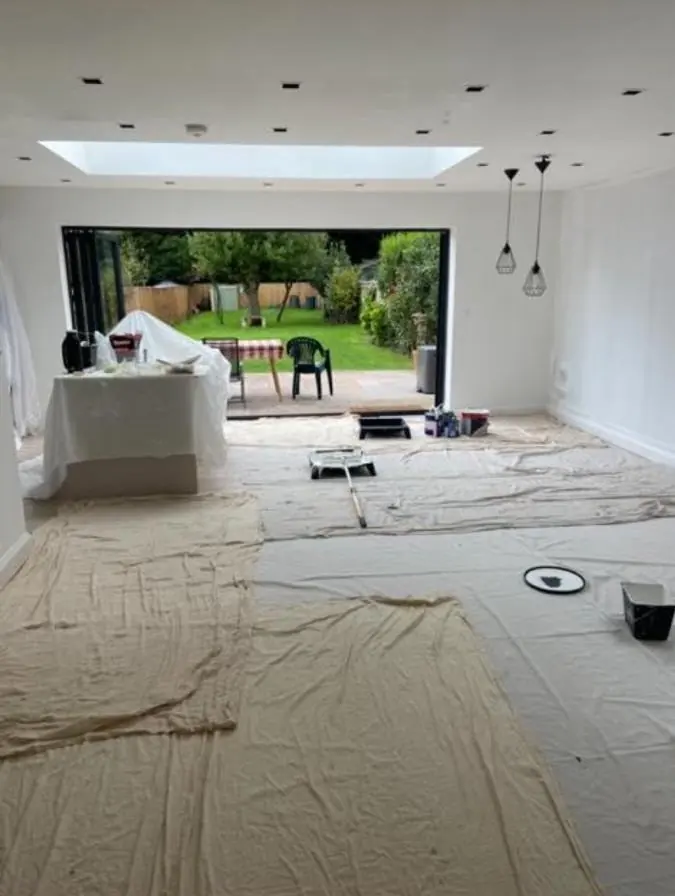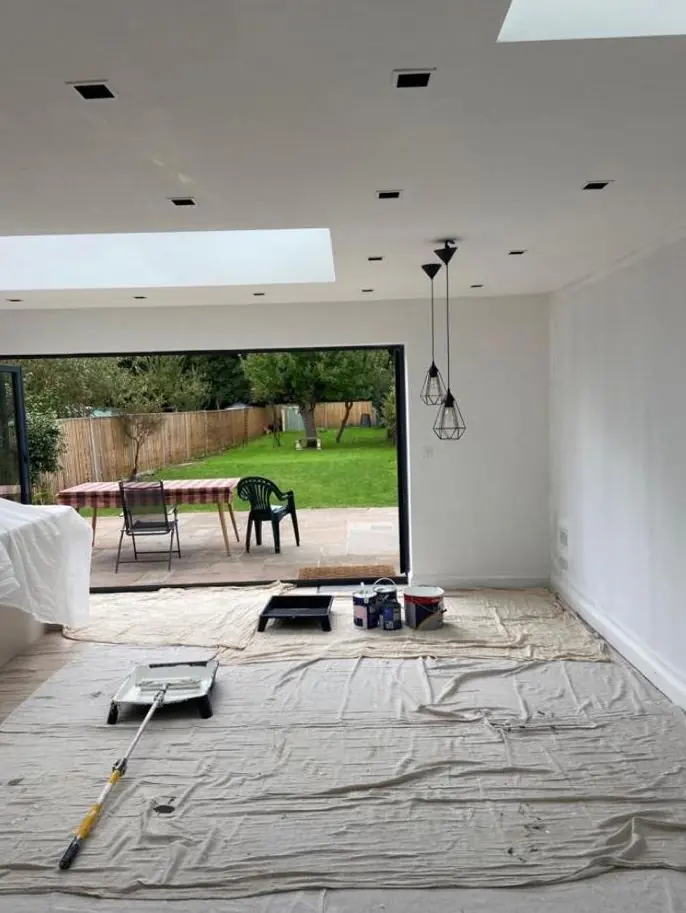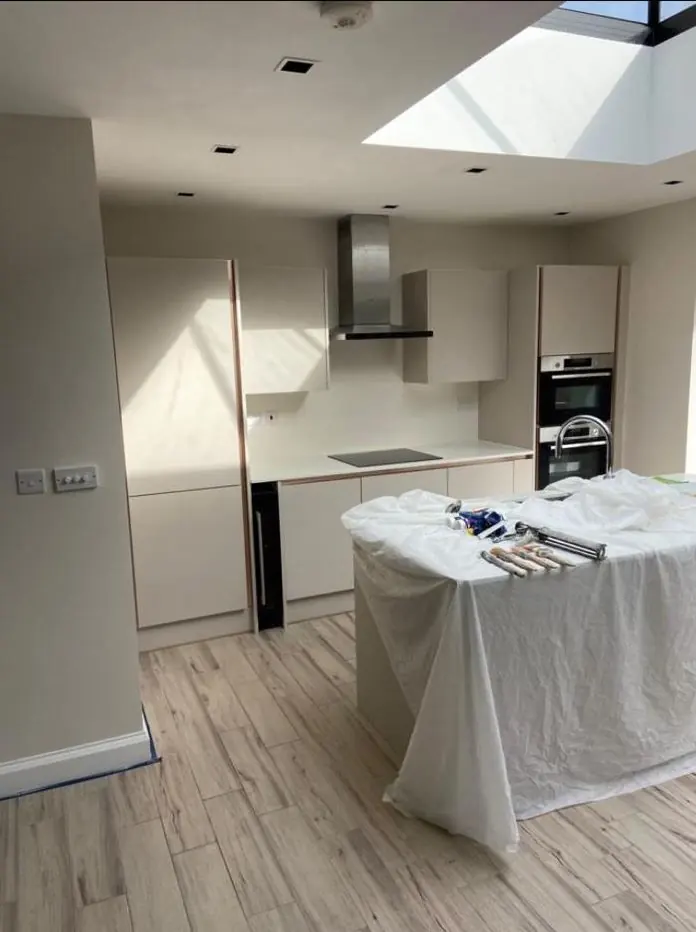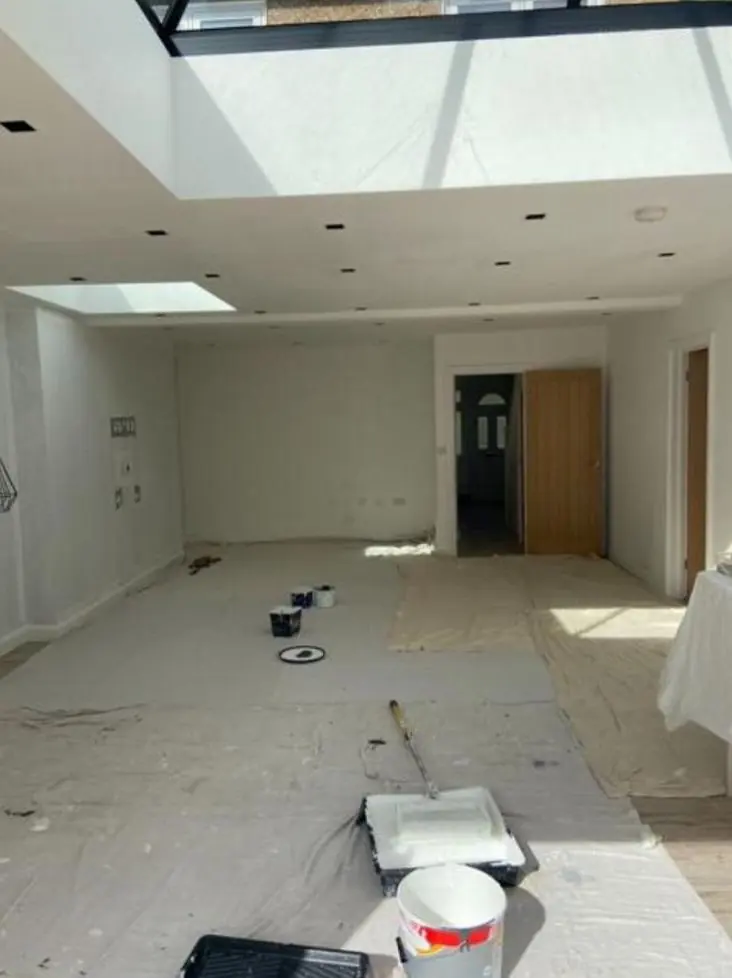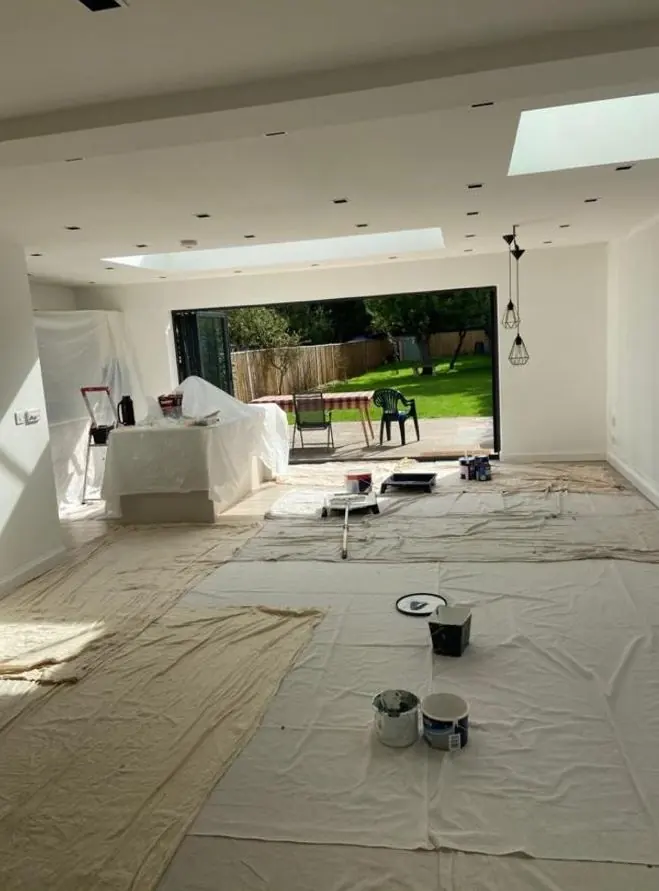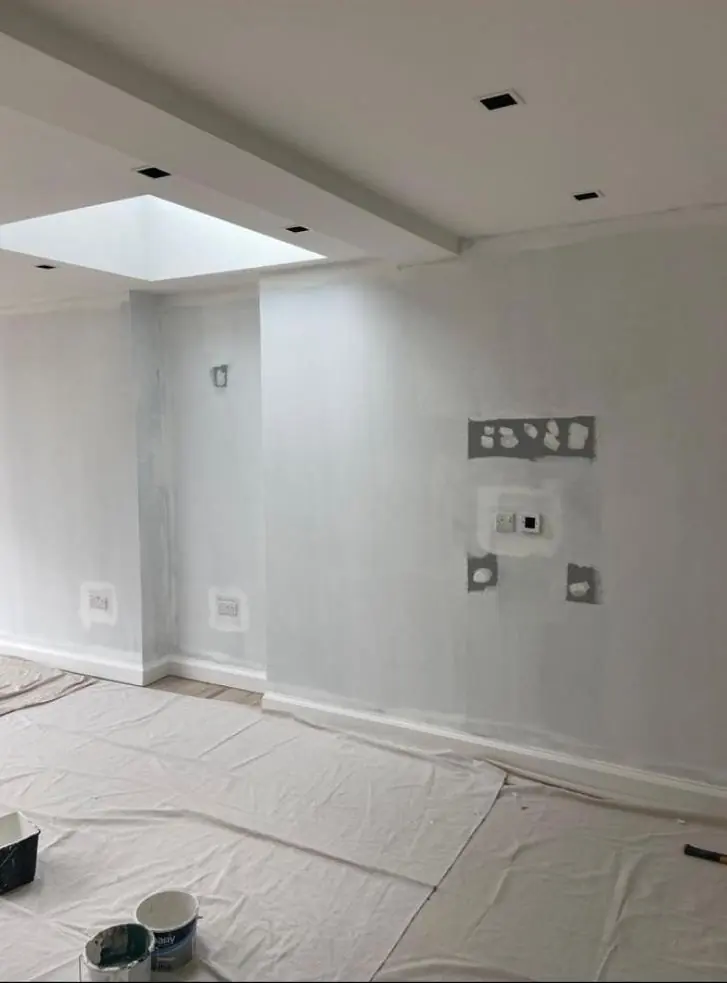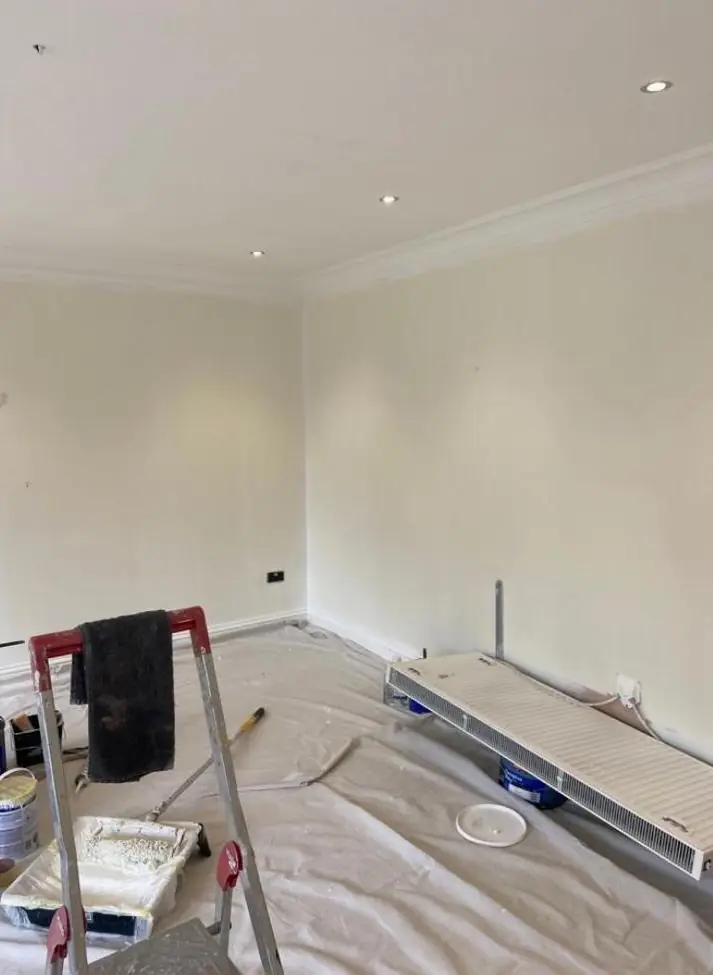
Dean decorates new plaster in Headlands, NN3, around 2.2 miles north-east of Northampton town centre, once the builder or plasterer has finished. Typical jobs are rear and side extensions, converted brick garages and dining rooms opened into kitchens, all of which need a mist coat before normal emulsion.
Where new plaster turns up in Headlands homes
The houses here are mostly semi-detached and built around 1939, and many have since been extended; agent listings regularly note brick garages added on the driveways. The common additions are a single-storey rear extension, a side extension along the driveway, and a brick garage that has later been turned into a room. Inside the original house, the rear dining room is often opened through into the kitchen, and the wall that comes out leaves a fresh skim across the ceiling and the returns.
Each of these produces bare plaster that cannot simply be rolled with the emulsion you used elsewhere. The general process for decorating it is on our new plaster and extension painting page, and the reasons behind a mist coat are covered in our guide to mist coats on new plaster. What follows is about the situations specific to these houses.
Where 1939 plaster meets a new skim
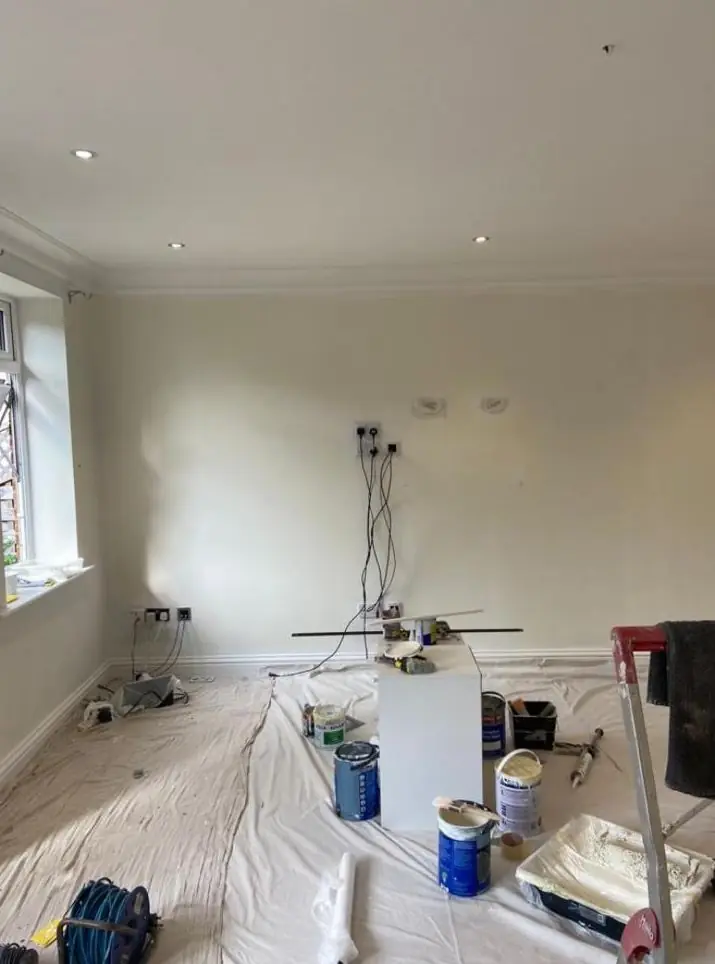
The original walls in an interwar semi are lime or early gypsum plaster on solid or early cavity brick. They are rarely perfectly flat, they often have hairline cracks, and they have absorbed decades of emulsion. A new extension wall is smooth, flat and very thirsty. Put the two side by side under one colour and the difference in texture and sheen shows, especially on a long rear wall where the extension opening has been cut through.
We deal with the join before the finish coats go on:
- Fill and sand the line where new skim butts against old plaster, and caulk any gap at the corner.
- Give the new areas a diluted mist coat, then let it dry fully.
- Run a full coat over old and new together, so both have the same base.
- Apply the finish coats across the whole wall, not just the new part.
If the old part of the wall has blown patches or cracks of its own, this is the time to sort them, since repairing them after the room is finished means patching new paint.
Garage conversions on the driveway side
Brick garages were added to many of these semis on the driveway. When one becomes a study, playroom or extra bedroom, the decorating covers more than plaster: new stud walls, a new window board, MDF skirtings, a new internal door and frame, and sometimes a boxed-in steel or meter. MDF and new softwood need sealing and priming before undercoat, and the end grain on cut MDF skirting soaks paint unless it is sealed first. We treat the conversion as a new room from scratch rather than a touch-up.
Timing the decorator after the builder
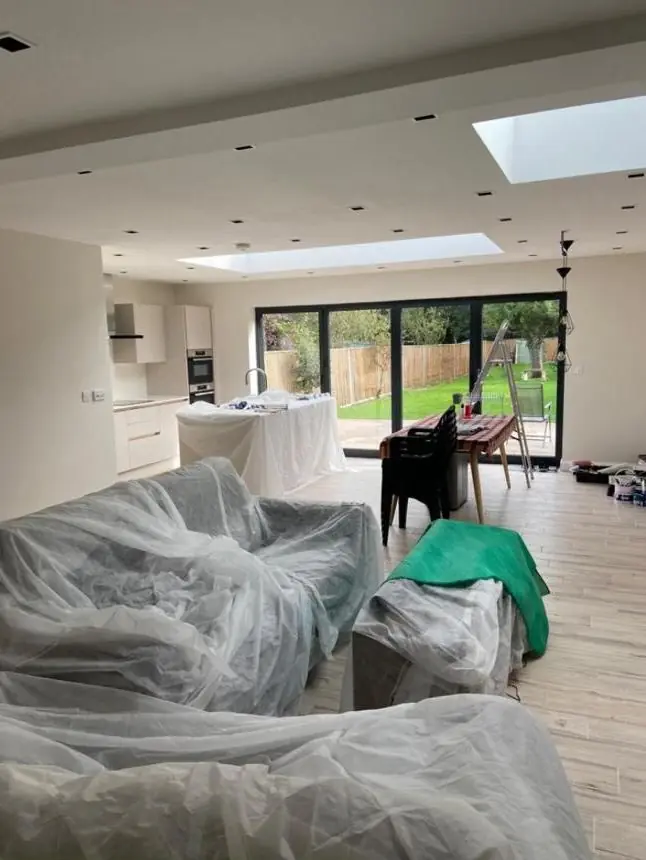
Fresh plaster must dry out before it is painted. As a rough guide, a thin skim on board dries faster than a full backing coat on brick, and an extension built through winter dries more slowly than one finished in summer. We check every wall, reveal and corner, including behind radiators, and will not mist coat until it is ready. Painting too early traps moisture and leads to peeling or patchy colour.
Access is rarely the hard part in Headlands. Most semis have side access and a driveway, so materials and dust sheets can come in through the side gate or straight into the extension without crossing the hall, and the van can park off the road. Our Headlands area page explains the other work we do on these interwar houses.
Last updated by Dean, DH Painter & Decorator.