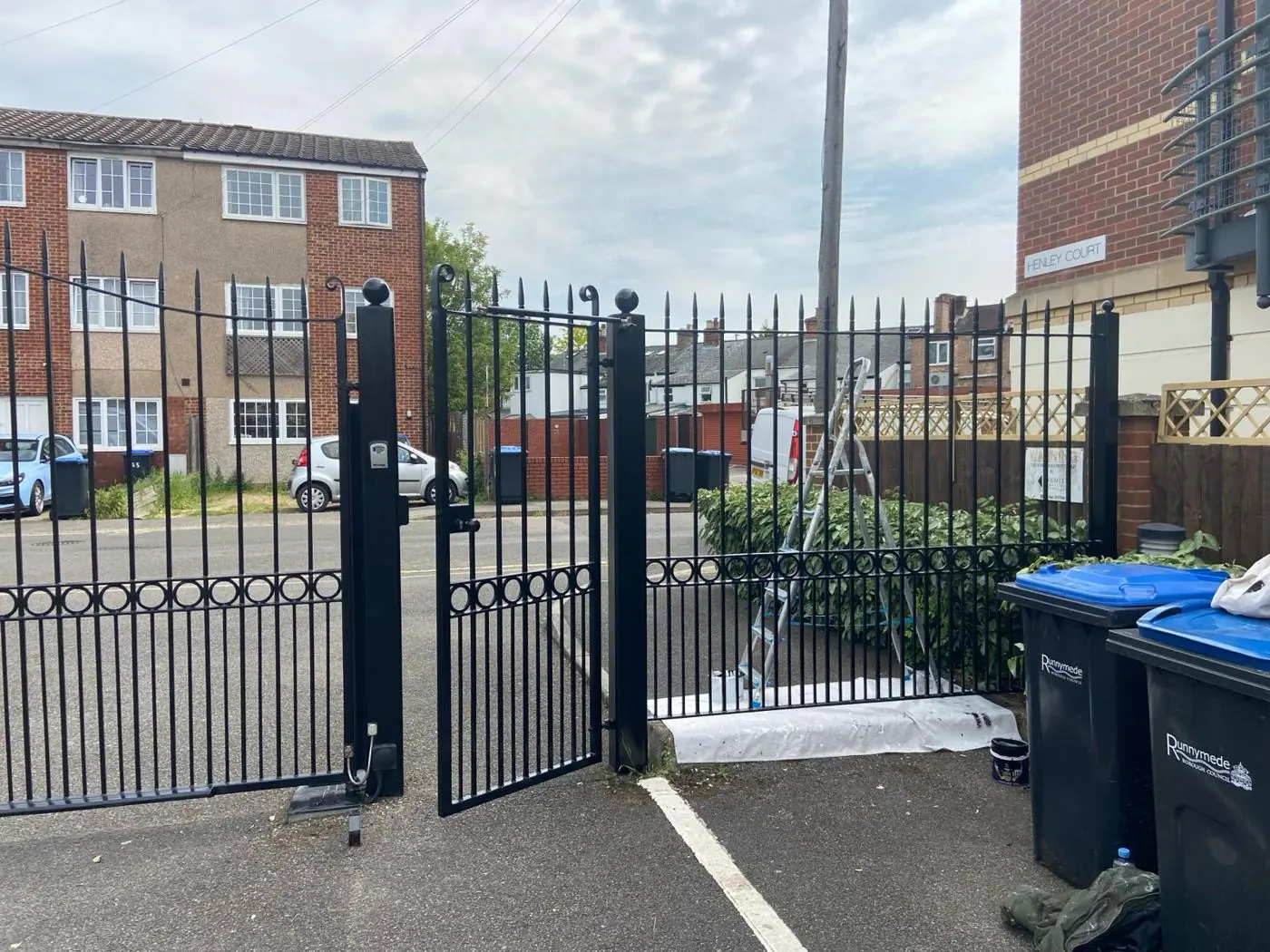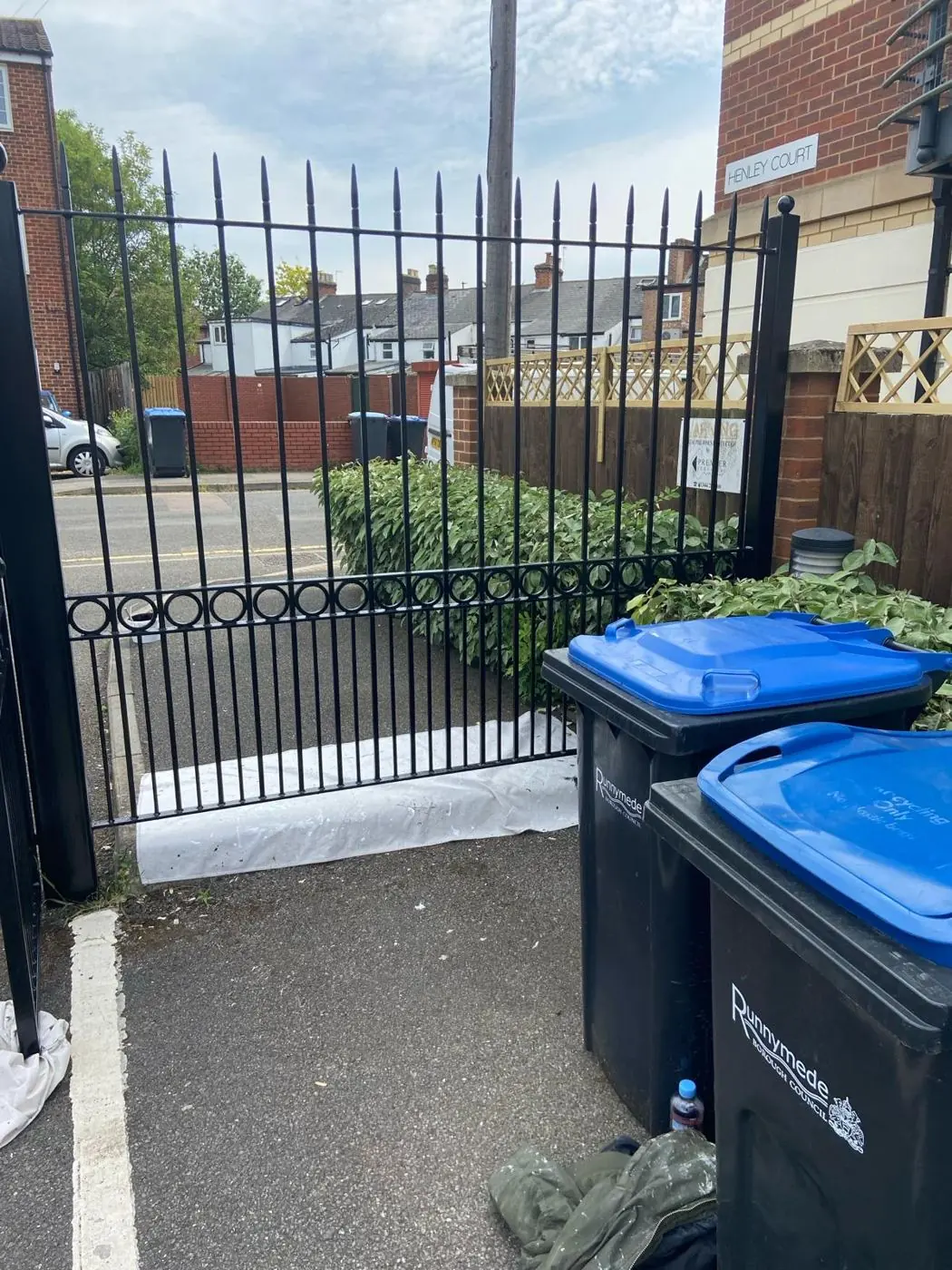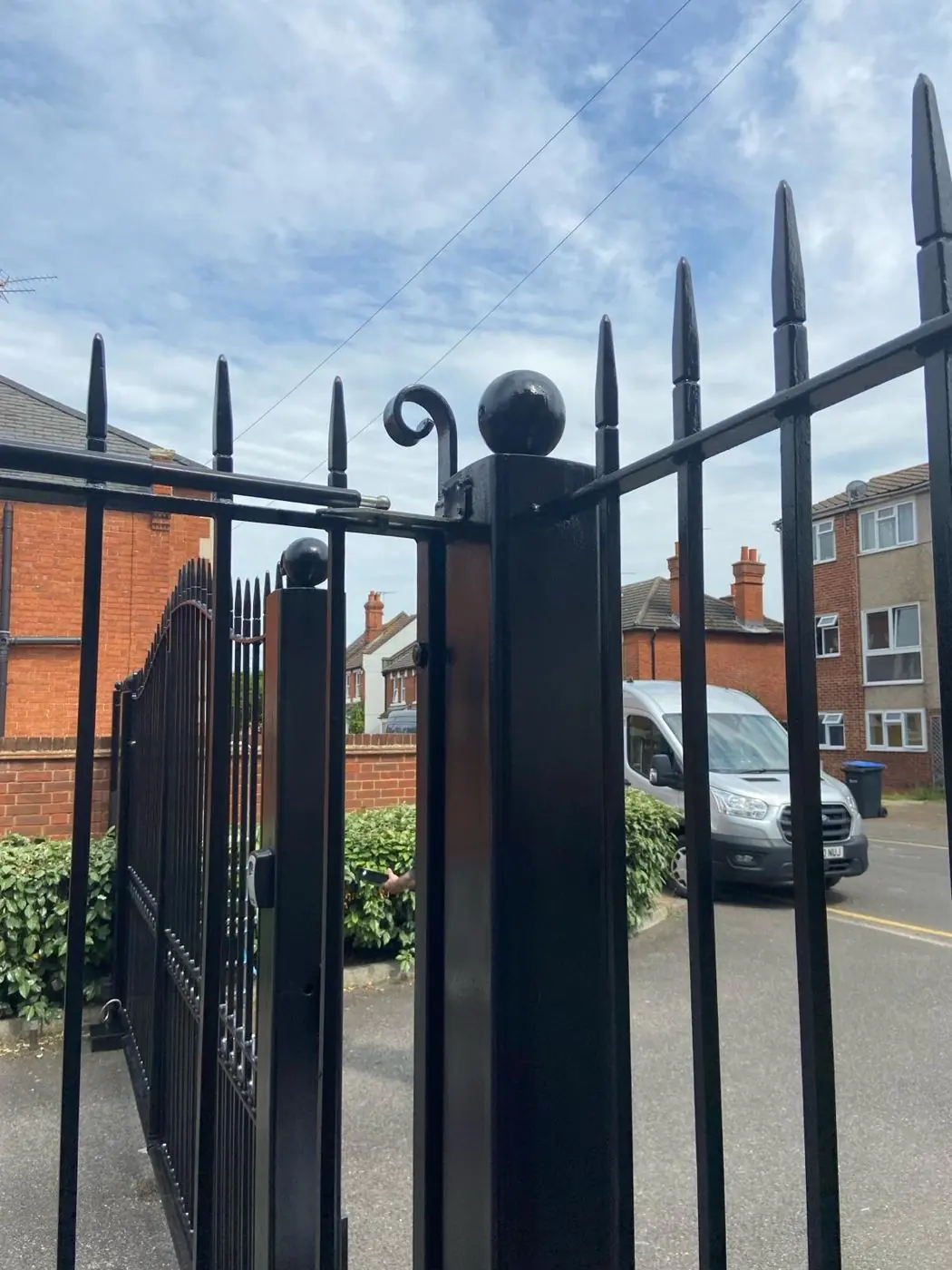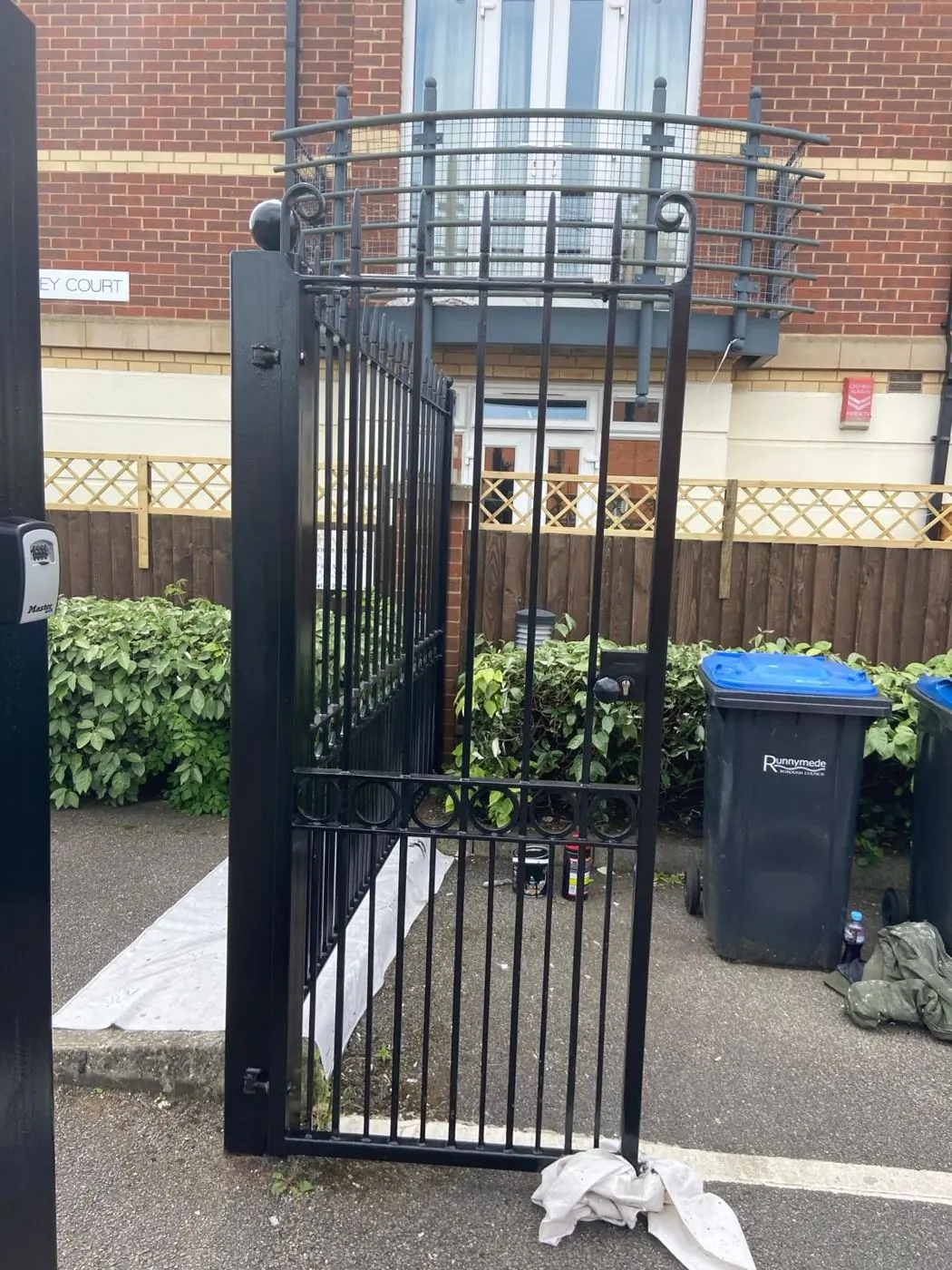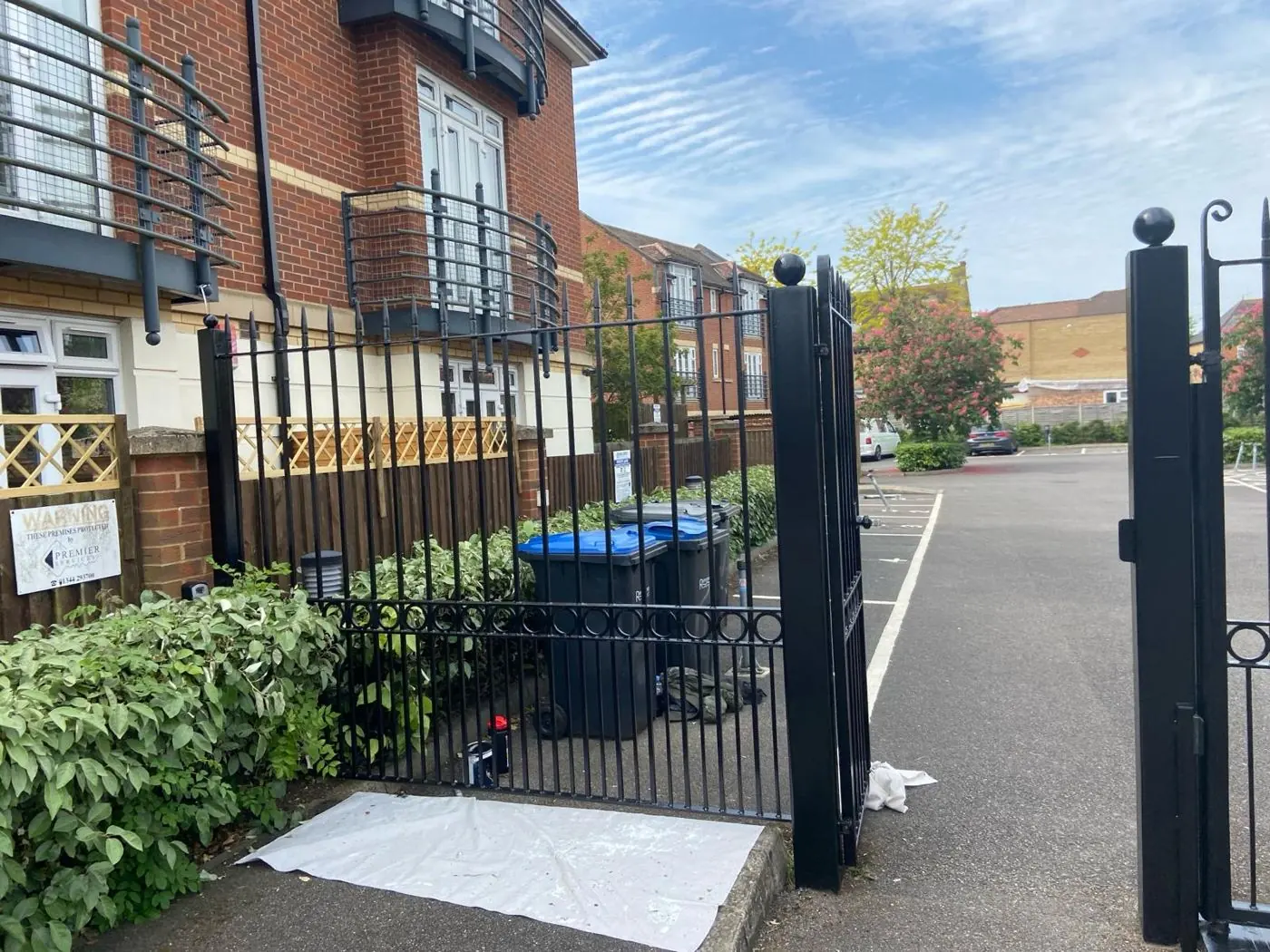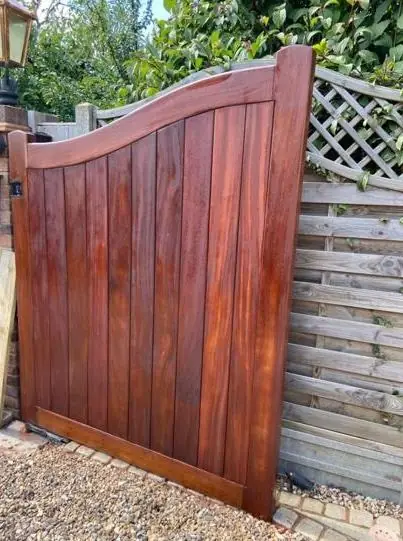
We stain and paint garden fences and timber gates in Headlands, NN3, around 2.2 miles north-east of Northampton town centre. Dean covers the long rear boundaries and side gates of the interwar semis, reaching most gardens by the side path.
Gardens laid out for long boundaries
Agent listings for Headlands semis describe enclosed, good-sized rear gardens, and that means long fence lines on both sides plus a back boundary. Measured by length of timber, a Headlands garden is often a bigger staining job than the house front. It also means the fence has usually been replaced or patched in sections over the decades, so one run may mix weathered feather-edge, newer panels and a concrete post or two.
Mixed timber takes stain unevenly. New panels drink less than old grey boards, and treated softwood that is only months old may repel water-based stain altogether. When we quote we note which sections are new, which are weathered, and which have been coated before, because that decides whether we can use one product all the way along or need to treat sections differently to get an even finish.
Beside the allotments
Houses at the bottom of Bush Hill have allotments behind their rear gardens. That boundary has neighbours on the other side who are growing food, so we are careful about what reaches them. Plot holders may be picking crops or watering on the day we work, and a fine stain mist can settle on leaves several metres away in a light breeze. Our approach on that boundary:
- we brush and pad stain on that boundary rather than spraying it, so no mist drifts onto plots
- we sheet the ground on the far side where we can reach, and keep tins and washing water well away from the fence base
- we choose a product suitable for use near plants for that run if you want both faces treated
The same restraint applies wherever beds or a vegetable patch run along your own side of the fence.
The gate between the pair
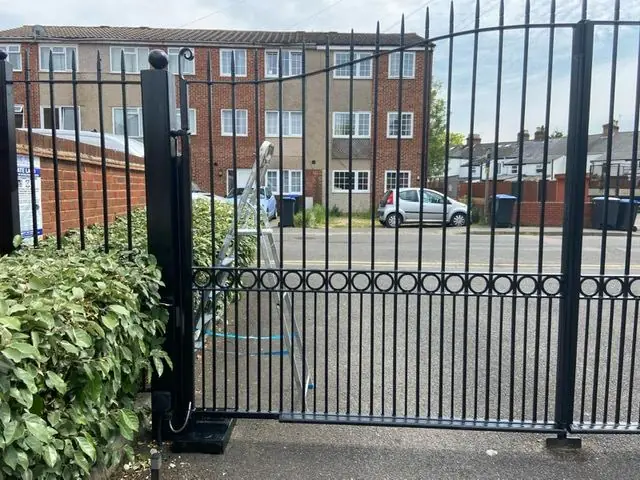
Most Headlands semis have a side passage closed by a timber gate, and that gate takes more knocks than any fence: bins in and out, bikes, and the latch being slammed. The bottom rail often sits on or near the path and stays wet. We check that it closes freely before staining, since a gate that binds will rub the new finish off at the edge within weeks, and we pay attention to the end grain at the base, which is where these gates rot first. Where a gate is shared between two semis, it is worth agreeing the colour with next door, as it is seen from both front gardens.
Front boundaries are a smaller part of the picture here. Many semis have a block-paved drive across much of the front, so timber at the front is often limited to a gate or a short panel by the drive. Where a front fence does exist, it is the piece passers-by see, so we take extra care over drips on the paving below.
Getting in and out
Side access is the norm on the semis, so we carry everything straight round to the garden without entering the house. On the few mid-terraces on Longland Road and Fullingdale Road, which may have no side path, we will agree a route through the house and protect the floors. Fence staining needs a dry day before and after, and the exterior painting timing guide covers the months that suit it.
For the choice between stain, paint and oil, and how we prepare bare, grey and previously coated timber, see our main fence and gate staining page. The Headlands page covers other exterior work on these roads.
Last updated by Dean, DH Painter & Decorator.