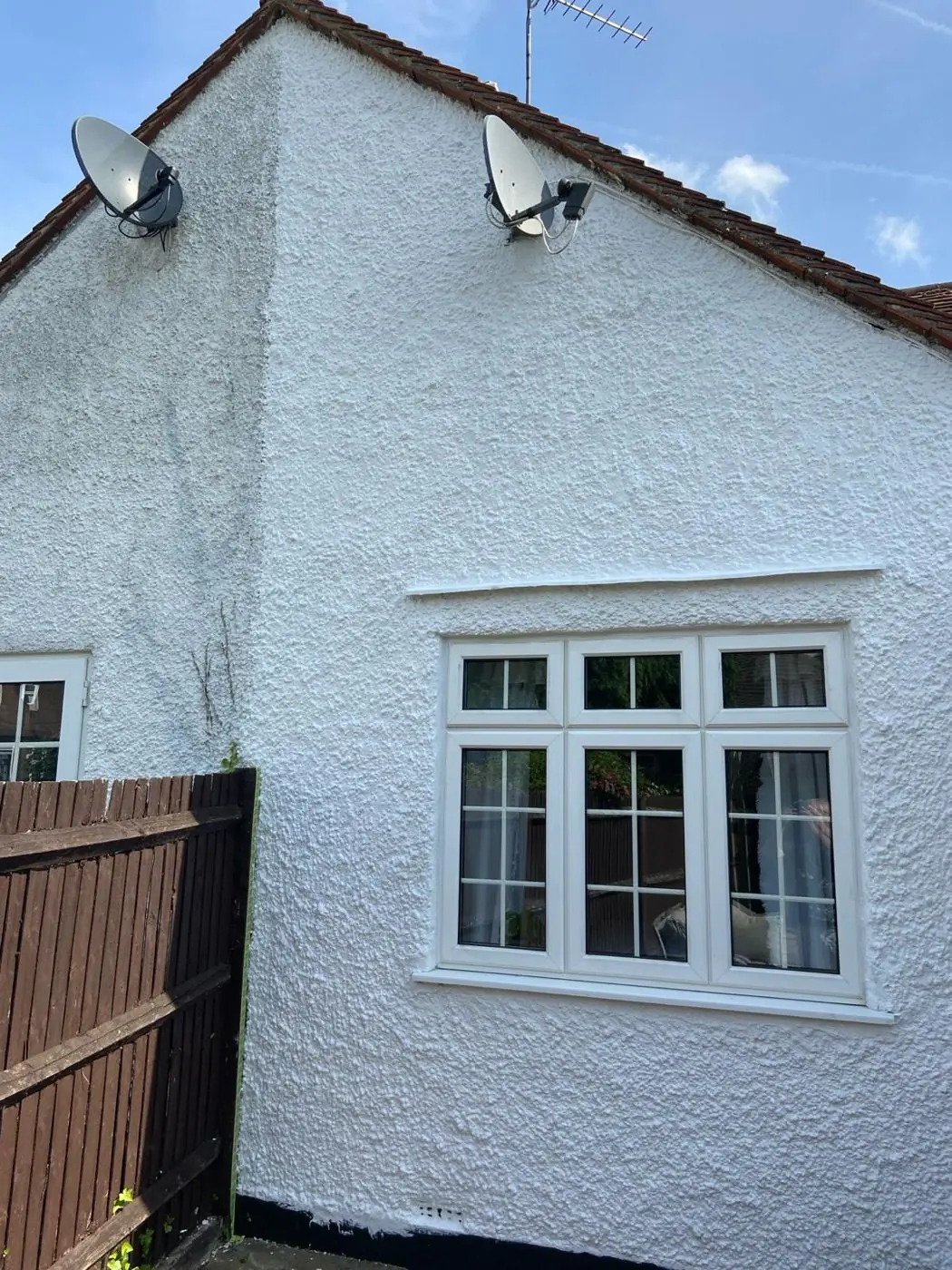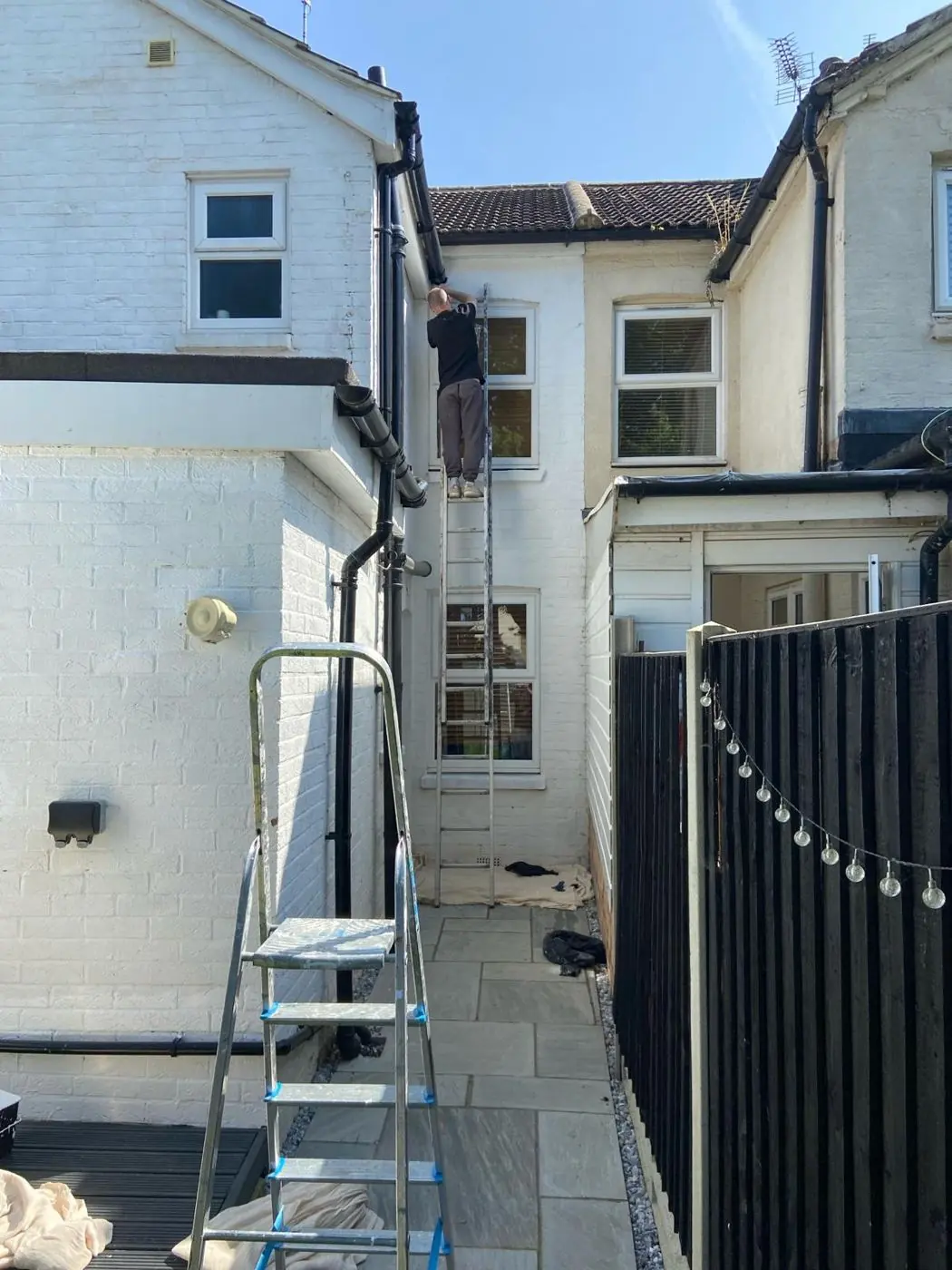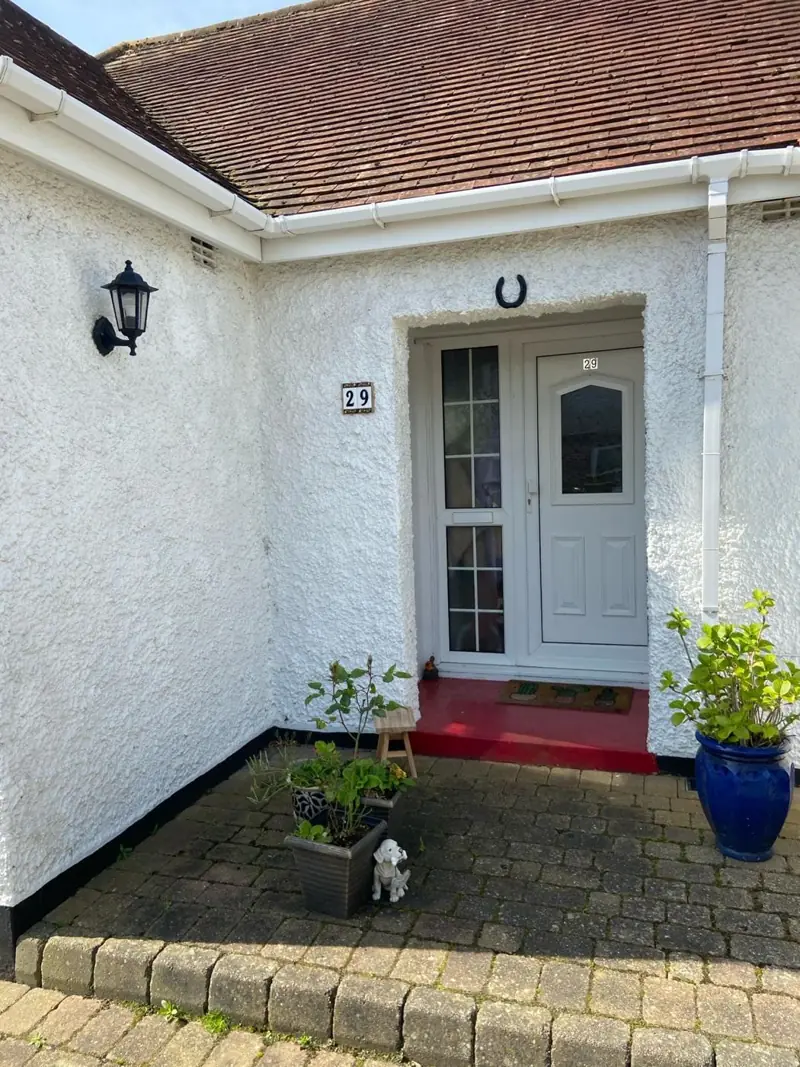
DH Painter & Decorator paints fascias, soffits, bargeboards and gutters in Rothersthorpe, NN7, around 3.4 miles south-west of Northampton town centre. Dean covers the village from our Northampton base. Most of the work is on the 19th-century red brick cottages and the 20th-century houses, since the oldest roofs here have little timber at the eaves.
Thatch, stone copings and roofs with nothing to paint
Some of the oldest houses in Rothersthorpe have no fascia board at all. The Manor and The Poplars are thatched, and thatch finishes in an overhang rather than a board. Other early roofs show where thatch used to be: steep pitches finished with stone gable copings and kneelers instead of timber bargeboards. On those houses a roofline quote is short, and sometimes there is nothing for a painter to do above the first-floor windows.
Where we do work near a thatched roof, the rules are strict. No heat gun goes anywhere near it, so old paint on nearby timber is removed by hand scraping and sanding. Dust sheets and ladders are placed so they do not disturb the thatch edge.
Red brick cottages on the eastern part of Church Street
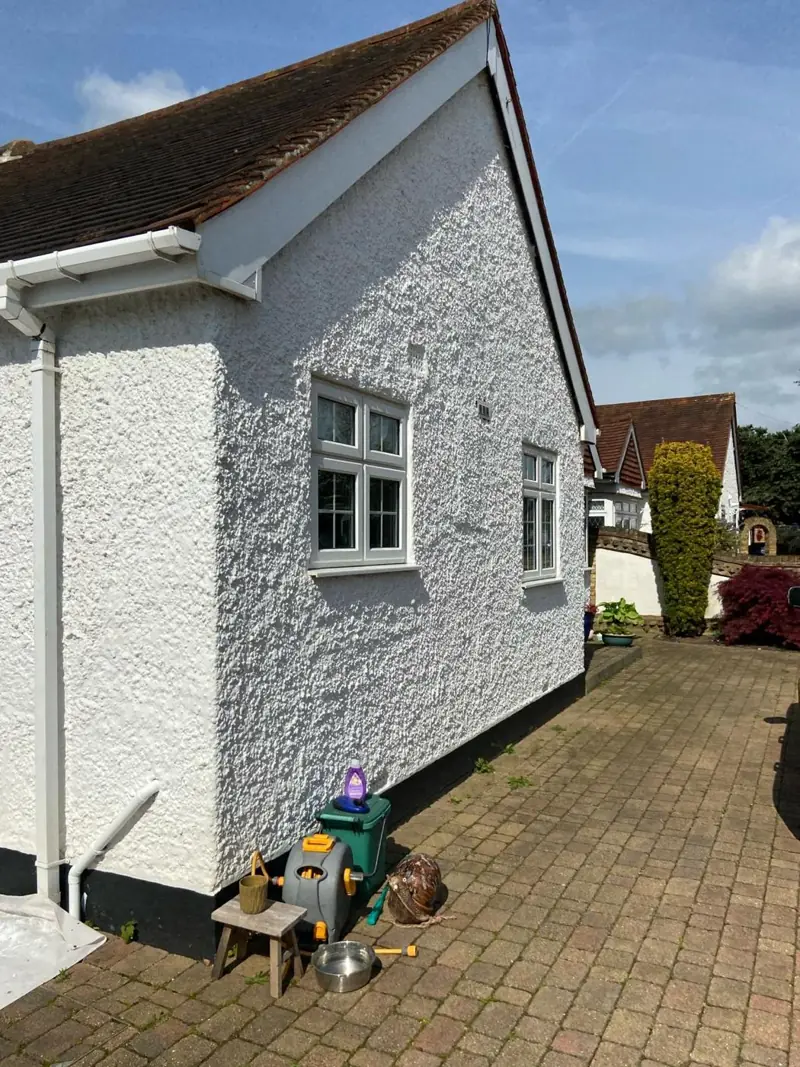
The 19th-century cottages, built in red brick under slate after the fields were enclosed in 1810, are where traditional roofline joinery turns up. Timber bargeboards on the gables, fascias carrying gutters and plain eaves are typical. Older boards have often been painted many times over, and the bottom edge, where water runs off the slate, is usually the first part to go.
Our approach on these cottages:
- Probe the bottom edges and joints for soft wood, and cut out and splice in new timber where it has rotted.
- Scrape and sand loose paint back to a sound edge rather than burning it off.
- Prime bare timber, then build up an exterior system that can flex with old wood.
- Paint cast iron gutters and downpipes where they survive, treating rust as we go.
Because the brick itself stays as facing brick, bargeboards and gutters are among the few painted surfaces on these houses. Getting the colour of the roofline right matters more here than on a modern estate, because it is one of the few painted lines on the front.
Estate houses off North Street, Banbury Lane and Kislingbury Road
The 20th-century infill and small estates have more standard rooflines, often under the concrete tiles the appraisal mentions spreading through the village. Some have timber fascias and soffits that need a full repaint; others have uPVC that only needs a clean. If yours is timber, the job is the familiar one: wash down, scrape, fill, prime and two coats of exterior gloss or satin. We tell you at the quote which boards are past saving.
Leaves, height and exposure
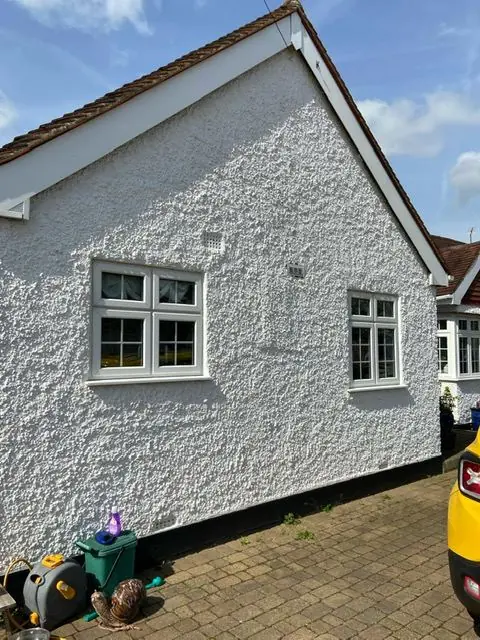
Rothersthorpe stands on raised ground that falls away gently on all sides, and the rural eastern side meets open fields. Rooflines facing that way get more wind-driven rain, so we check the condition of gutters and the seal along the top edge of each fascia before painting. Under the protected chestnut trees on Church Street near Manor Farm, and the mature trees around the churchyard and Castle Farm, gutters fill with leaves. Clearing them before painting stops water spilling down freshly painted boards.
Plenty of the older buildings stand on the road edge, so ladders for roofline work are often set on or beside the carriageway. We plan that with traffic in mind and allow for any branches that cannot be cut back because of the tree controls.
The main fascia and soffit painting service page explains the full process. For costs, see our painter and decorator cost guide, and for other services in the village, the Rothersthorpe hub.
Last updated by Dean, DH Painter & Decorator.