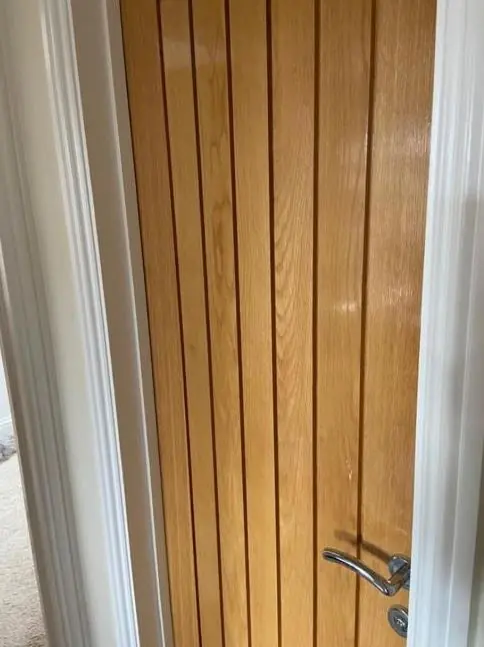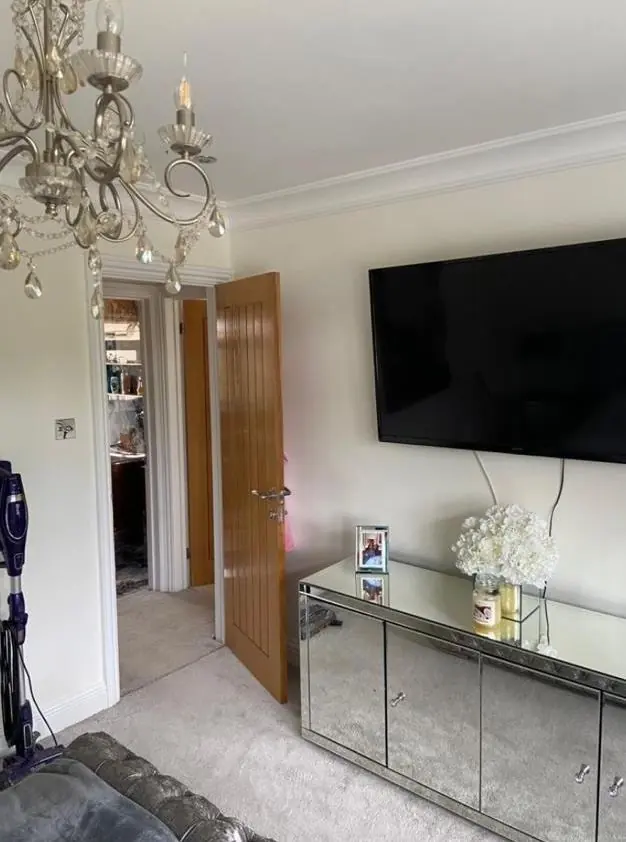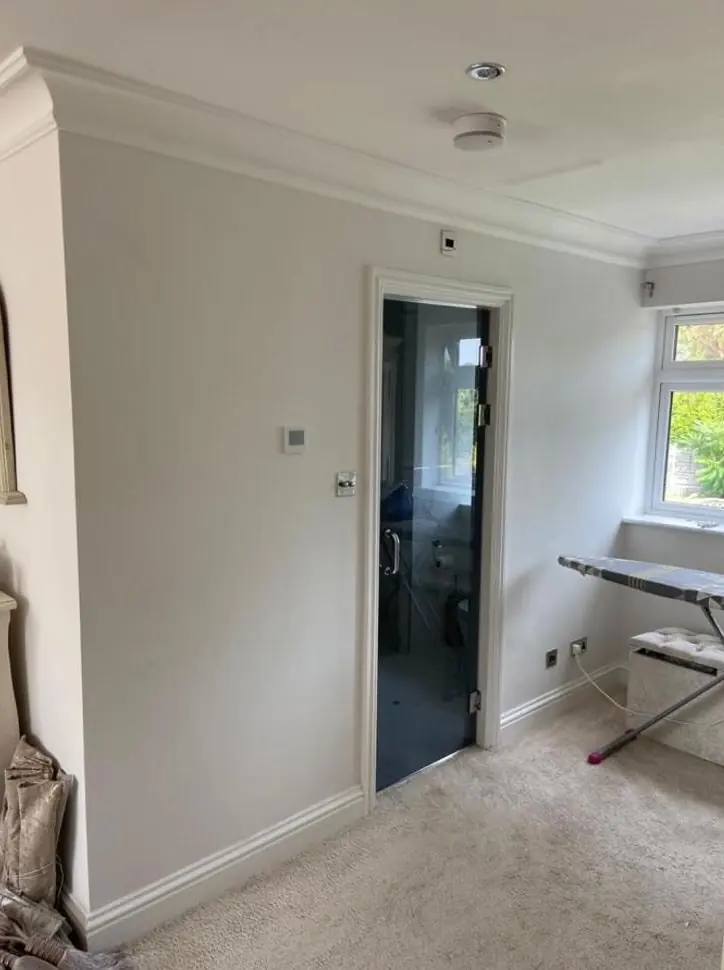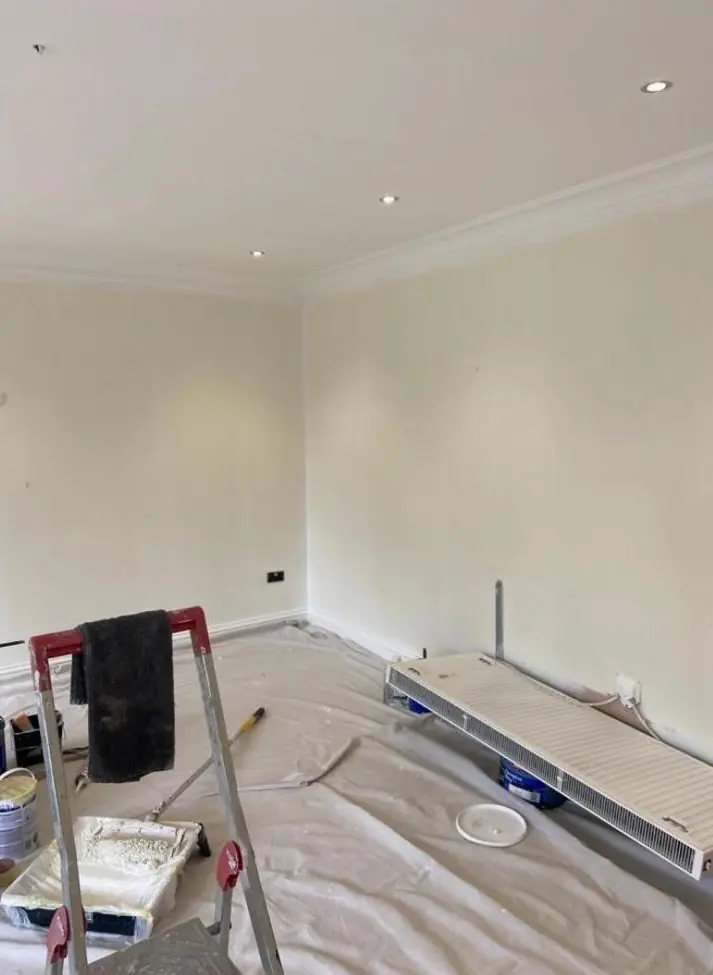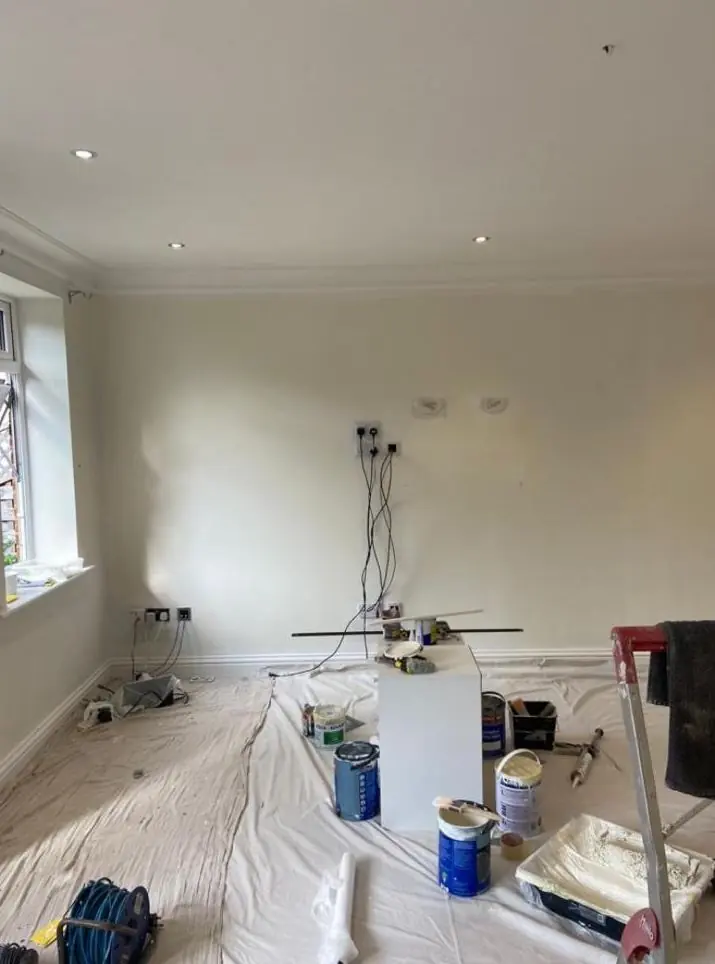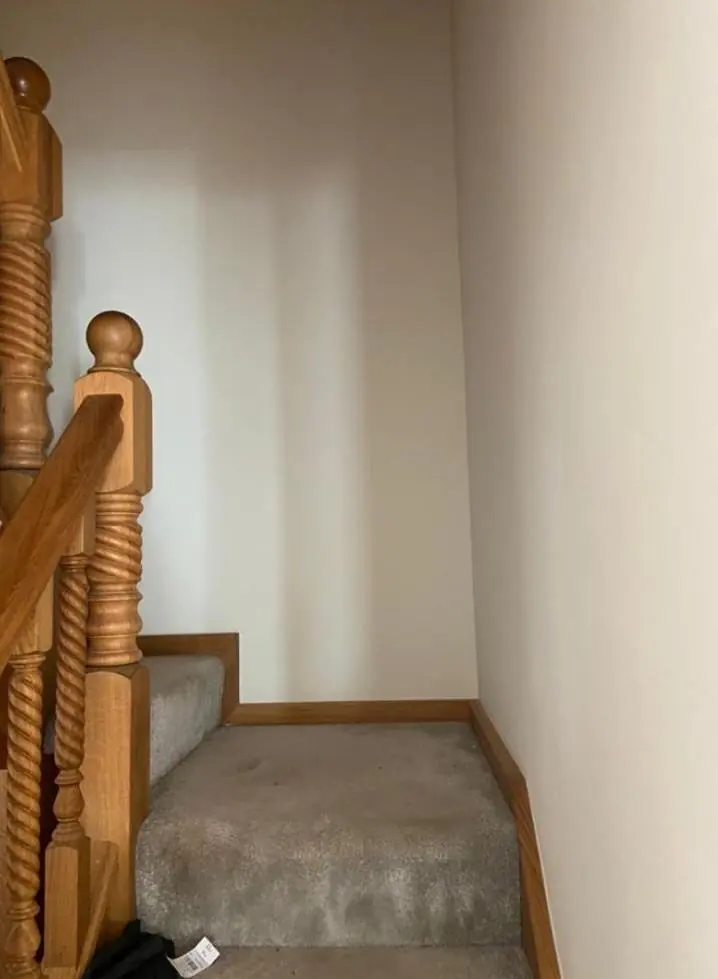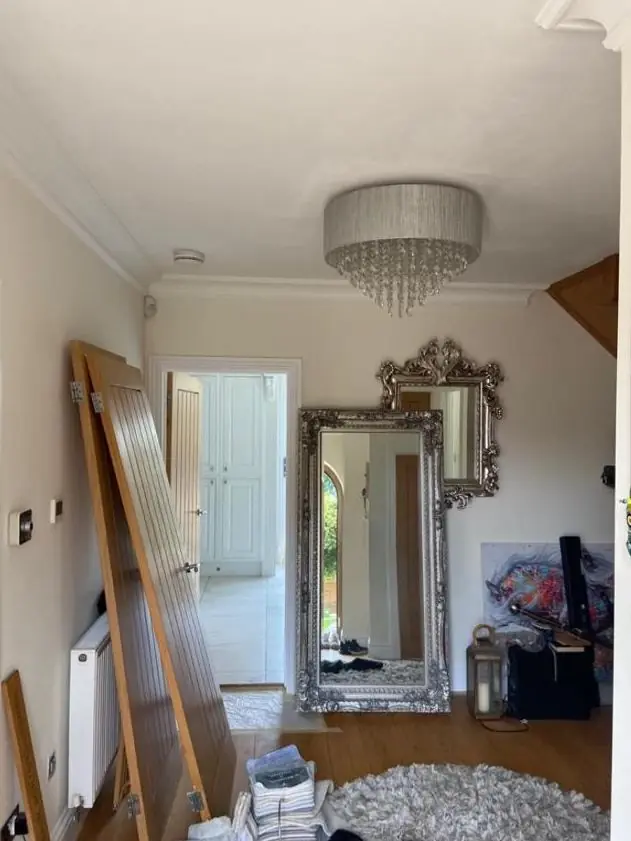
DH Painter & Decorator applies decorative finishes in Hunsbury Meadows (NN4), around 2.2 miles south-west of Northampton town centre. Since the estate dates from 1996 onwards, the work is about giving flat modern walls some depth through panelling effects, limewash-style paints and colour blocking, rather than restoring period features.
Modern walls with no period detail to restore
Every house in Hunsbury Meadows was built from the late 1990s onwards. The core estate off Banbury Lane sold new between 1996 and 2001, and the Pineham Lock streets by the canal between 2012 and 2015. There are no listed buildings and no conservation area here, which means no cornices to pick out and no Victorian mouldings to restore. What owners usually have is a set of flat, square rooms with straight walls and simple skirtings. Decorative work in this estate is about adding depth and character to those rooms, and the flat surfaces make that easier, because effects that depend on a true wall come out cleaner.
Panelling effects in the larger reception rooms
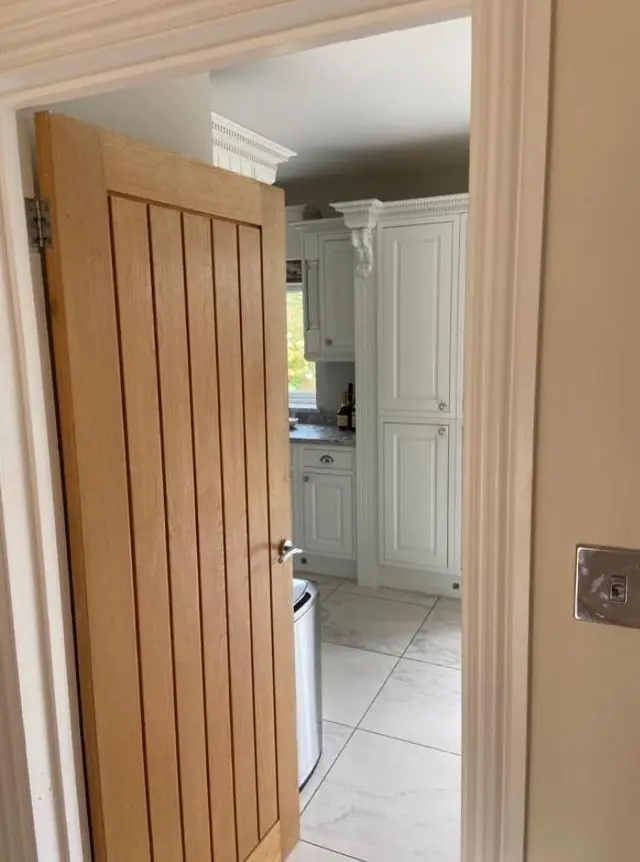
The detached houses built between 1996 and 2001 include four-bedroom houses marketed as executive style, some with more than one reception room. A dining room or snug in one of those houses is the obvious place for wall panelling. The usual options are:
- Picture-frame mouldings fixed to the wall and painted the same colour as it, giving shadow lines without a heavy look;
- Half-height panelling to dado level, painted a deeper shade than the wall above, which also takes knocks from dining chairs;
- Shaker-style boards on a single feature wall, often behind a bed or a sofa.
The paint finish decides whether panelling looks built-in or stuck on. Every joint and nail hole is filled and caulked, the mouldings are primed, and we usually suggest a matt or eggshell finish so the light picks out the profile rather than every brush mark.
Limewash-style paint and colour blocking
For a softer, cloudy look, limewash-style and mineral paints give movement on a wall that would otherwise read as one flat colour. Over the developer’s emulsion still on the walls of many Pineham Lock homes, these products need the right base coat to take evenly. Thin builder’s paint absorbs patchily, and on a brushed limewash effect that shows as dark blotches. We seal first, then build the finish up in crossed brush strokes.
Colour blocking suits the open-plan kitchen and living spaces in the newer homes. A painted arch behind a dining table, a block of colour marking a reading corner, or a two-tone wall split at a set height can define zones in a room that has no walls to do it. The edges are what make or break it. We mark arches and split lines with a level and compass, seal the tape edge with the base colour so the top colour can’t bleed under it, and lift the tape while the paint is still soft. On the slightly uneven corners where plasterboard walls meet, we cut lines in by hand, because tape can’t follow them neatly.
Tall walls, smaller flats and getting the scale right
Where a larger detached house has a two-storey hall or tall stairwell, that high wall is a strong place for one decorative treatment. Scale matters there: a fine pattern that looks right at eye level gets lost from the bottom of the stairs. Not every house has one, so Dean looks before suggesting it; the upper section is then worked from a stair platform or tower.
The flats and maisonettes on Narrowboat Lane call for more restraint. One panelled wall or a limewash finish in a single alcove can be enough in a smaller room.
We cover Hunsbury Meadows from our base in Northampton, about 2.2 miles away. Examples of faux finishes, panelling and feature walls are on the decorative finishes page, while the Hunsbury Meadows area page sets out the estate’s two building phases.
Last updated by Dean, DH Painter & Decorator.