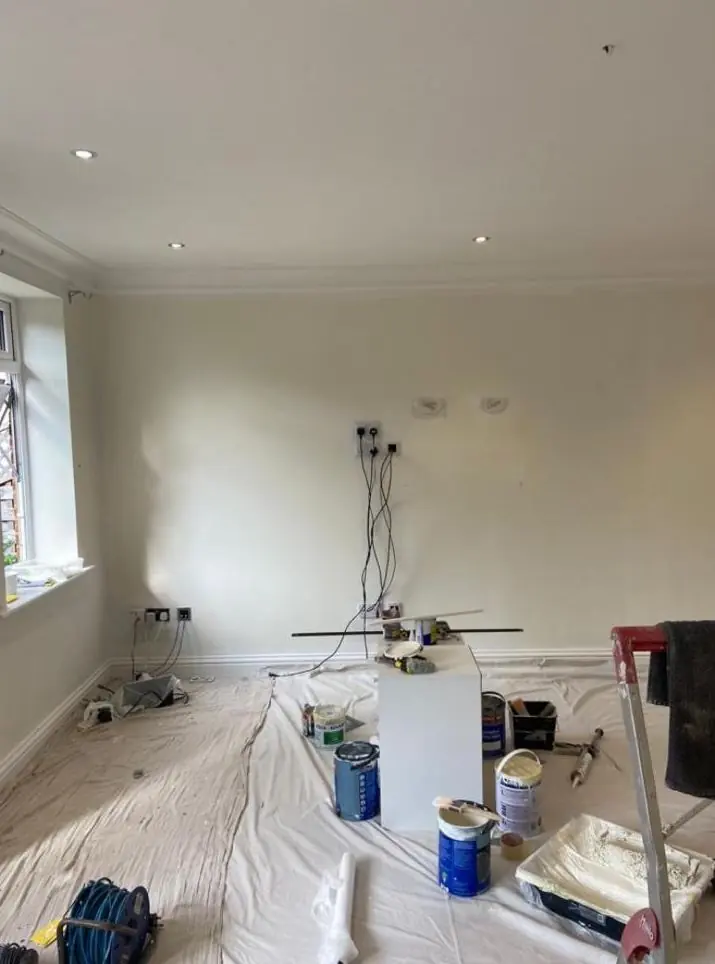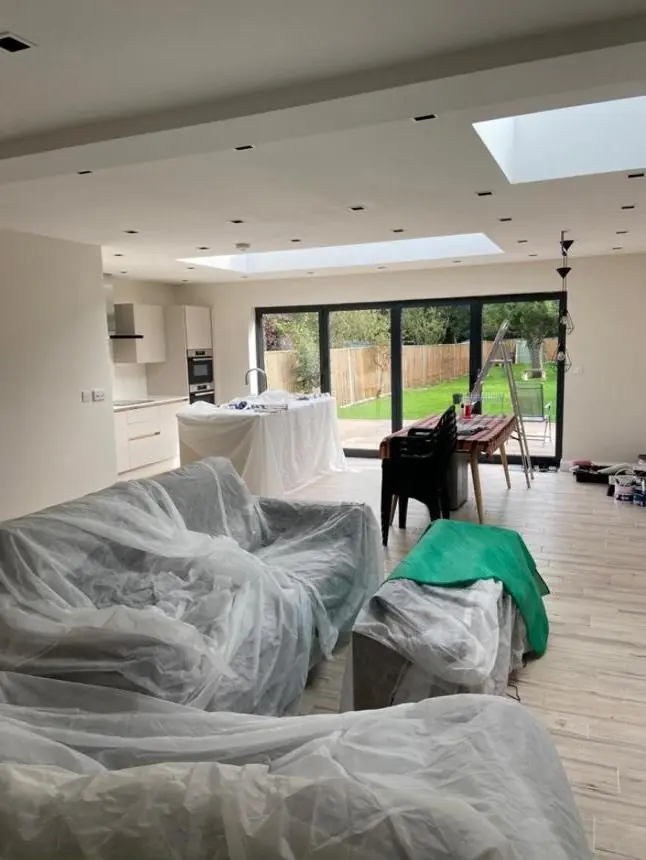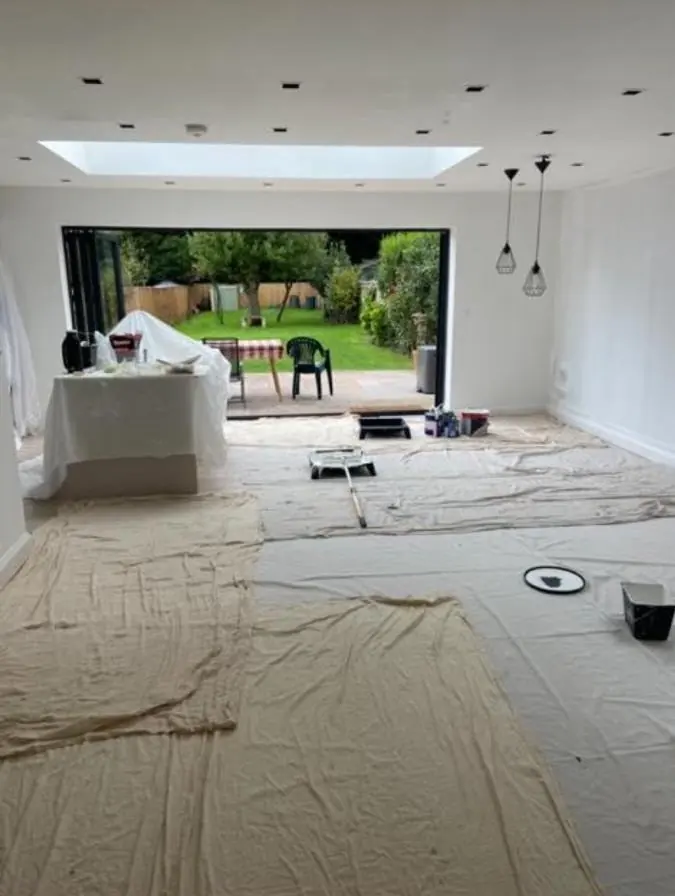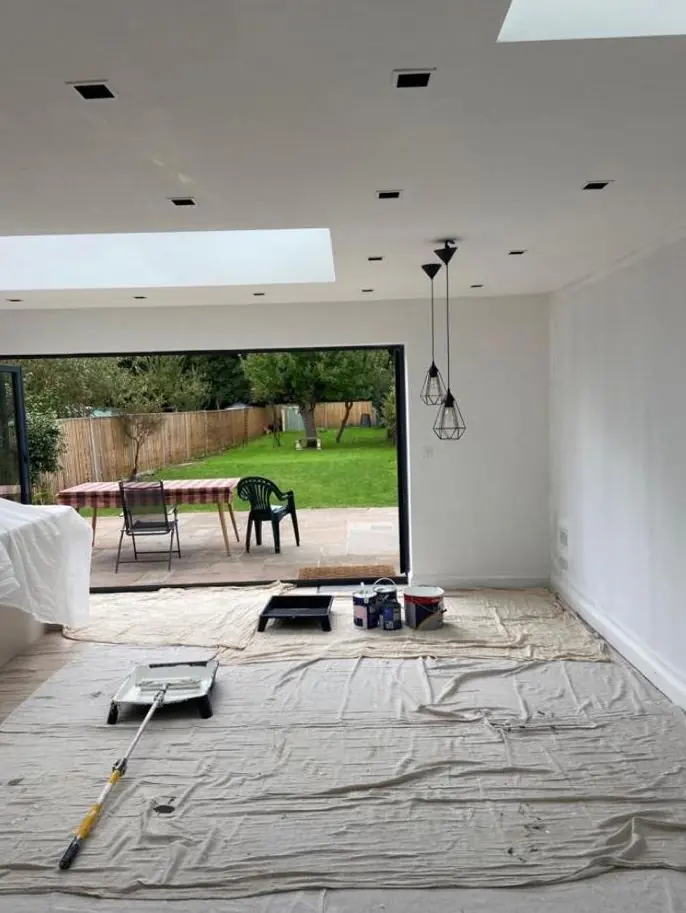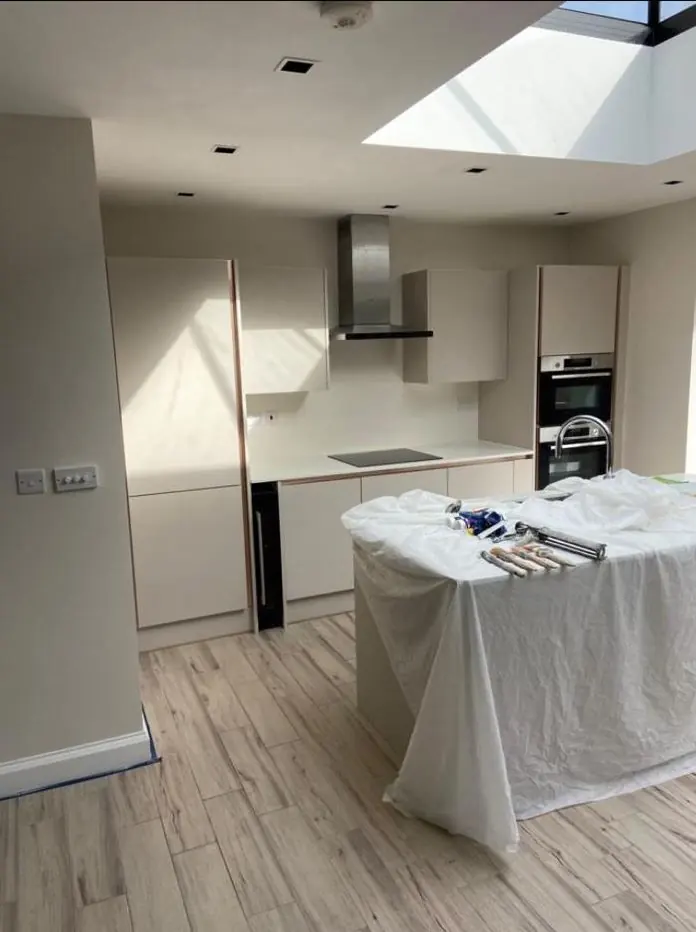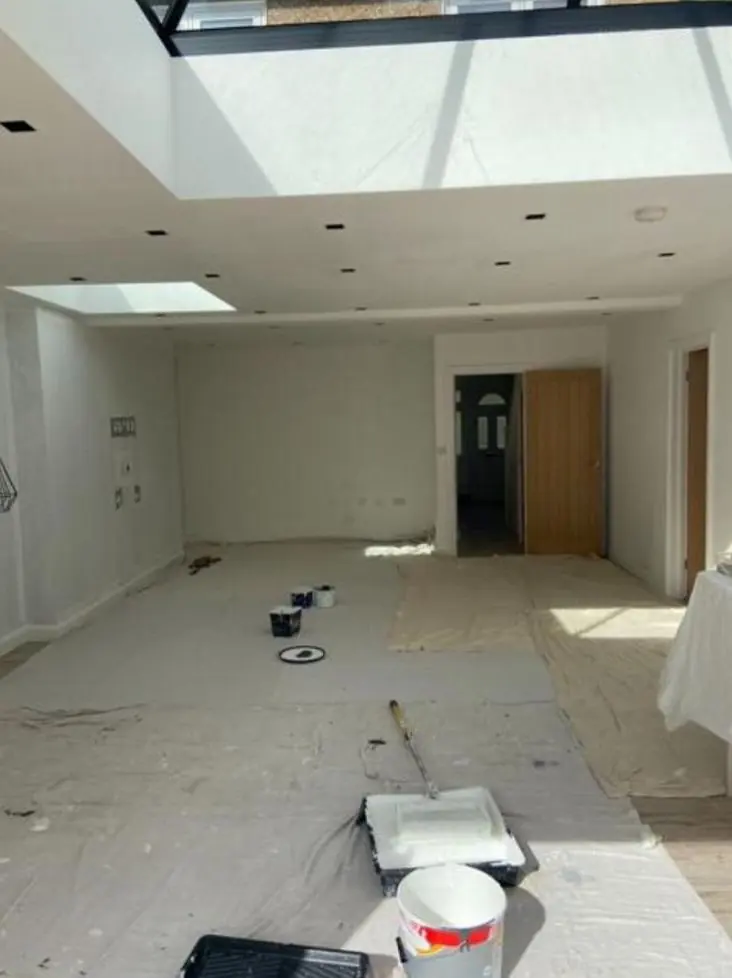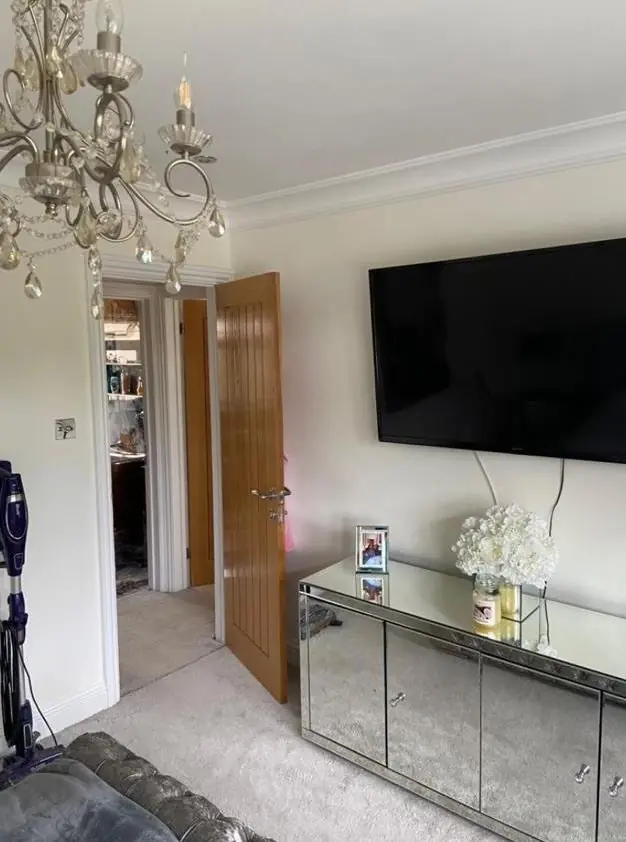
DH Painter & Decorator paints new plaster in Hunsbury Meadows, from rear extensions and garage conversions to rooms re-skimmed during a refit. We work from Northampton, about 2.2 miles away. Every job starts with a properly thinned mist coat on fully dried plaster.
Extensions on the estate’s detached plots
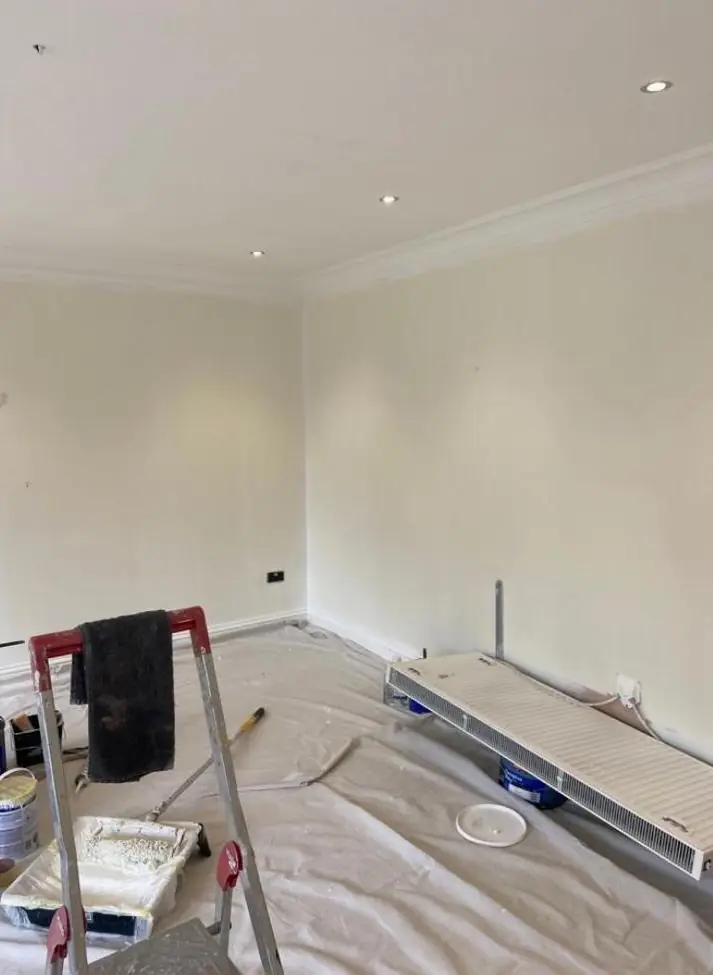
Most of the houses on the original Hunsbury Meadows streets, built between 1996 and 2001, are detached. Detached houses on their own plots are the type that tends to get extended once a family outgrows them, whether that means a kitchen-diner pushed out at the back or a room built over to the side. Whatever the builder puts up, the result for the decorator is the same: large areas of bare skim plaster or new plasterboard that need sealing before any colour goes on. Nothing on the estate is listed or inside a conservation area, so once the plaster is dry the usual modern trade products are all suitable.
New extensions also tend to sit right beside walls that are 25 years old. Where new plaster meets the original wall, we check the joint for hairline cracks, fill and sand it so the line disappears, and paint the old and new walls together so the colour matches across the whole room.
Double garages turned into rooms
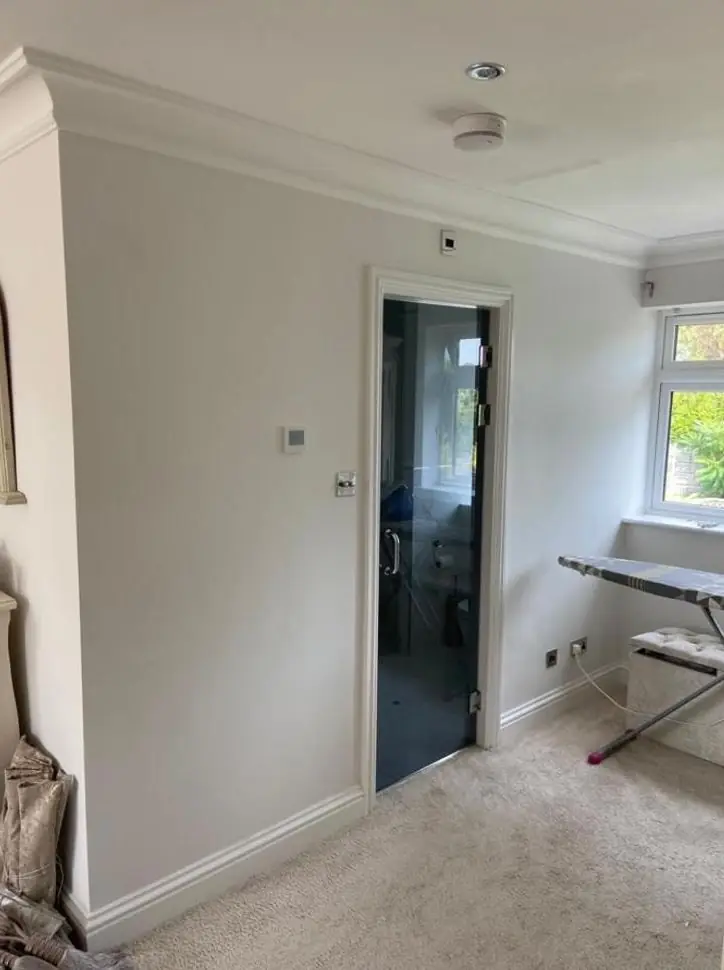
Some of the four-bedroom homes on the estate were built with double garages, and converting part of one into a study, playroom or utility is a common way to add space without building out. A garage conversion usually means a mix of surfaces: fresh skim on the original garage walls, new plasterboard on stud partitions, and sometimes a new boarded ceiling. Each of those absorbs paint differently. Bare skim drinks a thinned mist coat, while taped and jointed board needs its joints to be fully cured and sanded flush before priming. Otherwise the tape lines show through the finish once the room is lit.
| What you have | What it needs before the finish coats |
|---|---|
| Fresh skim in a new extension | Full drying time, then a thinned mist coat to seal |
| New plasterboard in a garage conversion | Joints checked and sanded, then a primer or mist coat across board and joints alike |
| Patch plaster after a kitchen or bathroom refit in a 1990s house | Patches sealed separately so they don’t flash through the topcoat |
| Builder’s matt in a Pineham Lock home (not new plaster) | A sealing coat rather than a mist coat, because the walls are already painted |
Drying time next to the canal
Plaster has to dry out fully before it is painted. Light pink is the colour to wait for, with no darker patches left. The canal-side Pineham Lock streets (Towpath Avenue, Lockgate Road, Narrowboat Lane) run alongside the Northampton Arm and open meadow. That corridor stays damper and more sheltered than the middle of the estate. In autumn and winter, a new extension there can take longer to dry, especially if the heating isn’t on yet and the windows stay shut. Good ventilation helps. Rushing the paint helps nothing: emulsion over damp plaster can blister or flake within months. We will check the walls before we start, and if they aren’t ready we will tell you rather than paint anyway.
The full mist-coat method, including the thinning ratios, is set out in our guide to painting new plaster, and our main new plaster and extension painting page explains what is included.
Finishing the outside of an extension
A new extension can also bring new exterior timber, such as fascias, soffits or a door frame, alongside the original 1990s woodwork on the rest of the house. If you want them to match, we can quote for priming and painting the new timber at the same time and freshening the old. That saves a second visit and a second set of ladders on a busy shared-surface close. Find out more about the estate on the Hunsbury Meadows page.
Last updated by Dean, DH Painter & Decorator.